FEP is easier to process, while PTFE withstands more heat. FEP melts at approximately 265 °C, compared with about 327 °C for PTFE, and has a continuous service temperature near 200 °C, versus roughly 260 °C for PTFE. In return, FEP has dramatically lower melt viscosity, allowing it to be extruded, molded, and heat-sealed, whereas PTFE generally requires sintering, compression molding, or machining.
Choose PTFE when maximum thermal endurance, pressure resistance, low friction, or cryogenic stability is the priority. Choose FEP when transparent, melt-processed, heat-sealable, or geometrically complex labware is more important than the highest operating temperature.
Why FEP Processes More Easily Than PTFE
Side Groups Disrupt PTFE-Like Crystallinity
PTFE has a highly regular molecular structure that packs efficiently. Its virgin crystallinity is approximately 92–98%, producing excellent thermal and chemical stability but also exceptionally high melt viscosity.
FEP incorporates pendent trifluoromethyl groups (-CF3) into the polymer chain. These bulky side groups disrupt crystalline packing, reducing virgin crystallinity to approximately 40–50%.
Lower Melt Viscosity Enables Conventional Fabrication
Above its melting point, PTFE does not flow like a conventional thermoplastic. Its melt viscosity is approximately 10^10–10^12 poise, so it is typically formed through compression molding, sintering, paste extrusion, or CNC machining.
FEP has a melt viscosity of approximately 10^4–10^5 poise. That difference allows manufacturers to use processes such as extrusion, injection molding, blow molding, and heat sealing.
Processing Expands Design Options
FEP can be formed into seamless or highly integrated components with fewer mechanically joined sections. This is valuable for tubing, fluid-transfer components, sample bags, and complex molded labware where leak tightness and reduced assembly are important.
PTFE remains suitable for custom shapes, but fabrication often involves machining or joining previously formed material. That approach can increase manufacturing complexity when the design includes thin walls, intricate passages, or integrated features.
How Thermal Properties Differ
PTFE Handles Higher Continuous Temperatures
PTFE has a melting point near 327 °C and a continuous service temperature of approximately 260 °C. Its thermal endurance makes it appropriate for severe heating cycles and high-temperature laboratory operations.
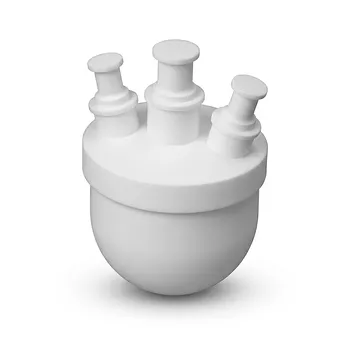
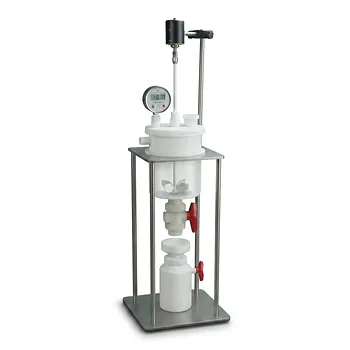
This is why PTFE is commonly considered for applications such as microwave digestion vessels, crucibles, and other apparatus exposed to intense heat or pressure.
FEP Offers Lower Thermal Headroom
FEP melts at approximately 265 °C and generally supports continuous service temperatures near 200 °C. The tertiary carbon atoms associated with its copolymer structure slightly reduce its thermal stability compared with PTFE.
FEP is still highly resistant to heat for many laboratory applications, but its operating limits must be evaluated against actual exposure conditions. Temperature, dwell time, pressure, thermal cycling, and chemical environment all matter.
Thermal Selection Is About the Operating Envelope
A component that briefly contacts a hot liquid may be suitable in FEP even when a continuously heated vessel requires PTFE. Conversely, a design may need PTFE if it combines elevated temperature with mechanical load or internal pressure.
The relevant question is not simply which material has the higher melting point. It is whether the material retains the required strength, dimensional stability, and chemical performance throughout the complete operating cycle.
What This Means for Specialized Labware
Transparent Tubing and Sample Containers
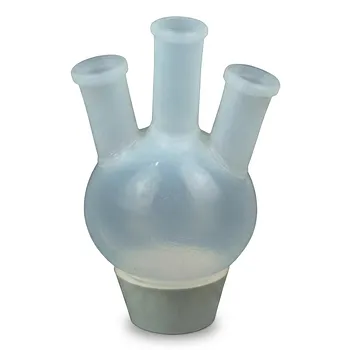
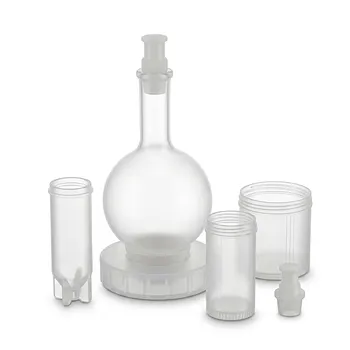
FEP provides excellent optical clarity relative to PTFE and can be extruded into transparent tubing. This makes it useful when operators need to inspect fluid flow, detect bubbles, verify cleanliness, or observe the condition of a sample.
Its heat-sealing capability also supports sample bags and flexible containment products that would be difficult to produce from conventional high-molecular-weight PTFE.
Complex Molded Components
FEP's melt flow allows complex components to be produced with integrated geometry. Potential examples include fluidic passages, molded fittings, and other components where machining a solid PTFE blank would be inefficient or would require multiple assembly steps.
Melt processing can also support consistent, pore-free parts and reduce weaknesses associated with mechanically assembled sections. The exact result still depends on resin grade, tooling, processing controls, and inspection.
High-Temperature Digestion and Pressure Applications
PTFE is generally the stronger choice for maximum heat resistance and demanding pressure applications. Its higher continuous-use temperature provides more margin during aggressive digestion, thermal cycling, and high-temperature containment.
For these applications, FEP's easier processing does not compensate for its lower thermal ceiling. A transparent or intricately molded component is not useful if its service conditions exceed the material's safe operating range.
Low-Friction and Cryogenic Components
PTFE provides the lowest coefficient of friction among fluoropolymers and maintains structural integrity at extremely low temperatures, including cryogenic conditions. It is therefore well suited to non-stick surfaces, sliding seals, stir-bar components, and low-temperature containment.
FEP also has low friction and broad chemical resistance, but PTFE is preferable when friction performance or cryogenic stability is a primary design requirement.
Chemical and Purity Considerations
Both Materials Resist Aggressive Chemicals
PTFE and FEP are perfluorinated materials with strong resistance to many acids, bases, and organic solvents. Both are appropriate candidates for high-purity laboratory environments where contamination control and chemical inertness are important.
However, chemical compatibility must still be checked against the specific reagent, concentration, temperature, exposure duration, and mechanical stress. No material-selection decision should rely only on a general “fluoropolymer” classification.
Processing Can Affect Component Integrity
PTFE's sintered or machined construction can be entirely appropriate, especially for robust, simple geometries. But designs assembled from multiple sections may introduce joints, interfaces, or potential leak paths.
FEP's melt-processability can enable seamless molded or extruded components, reducing the need for such interfaces. That advantage is most significant in fluid-handling systems, trace-analysis equipment, and containment components where leakage or contamination would compromise results.
Optical Clarity Is Functional, Not Merely Cosmetic
FEP's transparency can directly improve laboratory usability. Visual inspection of tubing and containers helps identify blockages, phase separation, trapped air, particulates, or incomplete cleaning.
PTFE's opacity is not a performance defect in high-temperature applications, but it limits visual monitoring. If inspection of the sample path is essential, FEP may provide greater operational value.
Understanding the Trade-offs
FEP's Processing Advantage Has a Temperature Cost
The same molecular modifications that lower crystallinity and melt viscosity also reduce FEP's melting point and continuous service temperature. FEP should not be selected for high-temperature work merely because it is easier or less expensive to mold.
A useful rule is to establish the thermal limit first, then consider processing and design benefits within that limit.
PTFE's Fabrication Complexity Is Deliberate
PTFE's need for sintering, specialized forming, or machining is a consequence of its molecular structure, not simply a manufacturing inconvenience. Those characteristics accompany its high crystallinity, thermal stability, low friction, and robust chemical resistance.
Using PTFE may increase tooling, machining, or assembly costs, but those costs can be justified when the application needs its wider thermal or mechanical operating envelope.
“Melt-Processable” Does Not Mean Universally Superior
FEP supports conventional thermoplastic processing, but processability alone does not determine suitability. Wall thickness, dimensional tolerances, pressure, transparency, sealing method, and cleaning requirements must be evaluated alongside temperature and chemical exposure.
For some high-purity applications, PFA may be a better melt-processable alternative because it combines thermoplastic processing with a continuous-use temperature closer to PTFE's. FEP remains especially attractive when optical clarity and lower-temperature melt flow are central requirements.
Do Not Use Melting Point as the Service Limit
A melting point is not an acceptable operating target. Long-term exposure, pressure, thermal cycling, and mechanical stress can compromise a component well below its nominal melting temperature.
Material selection should use the manufacturer's continuous-use and application-specific limits, with appropriate margin for the real laboratory process.
Making the Right Choice for Your Goal
Select the material by matching the component's complete operating environment to the polymer's strengths.
- If your primary focus is maximum temperature and pressure resistance: Choose PTFE for demanding digestion vessels, high-temperature containment, and applications requiring approximately 260 °C continuous service capability.
- If your primary focus is transparent fluid transfer: Choose FEP for visually inspectable tubing and containers where service temperatures remain within its lower operating range.
- If your primary focus is complex molded geometry or heat sealing: Choose FEP for integrated components, flexible sample bags, and designs that benefit from melt processing.
- If your primary focus is lowest friction or cryogenic stability: Choose PTFE for non-stick, sliding-seal, and extremely low-temperature laboratory components.
- If your primary focus is melt processing with PTFE-like thermal performance: Evaluate PFA as an alternative to FEP for complex, high-purity molded labware that may require service temperatures near 260 °C.
The right fluoropolymer is the one that provides sufficient thermal and chemical margin while making the required labware practical to manufacture, inspect, seal, and use.
Summary Table:
| Property | PTFE | FEP |
|---|---|---|
| Melting Point | ~327°C | ~265°C |
| Continuous Service Temp. | ~260°C | ~200°C |
| Melt Viscosity | 10^10–10^12 poise | 10^4–10^5 poise |
| Crystallinity | 92–98% | 40–50% |
| Fabrication Methods | Sintering, compression molding, machining | Extrusion, injection molding, heat sealing |
| Transparency | Opaque | Transparent |
| Heat Resistance | Higher | Lower |
| Processing Ease | More difficult | Easier |
| Best for | Max heat, pressure, low friction, cryogenic | Transparent, complex, or heat-sealed parts |
Optimize your lab's performance with the right fluoropolymer! KINTEK offers a comprehensive range of PTFE and PFA labware, backed by end-to-end custom machining capabilities. Whether you need high-temperature digestion vessels or transparent FEP tubing, our experts will guide you to the perfect solution. Contact us today to discuss your specific requirements and elevate your laboratory processes.
Related Products
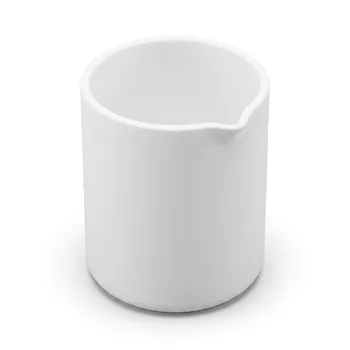
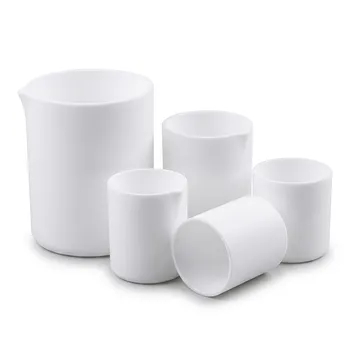
- Custom Thickened PTFE Beaker 3000ml Hotplate Heating High Temperature Deformation Resistant Fluoropolymer Labware
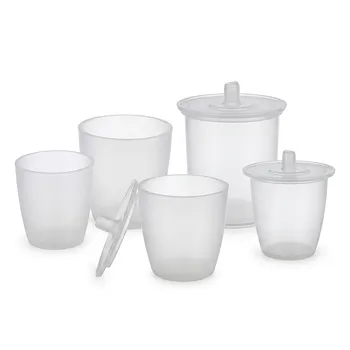
- High Purity PFA Crucible and Corrosion Resistant PTFE Beaker for Trace Analysis and Custom Laboratory Applications
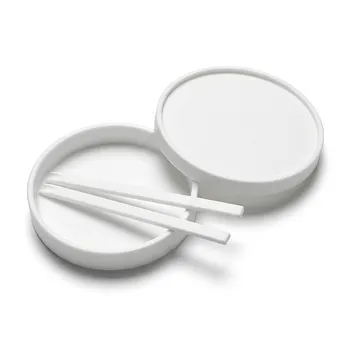
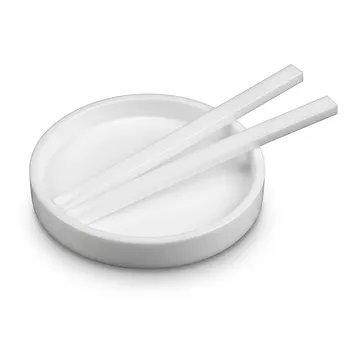
- Custom Polytetrafluoroethylene PTFE Petri Dishes 60mm Corrosion Resistant Low Background Labware
- Custom PTFE Petri Dish 30mm Corrosion Resistant Low Background Non Leaching Laboratory Ware
- Custom PTFE Petri Dish 120mm Diameter Corrosion Resistant Low Background High Purity Labware
People Also Ask
- Why is the material of the reaction vessel critical for tribocatalytic degradation? Boost Your Catalytic Yield!
- What are the limitations of pure PTFE in high temperature applications? Understanding the 200°C Ceiling
- What are the maximum operating temperatures and processing differences between PTFE and PFA, and how do they guide material selection for high-temperature laboratory apparatus?
- Are Teflon parts capable of withstanding high temperatures? Understanding the 260°C Limit for Performance
- What structural characteristics give fluoropolymer lab consumables their non-stick surface and low friction? Discover the molecular secrets behind PTFE's easy-release and smooth-slide performance.