Knowledge PTFE(Teflon) Parts What are the maximum operating temperatures and processing differences between PTFE and PFA, and how do they guide material selection for high-temperature laboratory apparatus?
Author avatar

Tech Team · Kintek

Updated 2 weeks ago

What are the maximum operating temperatures and processing differences between PTFE and PFA, and how do they guide material selection for high-temperature laboratory apparatus?


PTFE and PFA can both operate continuously at temperatures up to approximately 260°C, but they reach that performance through different processing routes. PTFE has the higher melting point, about 327°C, yet it cannot be conventionally melt-processed because of its extremely high melt viscosity. PFA melts at approximately 305°C and can be injection molded, extruded, and formed into complex, high-purity laboratory components.

The practical distinction is not usually the continuous temperature limit; it is fabrication and component design. Select PTFE for robust machined or compression-molded parts, and select PFA when complex molded geometry, translucency, smooth fluid paths, or high-purity sealing performance is more important.

How the Temperature Limits Compare

PTFE: Higher Melting Point, 260°C Continuous Use

PTFE has a melting point of approximately 327°C and a commonly specified maximum continuous operating temperature of 260°C.

Its higher melting point does not mean that PTFE should be operated near 327°C. The melting point describes a phase transition, while the continuous-use rating describes the temperature range in which the material can maintain its required mechanical and chemical performance over time.

PFA: Lower Melting Point, Similar Continuous Use

PFA has a melting point of approximately 305°C and also supports continuous operation up to about 260°C, depending on grade, component design, load, and exposure conditions.

PFA therefore provides a similar practical upper operating limit to PTFE despite its lower melting point. The exact rating should be confirmed against the selected manufacturer's datasheet, especially for pressure-containing parts and long-duration heating.

Why Melting Point and Service Temperature Differ

A laboratory component can lose dimensional stability, seal performance, or mechanical strength before it reaches its formal melting point.

Operating above the continuous-use limit can cause creep, deformation, loss of seal integrity, and eventual thermal degradation. The relevant design temperature is the service rating of the finished component, not simply the polymer's melting point.

The Processing Difference That Drives Selection

PTFE Is Non-Melt Processable

Standard PTFE has extremely high melt viscosity. When heated above its melting point, it does not flow like a conventional thermoplastic, so standard injection molding and melt extrusion are generally unsuitable.

PTFE is typically produced by compression molding and sintering, followed by precision CNC machining when a custom shape or tight dimensional control is required.

PFA Is Melt Processable

PFA includes perfluoroalkoxy side groups that reduce its melt viscosity. This allows it to be processed using conventional thermoplastic methods such as injection molding, extrusion, and blow molding.

That processability supports seamless or highly integrated designs, including tubing, valves, fittings, bottles, vessels, and intricate fluid-handling components.

Processing Affects Geometry and Surface Quality

PTFE is well suited to parts that can be machined from molded stock or formed as relatively substantial structures. This makes it practical for custom blocks, liners, reaction components, and heavy-duty apparatus.

PFA is advantageous when the design requires complex internal passages, molded connections, smooth surfaces, or translucent walls. These features can be difficult, expensive, or impossible to reproduce efficiently in conventional PTFE.

How the Materials Behave in Laboratory Apparatus

PTFE for Structural and Machined Components

PTFE provides excellent chemical resistance, low friction, and strong non-stick performance. Its robust fabrication route is suitable for microwave digestion vessels, vessel liners, reaction containers, stirrer components, gaskets, and custom-machined parts.

It is often the better choice when the apparatus must tolerate mechanical handling, sliding contact, or a demanding custom geometry produced through machining.

PFA for Fluid Handling and High-Purity Parts

PFA combines PTFE-like chemical inertness with melt-processability. It is particularly useful for fluid-transfer tubing, molded fittings, valves, reagent bottles, and high-purity containment components.

PFA can also provide translucency or optical clarity that helps operators inspect fluid level, flow, particles, or reaction progress. Its smooth molded surfaces can reduce locations where trace contaminants collect.

Both Materials Support Severe Chemical Service

Both PTFE and PFA offer exceptionally broad resistance to strong acids, bases, and many organic solvents. This makes both suitable for aggressive laboratory environments where ordinary plastics or metals may fail.

Chemical compatibility is therefore rarely the deciding factor between them. Manufacturing method, mechanical design, visibility, purity, and sealing requirements usually determine the better material.

Understanding the Trade-offs

Do Not Treat 260°C as a Universal Guarantee

The 260°C figure is a general continuous-use reference, not a guarantee for every geometry or operating condition. Pressure, wall thickness, applied load, thermal cycling, chemical exposure, and seal design can reduce the usable temperature.

Some supplier data may list different limits, including values around 225°C, 260°C, or higher for particular grades or short-term conditions. Use the rating for the specific compound and finished component rather than comparing isolated headline numbers.

PTFE Requires More Specialized Fabrication

PTFE's non-melt processability limits design flexibility and can increase manufacturing time and cost for complex shapes. Machining also introduces joints, interfaces, or dimensional considerations that may not exist in a molded PFA component.

This is a manageable trade-off when the required part benefits from PTFE's low friction, heavy-duty structure, or custom-machined form.

PFA Is Not Automatically the Stronger Choice

PFA's ability to be molded does not eliminate the need for mechanical design analysis. High temperatures can still produce creep, distortion, or seal relaxation, particularly in thin walls, pressurized tubing, and loaded fittings.

PFA should be selected for the combination of geometry, purity, and thermal exposure required, not simply because it is easier to process.

Design for Thermal Cycling and Sealing

Repeated heating and cooling can create dimensional changes and stress at joints, threaded interfaces, and seals. Apparatus exposed to microwave cycles or repeated reaction runs should be evaluated for thermal expansion, pressure, and chemical exposure together.

A material that survives a static temperature test may still fail after repeated cycles if the component design concentrates stress or relies on a marginal seal.

Making the Right Choice for Your Goal

Both polymers are viable for high-temperature laboratory apparatus, but the selection should follow the component's manufacturing and operating requirements.

  • If your primary focus is heavy-duty structural parts or custom-machined apparatus: Choose PTFE when compression molding and CNC machining provide the required strength, low friction, non-stick performance, and dimensional form.
  • If your primary focus is complex molded geometry or integrated fluid paths: Choose PFA because melt processing enables intricate fittings, valves, tubing, and reaction vessels.
  • If your primary focus is visual inspection or trace-clean fluid handling: Favor PFA for its translucency, smooth molded surfaces, and suitability for high-purity containers and fluid components.
  • If your primary focus is continuous exposure near 260°C: Treat PTFE and PFA as broadly comparable starting options, then verify the exact grade, pressure, load, thermal cycling, and seal design.
  • If your primary focus is minimizing sliding friction or maximizing non-stick behavior: Favor PTFE, which generally provides the lower coefficient of friction.

The right choice is determined by the complete operating envelope and fabrication method, not by melting point alone.

Summary Table:

Property PTFE PFA
Melting point ~327°C ~305°C
Continuous use temp ~260°C ~260°C
Processing method Compression molding + machining Injection molding, extrusion
Typical applications Heavy-duty machined parts, liners Complex fluid handling, translucent components

Need high-performance PTFE or PFA labware tailored to your application? At KINTEK, we specialize in custom manufacturing from PTFE and PFA—from essential labware to advanced reaction apparatus. For complex molded parts, our PFA capabilities ensure precision and purity; for machined components, our CNC expertise delivers robustness and accuracy. Contact us today to discuss your requirements and get a quote!

Related Products

People Also Ask

Related Products

Corrosion Resistant PFA Translucent Reaction Bottle with PTFE Screw Cap and Standard 19 24 Ground Joint Neck for High Temperature Lab Applications

Corrosion Resistant PFA Translucent Reaction Bottle with PTFE Screw Cap and Standard 19 24 Ground Joint Neck for High Temperature Lab Applications

High-performance PFA translucent reaction bottles with PTFE screw caps offer near-universal chemical resistance and high-purity trace analysis capabilities. Featuring standard 19/24 necks and exceptional thermal stability, these custom-engineered laboratory solutions ensure zero-contamination for demanding industrial chemical synthesis processes.

Laboratory Hydrothermal Synthesis Autoclave Reactor PTFE PPL Lined High Temperature High Pressure Explosion Proof Reaction Vessel

Laboratory Hydrothermal Synthesis Autoclave Reactor PTFE PPL Lined High Temperature High Pressure Explosion Proof Reaction Vessel

Achieve precise material synthesis with this high pressure hydrothermal autoclave reactor featuring interchangeable PTFE or PPL liners. Engineered for laboratory safety and superior chemical resistance, it delivers highly reliable high temperature performance under the most demanding experimental research conditions.

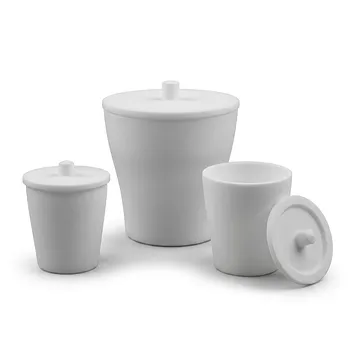
High Purity PFA Crucible and Corrosion Resistant PTFE Beaker for Trace Analysis and Custom Laboratory Applications

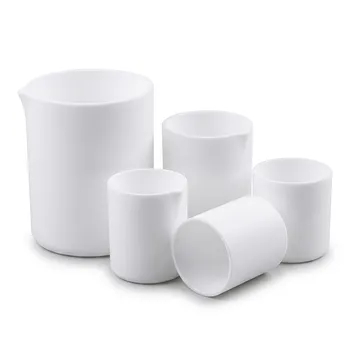
High Purity PFA Crucible and Corrosion Resistant PTFE Beaker for Trace Analysis and Custom Laboratory Applications

Discover high-purity PFA crucibles and PTFE beakers engineered for extreme chemical resistance and ultra-low background noise. These customizable fluoropolymer solutions ensure precision in trace analysis, semiconductor processing, and demanding industrial laboratory environments worldwide. Contact us for bespoke engineering quotes.

High Purity Custom PTFE Beaker 5000ml With Lid Hot Plate Heating Compatible High Temperature Chemical Labware

High Purity Custom PTFE Beaker 5000ml With Lid Hot Plate Heating Compatible High Temperature Chemical Labware

Engineered for excellence, our custom 5000ml PTFE beakers provide superior chemical inertness and thermal stability up to 260°C. Perfect for hot plate heating, these bespoke vessels ensure high-purity results for aggressive industrial laboratory and chemical processing applications.

High Temperature Resistant Thickened PTFE Beaker 2000ml for Chemical Processing and Laboratory Trace Analysis

High Temperature Resistant Thickened PTFE Beaker 2000ml for Chemical Processing and Laboratory Trace Analysis

This thickened 2000ml PTFE beaker is engineered for high-temperature chemical resistance, withstanding hot plate heating up to 200°C without deformation. Our custom fluoropolymer vessels provide exceptional durability for demanding laboratory trace analysis and corrosive fluid processing applications.

High Temperature Corrosion Resistant PTFE Reaction Flask Custom Multi Neck Laboratory Vessel with Flat or U Bottom

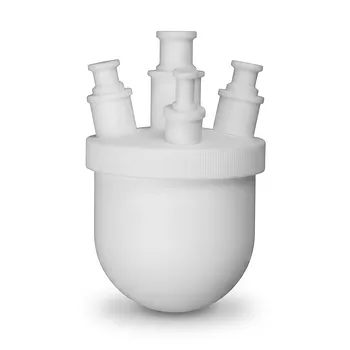
High Temperature Corrosion Resistant PTFE Reaction Flask Custom Multi Neck Laboratory Vessel with Flat or U Bottom

High-performance PTFE reaction flasks offer unmatched chemical resistance and thermal stability for aggressive laboratory synthesis. These customizable multi-neck vessels ensure high-purity results in pharmaceutical and semiconductor research through precision CNC fabrication and inert fluoropolymer construction.

Custom PTFE Multilayer Reaction Apparatus High Temperature Corrosion Resistant Threaded Modular Sieve System

Custom PTFE Multilayer Reaction Apparatus High Temperature Corrosion Resistant Threaded Modular Sieve System

Enhance chemical processing with this custom PTFE multilayer reaction apparatus featuring corrosion-resistant threaded connections and integrated sieve plates. Designed for high-temperature stability and precision filtration in demanding laboratory environments across pharmaceutical and semiconductor research and advanced industrial applications.

Custom Thickened PTFE Beaker 3000ml Hotplate Heating High Temperature Deformation Resistant Fluoropolymer Labware

Custom Thickened PTFE Beaker 3000ml Hotplate Heating High Temperature Deformation Resistant Fluoropolymer Labware

Professional 3000ml thickened PTFE beaker designed for reliable hotplate heating up to 200°C. Engineered for maximum chemical inertness and deformation resistance, this custom-fabricated laboratory vessel ensures safe, high-purity processing in demanding industrial and research environments.

High Temperature Resistant PTFE Thermal Insulation Board Corrosion Resistant Metal Free Fluoropolymer Stand for Ultra Clean Laboratories

High Temperature Resistant PTFE Thermal Insulation Board Corrosion Resistant Metal Free Fluoropolymer Stand for Ultra Clean Laboratories

Advanced custom PTFE thermal insulation boards and metal-free stands designed for ultra-clean laboratory environments. These high-purity fluoropolymer solutions offer exceptional corrosion resistance and thermal stability for demanding trace analysis and semiconductor manufacturing processes.

Corrosion Resistant PTFE Support with PFA Transparent Reaction Tank and High Purity PFA Sampling Tube for Trace Analysis

Corrosion Resistant PTFE Support with PFA Transparent Reaction Tank and High Purity PFA Sampling Tube for Trace Analysis

Optimized for trace analysis and corrosive chemical processing this high purity PTFE support and transparent PFA reaction system ensures zero heavy metal contamination custom engineered for laboratories demanding superior chemical resistance and precision fluid transfer in sensitive industrial applications

Large Scale PTFE Beakers and Flasks for High Temperature Corrosion Resistant Laboratory Applications with Custom CNC Fabrication

Large Scale PTFE Beakers and Flasks for High Temperature Corrosion Resistant Laboratory Applications with Custom CNC Fabrication

High-performance PTFE beakers and flasks offering superior chemical resistance and thermal stability for demanding laboratory environments. Fully customizable large-scale labware engineered with precision CNC fabrication to meet specific industrial requirements for high-purity trace analysis and chemical processing.

High Purity PFA Constant Pressure Condensation Reaction System Acid Resistant High Temperature Customizable Teflon Labware

High Purity PFA Constant Pressure Condensation Reaction System Acid Resistant High Temperature Customizable Teflon Labware

Engineered for extreme purity, this PFA constant pressure condensation reaction system offers unparalleled acid resistance and thermal stability. Fully customizable for ultra-trace analysis and semiconductor applications, ensuring sample integrity in the most demanding industrial and laboratory environments.

Customizable PTFE Heat Insulation Plate High Temperature Corrosion Resistant Laboratory Support Layered Multi Tier Stand

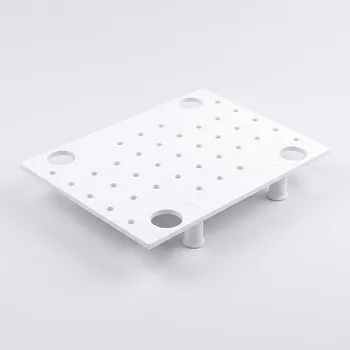
Customizable PTFE Heat Insulation Plate High Temperature Corrosion Resistant Laboratory Support Layered Multi Tier Stand

High-performance customizable PTFE heat insulation plates offer superior 250°C thermal stability and chemical resistance. Expertly engineered for laboratory environments, these bespoke layered supports ensure maximum durability and precision for demanding industrial fluid or chemical processing applications in modern facilities.

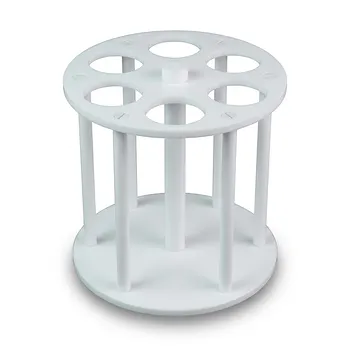
Custom PFA Microcolumn Racks and PTFE Machined Low Background Corrosion Resistant Laboratory Fixtures

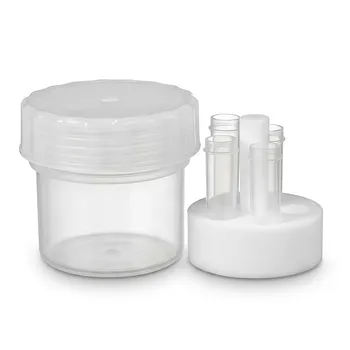
Custom PFA Microcolumn Racks and PTFE Machined Low Background Corrosion Resistant Laboratory Fixtures

Optimize trace analysis with our custom PFA microcolumn racks and PTFE machined fixtures. These corrosion-resistant, low-background laboratory solutions offer exceptional durability and high-purity performance for demanding chemical processing and high-end research applications across diverse industrial environments today.

Custom PTFE Beaker 350ml High Purity Laboratory Vessel with Optional Lid for Hot Plate Heating Applications

Custom PTFE Beaker 350ml High Purity Laboratory Vessel with Optional Lid for Hot Plate Heating Applications

Premium 350ml PTFE beaker designed for aggressive chemical processing and high-temperature laboratory applications. Fully customizable with lids and hot plate compatibility up to 200 degrees Celsius, ensuring superior chemical inertness and long-term durability in critical research environments.

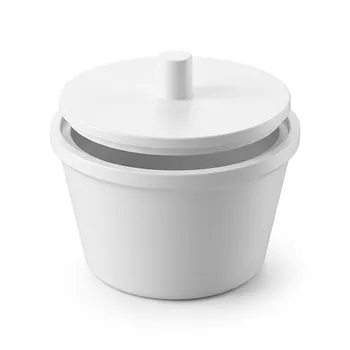
Custom PTFE Laboratory Crucibles High Purity Chemical Resistant White Labware for Hot Plate Heating

Custom PTFE Laboratory Crucibles High Purity Chemical Resistant White Labware for Hot Plate Heating

Optimize trace analysis with our custom high-purity PTFE crucibles. Engineered for 260°C resistance and zero leaching, these chemical-resistant vessels integrate perfectly with laboratory hot plates for demanding acid digestion and sample preparation workflows in premium industrial laboratory environments worldwide today.

Heat Resistant Custom PTFE Laboratory Beaker for Hot Plate Heating and Trace Analysis

Heat Resistant Custom PTFE Laboratory Beaker for Hot Plate Heating and Trace Analysis

High-performance custom PTFE beakers designed for reliable hot plate heating up to 260°C. Engineered with superior chemical resistance and anti-deformation properties, these 30ml laboratory vessels ensure high-purity trace analysis and long-term durability in demanding industrial chemical processing environments.

High Purity PTFE PFA Plastic Crucible for Corrosion Resistant Acid Digestion and Trace Analysis

High Purity PTFE PFA Plastic Crucible for Corrosion Resistant Acid Digestion and Trace Analysis

High-purity PTFE PFA plastic crucibles designed for trace analysis and acid digestion. Offering extreme corrosion resistance and low background levels, these heat-resistant vessels withstand 250°C for reliable sample preparation in demanding laboratory and industrial environments worldwide.

Custom PFA Separatory Funnel Rack PTFE Machined Laboratory Support Stand Corrosion Resistant Low Background Fluoropolymer Fixture

Custom PFA Separatory Funnel Rack PTFE Machined Laboratory Support Stand Corrosion Resistant Low Background Fluoropolymer Fixture

Custom-engineered PFA and PTFE separatory funnel racks provide absolute chemical resistance and ultra-low background levels for high-purity analytical laboratories. Precision-machined for durability, these fluoropolymer supports eliminate contamination risks in demanding semiconductor, pharmaceutical, and trace metal analysis industrial workflows.

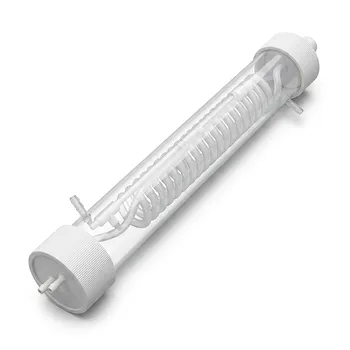
High Purity PFA Condenser Serpentine Straight HF Resistant Reaction Apparatus Custom Circulation Column

High Purity PFA Condenser Serpentine Straight HF Resistant Reaction Apparatus Custom Circulation Column

Engineered for semiconductor and trace analysis, these custom PFA condensers and reaction columns offer unrivaled HF resistance and high-temperature stability. Our CNC-fabricated laboratory solutions ensure maximum purity and chemical compatibility for demanding industrial chemical processing and research applications.


Leave Your Message