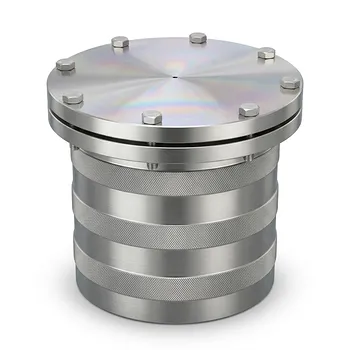
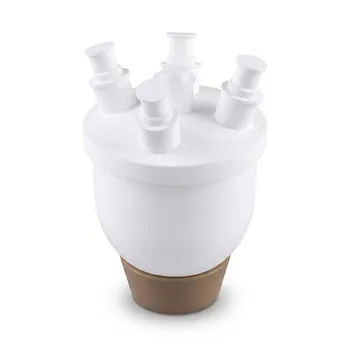
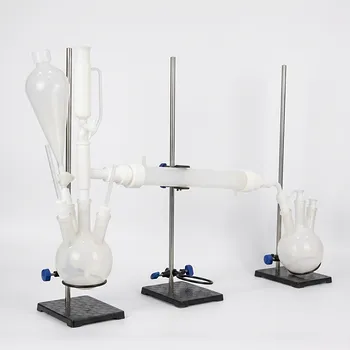
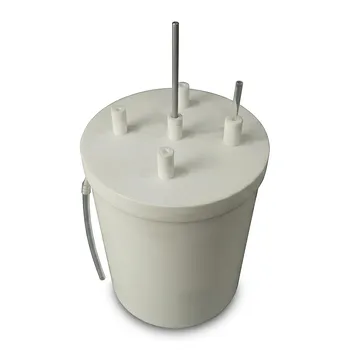
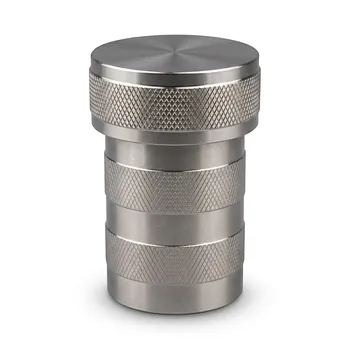
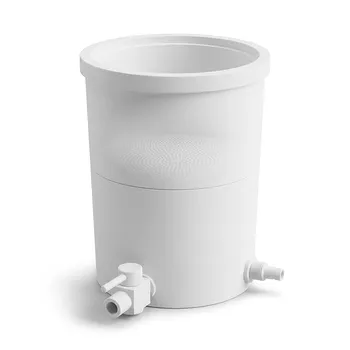
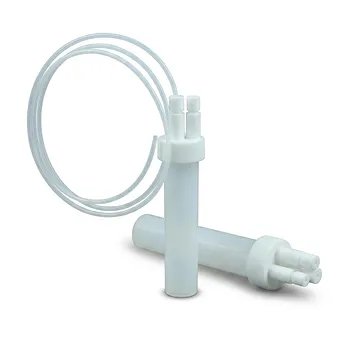
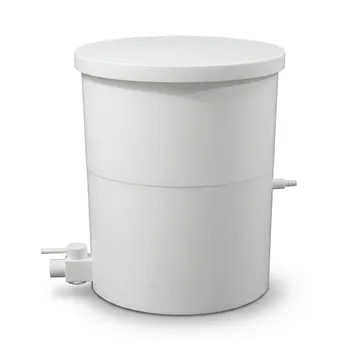
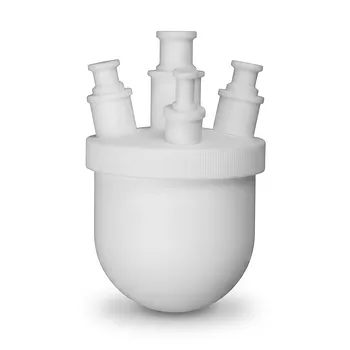
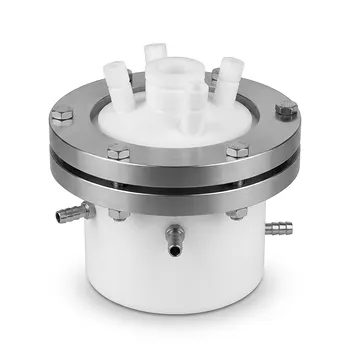
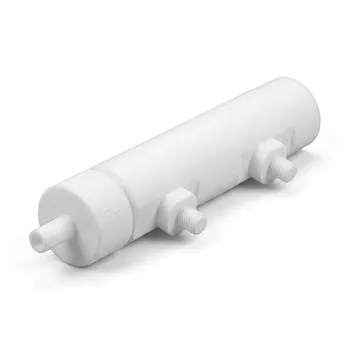
High-pressure reactors and their internal liners are essential for Diethylenetriamine (Dien) grafting because they facilitate chemical coupling at temperatures far exceeding the boiling points of standard solvents. The reactor provides a pressurized, sealed environment to prevent solvent volatilization, while the liner—typically made of PTFE or PFA—serves as a chemically inert barrier. This setup ensures that the corrosive alkaline amines do not damage the vessel and that no metal impurities contaminate the resulting product.
Core Takeaway: The high-pressure reactor acts as a thermal pressure chamber that forces reactions to occur in the liquid phase at high temperatures, while the internal liner provides the necessary chemical "blanket" to protect both the equipment and the purity of the synthesis.
Facilitating the Thermodynamics of Dien Grafting
Overcoming Boiling Point Limitations
Dien grafting reactions typically require high temperatures, such as 160 °C, to drive the chemical coupling of nitrile and amine groups. In an open system, the solvents required for these precursors would volatilize long before reaching these temperatures. The high-pressure reactor creates a sealed environment that maintains the liquid phase, allowing the reaction to proceed efficiently under "superheated" conditions.
Enabling Uniform Precursor Interaction
By maintaining high pressure, the reactor ensures that the Diethylenetriamine remains in close contact with the substrate or other precursors. This controlled environment is critical for the uniform reduction and assembly of materials. Without this pressure, the inconsistent density of the reaction media would lead to poor grafting density and non-uniform product quality.
The Protective Role of Internal Liners
Resisting Corrosive Alkaline Reagents
Diethylenetriamine is an alkaline amine reagent, which can be highly corrosive to standard stainless steel reactor walls at elevated temperatures. High-purity liners made from PTFE (Polytetrafluoroethylene) or PFA are used because they are virtually immune to chemical attack from strong bases. This isolation prevents the "pitting" or erosion of the outer pressure vessel.
Eliminating Metal Ion Contamination
In high-precision synthesis, even trace amounts of iron, nickel, or chromium from a steel reactor can poison a catalyst or alter the electronic properties of the product. The liner acts as a critical reaction carrier that ensures the synthesized products are free from metal impurity interference. This is especially vital when the grafting process is used to create materials for catalytic or electronic applications.
Improving Post-Reaction Recovery
The non-stick properties of fluoropolymer liners like PTFE facilitate the easy recovery of the grafted product after the experiment is complete. Because the reaction media does not adhere to the liner walls, cleaning is simplified and the risk of cross-contamination between different experimental batches is significantly reduced.
Understanding the Trade-offs and Limitations
Thermal Constraints of Liner Materials
While liners provide excellent chemical resistance, they have strict temperature limits that must be observed to prevent failure. Standard PTFE liners are generally rated for use up to 220 °C; exceeding this can cause the liner to soften or deform, compromising the seal. For reactions requiring higher temperatures, specialized materials like PPL (Para-polyphenylene) must be substituted.
Pressure Sealing and Mechanical Stress
The liner must be perfectly sized to the reactor vessel to ensure a proper seal under high-pressure conditions. If there is a mismatch, the "cold flow" of the plastic liner under pressure can lead to leaks or even a catastrophic release of pressure. Users must balance the thickness of the liner with the need for efficient heat transfer from the reactor's external heating element.
How to Optimize Your Grafting Reaction Setup
To achieve the best results in your Diethylenetriamine grafting process, consider the following recommendations based on your specific requirements:
- If your primary focus is maximum product purity: Utilize high-purity PFA liners, as they offer lower trace-metal extractables than standard PTFE.
- If your primary focus is high-throughput or rapid cleaning: Select PTFE liners for their superior non-stick properties, which minimize material loss during recovery.
- If your primary focus is operating above 220 °C: Opt for a PPL (Para-polyphenylene) liner, which maintains structural integrity at higher thermal ranges than fluoropolymers.
- If your primary focus is preventing vessel failure: Ensure the outer stainless steel shell is regularly inspected for signs of stress, even when using a liner, to guarantee the safety of the pressurized system.
By matching the specific material properties of the liner to the thermal and chemical demands of the Dien grafting reaction, you ensure both the safety of your laboratory and the integrity of your chemical results.
Summary Table:
| Feature | Role in Dien Grafting | Material Benefit |
|---|---|---|
| Pressure Containment | Prevents solvent volatilization at 160°C+ | Enables superheated liquid-phase reactions |
| Chemical Inertness | Resists corrosive alkaline amine reagents | PTFE/PFA liners prevent vessel corrosion |
| Purity Control | Eliminates metal ion leaching | Protects catalysts from Ni/Cr/Fe contamination |
| Surface Property | Non-stick for easy product recovery | Simplifies cleaning and reduces cross-contamination |
Elevate Your Chemical Synthesis with KINTEK
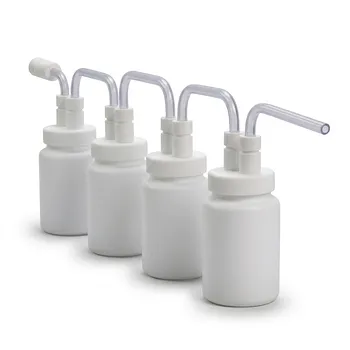
Maximize the precision and purity of your grafting reactions with KINTEK’s high-performance fluoropolymer solutions. Whether you require everyday basic labware like beakers, crucibles, and reagent bottles or advanced reaction apparatus such as hydrothermal synthesis liners, microwave digestion vessels, and custom electrochemical cells, we provide the ultimate protection against corrosion and contamination.
From fluid transfer components (tubing, valves) to high-volume consumables (O-rings, gaskets, stirring bars), KINTEK manufactures virtually every laboratory supply imaginable from PTFE and PFA. Backed by end-to-end custom CNC fabrication, we deliver everything from complex non-standard machined parts to bespoke laboratory setups tailored to your specific research needs.
Ready to optimize your lab's performance? Contact us today to discuss your custom fluoropolymer requirements!
References
- Yun Lee, Youngkyun Jung. Controlled in-situ crystallization in amine-rich millicapsules for hyper-efficient copper recovery. DOI: 10.1007/s42114-025-01439-2
This article is also based on technical information from Kintek Knowledge Base .
Related Products
- High Pressure Custom TFM Reactor Stainless Steel Outer Vessel PTFE Inner Cup for Corrosive Synthesis
- Custom TFM Reaction Vessel with Stainless Steel Jacket and PTFE Inner Cup for High Corrosion Resistance
- High Performance Customizable PTFE Reaction Vessel and Corrosion Resistant Polytetrafluoroethylene Flask for Chemical Laboratory Use
- High Purity PFA Constant Pressure Condensation Reaction System Acid Resistant High Temperature Customizable Teflon Labware
- PTFE Lined High Pressure Digestion Vessel 50ml High Temperature Hydrothermal Synthesis Tank
People Also Ask
- Why is a PTFE-lined reactor required for Mn2O3 synthesis? Achieve High Purity & Corrosion Resistance
- What is the technical value of 180 bar pressure for MgO nanostructures? Unlock Superior Crystallinity and Morphology
- What are the technical advantages of using high-pressure PTFE reaction vessels during metal digestion? Expert Insights.
- How does the regulation of initial pressure within a high-pressure reaction system affect the production of MIL-100(Fe)?
- Why is a high-pressure reactor necessary for the esterification reaction between oleic acid and methanol at 150°C? Guide