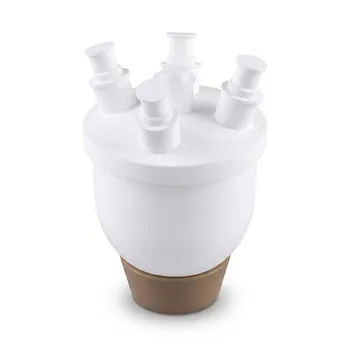
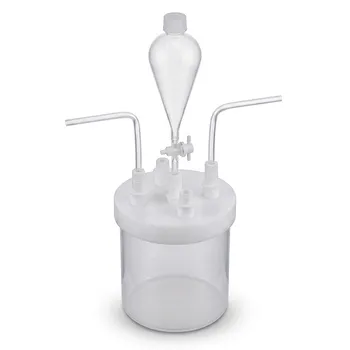
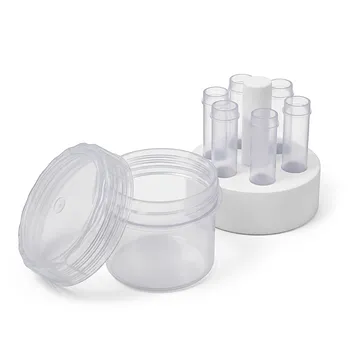
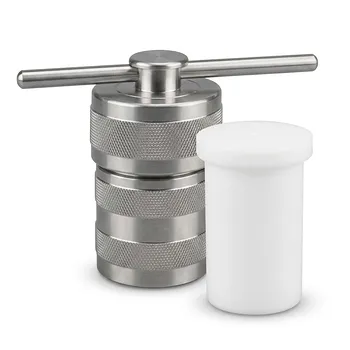
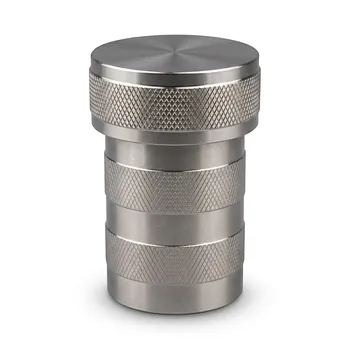
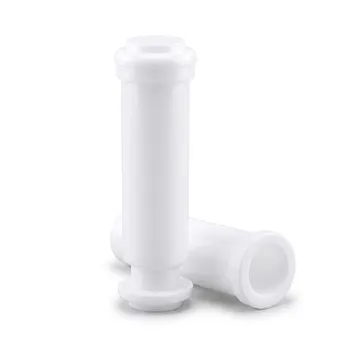
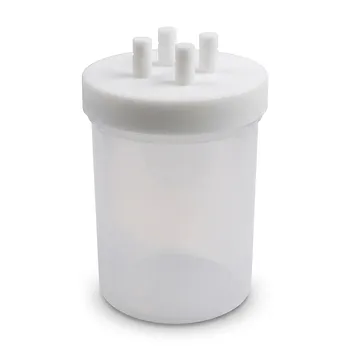
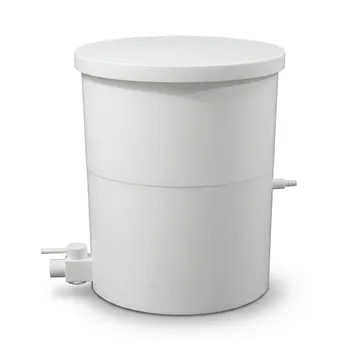
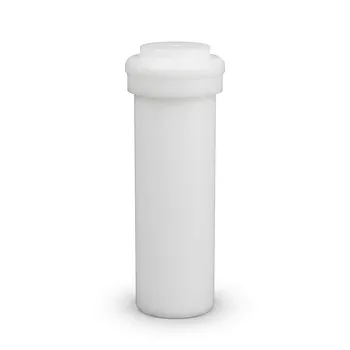
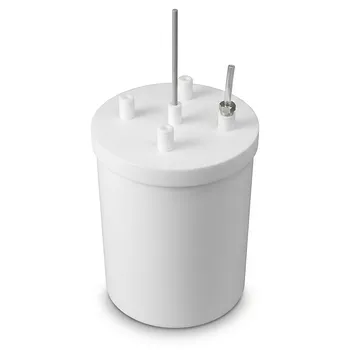
High-pressure reaction vessels and chemically inert liners are the fundamental components required to create the extreme physical environments necessary for hydrothermal carbonization. They allow aqueous sugar or carbohydrate solutions to be heated far beyond their boiling points while remaining liquid, facilitating the controlled decomposition and nucleation of precursors into high-purity, uniform carbon nanoparticles.
These tools provide a sealed, pressurized environment that accelerates carbonization reactions and ensures product uniformity. The inert liner acts as a critical barrier, preventing chemical contamination and protecting the vessel from corrosive reactants to maintain the integrity of the nanomaterials.
Facilitating the Hydrothermal Environment
Maintaining Liquid State Above Boiling Points
High-pressure vessels, often referred to as autoclaves, create a sealed system where aqueous solutions can reach temperatures exceeding 220°C. In this closed environment, the liquid generates autogenous pressure, which prevents the solvent from evaporating. This allows the synthesis to occur in a liquid phase at temperatures where the solvent would normally be a gas.
Accelerating Nucleation and Growth
The extreme physical conditions within the vessel significantly enhance the reactivity of raw materials. This environment promotes the rapid decomposition of precursor complexes and triggers homogeneous nucleation. The result is the formation of spherical carbon particles with highly controlled and uniform dimensions.
Influencing Particle Morphology
By maintaining a stable, high-pressure state, these vessels allow researchers to tune the morphology of the resulting nanomaterials. Beyond simple spheres, this controlled environment can be used to direct the growth of more complex structures like nanowires or nanosheets. This is achieved by reaching states near the solvent's critical point, which increases solubility and reaction kinetics.
Ensuring Chemical Purity and System Longevity
Preventing Material Contamination
Chemically inert liners, typically made from high-purity fluoropolymers like PTFE (Teflon) or PFA, are essential for maintaining product quality. They ensure that no metallic impurities from the vessel's outer shell are leached into the reaction at high temperatures. This is critical for applications where high phase purity and precise chemical stoichiometry are required.
Protecting the Vessel from Corrosion
In many synthesis processes, the reaction environment can be highly corrosive or acidic. The inert liner acts as a physical shield, protecting the metal walls of the high-pressure reactor from damage. This not only extends the life of the equipment but also prevents the introduction of corrosion byproducts into the synthesized carbon nanoparticles.
Supporting Diverse Chemical Pathways
Liners made of materials like para-polyphenylene (PPL) allow for even higher temperature thresholds than standard PTFE. This flexibility enables the synthesis of advanced materials, such as carbon-titanium dioxide heterojunctions, by providing a stable environment for simultaneous carbonization and crystallization. This versatility is vital for creating electrochemically active materials.
Understanding the Trade-offs
Temperature and Pressure Limitations
While PTFE liners are highly inert, they have a strict thermal ceiling, typically around 250°C, beyond which they may deform or release toxic vapors. If a synthesis requires temperatures between 550°C and 700°C, researchers must transition to specialized inert atmospheres or different vessel materials. Using a liner beyond its rated temperature can lead to vessel failure or sample contamination.
Heat Transfer Inefficiency
Inert liners act as thermal insulators, which can lead to a lag time between the furnace temperature and the actual temperature of the reactants. This necessitates careful calibration of heating cycles to ensure the internal environment reaches the desired state. Failure to account for this can result in incomplete carbonization or inconsistent particle sizes.
Selecting the Right Components for Your Synthesis
When designing a synthesis protocol for carbon nanoparticles, your choice of vessel and liner should be dictated by your specific material requirements and safety constraints.
- If your primary focus is high purity and uniformity: Use a high-purity PTFE liner within a stainless steel autoclave to ensure zero metallic contamination during the hydrothermal process.
- If your primary focus is reaching extreme temperatures (above 250°C): Opt for a PPL liner or a specialized furnace setup that utilizes an inert gas atmosphere rather than a standard fluoropolymer-lined vessel.
- If your primary focus is morphology control (e.g., nanowires): Utilize a high-pressure reactor capable of reaching near-critical solvent states to maximize the solubility and growth direction of your precursors.
The synergy between the structural strength of the high-pressure vessel and the chemical resistance of the inert liner is what makes the precise synthesis of carbon nanoparticles possible.
Summary Table:
| Component | Key Role | Material Advantage |
|---|---|---|
| High-Pressure Vessel | Maintains liquid phase >100°C | Enables autogenous pressure for hydrothermal synthesis |
| Inert Liner (PTFE/PFA) | Prevents chemical contamination | High chemical resistance & protection against corrosion |
| PPL Liner | High-temperature stability | Supports advanced synthesis up to 280°C+ |
| Sealed Environment | Controls particle morphology | Uniform nucleation for spherical or wire-like structures |
Elevate Your Research with KINTEK’s High-Performance Fluoropolymers
Maximize the purity and precision of your nanoparticle synthesis with KINTEK’s specialized laboratory supplies. From everyday PFA beakers and centrifuge tubes to advanced hydrothermal synthesis liners, microwave digestion vessels, and custom-machined reaction components, we provide the chemically inert environment your research demands.
Our end-to-end custom CNC fabrication allows us to deliver everything from high-volume general consumables to bespoke laboratory setups designed for extreme performance. Whether you need high-purity trace analysis tools or complex fluid transfer components like PTFE valves and fittings, KINTEK maintains an exclusive focus on high-performance materials to ensure your system longevity and product integrity.
Ready to optimize your lab's performance? Contact us today for custom solutions and high-purity supplies!
References
- Pietro Di Matteo, Águeda Sonseca. Carbon Nanoparticle-Loaded PLA Nanofibers via Electrospinning for Food Packaging. DOI: 10.3390/jcs9010025
This article is also based on technical information from Kintek Knowledge Base .
Related Products
- PTFE Lined High Pressure Digestion Vessel 50ml High Temperature Hydrothermal Synthesis Tank
- Custom TFM Reaction Vessel with Stainless Steel Jacket and PTFE Inner Cup for High Corrosion Resistance
- High Pressure Custom TFM Reactor Stainless Steel Outer Vessel PTFE Inner Cup for Corrosive Synthesis
- High Purity PFA Constant Pressure Condensation Reaction System Acid Resistant High Temperature Customizable Teflon Labware
- High Temperature PTFE Reaction Flask 1000ml Single Neck Round and Flat Bottom Laboratory Bottle
People Also Ask
- What are the benefits of using a PTFE-lined vessel for carbon-sulfur cathode treatment? Maximize Purity & Performance
- Why are PTFE-lined pressure digestion vessels required for the preparation of Ag/CeO2 catalysts? Purity & Performance
- What is the function of high-pressure PTFE digestion vessels in mineral analysis? Optimize Sample Mineralization
- What safety features are typically incorporated into high-pressure PTFE digestion vessel designs? Ensure Lab Safety
- What is the function of PTFE lined high-pressure vessels in g-C3N4 synthesis? Achieve High-Purity Material Growth