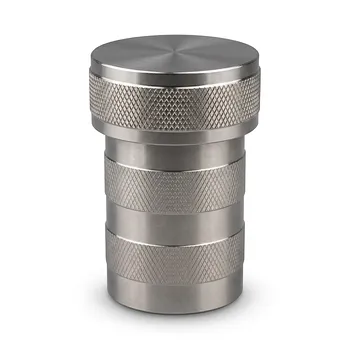
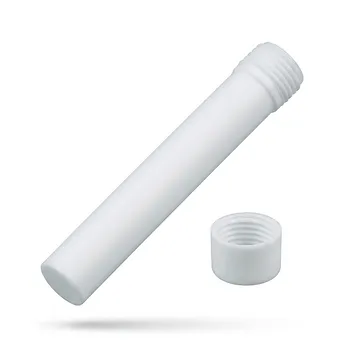
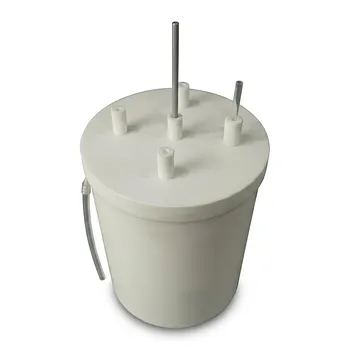
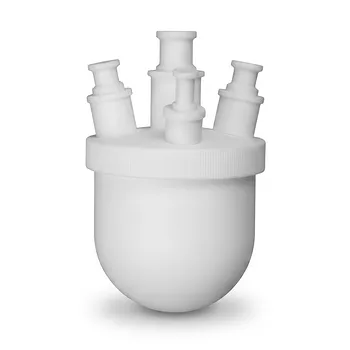
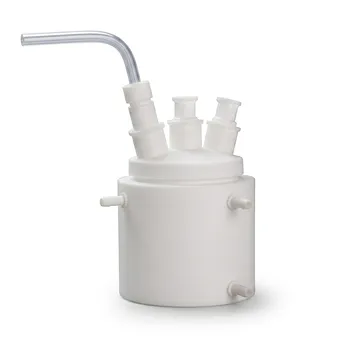
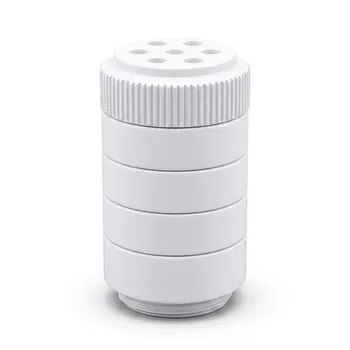
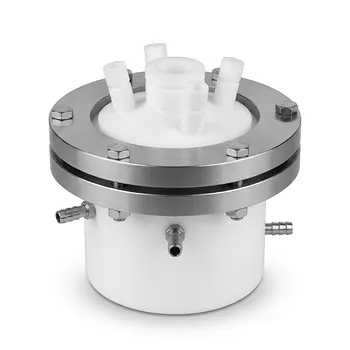
High-pressure hydrothermal reactors and their liners act as the fundamental "reaction chambers" that enable the precise synthesis of PtAu/3D graphene aerogels. The reactor provides the necessary high-temperature and high-pressure environment for the uniform reduction and assembly of Platinum (Pt) and Gold (Au) onto the graphene framework. The internal PTFE (Polytetrafluoroethylene) or PPL (Para-polyphenylene) liners ensure a chemically inert environment, preventing reactor corrosion and protecting the purity of the catalyst from metal ion contamination.
Core Takeaway: The reactor and its liner work in tandem to provide a controlled, high-energy environment while maintaining absolute chemical purity. Without this containment system, the catalytic activity of the PtAu nanoparticles would be compromised by impurities, and the 3D graphene structure would fail to assemble uniformly.
The Reactor’s Role in Structural Assembly
Facilitating Uniform Precursor Reduction
The high-pressure hydrothermal reactor creates an environment where temperature and pressure can exceed the boiling point of solvents. This "superheated" state is essential for the simultaneous and uniform reduction of Platinum and Gold precursors.
By controlling these variables, the reactor ensures that the metal nanoparticles deposit evenly across the graphene surface. This leads to a more efficient distribution of active sites, which is critical for the resulting aerogel's catalytic performance.
Driving the 3D Graphene Self-Assembly
The reactor provides the thermal energy required for graphene oxide sheets to undergo cross-linking and reduction. Under high-pressure conditions, these sheets assemble into a continuous 3D porous network rather than simply stacking into graphite.
This 3D architecture is vital because it provides a high surface area for the PtAu particles to reside. The reactor effectively "locks" this structure in place during the solvothermal process.
The Liner as a Chemical and Purity Barrier
Ensuring High-Purity Catalytic Activity
The internal liners, made from PTFE or PPL, are chosen for their extreme chemical inertness. They prevent the reaction solution from interacting with the stainless steel walls of the reactor vessel.
If the reaction liquid touched the metal walls, impurity ions (like iron or nickel) could leach into the solution. These impurities would poison the PtAu nanoparticles, significantly reducing their catalytic activity and surface purity.
Resistance to Corrosive Solvents
Solvothermal synthesis often involves strong bases or aggressive organic solvents that would rapidly corrode a standard metal reactor. The liner acts as a sacrificial but durable shield that can withstand these harsh chemicals at high temperatures.
PTFE is typically used for reactions up to 200-220°C, while PPL (Para-polyphenylene) is preferred for higher temperature requirements. This chemical resistance ensures the structural integrity of both the equipment and the synthesized material.
Facilitating Product Recovery and Cleaning
The non-stick properties of PTFE and PPL are a significant practical advantage during laboratory synthesis. These materials prevent the newly formed 3D graphene aerogel from adhering to the chamber walls.
This ensures that the delicate aerogel structure can be recovered intact after the reaction is complete. It also simplifies the cleaning process, preventing cross-contamination between different synthesis batches.
Understanding the Technical Trade-offs
Temperature and Pressure Constraints
While polymer liners provide chemical safety, they introduce thermal limits to the synthesis process. Exceeding the rated temperature of a PTFE liner (typically 220°C) can cause the material to soften or release toxic fumes, potentially ruining the experiment.
Differential Thermal Expansion
Polymer liners and stainless steel outer shells expand at different rates when heated. If a reactor is cooled too quickly, the liner may deform or "creep," which can lead to sealing failures or difficulty removing the liner from the autoclave body.
How to Optimize Your Synthesis Setup
To achieve the best results when synthesizing PtAu/3D graphene aerogels, consider the following recommendations based on your specific synthesis goals:
- If your primary focus is maximum catalytic purity: Always use a high-purity PTFE liner and ensure it is meticulously cleaned with acid between runs to remove any trace metal ions.
- If your primary focus is high-temperature stability (above 220°C): Opt for a PPL (Para-polyphenylene) liner, as it offers better structural integrity and thermal resistance than standard PTFE in high-heat solvothermal processes.
- If your primary focus is structural integrity of the aerogel: Ensure the reactor is cooled slowly to room temperature to prevent mechanical stress on the 3D graphene framework during the transition from high pressure.
By carefully selecting and maintaining these containment systems, researchers can ensure the production of high-performance, uncontaminated nanostructures.
Summary Table:
| Component | Primary Function | Key Benefit |
|---|---|---|
| Hydrothermal Reactor | Environment Control | Drives uniform reduction and 3D graphene self-assembly via high temp/pressure. |
| PTFE/PPL Liner | Chemical Barrier | Prevents metal ion contamination and reactor corrosion; ensures catalytic purity. |
| Material Choice | Thermal Stability | PTFE (up to 220°C) or PPL (high-temp) options to match synthesis requirements. |
| Non-stick Surface | Product Recovery | Facilitates the intact removal of delicate aerogels and simplifies cleaning. |
Elevate Your Synthesis Precision with KINTEK
Maximize the performance of your catalysts and nanomaterials with KINTEK’s high-performance fluoropolymer solutions. From everyday basic labware like beakers, crucibles, and reagent bottles to advanced hydrothermal synthesis liners and microwave digestion vessels, we provide the chemically inert environment your research demands.
Whether you need standard consumables—such as tubing, fittings, filters, and stirring bars—or complex custom CNC-fabricated components for bespoke laboratory setups, KINTEK is your absolute partner in PTFE and PFA manufacturing. We support everything from high-purity trace analysis to advanced reaction apparatus like electrochemical cells and battery testing fixtures.
Ready to ensure absolute purity in your next experiment? Contact KINTEK today to discover how our expert fabrication and high-volume capabilities can transform your laboratory efficiency.
References
- Xiao Yu, Qixian Zhang. One‐Pot Solvothermal Synthesis of PtAu/3d Graphene Aerogels for Methanol Fuel Cells. DOI: 10.1002/elan.12051
This article is also based on technical information from Kintek Knowledge Base .
Related Products
- High Pressure Custom TFM Reactor Stainless Steel Outer Vessel PTFE Inner Cup for Corrosive Synthesis
- PTFE Lined High Pressure Digestion Vessel 50ml High Temperature Hydrothermal Synthesis Tank
- Custom TFM Reaction Vessel with Stainless Steel Jacket and PTFE Inner Cup for High Corrosion Resistance
- High Temperature Corrosion Resistant Hydrothermal Synthesis Reactor with TFM Inner Liner and Straight Cylinder Design
- High Purity TFM Microwave Digestion Vessels PTFE Acid Evaporation Liners Domestic GT-400 Equivalent Laboratory Reaction Containers
People Also Ask
- Why is a PTFE-lined reactor required for Mn2O3 synthesis? Achieve High Purity & Corrosion Resistance
- What is the technical value of 180 bar pressure for MgO nanostructures? Unlock Superior Crystallinity and Morphology
- What are the technical advantages of using high-pressure PTFE reaction vessels during metal digestion? Expert Insights.
- How does the regulation of initial pressure within a high-pressure reaction system affect the production of MIL-100(Fe)?
- Why is a high-pressure reactor necessary for the esterification reaction between oleic acid and methanol at 150°C? Guide