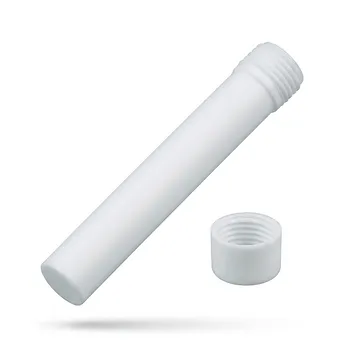
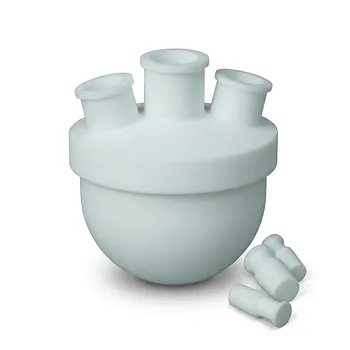
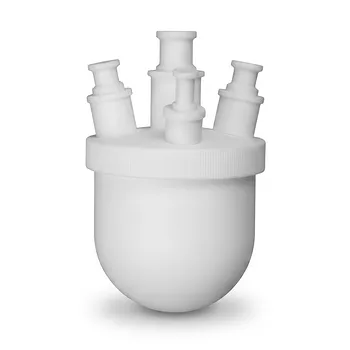
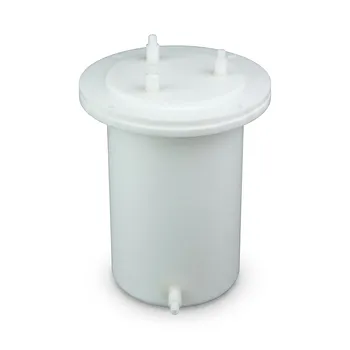
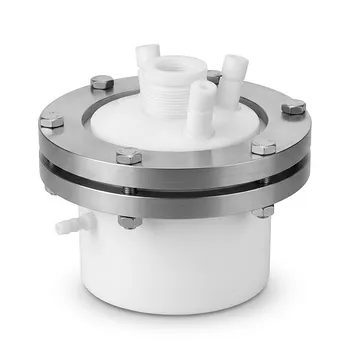
The PTFE-lined hydrothermal synthesis vessel serves as the critical reaction chamber that enables the precise crystallization of bismuth-based metal-organic frameworks (Bi-MOFs). It provides a unique combination of chemical inertness, high-pressure containment, and thermal stability required for solvothermal processes. By creating a sealed environment, the vessel allows reactants like terephthalic acid and bismuth salts to interact at temperatures far exceeding their atmospheric boiling points, typically reaching 180°C to 220°C.
Core Takeaway: The PTFE liner acts as a chemically neutral barrier that facilitates subcritical solvent conditions, ensuring that Bi-MOFs achieve high crystallinity and structural purity by preventing metal ion contamination from the reactor's outer shell.
Facilitating Subcritical Reaction Conditions
Enhancing Solubility and Reactivity
The sealed nature of the PTFE-lined vessel allows organic solvents to remain in a liquid state well above their normal boiling points. These subcritical conditions significantly increase the solubility of bismuth precursors and organic ligands, which are often poorly soluble at room temperature. This increased solubility is the primary driver for the chemical interactions necessary to form complex MOF structures.
Controlled Nucleation and Crystal Growth
By maintaining a stable, high-pressure environment, the vessel creates a supersaturated state within the solution. This state is essential for the slow, controlled nucleation of Bi-MOFs, leading to the growth of high-quality single crystals. Without this pressurized containment, the solvent would evaporate, preventing the formation of the desired regular crystalline morphology.
Maintaining Chemical Purity and Integrity
Prevention of Metal Ion Contamination
The primary role of the PTFE liner is to isolate the reaction mixture from the stainless steel outer shell of the autoclave. At high temperatures, acidic or polar organic solvents can leach metal ions from the steel vessel, which would incorporate into the MOF framework as impurities. The PTFE liner ensures that only the intended bismuth ions participate in the coordination process.
Resistance to Corrosive Reagents
Solvothermal synthesis often involves aggressive reagents, including strong polar solvents like dimethylformamide (DMF) and various acidic components. PTFE (Polytetrafluoroethylene) is exceptionally resistant to chemical attack, protecting the structural integrity of the autoclave shell from corrosion. This resistance is vital for maintaining a safe, pressurized environment over extended reaction periods.
Understanding the Trade-offs and Limitations
Temperature and Pressure Boundaries
While PTFE is highly versatile, it has a definitive thermal limit, generally around 220°C. Exceeding this temperature can cause the liner to soften or undergo thermal decomposition, potentially leading to vessel failure or sample contamination. Users must balance the need for high-temperature reactivity with the physical limits of the polymer liner.
Thermal Expansion and Sealing Risks
PTFE has a different coefficient of thermal expansion than the stainless steel shell surrounding it. Rapid heating or cooling can lead to deformation of the liner, which may compromise the seal and cause solvent leakage. Gradual temperature changes are necessary to preserve the life of the liner and ensure the success of the synthesis.
Practical Advice for Bi-MOF Synthesis
Maximizing Success in Your Project
When selecting and using a PTFE-lined vessel for bismuth-based MOF synthesis, consider the following technical recommendations:
- If your primary focus is High Crystalline Purity: Always use a fresh or thoroughly decontaminated PTFE liner to ensure no residual metal ions interfere with the bismuth coordination.
- If your primary focus is Scalable Yield: Monitor the filling degree of the liner (typically 60-80%) to ensure there is enough headspace for pressure build-up without risking a mechanical breach of the seal.
- If your primary focus is Morphology Control: Implement a slow cooling ramp-down after the 180°C dwell time to allow the Bi-MOF crystals to precipitate slowly and uniformly.
The PTFE-lined vessel is the silent enabler of Bi-MOF chemistry, providing the precise physical and chemical boundaries necessary to transform raw precursors into sophisticated, porous architectures.
Summary Table:
| Feature | Role in Bi-MOF Synthesis | Technical Requirement |
|---|---|---|
| PTFE Liner | Prevents metal ion leaching and ensures chemical purity | High-purity fluoropolymer |
| Pressure Containment | Facilitates subcritical solvent states for increased solubility | Sealed autoclave assembly |
| Thermal Stability | Enables high-temperature crystallization (up to 220°C) | Gradual heating/cooling ramps |
| Inert Environment | Resists aggressive reagents like DMF and acidic ligands | 60-80% filling degree |
| Morphology Control | Supports slow, controlled nucleation for single crystals | Stable pressure maintenance |
Elevate Your Materials Synthesis with KINTEK’s Precision Labware
Achieving the perfect crystalline structure in Bi-MOF synthesis requires more than just chemistry—it requires high-performance equipment that eliminates contamination. KINTEK specializes in manufacturing virtually all imaginable laboratory supplies crafted from premium PTFE and PFA, ensuring your reactions remain pure and your results reproducible.
From everyday basic labware like beakers, crucibles, and reagent bottles to advanced hydrothermal synthesis liners, microwave digestion vessels, and custom electrochemical cells, we provide the tools researchers trust. Whether you need standard centrifuge tubes, filters, and stirring bars or bespoke non-standard machined parts via our end-to-end custom CNC fabrication, KINTEK is your dedicated partner for high-performance fluoropolymer materials.
Ready to optimize your lab’s efficiency and purity?
Contact us today to discuss your custom project or high-volume orders!
References
- B.X. Wang, Yanwei Lum. Organic Molecule Functionalization Enables Selective Electrochemical Reduction of Dilute CO<sub>2</sub> Feedstock. DOI: 10.1002/ange.202417196
This article is also based on technical information from Kintek Knowledge Base .
Related Products
- PTFE Lined High Pressure Digestion Vessel 50ml High Temperature Hydrothermal Synthesis Tank
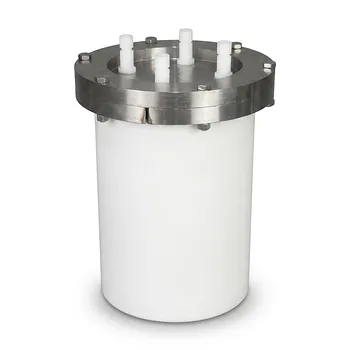
- High Pressure Custom TFM Reactor Stainless Steel Outer Vessel PTFE Inner Cup for Corrosive Synthesis
- Custom TFM Reaction Vessel with Stainless Steel Jacket and PTFE Inner Cup for High Corrosion Resistance
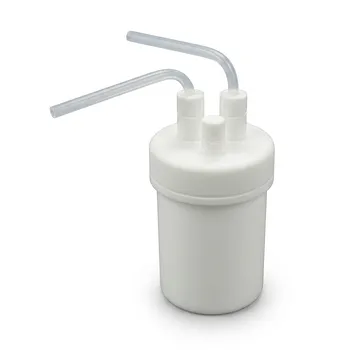
- Custom PTFE Continuous Reaction Bottles Virgin Fluoropolymer High Purity Low Background Synthesis Vessels
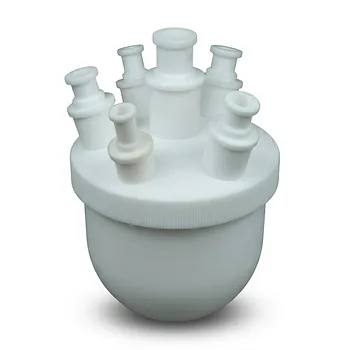
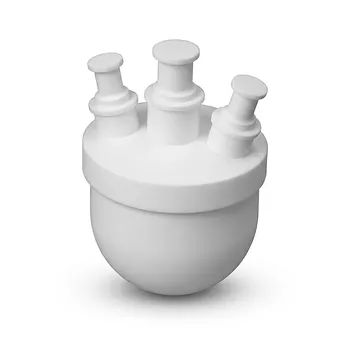
- Custom Multi Neck PTFE Flask 18L Laboratory Chemical Reactor Vessel for High Purity Synthesis and Stirring Applications
People Also Ask
- What are the benefits of using a PTFE-lined vessel for carbon-sulfur cathode treatment? Maximize Purity & Performance
- Why are PTFE-lined pressure digestion vessels required for the preparation of Ag/CeO2 catalysts? Purity & Performance
- What safety features are typically incorporated into high-pressure PTFE digestion vessel designs? Ensure Lab Safety
- What is the function of high-pressure PTFE digestion vessels in mineral analysis? Optimize Sample Mineralization
- What is the function of PTFE lined high-pressure vessels in g-C3N4 synthesis? Achieve High-Purity Material Growth