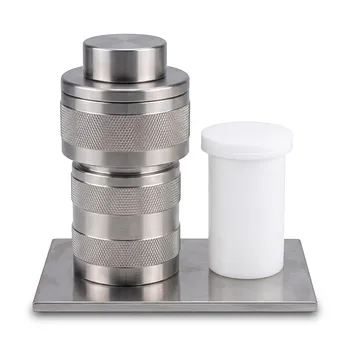
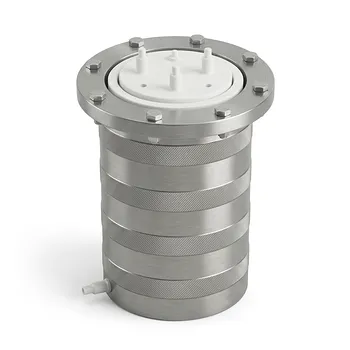
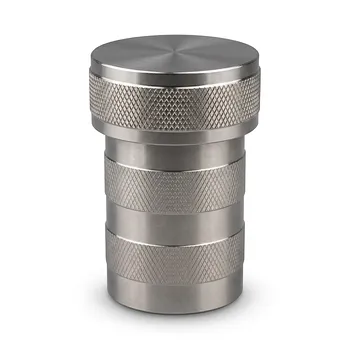
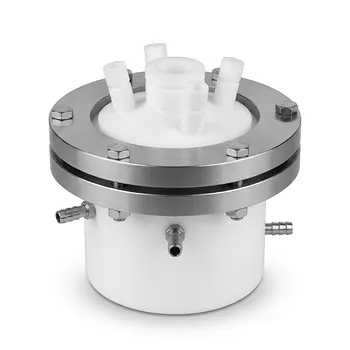
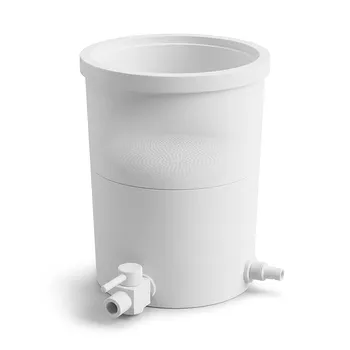
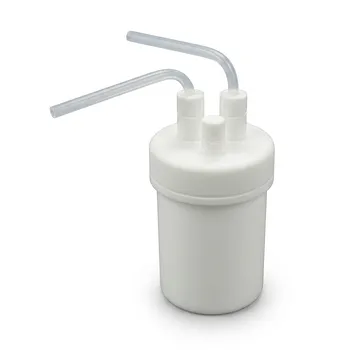
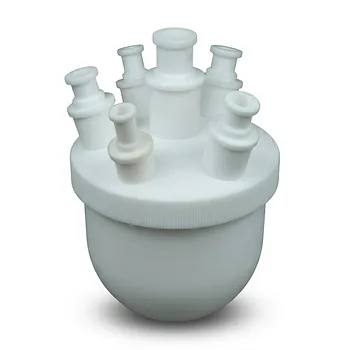
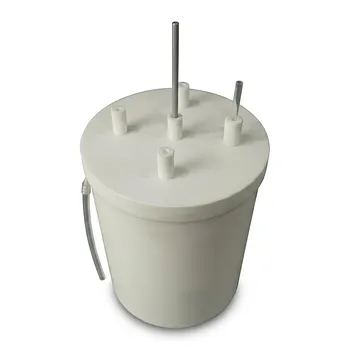
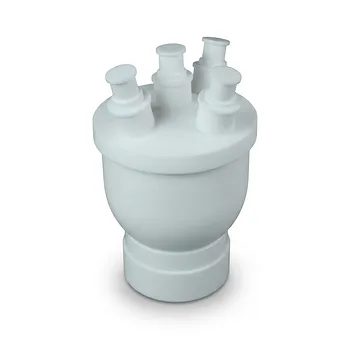
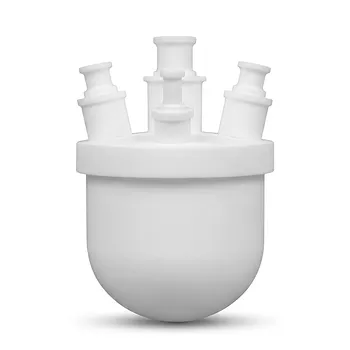
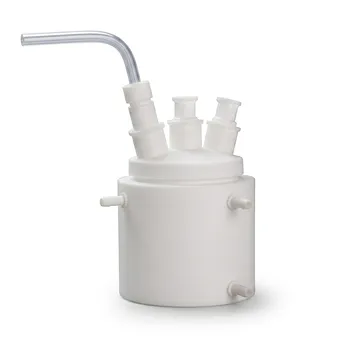
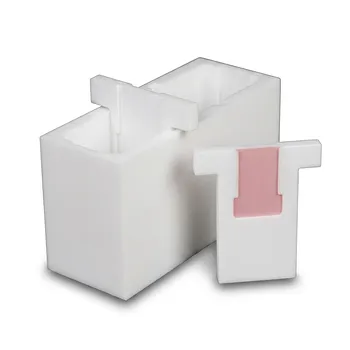
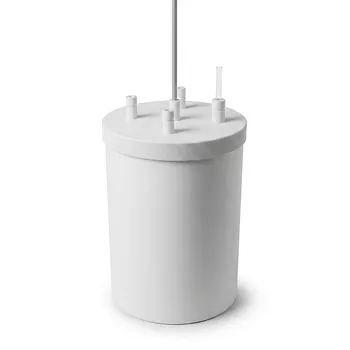
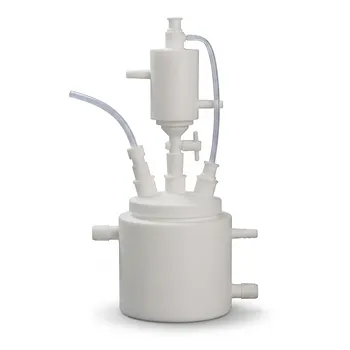
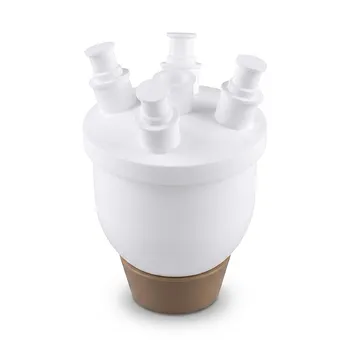
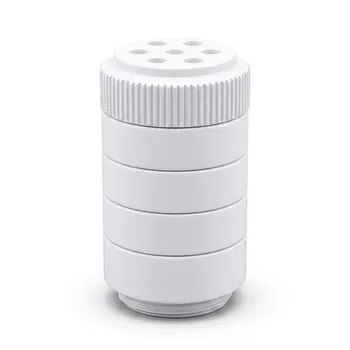
The PTFE-lined hydrothermal synthesis reactor serves as a chemically inert, high-pressure reaction chamber essential for the formation of MOF(Bi). It creates a controlled environment where bismuth salts and organic ligands can react at temperatures and pressures far exceeding their atmospheric boiling points. This setup is critical for achieving the high purity and specific crystalline morphology required for bismuth-based metal-organic frameworks.
A PTFE-lined reactor provides an ultra-clean, non-reactive environment that prevents metal contamination and shell corrosion, ensuring that the bismuth-ligand coordination process results in a high-quality, stable crystalline structure.
Ensuring Chemical Purity and Structural Integrity
Prevention of Metal Ion Contamination
In the synthesis of MOF(Bi), maintaining a specific metal-to-ligand ratio is vital for forming the correct lattice. The PTFE liner acts as a barrier that prevents the leaching of iron, nickel, or chromium ions from the stainless steel reactor shell into the solution.
Protection Against Corrosive Environments
The solvothermal process often involves strong acids or aggressive polar organic solvents like DMF. PTFE’s exceptional chemical resistance ensures the liner does not degrade or react, protecting the reactor’s outer shell from structural damage during extended heating periods.
Facilitating Coordination Integrity
By providing a non-stick surface, the liner prevents bismuth ions from reacting with the vessel walls. This ensures that the bismuth ions are fully available to coordinate with organic ligands, leading to more uniform crystal growth and higher product yields.
Enabling the Solvothermal Environment
Subcritical Solvent Conditions
The sealed reactor allows solvents to reach subcritical conditions, where they remain liquid above their normal boiling points. This significantly increases the solubility and reactivity of bismuth precursors, allowing them to overcome kinetic barriers to crystallization.
Controlled Nucleation and Growth
The stable thermal environment of a PTFE-lined autoclave facilitates a supersaturated state necessary for slow nucleation. This controlled process is essential for producing high-quality non-centrosymmetric single crystals with regular porosity and morphology.
Ease of Product Recovery
The non-adhesive properties of PTFE simplify the collection of the synthesized MOF(Bi) powder after the reaction. This minimizes loss of material and prevents cross-contamination between different synthesis batches by making the cleaning process more effective.
Understanding the Trade-offs and Limitations
Thermal Expansion and Pressure Limits
While PTFE is highly inert, it has a high coefficient of thermal expansion. If the reactor is heated too rapidly or exceeds its rated temperature (typically above 220°C–250°C), the liner may deform or "creep," potentially compromising the seal of the autoclave.
Permeability Concerns
At very high temperatures and pressures, some organic solvents can slightly permeate the PTFE material. This can lead to the trapping of precursors within the liner walls over time, which may require specialized cleaning or periodic replacement of the liner to maintain experimental consistency.
How to Apply This to Your Synthesis Goal
Recommendations for MOF(Bi) Production
When utilizing a PTFE-lined reactor for bismuth-based frameworks, align your equipment choice with your specific research objectives:
- If your primary focus is High Crystalline Purity: Prioritize using a fresh or meticulously cleaned PTFE liner to ensure zero metal ion leaching from previous experiments.
- If your primary focus is Large-Scale Yield: Ensure the reactor is filled to approximately 60-80% capacity to maintain the optimal internal pressure required for subcritical synthesis without overstressing the PTFE seal.
- If your primary focus is High-Temperature Stability (above 200°C): Consider a PPL (Polyphenylene polymers) liner instead of PTFE, as it offers better resistance to deformation at elevated thermal ranges.
By precisely controlling the solvothermal environment within a PTFE liner, you ensure the reliable and reproducible synthesis of high-performance bismuth-based MOFs.
Summary Table:
| Feature | Function in MOF(Bi) Synthesis | Benefit to Research |
|---|---|---|
| Chemical Inertness | Prevents metal ion leaching from shell | Ensures high crystalline purity and lattice integrity |
| Subcritical Conditions | Enables high temperature/pressure reaction | Increases precursor solubility and overcomes kinetic barriers |
| Non-stick Surface | Prevents wall-adhesion of bismuth ions | Improves product yield and simplifies recovery of powders |
| Thermal Stability | Provides stable nucleation environment | Facilitates growth of uniform, high-quality single crystals |
Elevate Your Synthesis Precision with KINTEK
Unlock the full potential of your material science research with high-performance fluoropolymer solutions from KINTEK. Whether you are developing bismuth-based MOFs or exploring advanced solvothermal chemistry, we provide the specialized tools necessary for absolute purity and reproducible results.
From everyday basic labware like beakers, crucibles, and reagent bottles to high-purity trace analysis instruments and comprehensive fluid transfer components, KINTEK is your single source for excellence. Our expertise extends to advanced reaction apparatus, including custom PTFE/PFA hydrothermal synthesis liners, microwave digestion vessels, and electrochemical cells designed to withstand the most aggressive environments.
Why choose KINTEK?
- Comprehensive Range: We manufacture virtually all laboratory supplies from high-grade PTFE and PFA.
- Bespoke Fabrication: Backed by end-to-end custom CNC machining for non-standard parts and complex experimental setups.
- Uncompromising Quality: An exclusive focus on high-performance materials ensures your lab maintains the highest standards of structural integrity and chemical resistance.
Ready to optimize your laboratory setup? Contact KINTEK today to discuss your custom project or high-volume orders!
References
- Jiaoling Wang, Xinai Zhang. Tracking Cadmium Transfer from Soil to Cup: An Electrochemical Sensing Strategy Based on Bi3+-Rich MOFs for Tea Safety Monitoring. DOI: 10.3390/foods14213779
This article is also based on technical information from Kintek Knowledge Base .
Related Products
- PTFE Lined High Pressure Digestion Vessel 50ml High Temperature Hydrothermal Synthesis Tank
- High Pressure Custom TFM Reactor Stainless Steel Outer Vessel PTFE Inner Cup for Corrosive Synthesis
- High Temperature Corrosion Resistant Hydrothermal Synthesis Reactor with TFM Inner Liner and Straight Cylinder Design
- Custom TFM Reaction Vessel with Stainless Steel Jacket and PTFE Inner Cup for High Corrosion Resistance
- Custom PTFE Reaction System with Hose Barb Fittings Corrosion Resistant High Sealing 2L 4L Lab Reactor with Separatory Funnel
People Also Ask
- What are the benefits of using a PTFE-lined vessel for carbon-sulfur cathode treatment? Maximize Purity & Performance
- Why are PTFE-lined pressure digestion vessels required for the preparation of Ag/CeO2 catalysts? Purity & Performance
- What safety features are typically incorporated into high-pressure PTFE digestion vessel designs? Ensure Lab Safety
- What is the function of high-pressure PTFE digestion vessels in mineral analysis? Optimize Sample Mineralization
- What is the function of PTFE lined high-pressure vessels in g-C3N4 synthesis? Achieve High-Purity Material Growth