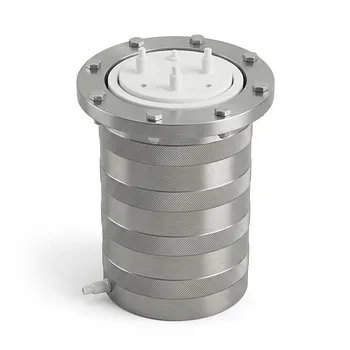
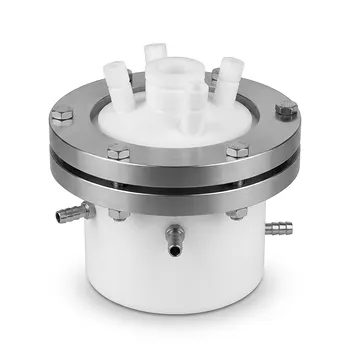
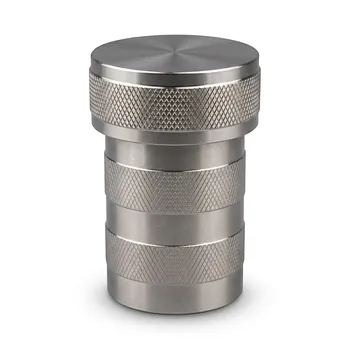
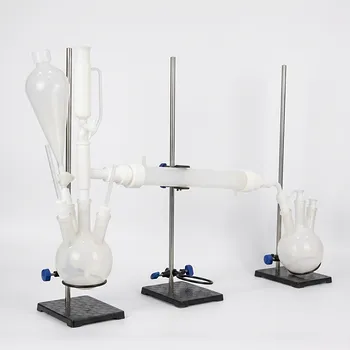
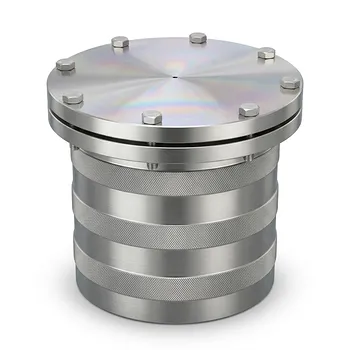
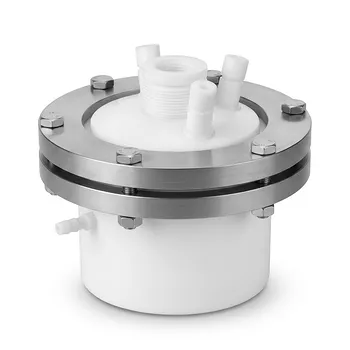
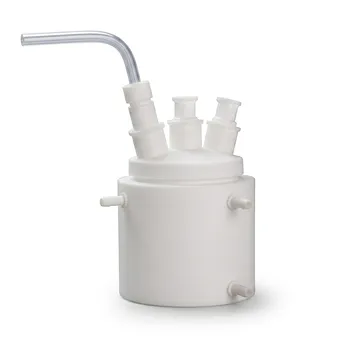
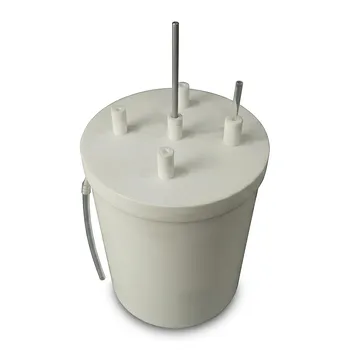
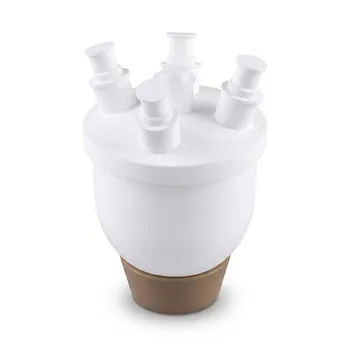
The high-pressure sealed reactor is the fundamental catalyst for hydrothermal Zinc Oxide (ZnO) synthesis. By creating a closed system, the reactor allows solvents to reach temperatures far exceeding their normal boiling points while remaining in a liquid state. This specific environment is essential for dissolving precursor salts and facilitating the precise, oriented growth required to form high-quality nanorods.
Core Takeaway: A high-pressure reactor enables "autogenous pressure" conditions that increase precursor solubility and control supersaturation, directly driving the anisotropic crystallization of ZnO into uniform nanorod structures.
Engineering the Growth Environment
Maintaining the Liquid Phase Above Boiling Point
The primary function of the sealed reactor is to prevent the solvent from evaporating as temperatures rise. This allows the aqueous solution to reach a "superheated" state, typically between 90°C and 200°C, where chemical reactivity is significantly enhanced.
Generating Autogenous Pressure
As the temperature inside the vessel increases, the expanding solvent creates autogenous pressure. This internal pressure increases the solubility and diffusion rates of reactants, ensuring that zinc ions and hydroxyl groups can interact efficiently throughout the solution.
Ensuring Kinetic Stability
The sealed nature of the reactor maintains a constant temperature and pressure throughout the reaction duration. This stability is critical for achieving kinetic consistency, which results in nanorods with uniform diameters and predictable lengths.
Controlling Precursor Kinetics
Facilitating Complete Dissolution
Under standard atmospheric conditions, many zinc precursor salts, such as zinc nitrate, may not dissolve or react completely. The high-pressure environment ensures these precursors are fully integrated into the solution, providing a steady supply of ions for crystal growth.
Managing Supersaturation and Nucleation
The reactor environment allows researchers to precisely control the state of supersaturation. By adjusting the temperature and precursor concentration, the system dictates when and where zinc source ions begin to nucleate on a seed layer or in the bulk solution.
Driving Anisotropic Crystal Growth
ZnO naturally tends to grow along specific crystallographic directions (such as the c-axis). The reactor provides the energy and chemical environment necessary for this anisotropic growth, transforming simple nanoparticles into high-aspect-ratio nanorods.
The Role of Material Integrity
Utilizing Corrosion-Resistant Liners
High-pressure reactors are typically equipped with a Polytetrafluoroethylene (PTFE) or Teflon liner. This liner is critical because it withstands the corrosive nature of the chemical precursors while preventing metallic contamination from the stainless steel outer shell.
Protecting Material Purity
By providing a sealed, inert environment, the reactor ensures that no external contaminants enter the reaction. This results in ZnO nanorods with high crystallinity and purity, which is essential for applications in electronics and sensing.
Understanding the Trade-offs
The Risk of Pressure Hazards
Operating at high temperatures within a sealed vessel presents significant safety risks if the equipment is not maintained. Over-pressurization can lead to vessel failure, requiring the use of burst disks and rigorous safety protocols.
Limited Real-Time Observation
Because the reaction occurs inside a thick-walled stainless steel autoclave, it is difficult to monitor the growth process in real-time. This "black box" nature means that parameters must be optimized through iterative testing rather than direct visual observation.
Scalability Constraints
Hydrothermal synthesis in high-pressure reactors is often a batch process, which can limit high-volume production. Scaling from a small laboratory autoclave to large industrial reactors requires complex adjustments to heat transfer and pressure management.
How to Apply This to Your Project
Recommendations for Synthesis Goals
- If your primary focus is high aspect ratio nanorods: Increase the reaction duration and maintain a moderate temperature (around 90°C to 150°C) to allow for slow, oriented growth along the c-axis.
- If your primary focus is maximum material purity: Always use a high-performance PTFE liner and ensure it is thoroughly cleaned between batches to prevent cross-contamination.
- If your primary focus is uniform morphology: Use a pre-existing ZnO seed layer on your substrate to provide a template for heteroepitaxial growth within the reactor.
The high-pressure reactor transforms standard chemical reactions into a precision-controlled manufacturing process for advanced nanomaterials.
Summary Table:
| Feature of Reactor | Impact on ZnO Synthesis | Key Benefit |
|---|---|---|
| Superheated Liquid | Enables reactions at 90°C–200°C without evaporation | Enhances chemical reactivity and dissolution |
| Autogenous Pressure | Increases reactant solubility and diffusion rates | Drives anisotropic growth into uniform rods |
| Kinetic Stability | Maintains constant internal environment | Ensures predictable lengths and diameters |
| PTFE/Teflon Liner | Prevents metallic corrosion and contamination | Guarantees high crystallinity and purity |
Elevate Your Nanomaterial Synthesis with KINTEK
Achieve precision and purity in your hydrothermal processes with KINTEK’s high-performance fluoropolymer solutions. From high-purity PTFE/PFA liners and microwave digestion vessels specifically designed for ZnO synthesis to complete custom-machined reactors, we provide the inert environment your research demands.
Our expertise extends from everyday labware—including beakers, crucibles, and reagent bottles—to specialized fluid transfer components like PFA tubing and valves. Whether you require standard consumables or complex, non-standard parts through our end-to-end custom CNC fabrication, KINTEK delivers the durability and chemical resistance essential for high-pressure applications.
Ready to optimize your laboratory setup? Contact us today to discuss your custom requirements!
References
- M. Borah. Theoretical Insights into Growth Mechanisms of ZnO Nanorods. DOI: 10.30799/jnst.357.25100201
This article is also based on technical information from Kintek Knowledge Base .
Related Products
- High Pressure Custom TFM Reactor Stainless Steel Outer Vessel PTFE Inner Cup for Corrosive Synthesis
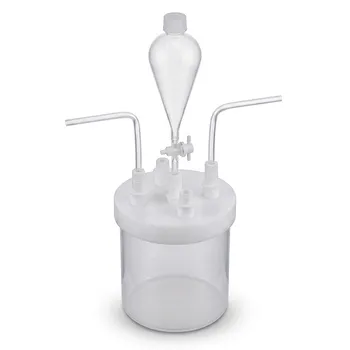
- Custom PTFE Reaction System with Hose Barb Fittings Corrosion Resistant High Sealing 2L 4L Lab Reactor with Separatory Funnel
- High Temperature Corrosion Resistant Hydrothermal Synthesis Reactor with TFM Inner Liner and Straight Cylinder Design
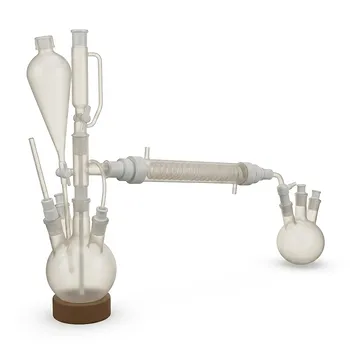
- High Purity PFA Constant Pressure Condensation Reaction System Acid Resistant High Temperature Customizable Teflon Labware
- Custom TFM Reaction Vessel with Stainless Steel Jacket and PTFE Inner Cup for High Corrosion Resistance
People Also Ask
- Why is a PTFE-lined reactor required for Mn2O3 synthesis? Achieve High Purity & Corrosion Resistance
- What is the technical value of 180 bar pressure for MgO nanostructures? Unlock Superior Crystallinity and Morphology
- What are the technical advantages of using high-pressure PTFE reaction vessels during metal digestion? Expert Insights.
- How does the regulation of initial pressure within a high-pressure reaction system affect the production of MIL-100(Fe)?
- Why is a high-pressure reactor necessary for the esterification reaction between oleic acid and methanol at 150°C? Guide