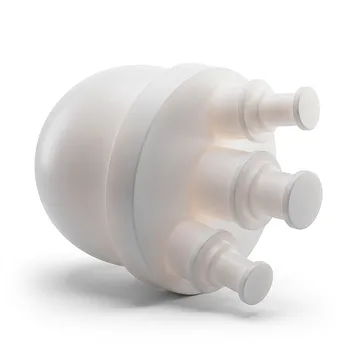
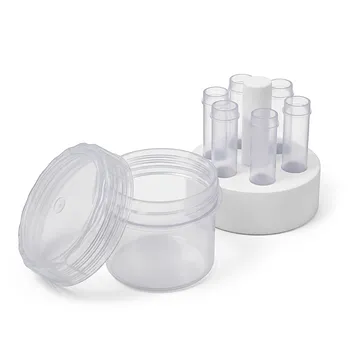
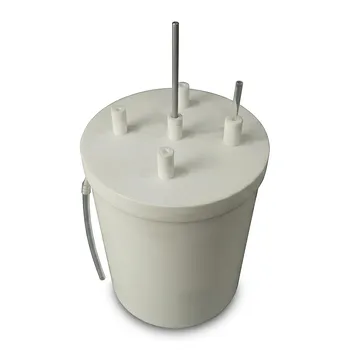
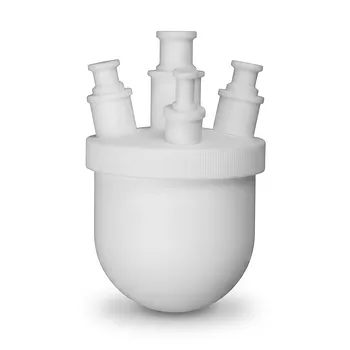
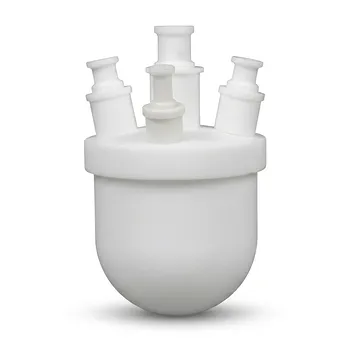
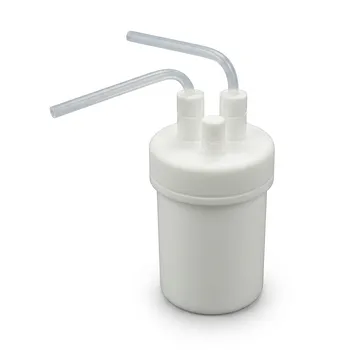
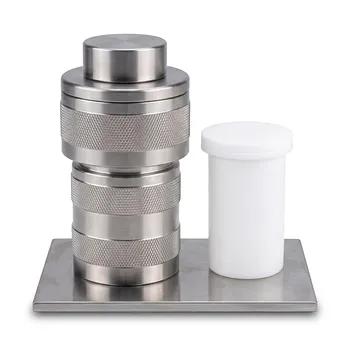
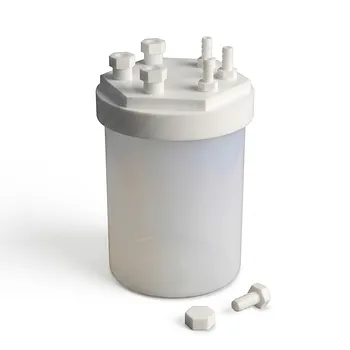
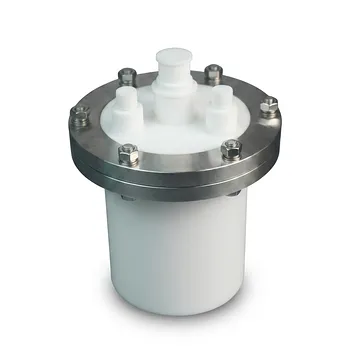
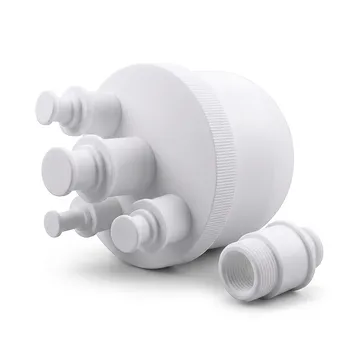
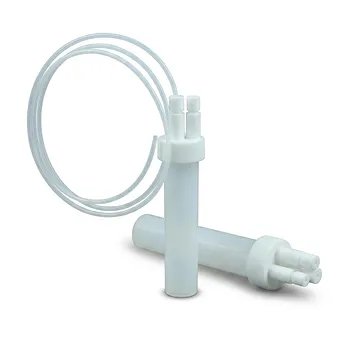
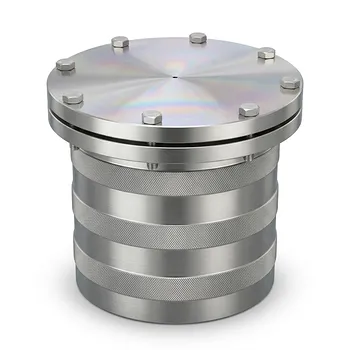
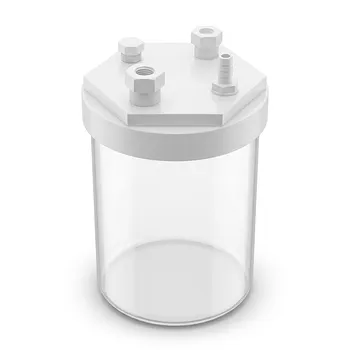
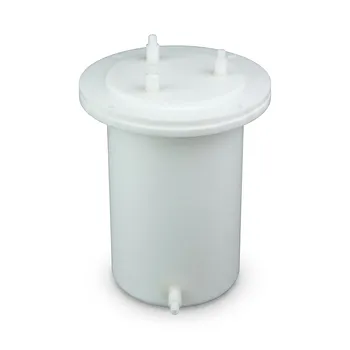
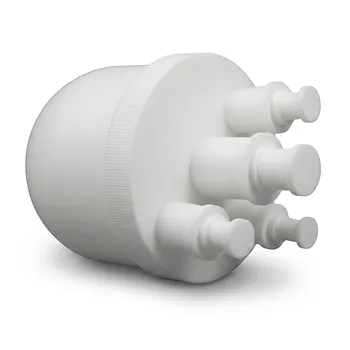
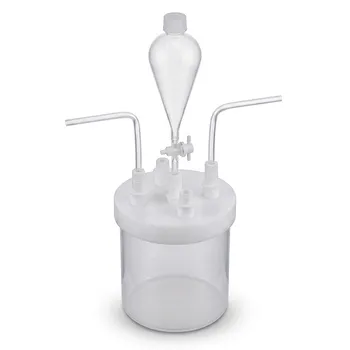
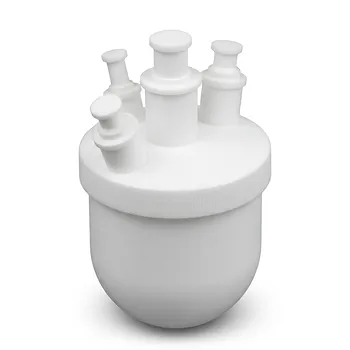
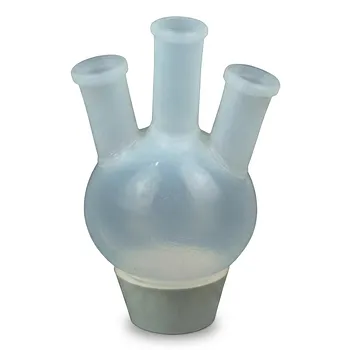
A high-pressure reaction vessel with a fluoropolymer liner provides the critical controlled environment necessary for the solvothermal growth of MoS2/Cu2S heterostructures. It simultaneously manages extreme physical conditions—high temperature and autogenous pressure—while ensuring chemical purity by preventing corrosive precursors from reacting with the vessel’s metal walls.
The core role of the fluoropolymer-lined vessel is to facilitate a contamination-free, subcritical environment where sulfur sources and metal ions can interact at precise stoichiometries. This setup is essential for achieving the high-quality heterojunction interfaces and "nanoflower" morphologies required for advanced material performance.
Facilitating the Solvothermal Environment
Managing High Temperatures and Autogenous Pressure
The synthesis of MoS2/Cu2S often requires heating solvents beyond their standard boiling points within a sealed system. This process generates autogenous pressure, which increases the solubility and reactivity of the precursors, allowing the reaction to proceed more efficiently than at atmospheric pressure.
Providing a Confined Reaction Space
The high-pressure vessel acts as a closed system that maintains a constant environment for durations ranging from several to dozens of hours. This stability is vital for the molecular-level interaction between molybdenum and copper precursors, ensuring uniform distribution and growth.
Ensuring Chemical Purity and Interface Integrity
Preventing Metal Contamination
Standard stainless steel reactors are susceptible to erosion from corrosive sulfur sources and acidic or basic precursors. The fluoropolymer liner (typically PTFE or PFA) acts as a barrier, preventing metal ions from the reactor wall from leaching into the solution and poisoning the MoS2/Cu2S heterostructure.
Protecting the Heterojunction Interface
The quality of a heterostructure depends on the purity of the contact point between the two materials (MoS2 and Cu2S). By maintaining a chemically inert environment, the liner ensures that no unintended impurities disrupt the electronic or structural properties of the heterojunction interface.
Promoting Structural and Morphological Precision
Enabling Nanoflower Growth
The "nanoflower" structures characteristic of high-performance MoS2/Cu2S require specific crystallization conditions. The controlled pressure and temperature within the vessel allow for the precise chemical stoichiometry and slow crystallization needed to form these complex, high-surface-area geometries.
Facilitating Material Recovery
Fluoropolymers like PTFE and PFA possess non-stick properties. This characteristic is essential for the complete collection of synthesized nanosheets and powders, ensuring that the final yield accurately reflects the intended chemical proportions without loss to the container walls.
Understanding the Trade-offs
Temperature Limitations
While fluoropolymer liners are highly inert, they have strict thermal limits, typically failing or deforming if temperatures exceed 250°C to 260°C. For syntheses requiring higher temperatures, different liner materials or specialized vessel designs must be employed to avoid structural failure.
Pressure Sensitivity and Seal Integrity
The effectiveness of the vessel depends entirely on the seal between the liner and the reactor cap. Over-pressurization or improper assembly can lead to leaks or "cold flow" deformation of the PTFE, which compromises the autogenous pressure and can ruin the crystallinity of the MoS2/Cu2S structure.
Applying This Technology to Your Synthesis
Making the Right Choice for Your Goal
To achieve the best results in synthesizing MoS2/Cu2S or similar heterostructures, consider the following technical priorities:
- If your primary focus is Maximum Phase Purity: Use a high-purity PFA liner to ensure zero metal leaching and the highest possible resistance to corrosive sulfur precursors.
- If your primary focus is Complex Morphologies (Nanoflowers): Prioritize a vessel with high thermal stability and precise pressure monitoring to maintain the steady-state environment required for delicate crystal growth.
- If your primary focus is Scalable Yield: Select a reactor with a high-capacity PTFE liner and a robust mechanical seal to allow for consistent results across larger batches.
The synergy between the mechanical strength of the pressure vessel and the chemical resistance of the fluoropolymer liner is the fundamental requirement for engineering high-performance MoS2/Cu2S heterostructures.
Summary Table:
| Key Feature | Functional Role | Impact on MoS2/Cu2S Synthesis |
|---|---|---|
| Fluoropolymer Liner | Chemical Inertness | Prevents metal ion leaching; ensures high-purity heterojunctions. |
| Pressure Vessel | Autogenous Pressure | Increases precursor solubility and reactivity for solvothermal growth. |
| Closed System | Controlled Environment | Maintains precise stoichiometry for complex "nanoflower" shapes. |
| Non-stick Surface | Material Recovery | Facilitates 100% yield collection of nanosheets and powders. |
| Thermal Stability | Heat Management | Provides a steady-state environment up to 260°C for crystallization. |
Elevate Your Material Synthesis with KINTEK’s High-Performance Fluoropolymers
Precision in synthesizing advanced heterostructures like MoS2/Cu2S demands absolute chemical purity and reliable equipment. KINTEK specializes in manufacturing high-performance laboratory supplies crafted exclusively from PTFE and PFA to ensure your research is never compromised by contamination.
From everyday basic labware—including beakers, measuring cylinders, crucibles, and reagent bottles—to specialized components like high-purity trace analysis instruments, cleaning tanks, and fluid transfer systems (tubing, fittings, valves), we provide the tools necessary for rigorous scientific environments. Our range extends to sample prep tools, general consumables (stirring bars, O-rings, gaskets), and advanced reaction apparatus such as hydrothermal synthesis liners, microwave digestion vessels, and custom electrochemical cells.
Why choose KINTEK?
- End-to-End Customization: Our custom CNC fabrication delivers everything from complex non-standard machined parts to high-volume orders.
- Material Expertise: Absolute focus on high-performance fluoropolymers for maximum chemical resistance.
- Bespoke Solutions: We build laboratory setups tailored specifically to your unique synthesis requirements.
Ready to optimize your lab’s efficiency and results? Contact KINTEK today to request a quote or discuss your custom project!
References
- Ming‐Jian Zhang, Jiamin Jin. Chemical Engineering of Heterojunction SERS Substrates: Emerging Tools for Disease Diagnosis and Health Monitoring. DOI: 10.1002/smm2.70045
This article is also based on technical information from Kintek Knowledge Base .
Related Products
- High Purity Custom PTFE Large Volume 15L Flask Corrosion Resistant Low Trace Background Fluoropolymer Reaction Vessel
- High Purity Corrosion Resistant PFA Reaction Vessel with PTFE Holder and Integrated Sampling Tube for Trace Analysis
- PTFE 10L Reaction Vessel with Stirring Paddle Customizable Corrosion Resistant High Temperature Reactor for Biopharmaceutical and Chemical Processing
- High Temperature Corrosion Resistant PTFE Reaction Flask Custom Multi Neck Laboratory Vessel with Flat or U Bottom
- Custom PTFE Flask 250ml High Purity Fluoropolymer Laboratory Vessel for Chemical Research
People Also Ask
- What reaction vessel and fluid handling considerations are necessary for living cationic polymerization of fluorinated monomers involving Lewis acid catalysts? Key design and safety tips
- Why are fluoropolymer reaction vessels essential for SnO2/rGO synthesis? The Key to High-Performance Composites
- How do choice of solvent and chain transfer activity affect molecular weight during vinylidene fluoride (VDF) radical polymerization? Learn Key Factors for High-MW PVDF
- Why are well-sealed reaction vessels necessary for superacid-promoted Friedel-Crafts polycondensation? Optimize Synthesis
- Why are PTFE or PFA reaction vessels required for the selective etching process of MXene using hydrofluoric acid (HF)?