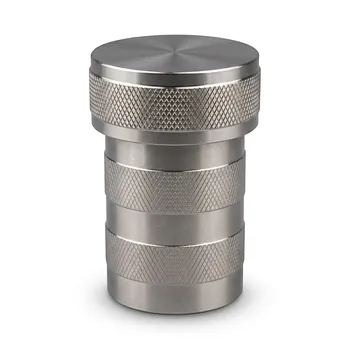
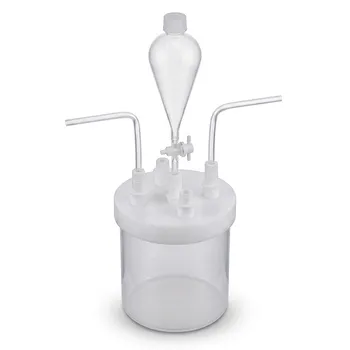
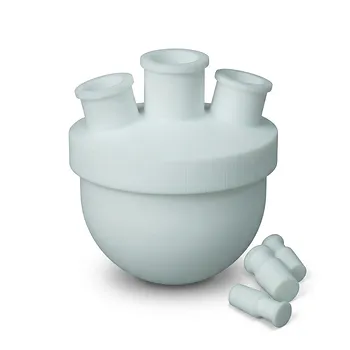
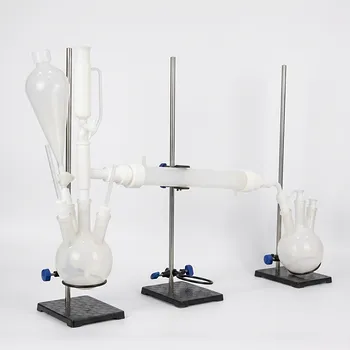
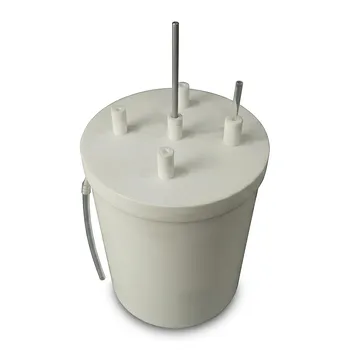
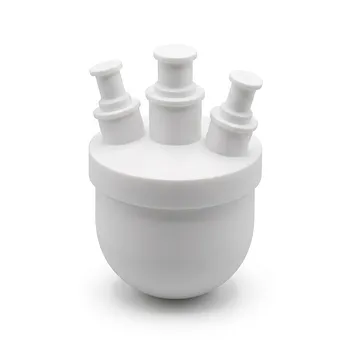
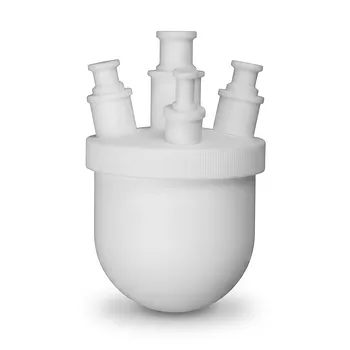
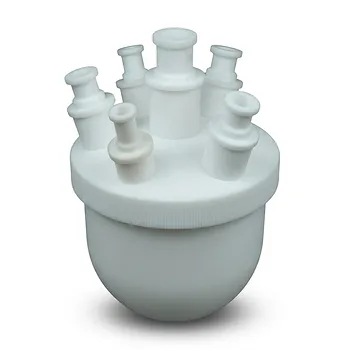
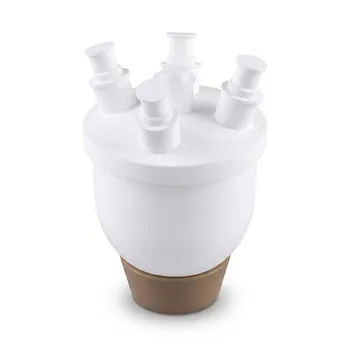
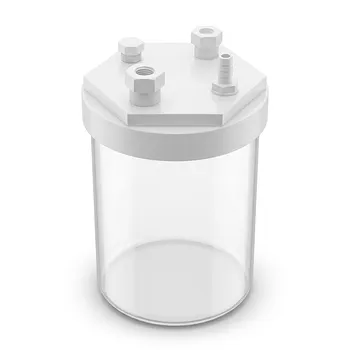
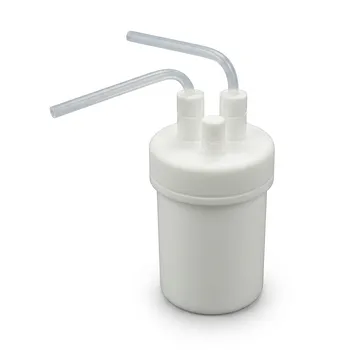
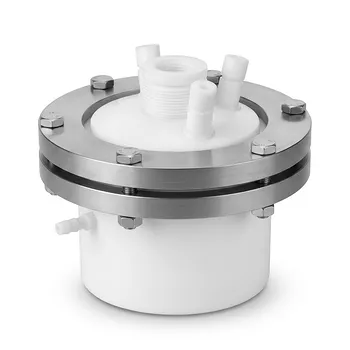
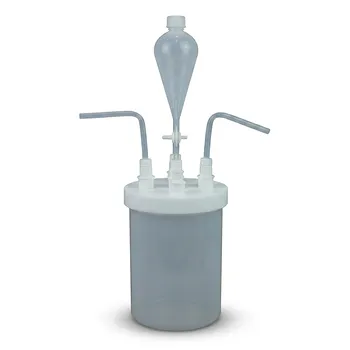
The high-pressure reaction vessel serves as the essential thermodynamic engine for the hydrothermal synthesis of tungsten oxide ($WO_3$). It creates a sealed environment where elevated temperatures—typically around 180°C—generate internal pressures that force precursor molecules to undergo oriented nucleation and crystalline growth. Without this controlled environment, the precursor solution would remain in a liquid state, failing to produce the structured nanoneedle arrays required for high-performance applications.
The reaction vessel acts as a catalyst for phase transformation, enabling the precursor solution to reach subcritical states that enhance solubility and drive the precise, oriented growth of $WO_3$ nanoneedles onto substrates.
Creating the Hydrothermal Environment
Achieving Subcritical Pressure
The primary function of the vessel is to maintain a sealed environment that prevents the evaporation of the solvent as temperatures rise. As the internal temperature reaches 160°C to 180°C, the solvent generates subcritical pressure, which significantly alters its physical properties.
Enhancing Precursor Solubility
Under high-pressure conditions, the solubility of reactants in the precursor solution increases dramatically. This allows the solutes to dissolve fully and then recrystallize at a controlled rate, a process necessary for forming the initial $WO_3 \cdot 0.33H_2O$ structures.
Accelerating Reaction Kinetics
The combination of high temperature and pressure increases the kinetic energy of the molecules within the solution. This leads to a higher reaction rate, ensuring that the transition from a liquid precursor to a solid crystalline state occurs efficiently.
Controlling Nanostructure Morphology
Driving Oriented Nucleation
The high-pressure vessel provides the energy required for oriented nucleation on the surface of substrates, such as copper mesh. This specific environment ensures that the $WO_3$ molecules do not just precipitate randomly but grow in a structured, directional manner.
Developing High Specific Surface Areas
By maintaining consistent pressure, the vessel allows for the growth of highly ordered nanoneedle arrays. These structures are characterized by a high specific surface area, which is vital for subsequent processes like ruthenium loading or hydrogenation.
Ensuring Crystalline Integrity
The stable environment inside the autoclave facilitates the production of highly crystalline nanostructures. This crystalline purity is essential for constructing composite heterojunctions and ensuring the stability of the final nanomaterial.
Understanding the Technical Trade-offs
Equipment Stress and Safety
Operating at 180°C and high pressure puts significant mechanical stress on the reaction vessel's seals and walls. Over time, repeated thermal cycling can lead to material fatigue, necessitating rigorous safety protocols and regular equipment inspections.
Sensitivity to Temperature Fluctuations
Small deviations in temperature within the vessel can lead to morphological inconsistencies. If the heat is not distributed uniformly, the nanoneedle arrays may exhibit irregular lengths or widths, compromising the uniformity of the array.
Scaling Limitations
Hydrothermal growth in a high-pressure vessel is often a batch process, which can limit production throughput. While continuous-flow systems exist to reach supercritical states rapidly, they require much more complex pressure-regulation hardware.
How to Optimize the Hydrothermal Process
Making the Right Choice for Your Goal
- If your primary focus is maximizing surface area: Ensure the vessel is maintained at 180°C for the full duration to promote the longest possible oriented growth of the nanoneedles.
- If your primary focus is crystalline purity: Focus on precise pressure control and a slow cooling phase to allow for the full recrystallization of $WO_3$ without defects.
- If your primary focus is substrate adhesion: Use the high-pressure environment to facilitate in-situ functionalization, ensuring the $WO_3$ nanoparticles adhere firmly to the mesh or nanotubes.
By mastering the high-pressure environment of the reaction vessel, you can transform simple precursor solutions into sophisticated, highly ordered nanostructures tailored for advanced technical use.
Summary Table:
| Key Function | Effect on WO3 Growth | Strategic Benefit |
|---|---|---|
| Subcritical Pressure | Prevents solvent evaporation at 180°C | Acts as the thermodynamic engine for synthesis |
| Enhanced Solubility | Increases dissolution of precursor reactants | Facilitates controlled recrystallization rates |
| Oriented Nucleation | Drives directional growth on substrates | Creates highly ordered, high-surface-area arrays |
| Thermal Stability | Maintains uniform heat distribution | Ensures crystalline purity and structural integrity |
Elevate Your Nanotechnology Research with KINTEK
Precision in hydrothermal synthesis demands high-performance materials that can withstand rigorous chemical and thermal environments. KINTEK specializes in manufacturing an exhaustive range of laboratory supplies crafted from high-purity PTFE and PFA, specifically designed for advanced material science and trace analysis.
From everyday basic labware like beakers, crucibles, and reagent bottles to specialized hydrothermal synthesis liners, microwave digestion vessels, and custom electrochemical cells, we provide the durability your research requires. Our capabilities extend to comprehensive fluid transfer components (tubing, valves, fittings), sample prep tools (filters, pipettes, tweezers), and high-volume consumables (O-rings, gaskets, seal tapes).
Whether you need standard supplies or complex, bespoke laboratory setups via our end-to-end custom CNC fabrication, KINTEK is your dedicated partner for high-performance fluoropolymer solutions.
Ready to optimize your WO3 nanostructure growth? Contact us today to discuss your custom requirements and experience the KINTEK advantage!
References
- Yan Zhang, Zheng Hu. Lattice-hydrogen cycling mechanism enables pH-universal hydrogen evolution at ampere-level current densities. DOI: 10.1038/s41467-025-65909-3
This article is also based on technical information from Kintek Knowledge Base .
Related Products
- PTFE Lined High Pressure Digestion Vessel 50ml High Temperature Hydrothermal Synthesis Tank
- High Temperature Corrosion Resistant Hydrothermal Synthesis Reactor with TFM Inner Liner and Straight Cylinder Design
- High Pressure Custom TFM Reactor Stainless Steel Outer Vessel PTFE Inner Cup for Corrosive Synthesis
- Custom TFM Reaction Vessel with Stainless Steel Jacket and PTFE Inner Cup for High Corrosion Resistance
- High Purity PFA Reaction Vessel for Biopharmaceutical Synthesis and Corrosive Chemical Fluid Handling with Customizable Tube Fittings
People Also Ask
- What are the benefits of using a PTFE-lined vessel for carbon-sulfur cathode treatment? Maximize Purity & Performance
- Why are PTFE-lined pressure digestion vessels required for the preparation of Ag/CeO2 catalysts? Purity & Performance
- What is the function of high-pressure PTFE digestion vessels in mineral analysis? Optimize Sample Mineralization
- What safety features are typically incorporated into high-pressure PTFE digestion vessel designs? Ensure Lab Safety
- What is the function of PTFE lined high-pressure vessels in g-C3N4 synthesis? Achieve High-Purity Material Growth