High-pressure laboratory reactors are the critical facilitators of Rhodium (Rh) exsolution within the ZnFeRh mixed oxide lattice. By maintaining a strictly controlled reduction environment—typically at 200°C and 28 bar of H2—these reactors enable metallic Rhodium (Rh0) to precipitate from the spinel oxide matrix. This specific high-pressure setting allows the activation to occur at relatively low temperatures, resulting in the creation of highly dispersed active sites necessary for catalytic efficiency.
Core Takeaway: The high-pressure reactor transforms the catalyst from a stable mixed oxide into an active metallic-on-oxide structure by using pressure to overcome kinetic barriers. This ensures Rhodium nanoparticles remain small and highly dispersed, maximizing the catalyst's reactive surface area.
The Mechanics of Catalyst Activation
Facilitating Rhodium Exsolution
In the activation of ZnFeRh catalysts, the reactor’s primary role is to drive exsolution, a process where Rhodium ions migrate out of the host spinel lattice. Under the intense hydrogen pressure provided by the reactor, these ions are reduced to metallic Rhodium (Rh0) nanoparticles.
Overcoming Kinetic Barriers via Pressure
Without the 28 bar of H2 pressure, the energy required to "pull" Rhodium out of the stable oxide matrix would necessitate much higher temperatures. The reactor uses pressure as a lever to overcome these kinetic barriers, allowing the chemical transformation to proceed at a modest 200°C.
Precision Control of the Reduction Environment
A high-pressure reactor ensures that the reduction environment remains stable and uniform throughout the activation phase. This prevents localized fluctuations that could lead to inconsistent catalyst batches or incomplete activation of the Rhodium species.
Impact on Catalyst Performance
Achieving High Dispersion of Active Sites
The core benefit of using high pressure at lower temperatures is the high dispersion of Rhodium nanoparticles. Because the temperature is kept relatively low, the newly formed nanoparticles do not have enough thermal energy to migrate across the surface and clump together.
Preventing Sintering Through Low-Temperature Activation
Traditional high-temperature reduction often leads to sintering, where active metal particles fuse, reducing the overall surface area. The high-pressure reactor avoids this pitfall by substituting thermal energy with pressure-driven chemical potential, preserving the small size of the Rh0 sites.
Enhancing Surface Reactivity
By facilitating the deep precipitation of Rhodium from within the oxide matrix, the reactor ensures that the active components are securely anchored yet fully exposed. This structural arrangement is vital for maintaining catalytic stability and longevity during industrial use.
Understanding the Trade-offs
The Risk of Seal Failure and Safety
Operating at 28 bar of H2 requires specialized autoclave or reactor designs that can withstand high pressure without leaking. Any compromise in the reactor's seal integrity not only poses a significant safety risk but also ruins the catalyst activation by introducing oxygen or losing pressure.
Complexity of Scalability
While high-pressure reactors are effective in a laboratory setting for precise catalyst design, scaling this process to industrial volumes introduces significant engineering hurdles. Maintaining uniform pressure and temperature across a large-scale reactor is substantially more difficult than in a small laboratory unit.
Energy and Equipment Costs
High-pressure equipment is inherently more expensive to manufacture and maintain than ambient-pressure systems. The need for specialized alloys and precision monitoring tools increases the capital expenditure required for catalyst production.
Making the Right Choice for Your Goal
To maximize the effectiveness of your ZnFeRh catalyst activation, consider your primary objective:
- If your primary focus is maximum catalytic activity: Utilize the full 28 bar H2 pressure to ensure the highest possible dispersion of Rhodium nanoparticles.
- If your primary focus is minimizing thermal degradation: Use the high-pressure reactor to keep activation temperatures near 200°C, preventing the collapse of the spinel lattice.
- If your primary focus is process repeatability: Invest in a reactor with automated pressure and temperature logging to ensure every batch of catalyst undergoes identical exsolution conditions.
The high-pressure reactor serves as the bridge between an inactive oxide precursor and a high-performance, nanostructured catalyst.
Summary Table:
| Parameter | Mechanism | Impact on Catalyst performance |
|---|---|---|
| H2 Pressure (28 bar) | Overcomes kinetic energy barriers | Enables low-temperature activation |
| Temperature (200°C) | Minimizes thermal migration | Prevents sintering and maintains high surface area |
| Rhodium Exsolution | Drives Rh ions from lattice to surface | Creates highly dispersed metallic Rh0 active sites |
| Environment Control | Uniform H2 reduction atmosphere | Ensures consistent catalyst quality and repeatability |
Elevate Your Research with KINTEK’s Precision Engineering
Optimizing catalyst activation requires equipment that can withstand demanding conditions without compromising purity. KINTEK specializes in high-performance laboratory supplies crafted from premium PTFE and PFA, ensuring your reactions remain contaminant-free.
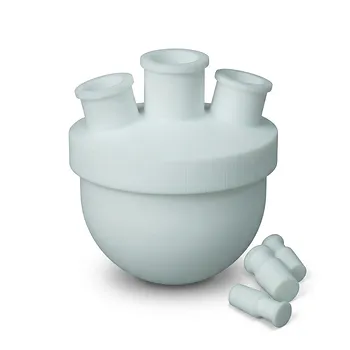
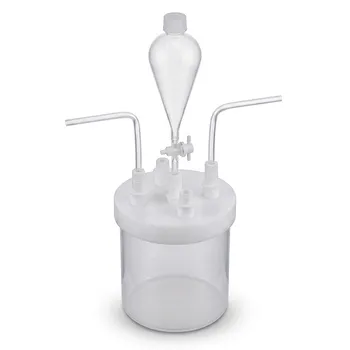
Whether you need everyday essentials like beakers, digestion tubes, and reagent bottles, or specialized components like tubing, fittings, and valves for fluid transfer, we have you covered. For advanced applications, we provide high-pressure reaction apparatus, custom electrochemical cells, hydrothermal synthesis liners, and microwave digestion vessels tailored to your exact specifications.
Backed by end-to-end custom CNC fabrication, KINTEK delivers everything from complex non-standard machined parts to high-volume consumables with an absolute focus on fluoropolymer performance.
Ready to upgrade your lab setup? Contact our experts today to discuss your custom requirements!
References
- Daniel Delgado, Annette Trunschke. Low-Temperature Exsolution of Rh from Mixed ZnFeRh Oxides toward Stable and Selective Catalysts in Liquid-Phase Hydroformylation. DOI: 10.1021/jacs.4c14839
This article is also based on technical information from Kintek Knowledge Base .
Related Products
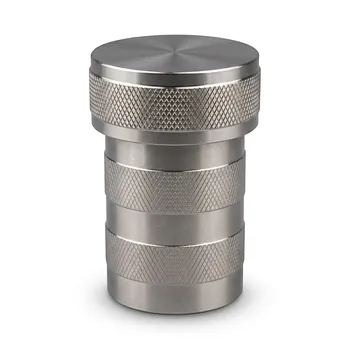
- High Pressure Custom TFM Reactor Stainless Steel Outer Vessel PTFE Inner Cup for Corrosive Synthesis
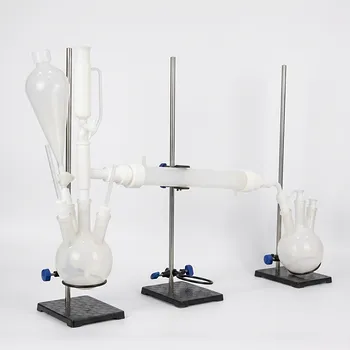
- High Purity PFA Constant Pressure Condensation Reaction System Acid Resistant High Temperature Customizable Teflon Labware
- High Temperature Corrosion Resistant Hydrothermal Synthesis Reactor with TFM Inner Liner and Straight Cylinder Design
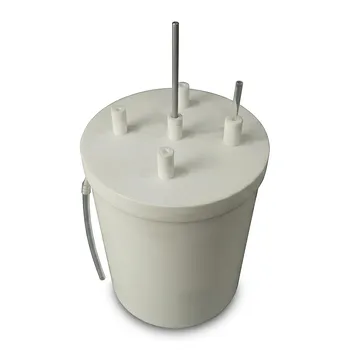
- High Purity Custom PTFE Laboratory Reaction Tank with Baffles for Low Background Trace Analysis
- PTFE 10L Reaction Vessel with Stirring Paddle Customizable Corrosion Resistant High Temperature Reactor for Biopharmaceutical and Chemical Processing
People Also Ask
- Why is a PTFE-lined reactor required for Mn2O3 synthesis? Achieve High Purity & Corrosion Resistance
- What is the technical value of 180 bar pressure for MgO nanostructures? Unlock Superior Crystallinity and Morphology
- What are the technical advantages of using high-pressure PTFE reaction vessels during metal digestion? Expert Insights.
- How does the regulation of initial pressure within a high-pressure reaction system affect the production of MIL-100(Fe)?
- Why is a high-pressure reactor necessary for the esterification reaction between oleic acid and methanol at 150°C? Guide