The high-pressure hydrothermal synthesis reactor is the primary engine for ZIF-67 production. It provides a sealed environment that facilitates the reaction between cobalt ions and 2-methylimidazole ligands at elevated temperatures, typically around 140 °C. This specific environment generates autogenous pressure, which is a fundamental requirement for the crystallization and structural formation of the ZIF-67 framework.
The high-pressure reactor creates a superheated, high-energy environment that overcomes the kinetic barriers of metal-organic framework (MOF) synthesis. By maintaining solvents in a liquid state above their boiling points, the reactor ensures the solubility and diffusion necessary for precise crystal growth.
Facilitating the Chemical Reaction Environment
Maintaining the Liquid State at High Temperatures
A critical role of the reactor is creating a superheated liquid environment. By sealing the reaction mixture, the reactor prevents solvents from evaporating even when temperatures exceed their atmospheric boiling points. This ensures that the precursors remain in a dense, liquid phase where they can interact effectively.
Enhancing Solubility and Diffusion Rates
The high-pressure environment significantly increases the solubility of metal salts and organic ligands like 2-methylimidazole (MeIM). Under these conditions, the diffusion rates of these components are accelerated. This rapid movement is essential for the chemical precursors to find one another and begin the bonding process.
Creating Autogenous Pressure
As the internal temperature rises to levels like 140 °C, the reactor generates autogenous pressure. This internal pressure acts as a physical catalyst, forcing the cobalt ions and organic ligands into the specific orientations required to form the ZIF-67 lattice. Without this pressure, the framework might fail to assemble or result in an amorphous material.
Controlling Crystal Nucleation and Morphology
Driving Rapid Nucleation
The reactor provides the essential kinetic conditions for the rapid formation of crystal nuclei. Because the environment is highly energized, a large number of nucleation sites can form simultaneously. This is the first step in ensuring a high yield of ZIF-67 particles.
Influencing Geometric Symmetry
The precise control over temperature and pressure within the reactor allows for the growth of specific geometric morphologies. Depending on the duration and heat applied, the reactor enables the synthesis of nanocubes, flake structures, or hierarchical crystals. This level of control is vital for tailoring the particles to specific industrial applications.
Ensuring Structural Stability
The high-energy environment facilitates the reorganization of molecular chains into more stable, regular structures. By providing a consistent and controlled heat source, the reactor ensures that the resulting ZIF-67 crystals are highly crystalline and thermally stable, rather than loosely packed or irregular.
Understanding the Trade-offs
The Challenge of Real-Time Monitoring
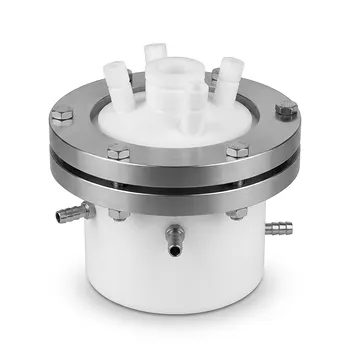
Because the hydrothermal reactor is a sealed, high-pressure stainless steel vessel (often with a PTFE liner), real-time observation of the reaction is difficult. This "black box" nature means that researchers must rely on post-reaction analysis to determine if the synthesis was successful.
Safety and Scaling Limitations
Operating at high temperatures and pressures introduces significant safety risks, requiring specialized equipment and rigorous maintenance of seals. Additionally, while these reactors are excellent for laboratory-scale precision, scaling the process for mass industrial production requires complex engineering to maintain uniform pressure and heat distribution.
Sensitivity to Parameter Fluctuations
The morphology of ZIF-67 is highly sensitive to even minor changes in the temperature-time profile. If the reactor's internal temperature deviates by only a few degrees, the resulting particles may transition from the desired nanocubes to unintended structural phases, leading to inconsistent product quality.
How to Apply This to Your Project
Making the Right Choice for Your Goal
To achieve the best results in ZIF-67 synthesis, your approach should be dictated by your specific material requirements:
- If your primary focus is high crystallinity: Prioritize a reactor with precise temperature control to maintain a steady 140 °C, ensuring complete hydrolysis and ordered crystal growth.
- If your primary focus is specific particle shape (e.g., nanocubes): Focus on the precise calibration of the reaction duration within the pressurized environment to stop growth at the desired morphology.
- If your primary focus is maximizing yield: Use a reactor that ensures a high seal integrity to maximize autogenous pressure, which drives faster and more complete precursor conversion.
The high-pressure hydrothermal reactor remains the indispensable tool for transforming raw chemical precursors into the sophisticated, highly structured framework of ZIF-67.
Summary Table:
| Reactor Function | Impact on ZIF-67 Synthesis | Key Mechanism |
|---|---|---|
| Thermal Regulation | High Crystallinity | Maintains superheated liquid phase for precursor interaction |
| Pressure Generation | Structural Integrity | Autogenous pressure forces ligands into specific lattice orientations |
| Kinetic Activation | Rapid Nucleation | Increases solubility and diffusion rates of cobalt ions and MeIM |
| Morphology Tuning | Shape Control | Adjusts geometry (nanocubes/flakes) via precise time-temp profiles |
Unlock Precision in Your Chemical Synthesis with KINTEK
To achieve superior ZIF-67 morphology and high-yield MOF production, your equipment must withstand extreme chemical and thermal environments. KINTEK specializes in high-performance fluoropolymer laboratory solutions designed specifically for these demanding applications.
From everyday basic labware—including beakers, crucibles, and reagent bottles—to advanced hydrothermal synthesis liners and microwave digestion vessels, we manufacture virtually every laboratory supply imaginable from high-purity PTFE and PFA. Whether you require comprehensive fluid transfer components (tubing, fittings, valves) or custom-machined parts via our end-to-end CNC fabrication, KINTEK provides the absolute focus on material performance your research deserves.
Don’t let equipment limitations hinder your crystal growth. Contact KINTEK today to discuss your custom laboratory setup!
References
- Paula S. Pacheco, Daniel Eiras. Fabrication of Morphology-Tailored ZIF-67/Polyether- <i>b</i> -Amide Mixed Matrix Membranes via CTAB-Assisted Hydrothermal Synthesis for CO <sub>2</sub> and CO <sub>2</sub> /N <sub>2</sub> Separation. DOI: 10.1021/acsomega.5c06995
This article is also based on technical information from Kintek Knowledge Base .
Related Products
- High Temperature Corrosion Resistant Hydrothermal Synthesis Reactor with TFM Inner Liner and Straight Cylinder Design
- PTFE Lined High Pressure Digestion Vessel 50ml High Temperature Hydrothermal Synthesis Tank
- High Pressure Custom TFM Reactor Stainless Steel Outer Vessel PTFE Inner Cup for Corrosive Synthesis
- High Temperature PTFE Reaction Flask 1000ml Single Neck Round and Flat Bottom Laboratory Bottle
- Custom TFM Reaction Vessel with Stainless Steel Jacket and PTFE Inner Cup for High Corrosion Resistance
People Also Ask
- What is the role of a corrosion-resistant reactor in the synthesis of lignin-based carbon dots? Ensure Maximum Purity
- What are the technical advantages of using hydrothermal synthesis reactors for advanced electronic & optical nanomaterials?
- How does a hydrothermal synthesis reactor facilitate the production of crystalline materials with tailored morphologies? Precision Crystal Growth
- Why is the sealing reliability of a hydrothermal synthesis reactor critical for 24-hour cycles? Ensure Nano-Precision
- What role do hydrothermal synthesis reactors play in CQD preparation? Achieve High-Purity Nanomaterial Synthesis