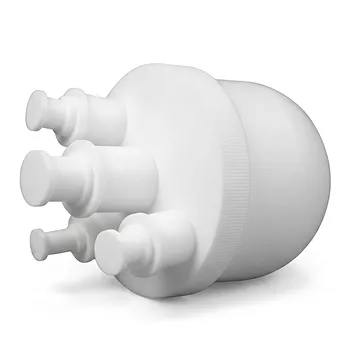
The high-pressure hydrothermal synthesis reactor is the primary vehicle for creating the specific subcritical environment required to form the cobalt-doped sodium tantalate (NaTaO3) crystal lattice. By maintaining a sealed system at temperatures such as 453 K (180 °C), the reactor forces the dissolution of precursors that would remain insoluble at atmospheric pressure, allowing them to recrystallize into a precise perovskite structure while ensuring cobalt ions are uniformly dispersed throughout the matrix.
The reactor functions as a high-energy chemical "pressure cooker" that enables full dissolution and controlled recrystallization of precursors. This process is essential for overcoming the kinetic barriers to perovskite phase formation and achieving atomic-level doping of cobalt.
Facilitating the NaTaO3 Perovskite Structure
Solvent Behavior Under Pressure
The reactor creates a subcritical environment where the properties of the aqueous solvent change significantly. Under high pressure and temperature, the dielectric constant of water decreases, and its ionic product increases, which significantly enhances the solubility of metal precursors.
Dissolution and Recrystallization
Once the precursors are fully dissolved, the reactor provides the thermal energy necessary for recrystallization. This "bottom-up" approach allows sodium and tantalum ions to organize into the stable perovskite crystal system, a process that is far more efficient than solid-state reactions.
Phase Purity and Crystallinity
The sealed environment prevents the loss of volatile components and maintains stoichiometric balance. This results in a product with high crystallinity and a pure phase, which are critical for the material’s performance in applications like photocatalysis.
Achieving Precision Cobalt Doping
Atomic-Level Dispersion
A major role of the hydrothermal reactor is preventing the segregation of dopants. The high-pressure environment facilitates the initial dispersion of cobalt ions within the sodium tantalate lattice as it forms, rather than allowing them to precipitate as separate, inactive oxides.
Deep Ion Interaction
The reactor promotes deep interaction between the host lattice and the dopant ions. This ensures that the cobalt effectively replaces ions within the NaTaO3 structure, creating the oxygen vacancies or electronic shifts required for the material's specific technical function.
Controlled Nucleation
By controlling the heating rate and pressure, the reactor allows for uniform nucleation. This results in a fine particle size and a large specific surface area, ensuring that the cobalt active sites are accessible and not buried within large, inactive clusters.
Understanding the Trade-offs
Equipment Limitations and Safety
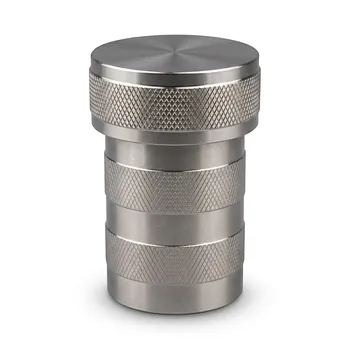
High-pressure reactors require specialized materials, such as stainless steel with PTFE or PPL liners, to withstand both the pressure and potential chemical corrosion. Operating these systems involves inherent risks, requiring strict adherence to safety protocols and pressure limits to prevent vessel failure.
Scalability and Monitoring
The "black box" nature of a sealed hydrothermal reactor makes real-time monitoring of the reaction difficult. While effective for laboratory-scale synthesis, translating these results to large-scale production is challenging due to the complexities of maintaining uniform temperature gradients in larger pressurized vessels.
Applying This to Your Synthesis Goals
Strategic Recommendations for Reactor Use
- If your primary focus is phase purity: Prioritize the dwell time at the maximum temperature (e.g., 453 K) to ensure the sodium tantalate precursors have completely recrystallized into the perovskite phase.
- If your primary focus is dopant uniformity: Ensure the precursor solution is thoroughly homogenized before sealing the reactor to allow the high-pressure environment to lock the cobalt ions into the lattice during the initial stages of crystal growth.
- If your primary focus is particle size control: Experiment with the solvent-to-precursor ratio and the reactor’s fill factor, as the autogenous pressure generated significantly influences the final dimensions and morphology of the nanoparticles.
The hydrothermal reactor transforms a simple aqueous mixture into a sophisticated, cobalt-doped semiconductor by leveraging the unique chemical physics of high-pressure subcritical water.
Summary Table:
| Mechanism | Role in Synthesis | Resulting Benefit |
|---|---|---|
| Subcritical Water | Lowers dielectric constant & increases solubility | Full precursor dissolution |
| Sealed System | Prevents loss of volatile components | Phase purity & stoichiometry |
| Controlled Pressure | Promotes atomic-level cobalt dispersion | Uniform doping & fine particle size |
| Thermal Energy | Drives bottom-up recrystallization | High crystallinity perovskite phase |
Elevate Your Material Synthesis with KINTEK Precision
Achieving the perfect perovskite structure requires equipment that can withstand the rigors of high-pressure chemistry. KINTEK specializes in high-performance fluoropolymer solutions, offering an exhaustive range of laboratory supplies—from PTFE and PFA liners for hydrothermal reactors and microwave digestion vessels to high-purity trace analysis instruments.
Whether your research requires everyday essentials like reagent bottles, crucibles, and beakers, or specialized fluid transfer components such as tubing, valves, and fittings, our end-to-end custom CNC fabrication ensures absolute precision. We support everything from complex non-standard machined parts to high-volume orders, ensuring your cobalt-doping processes are backed by the highest quality materials.
Ready to optimize your lab's performance? Contact KINTEK today for custom fluoropolymer solutions and high-performance labware!
References
- Masato Yanagi, Nobuyuki Ichikuni. Calcination-driven Co4+ incorporation in hydrothermally synthesized NaTaO3. DOI: 10.1093/chemle/upaf053
This article is also based on technical information from Kintek Knowledge Base .
Related Products
- High Temperature Corrosion Resistant Hydrothermal Synthesis Reactor with TFM Inner Liner and Straight Cylinder Design
- PTFE Lined High Pressure Digestion Vessel 50ml High Temperature Hydrothermal Synthesis Tank
- High Pressure Custom TFM Reactor Stainless Steel Outer Vessel PTFE Inner Cup for Corrosive Synthesis
- Custom TFM Reaction Vessel with Stainless Steel Jacket and PTFE Inner Cup for High Corrosion Resistance
- High Purity PFA Reaction Vessel for Biopharmaceutical Synthesis and Corrosive Chemical Fluid Handling with Customizable Tube Fittings
People Also Ask
- What is the role of a corrosion-resistant reactor in the synthesis of lignin-based carbon dots? Ensure Maximum Purity
- What are the technical advantages of using hydrothermal synthesis reactors for advanced electronic & optical nanomaterials?
- How does a hydrothermal synthesis reactor facilitate the production of crystalline materials with tailored morphologies? Precision Crystal Growth
- Why is the sealing reliability of a hydrothermal synthesis reactor critical for 24-hour cycles? Ensure Nano-Precision
- What role do hydrothermal synthesis reactors play in CQD preparation? Achieve High-Purity Nanomaterial Synthesis