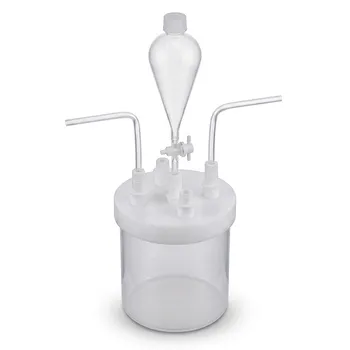
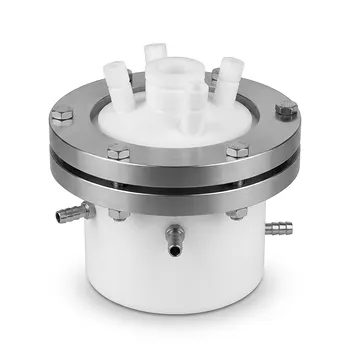
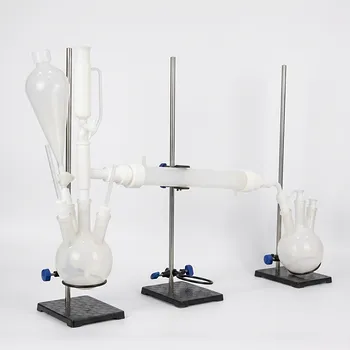
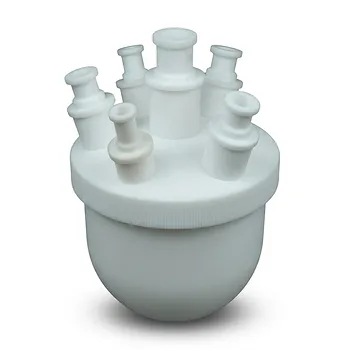
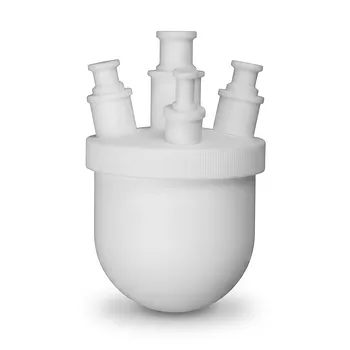
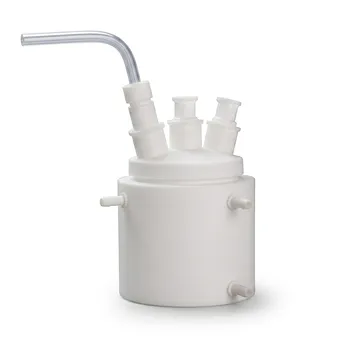
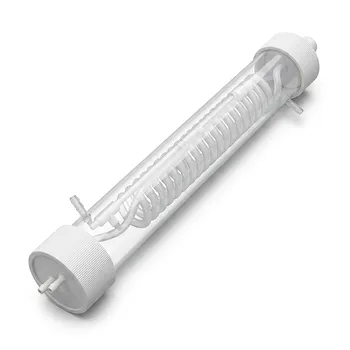
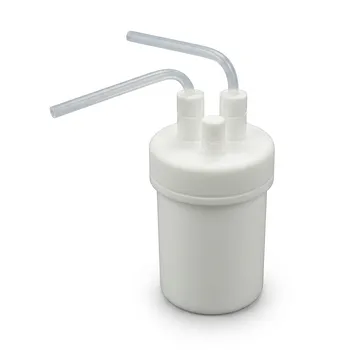
The high-pressure hydrothermal synthesis reactor is the critical vessel that enables the formation of spinel ZnNiₓMnₓCo₂₋₂ₓO₄ nanomaterials by providing a sealed, high-energy environment. This reactor allows precursor solutions to be heated—typically to around 160 °C—generating autogenous pressure that significantly increases the solubility and reactivity of metal acetate precursors. This specific environment is what ensures uniform nucleation and growth, allowing for precise control over the material's stoichiometry and particle size.
Core Takeaway: The hydrothermal reactor functions as a high-pressure "pressure cooker" for chemistry, forcing precursors into a reactive state that allows for the creation of complex spinel structures with high crystalline purity and fine-tuned chemical compositions that are impossible to achieve at atmospheric pressure.
Creating the Ideal Thermodynamic Environment
Maintaining the Liquid Phase Above Boiling Point
The primary function of the reactor is to provide a sealed system that keeps aqueous solutions in a liquid state even when temperatures exceed 100 °C. This environment allows the solvent to reach a subcritical state, where its properties change to favor the dissolution of solid precursors.
Generating Autogenous Pressure
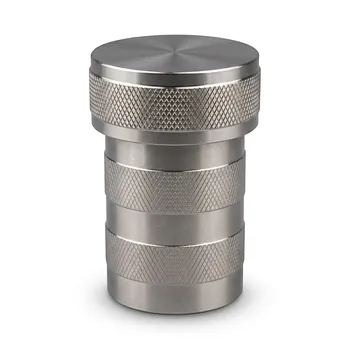
As the temperature rises within the confined space of the reactor (often a stainless steel autoclave with a PTFE liner), the internal pressure increases naturally. This autogenous pressure is the driving force that pushes the reactants together, overcoming energy barriers for the formation of the spinel crystal lattice.
Enhancing Precursor Solubility and Reactivity
Activating Metal Acetate Precursors
In the synthesis of ZnNiₓMnₓCo₂₋₂ₓO₄, metal acetates must be broken down and rearranged into a complex oxide structure. The high-pressure environment significantly increases the solubility and diffusion rates of these metal ions, ensuring they are evenly distributed throughout the solution before they begin to crystallize.
Facilitating Complete Hydrolysis
High-energy conditions within the reactor facilitate the complete hydrolysis of metal precursors. This ensures that the transition from a liquid precursor solution to a solid crystalline oxide is thorough, preventing the formation of unwanted side-products or unreacted residues.
Precision Control of Nanostructure and Stoichiometry
Achieving Uniform Nucleation
The reactor’s controlled heating allows for uniform nucleation, where the first "seeds" of the nanoparticles form simultaneously throughout the solution. This uniformity is essential for obtaining fine particle sizes and preventing a wide variance in the dimensions of the resulting nanomaterials.
Preserving Specific Stoichiometry
Because the system is sealed, there is no loss of volatile components or solvent during the reaction. This "closed-loop" environment is vital for maintaining the specific stoichiometry of ZnNiₓMnₓCo₂₋₂ₓO₄, ensuring the ratio of Zinc, Nickel, Manganese, and Cobalt remains exactly as intended in the final spinel structure.
Understanding the Trade-offs
The "Black Box" Limitation
One major challenge of hydrothermal synthesis is that the reaction happens inside a sealed, opaque vessel. This makes it impossible to observe the crystal growth in real-time, requiring researchers to rely on precise timing and post-reaction analysis to understand the results.
Safety and Scaling Constraints
Operating at high temperatures and pressures carries inherent safety risks, requiring specialized equipment like stainless steel autoclaves. Furthermore, while excellent for laboratory precision, scaling this process for industrial mass production can be capital-intensive due to the need for large-scale high-pressure vessels.
How to Apply This to Your Project
Recommendations for Material Synthesis
The success of your synthesis depends on how you manage the reactor's environment relative to your specific material goals.
- If your primary focus is Phase Purity: Ensure the reaction temperature is held steady (e.g., 160 °C) for a sufficient duration to allow the spinel lattice to fully organize and stabilize.
- If your primary focus is Fine Particle Size: Focus on rapid heating to the target temperature to trigger a "burst" of nucleation, which creates many small particles rather than a few large ones.
- If your primary focus is Morphology Control: Experiment with different fill levels within the reactor (the "filling degree"), as this alters the internal pressure and can induce different crystal facets or shapes.
By mastering the high-pressure environment of the hydrothermal reactor, you gain the ability to engineer complex spinel nanomaterials with atomic-level precision.
Summary Table:
| Reactor Feature | Impact on Synthesis | Key Material Benefit |
|---|---|---|
| Sealed Liquid Phase | Maintains solvent above boiling point | Enables subcritical dissolution of precursors |
| Autogenous Pressure | Overcomes energy barriers for lattice formation | Creation of complex spinel structures |
| Sealed System | Prevents loss of volatile components | Precise control over specific stoichiometry |
| Controlled Heating | Triggers simultaneous 'burst' nucleation | Achieves uniform and fine particle size |
| PTFE/PFA Liners | High-energy chemical resistance | Prevents contamination and handles precursors |
Precision Labware for High-Performance Synthesis
To achieve the delicate stoichiometry required for advanced nanomaterials like ZnNiₓMnₓCo₂₋₂ₓO₄, the purity and reliability of your lab components are non-negotiable. At KINTEK, we specialize exclusively in high-performance fluoropolymer materials, manufacturing virtually every lab supply imaginable from PTFE and PFA.
From high-purity hydrothermal synthesis liners and microwave digestion vessels to essential basic labware like beakers, crucibles, and reagent bottles, our products ensure zero contamination in your most sensitive reactions. Whether you need standard fluid transfer components (tubing, fittings, valves), specialized sample prep tools (filters, pipettes, tweezers), or custom CNC-fabricated non-standard parts, KINTEK provides end-to-end solutions for complex laboratory setups.
Ready to elevate your material research? Contact us today to discuss how our bespoke fluoropolymer solutions can enhance your lab's precision and throughput.
References
- T. Singha, A. Somdee. Study of spinel ZnNixMnxCo2-2xO4 (x = 0, 0.25, 0.5, 0.75, and 1.0) nanomaterials for supercapacitor electrode applications by hydrothermal synthesis. DOI: 10.15251/jor.2025.212.225
This article is also based on technical information from Kintek Knowledge Base .
Related Products
- High Temperature Corrosion Resistant Hydrothermal Synthesis Reactor with TFM Inner Liner and Straight Cylinder Design
- High Pressure Custom TFM Reactor Stainless Steel Outer Vessel PTFE Inner Cup for Corrosive Synthesis
- PTFE Lined High Pressure Digestion Vessel 50ml High Temperature Hydrothermal Synthesis Tank
- High Temperature PTFE Reaction Flask 1000ml Single Neck Round and Flat Bottom Laboratory Bottle
- Custom TFM Reaction Vessel with Stainless Steel Jacket and PTFE Inner Cup for High Corrosion Resistance
People Also Ask
- What is the role of a corrosion-resistant reactor in the synthesis of lignin-based carbon dots? Ensure Maximum Purity
- What are the technical advantages of using hydrothermal synthesis reactors for advanced electronic & optical nanomaterials?
- How does a hydrothermal synthesis reactor facilitate the production of crystalline materials with tailored morphologies? Precision Crystal Growth
- Why is the sealing reliability of a hydrothermal synthesis reactor critical for 24-hour cycles? Ensure Nano-Precision
- What role do hydrothermal synthesis reactors play in CQD preparation? Achieve High-Purity Nanomaterial Synthesis