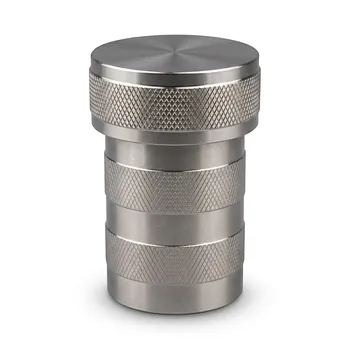
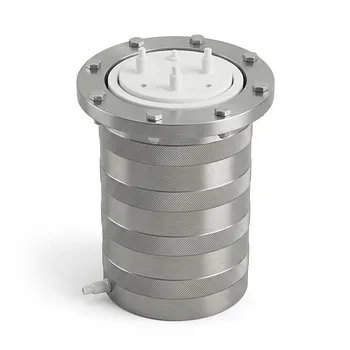
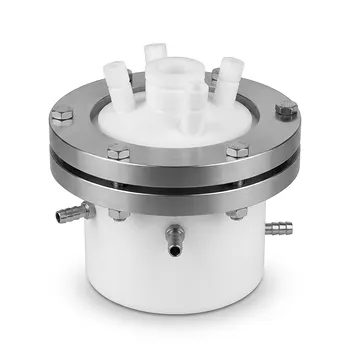
The high-pressure hydrothermal synthesis reactor is the essential environment required to engineer the interface between carbon nanotubes and metal oxides. It provides a sealed, high-temperature (typically 120°C), and high-pressure setting for an extended duration, such as 8 hours. This controlled environment enables the in-situ decomposition and crystallization of copper acetate, ensuring that CuO@Cu2O nanoclusters adhere firmly and uniformly to the carbon nanotube (CNT) network.
The reactor functions by creating subcritical conditions that increase precursor solubility and reactivity, allowing for the precise, in-situ growth of crystallized copper oxides directly onto the surface of carbon nanotubes.
Creating the Subcritical Reaction Environment
Achieving Precise Thermal and Pressure Control
The reactor maintains a constant temperature of 120°C, which, in a sealed vessel, generates the internal pressure necessary to drive chemical reactions. This stable environment prevents the evaporation of solvents, ensuring the stoichiometric integrity of the CuO@Cu2O nanoclusters throughout the 8-hour process.
Enhancing Precursor Solubility and Reactivity
High-pressure conditions significantly increase the solubility of metal acetate precursors in the aqueous or solvent-based solution. This increased reactivity allows the copper salts to decompose and nucleate at lower temperatures than would be possible under standard atmospheric pressure.
Facilitating In-Situ Nanocluster Formation
Promoting Nucleation on Carbon Nanotube Surfaces
The reactor enables in-situ functionalization, meaning the copper oxide nanoclusters grow directly on the CNT walls rather than forming separately in the solution. This process ensures the copper oxides are integrated into the dense network structure of the nanotubes, creating a cohesive composite material.
Ensuring Structural Integrity and Adhesion
The hydrothermal environment facilitates the full crystallization of the copper oxides, leading to high-purity nanoclusters. This method ensures that the nanoparticles adhere firmly to the carbon substrate, which is vital for the mechanical and electrical stability of the resulting composite.
Understanding the Trade-offs
Reaction Time vs. Particle Morphology
While 8 hours is often the standard duration, excessive time in the reactor can lead to particle agglomeration or unwanted crystal growth. Conversely, a reaction time that is too short may result in incomplete crystallization or poor adhesion to the CNT surface.
Scalability and Safety Constraints
Hydrothermal reactors are typically limited by the volume of the pressure vessel, which can make large-scale production more challenging than open-system methods. Additionally, the high pressures involved require specialized equipment and rigorous safety monitoring to prevent vessel failure.
How to Apply This to Your Project
- If your primary focus is uniform nanocluster distribution: Ensure the CNTs are properly dispersed in the precursor solution before sealing the reactor to allow for even nucleation sites.
- If your primary focus is maximizing adhesion: Adhere strictly to the 8-hour high-pressure cycle to allow sufficient time for the copper oxides to bond to the carbon walls.
- If your primary focus is controlling oxide phases (CuO vs Cu2O): Precisely calibrate the reactor temperature, as even small fluctuations can alter the reduction-oxidation balance during crystallization.
By leveraging the unique subcritical environment of a hydrothermal reactor, you can achieve a level of structural precision and interfacial strength that is unattainable through conventional mixing methods.
Summary Table:
| Feature | Role in Synthesis | Outcome |
|---|---|---|
| Subcritical Setting | Boosts precursor solubility and reactivity | Lower temperature nucleation |
| In-Situ Formation | Direct growth on CNT surface walls | Strong adhesion & structural stability |
| Thermal Control | Maintains stoichiometric integrity | High-purity CuO@Cu2O nanoclusters |
| Sealed System | Prevents solvent evaporation at 120°C | Consistent 8-hour reaction cycle |
Upgrade Your Research with KINTEK’s Precision Fluoropolymer Solutions
From everyday basics like beakers, crucibles, and digestion tubes to advanced hydrothermal synthesis liners and microwave digestion vessels, KINTEK delivers the high-performance laboratory supplies your synthesis requires. We specialize in PTFE and PFA materials, utilizing end-to-end custom CNC fabrication to provide everything from high-purity trace analysis instruments to complex, non-standard machined parts.
Whether you need fluid transfer components (tubing, valves), sample prep tools (filters, pipettes, tweezers), or bespoke electrochemical cells and battery testing fixtures, we maintain an absolute focus on material excellence and durability.
Experience the KINTEK advantage in your next project—contact us today for custom or high-volume orders!
References
- Taotao Liang, Lin Guo. Unveiling superior creatinine detection: advanced electrochemical biosensor with remarkable sensitivity. DOI: 10.1039/d5ma00644a
This article is also based on technical information from Kintek Knowledge Base .
Related Products
- High Temperature Corrosion Resistant Hydrothermal Synthesis Reactor with TFM Inner Liner and Straight Cylinder Design
- High Pressure Custom TFM Reactor Stainless Steel Outer Vessel PTFE Inner Cup for Corrosive Synthesis
- PTFE Lined High Pressure Digestion Vessel 50ml High Temperature Hydrothermal Synthesis Tank
- High Temperature PTFE Reaction Flask 1000ml Single Neck Round and Flat Bottom Laboratory Bottle
- Custom TFM Reaction Vessel with Stainless Steel Jacket and PTFE Inner Cup for High Corrosion Resistance
People Also Ask
- What is the role of a corrosion-resistant reactor in the synthesis of lignin-based carbon dots? Ensure Maximum Purity
- What are the technical advantages of using hydrothermal synthesis reactors for advanced electronic & optical nanomaterials?
- How does a hydrothermal synthesis reactor facilitate the production of crystalline materials with tailored morphologies? Precision Crystal Growth
- Why is the sealing reliability of a hydrothermal synthesis reactor critical for 24-hour cycles? Ensure Nano-Precision
- What role do hydrothermal synthesis reactors play in CQD preparation? Achieve High-Purity Nanomaterial Synthesis