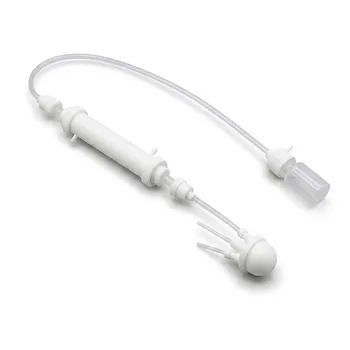
The high-pressure hydrothermal reactor acts as a controlled thermodynamic vessel that enables the synthesis of binuclear Ni(II) complexes by maintaining a sealed, high-temperature environment (typically 140°C) for extended periods. This process generates autogenous pressure that forces precursors into solution, facilitating the growth of high-quality single crystals suitable for X-ray diffraction analysis.
The reactor's primary role is to create a stable, high-energy environment that overcomes the solubility limits of organic ligands and metal sources. By preventing solvent loss and maintaining constant pressure, it allows for the slow, ordered self-assembly of complex molecular structures into a stable crystal lattice.
Enhancing Solubility and Kinetic Reactivity
Overcoming Solubility Barriers
In the synthesis of binuclear Ni(II) complexes, precursors such as 3-chlorobenzoic acid and 3-(pyridin-2-yl)-1,2,4-triazole often have limited solubility in standard water-ethanol mixtures at room temperature. The reactor allows the solvent to reach temperatures far above its normal boiling point while remaining in a liquid state. This superheated environment significantly increases the solubility and reactivity of these organic components.
Driving the Coordination Reaction
High internal pressure lowers the kinetic barriers for metal-ligand coordination. Under these conditions, the Ni(II) ions and organic ligands can interact more effectively to form the desired binuclear structure. This "supercritical" or "subcritical" fluid environment ensures thorough mixing and chemical engagement that would be impossible in an open-beaker system.
Facilitating Molecular Self-Assembly
The high-pressure environment is essential for the formation of complex metal-organic structures. Much like the synthesis of MOFs (Metal-Organic Frameworks), the pressure aids the coordination reaction between metal ions and organic ligands. This allows the components to reorganize from loosely packed molecules into a more stable, regular structure.
Ensuring Structural Integrity and Crystal Quality
The Necessity of a Sealed Environment
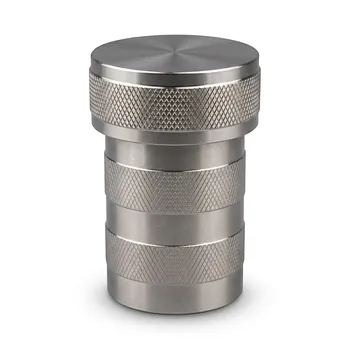
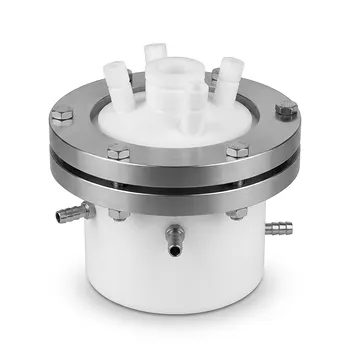
A high-pressure reactor, typically consisting of a stainless steel autoclave with a PTFE liner, ensures that no solvent leaks during the 72-hour reaction period. Maintaining a constant volume is critical because any loss of solvent would alter the concentration of the reactants and drop the internal pressure.
Preventing Polycrystalline Formation
Stable pressure is a physical requirement for the slow self-assembly of complex components into a stable lattice. If the pressure fluctuates or the solvent evaporates, the reaction may result in polycrystalline powders rather than single crystals. Single crystals are the "gold standard" for analysis, as they are required for definitive structural determination via diffraction.
Inducing Specific Morphologies
By precisely controlling the temperature and duration within the reactor, researchers can induce specific crystal facets and morphologies. The reactor environment provides the "quiet" thermodynamic conditions necessary for the crystals to grow slowly and without defects. This results in high-crystallinity materials that serve as the foundation for further chemical or catalytic study.
Understanding the Trade-offs and Risks
Solvent Limitations and Safety
While PTFE liners are highly resistant to chemicals, they have strict temperature limits (usually around 200°C-250°C). Exceeding these limits or using incompatible solvents can lead to liner deformation or catastrophic failure of the autoclave. Furthermore, the autogenous pressure generated is highly dependent on the "filling degree" of the liner; overfilling can lead to dangerous pressure spikes.
The Challenge of "Black Box" Synthesis
One major trade-off of hydrothermal synthesis is that it is a "closed-system" reaction. Researchers cannot observe the reaction in real-time or take samples without quenching the process and opening the reactor. This makes it difficult to determine the exact moment of crystal nucleation or to adjust parameters mid-way through the 72-hour cycle.
How to Apply This to Your Synthesis Goals
Optimization Based on Your Objectives
The success of your Ni(II) complex synthesis depends on balancing the heating duration with the cooling rate to ensure crystal stability.
- If your primary focus is obtaining high-quality single crystals: Maintain a stable temperature of 140°C for the full 72 hours and implement a very slow cooling ramp to room temperature to prevent crystal cracking.
- If your primary focus is maximizing yield of the complex: Ensure the "filling degree" of your PTFE liner is optimized (typically 50-80%) to maximize autogenous pressure and precursor solubility.
- If your primary focus is preventing polycrystalline impurities: Use a high-quality stainless steel autoclave with a perfect seal to ensure zero solvent loss, as even minor leakage can interrupt the self-assembly process.
The high-pressure hydrothermal reactor is the indispensable engine that provides the thermodynamic energy and physical stability required to transform simple precursors into sophisticated binuclear Ni(II) architectures.
Summary Table:
| Reactor Feature | Role in Ni(II) Synthesis | Impact on Final Product |
|---|---|---|
| High Temperature (140°C) | Increases kinetic reactivity and precursor solubility | Enables coordination of complex ligands |
| Autogenous Pressure | Forces precursors into solution; drives self-assembly | Creates stable, regular metal-organic structures |
| PTFE Liner & Seal | Prevents solvent loss and maintains constant concentration | Ensures structural integrity and prevents impurities |
| Controlled Cooling | Thermodynamic "quiet" environment | Produces high-quality single crystals for X-ray diffraction |
Elevate Your Synthesis Results with KINTEK
Precision in hydrothermal synthesis demands high-performance materials that withstand extreme conditions. KINTEK specializes in manufacturing a comprehensive range of laboratory supplies crafted exclusively from PTFE and PFA, ensuring your chemical reactions remain uncontaminated and stable.
From high-quality hydrothermal synthesis liners and microwave digestion vessels to standard labware like beakers, crucibles, and reagent bottles, we provide the essential tools for advanced research. Whether you need comprehensive fluid transfer components (tubing, valves, fittings), sample prep tools (filters, pipettes, tweezers), or advanced reaction apparatus like custom electrochemical cells and microchannel reactors, KINTEK delivers.
Why choose KINTEK?
- End-to-End Customization: Our CNC fabrication capabilities allow us to deliver complex, non-standard machined parts and bespoke laboratory setups.
- Material Focus: An absolute focus on high-performance fluoropolymers for superior chemical resistance.
- Scalability: We handle everything from high-volume orders to specialized, one-off research equipment.
Don't let equipment limitations hinder your molecular self-assembly. Contact us today to discuss your custom laboratory needs and experience the KINTEK difference in high-performance fluoropolymer engineering.
References
- Zhuowen Xu, Chang-Hong Li. Hydrothermal synthesis, crystal structure of [K3:N1:N2:N4-3-(pyridin-2-yl)-1,2,4-triazole] binuclear Ni(II) complex[Ni<sub>2</sub>(C<sub>7</sub>H<sub>5</sub>N<sub>4</sub>)2(C<sub>7</sub>H<sub>4</sub>ClO<sub>2</sub>)<sub>2</sub>]. DOI: 10.1515/ncrs-2024-0362
This article is also based on technical information from Kintek Knowledge Base .
Related Products
- High Temperature Corrosion Resistant Hydrothermal Synthesis Reactor with TFM Inner Liner and Straight Cylinder Design
- High Pressure Custom TFM Reactor Stainless Steel Outer Vessel PTFE Inner Cup for Corrosive Synthesis
- PTFE Lined High Pressure Digestion Vessel 50ml High Temperature Hydrothermal Synthesis Tank
- Custom TFM Reaction Vessel with Stainless Steel Jacket and PTFE Inner Cup for High Corrosion Resistance
- High Purity PFA Constant Pressure Condensation Reaction System Acid Resistant High Temperature Customizable Teflon Labware
People Also Ask
- What is the role of a corrosion-resistant reactor in the synthesis of lignin-based carbon dots? Ensure Maximum Purity
- What are the technical advantages of using hydrothermal synthesis reactors for advanced electronic & optical nanomaterials?
- How does a hydrothermal synthesis reactor facilitate the production of crystalline materials with tailored morphologies? Precision Crystal Growth
- Why is the sealing reliability of a hydrothermal synthesis reactor critical for 24-hour cycles? Ensure Nano-Precision
- What role do hydrothermal synthesis reactors play in CQD preparation? Achieve High-Purity Nanomaterial Synthesis