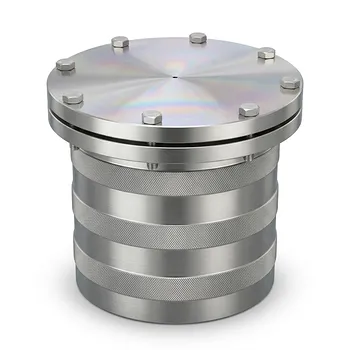
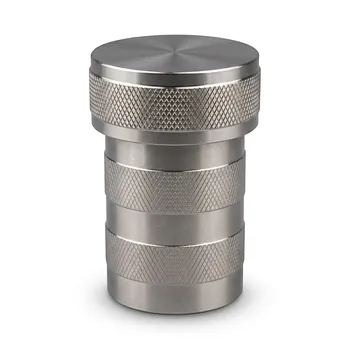
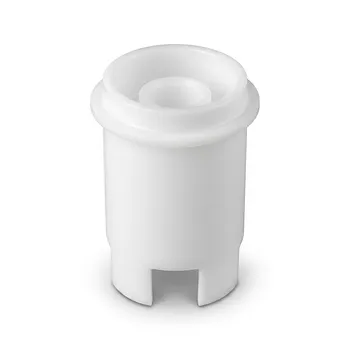
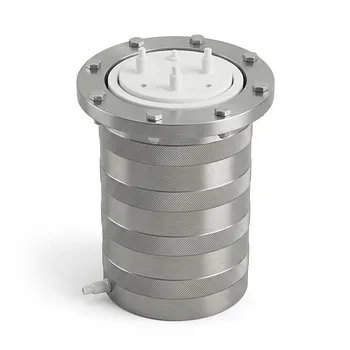
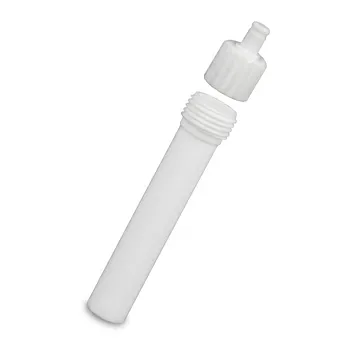
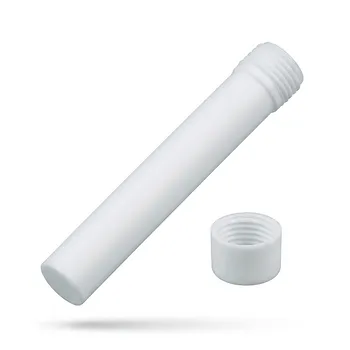
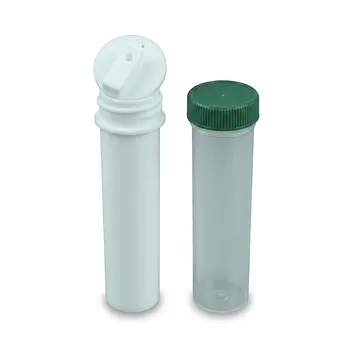
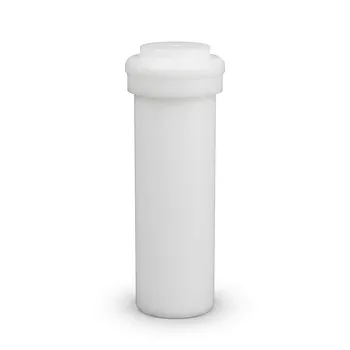
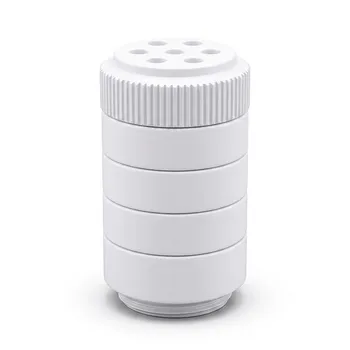
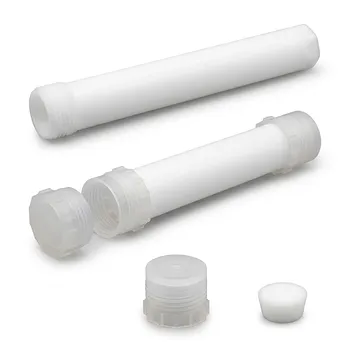
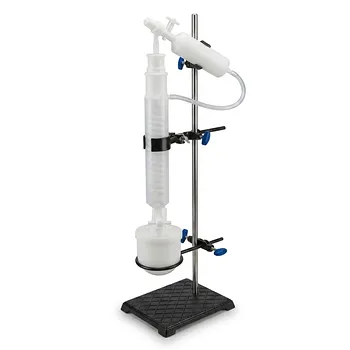
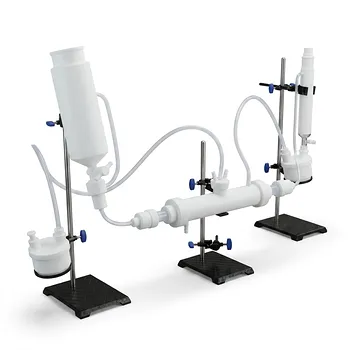
The high-pressure autoclave with a PTFE liner acts as the fundamental reactor for solvothermal synthesis, providing the extreme environment necessary to drive chemical transformations. Specifically, it enables the in-situ growth and self-assembly of iron-doped nickel sulfides onto chromium oxide (Cr2O3) templates by maintaining a stable temperature of 180 °C and high autogenous pressure. This equipment ensures that the resulting heterojunction is chemically pure by using a Polytetrafluoroethylene (PTFE) barrier to prevent the reaction mixture from leaching metallic impurities from the autoclave's steel walls.
The autoclave creates a "chemical pressure cooker" effect where increased solubility and high-energy conditions facilitate the molecular-level assembly of Fe-Ni3S4/Cr2O3 heterojunctions. The PTFE liner is the critical safeguard, ensuring the chemical integrity of the catalyst by resisting corrosive precursors and preventing contamination.
Creating the Ideal Solvothermal Environment
Driving Reaction Kinetics with Heat and Pressure
The sealed autoclave environment allows the solvent to be heated well beyond its boiling point, generating autogenous pressure. This high-energy state significantly increases the solubility of precursors, allowing iron and nickel ions to interact more effectively with the sulfur source.
Promoting Uniform Nucleation and Growth
Under these pressurized conditions, the system achieves molecular-level mixing, which is vital for the uniform distribution of iron dopants within the nickel sulfide lattice. This controlled environment facilitates the oriented growth of crystals, ensuring the Fe-Ni3S4 phase adheres correctly to the Cr2O3 template to form a functional heterojunction.
The Critical Role of the PTFE Liner
Ensuring Chemical Inertness and Purity
The PTFE liner is exceptionally resistant to chemical attack from aggressive sulfur sources and metal precursor solutions. By providing a non-reactive barrier, it prevents the introduction of metallic impurities that could poison the catalyst or alter the electronic properties of the Fe-Ni3S4/Cr2O3 interface.
Protecting the Structural Integrity of the Reactor
High-concentration precursors and organic solvents can be highly corrosive to the stainless steel outer shell of the autoclave. The PTFE liner protects the vessel from degradation, ensuring the safety of the high-pressure operation and extending the lifespan of the equipment.
Facilitating the Heterojunction Synthesis
In-situ Growth on Cr2O3 Templates
The autoclave environment drives the in-situ growth mechanism, where nickel and iron ions nucleate directly onto the surface of the Cr2O3 templates. This process is essential for creating the intimate contact required for efficient charge transfer across the heterojunction.
Enabling Effective Iron Doping
The stable, high-temperature environment (typically 180 °C) provides the necessary energy to overcome the activation barriers for iron doping. This modification of the Ni3S4 lattice is crucial for optimizing the electrochemical activity of the final catalyst.
Understanding the Trade-offs and Limitations
Temperature and Pressure Constraints
While PTFE is highly inert, it has a functional limit, typically around 220–250 °C. Exceeding these temperatures can lead to the mechanical deformation (creep) of the liner or the release of toxic fluorinated vapors, potentially compromising the experiment.
Scaling and Throughput Challenges
Autoclave synthesis is primarily a batch process, which can limit the volume of material produced in a single run. Furthermore, the cooling process must be carefully controlled; rapid cooling can lead to internal stresses in the heterojunction or inconsistent crystal morphologies.
How to Apply This to Your Synthesis Goals
Strategic Recommendations for Catalyst Design
- If your primary focus is maximizing chemical purity: Ensure the PTFE liner is thoroughly cleaned with acid between runs to remove any residual metal ions that may have adsorbed to the plastic surface.
- If your primary focus is achieving specific crystal morphology: Precisely control the filling ratio of the autoclave, as the headspace volume directly dictates the autogenous pressure generated at 180 °C.
- If your primary focus is ensuring structural stability of the heterojunction: Use a slower cooling ramp after the reaction is complete to allow the Fe-Ni3S4 and Cr2O3 phases to stabilize their interface.
By mastering the high-pressure environment of the PTFE-lined autoclave, researchers can precisely engineer the interface and composition of complex heterojunctions for advanced catalytic applications.
Summary Table:
| Aspect | Solvothermal Mechanism | PTFE Liner Role |
|---|---|---|
| Environment | 180°C + High autogenous pressure | Prevents metal leaching from steel walls |
| Kinetics | Increases precursor solubility & mixing | Resists corrosion from sulfur precursors |
| Morphology | Drives in-situ growth on templates | Ensures chemical integrity of the interface |
| Doping | Overcomes activation energy for Fe-doping | Maintains a non-reactive, stable environment |
Precision Labware for Advanced Catalyst Synthesis
Unlock superior research outcomes with KINTEK, the industry leader in high-performance fluoropolymer labware. Whether you are performing solvothermal synthesis or complex trace analysis, our specialized equipment ensures absolute chemical purity and durability.
Our extensive product range includes:
- Core Labware: PTFE/PFA beakers, crucibles, reagent bottles, and centrifuge tubes.
- Advanced Apparatus: Hydrothermal synthesis liners, microwave digestion vessels, and custom electrochemical cells.
- Fluid & Filtration: Tubing, valves, separatory funnels, and high-purity filtration tools.
- Custom Engineering: End-to-end custom CNC fabrication for non-standard machined parts and bespoke laboratory setups.
From high-volume orders to unique custom designs, KINTEK delivers the structural integrity and chemical resistance your lab requires. Contact KINTEK today to optimize your synthesis workflow!
References
- Kun Wang, Guangyu He. Fe doping intensifies the built-in electric field for tailoring the reconstruction of sulfides towards efficient oxygen evolution. DOI: 10.1039/d4sc08789e
This article is also based on technical information from Kintek Knowledge Base .
Related Products
- Custom TFM Reaction Vessel with Stainless Steel Jacket and PTFE Inner Cup for High Corrosion Resistance
- PTFE Lined High Pressure Digestion Vessel 50ml High Temperature Hydrothermal Synthesis Tank
- High Temperature Corrosion Resistant Hydrothermal Synthesis Reactor with TFM Inner Liner and Straight Cylinder Design
- High Pressure PTFE Digestion Vessel Inner Cup Holder Custom Corrosion Resistant Low Background Teflon
- High Pressure Custom TFM Reactor Stainless Steel Outer Vessel PTFE Inner Cup for Corrosive Synthesis
People Also Ask
- Why are high-performance pressure-resistant reaction vessels required for oxygen-assisted hydrothermal conversion at 150 °C?
- How do magnetic stirring and reaction vessels impact MOF-derived carbon quality? Optimize Your Composite Performance
- Why are high-quality fluoropolymer-lined reaction vessels required for alk-Ti3C2Tx MXene? Ensure Purity & HF Resistance
- Why are PTFE-lined reaction vessels necessary for forced degradation studies? Ensure high-purity results and accuracy.
- Why is a high-purity PTFE lined reaction vessel required for the acidic etching of MXenes? Ensure Material Purity.