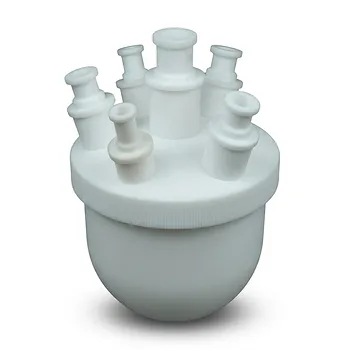
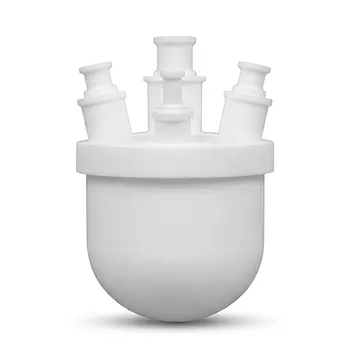
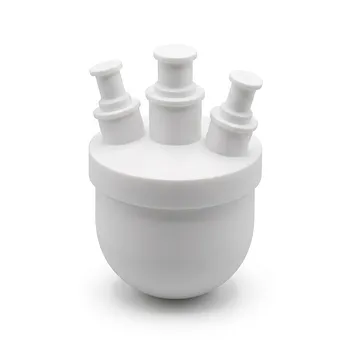
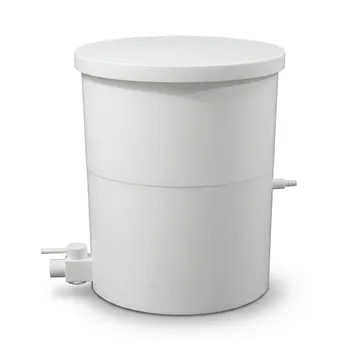
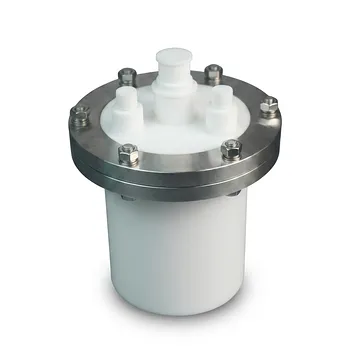
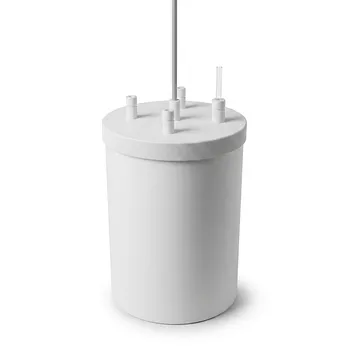
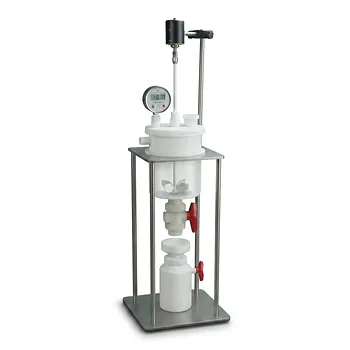
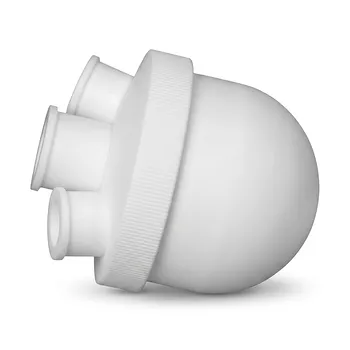
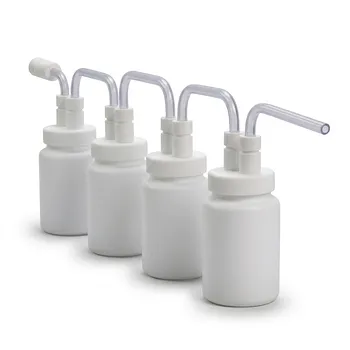
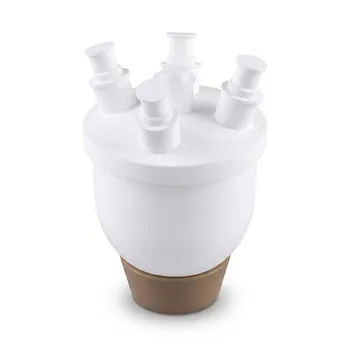
The 50 mL hydrothermal synthesis reactor with a high-purity PTFE liner serves as a pressurized "micro-environment" that enables the controlled growth of nanostructures while maintaining extreme chemical purity. It provides the necessary heat and autogenous pressure to facilitate in-situ nucleation and the growth of precursors into specific crystalline phases, such as rod-like structures on graphene sheets, without the risk of metallic contamination.
The core value of this reactor lies in its ability to decouple the reaction environment from the structural vessel. By using a chemically inert PTFE liner to isolate the reagents, researchers can achieve high-purity crystallization and uniform morphology under conditions that would otherwise corrode or contaminate the final composite material.
Facilitating Controlled Crystal Growth and Nucleation
Creating the High-Pressure Environment
The sealed 50 mL reactor generates internal pressure as it is heated, allowing chemical reactions to occur at temperatures above the boiling point of the solvent. This environment is essential for the complete hydrolysis of precursors and the subsequent crystallization of materials into specific structures, such as tetragonal rutile-structured tin dioxide.
Enabling In-Situ Growth on Substrates
The stable thermal environment facilitates the in-situ nucleation of precursors directly onto secondary materials, such as graphene oxide (rGO). This process is critical for creating high-performance composites where the "guest" material (e.g., Co3S4) must be intimately bonded to the "host" substrate to ensure optimal electronic or structural properties.
Achieving Specific Crystalline Phases
Maintaining a constant temperature, such as 90°C or 160°C, within a closed system allows for the precise transition of precursors into their final crystalline forms. This precision ensures that the synthesized composite exhibits the desired crystalline phase and rod-like morphology required for its specific application.
Ensuring High Purity and Chemical Integrity
The Role of PTFE as a Corrosion Barrier
The high-purity Polytetrafluoroethylene (PTFE) liner acts as a physical shield between the reaction solution and the reactor’s stainless steel shell. This isolation is crucial when working with strong acids or bases that would otherwise erode the metal walls and compromise the structural integrity of the autoclave.
Prevention of Metallic Contamination
By preventing direct contact between the reagents and the metal vessel, the PTFE liner ensures that no metal ion impurities are introduced into the product. This is a non-negotiable requirement for synthesizing high-purity nanomaterials where even trace amounts of iron or nickel could interfere with the material's properties.
Eliminating Catalytic Interference
The chemical inertness of the PTFE liner ensures that the vessel itself does not act as an unintended catalyst. This allows researchers to study the pure kinetics of the reaction, ensuring that the resulting molecular interactions and polymer compatibilities are a result of the intended chemical design rather than environmental interference.
Enhancing Material Recovery and Consistency
Non-Stick Properties and Product Yield
PTFE’s natural non-stick properties simplify the collection of synthesized products, especially high-viscosity polymers or sticky nanocomposites. This feature ensures a higher recovery rate of the sample and makes the cleaning process significantly easier, preventing cross-contamination between experimental runs.
Thermal Stability and Uniform Morphology
The thermal stability of the liner ensures a clean and consistent reaction environment throughout the heating cycle. This consistency is what allows for the preparation of nanomaterials with uniform morphology, preventing the irregular growth patterns that can occur in less stable or contaminated environments.
Understanding the Trade-offs
Temperature and Pressure Constraints
While highly effective, PTFE liners have a definitive thermal ceiling, typically around 220°C. Exceeding these temperatures can cause the liner to soften or deform, potentially leading to a loss of the hermetic seal and the failure of the experiment.
Scale and Volume Limitations
The 50 mL volume is ideal for bench-top research and development but presents challenges for scalability. The internal dynamics of heat transfer and pressure gradients in a small 50 mL vessel may not translate directly to larger industrial-scale reactors, requiring careful recalibration during process scale-up.
Making the Right Choice for Your Goal
How to Apply This to Your Project
- If your primary focus is high-purity nanomaterials: Ensure your PTFE liner is of the "high-purity" grade to eliminate the risk of trace contaminants leaching into your crystal growth system.
- If your primary focus is complex composite morphology: Use the reactor to maintain constant, lower-temperature heating (e.g., 90°C) over longer durations to allow for slow, controlled in-situ nucleation on substrates like rGO.
- If your primary focus is working with corrosive precursors: Regularly inspect the PTFE liner for thinning or discoloration, as the liner is the only defense for the expensive stainless steel outer shell.
By leveraging the unique chemical isolation and pressurized environment of a PTFE-lined reactor, you can achieve the precise material phases and structural purity required for advanced composite synthesis.
Summary Table:
| Feature | Function in Synthesis | Key Benefit |
|---|---|---|
| High-Purity PTFE Liner | Chemical isolation & corrosion barrier | Prevents metal ion contamination & ensures pure kinetics |
| Sealed Environment | Generates autogenous pressure | Enables reactions above boiling point for complete hydrolysis |
| In-situ Nucleation | Stable thermal environment | Facilitates growth of precursors directly onto substrates like rGO |
| Non-stick Surface | High product recovery | Simplifies collection of viscous polymers and nanocomposites |
| Thermal Stability | Constant heating up to 220°C | Ensures uniform morphology and consistent crystalline phases |
Elevate Your Material Research with KINTEK’s Fluoropolymer Expertise
At KINTEK, we specialize in the absolute precision required for advanced material synthesis. Whether you are conducting bench-top R&D or scaling up complex processes, our high-performance PTFE and PFA laboratory supplies provide the ultimate defense against contamination.
From everyday basic labware (beakers, crucibles, reagent bottles, and digestion tubes) to advanced reaction apparatus like hydrothermal synthesis liners, microwave digestion vessels, and custom electrochemical cells, we offer a comprehensive range of solutions. Our capabilities extend to high-purity trace analysis instruments, fluid transfer components (tubing, valves, fittings), and bespoke sample prep tools, all backed by end-to-end custom CNC fabrication for non-standard machined parts.
Ensure the integrity of your composite materials—Contact us today to request a quote or discuss your custom laboratory setup!
References
- Mingxing Zhu, Guiling Wang. Preparation of Co<sub>3</sub>S<sub>4</sub>/rGO composites and their supercapacitor performances. DOI: 10.20517/microstructures.2024.108
This article is also based on technical information from Kintek Knowledge Base .
Related Products
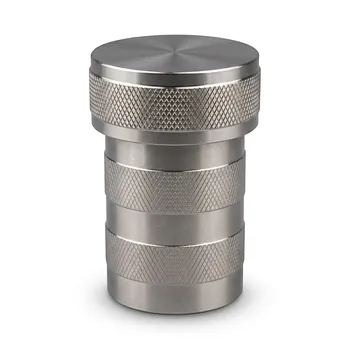
- PTFE Lined High Pressure Digestion Vessel 50ml High Temperature Hydrothermal Synthesis Tank
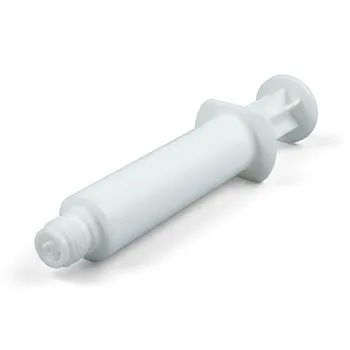
- Virgin PTFE Laboratory Syringe 50ml for Corrosive Chemical Handling and Automated Syringe Pump Systems with FEP Tube Compatibility
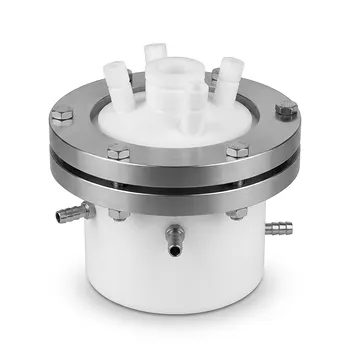
- High Pressure Custom TFM Reactor Stainless Steel Outer Vessel PTFE Inner Cup for Corrosive Synthesis
- High Temperature Corrosion Resistant Hydrothermal Synthesis Reactor with TFM Inner Liner and Straight Cylinder Design
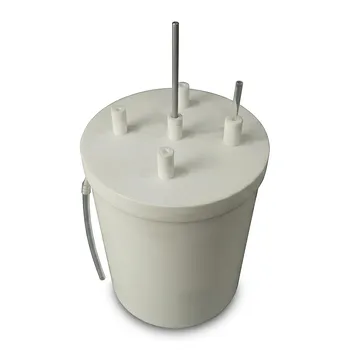
- Custom PTFE Reaction System with Hose Barb Fittings Corrosion Resistant High Sealing 2L 4L Lab Reactor with Separatory Funnel
People Also Ask
- What are the benefits of using a PTFE-lined vessel for carbon-sulfur cathode treatment? Maximize Purity & Performance
- Why are PTFE-lined pressure digestion vessels required for the preparation of Ag/CeO2 catalysts? Purity & Performance
- What safety features are typically incorporated into high-pressure PTFE digestion vessel designs? Ensure Lab Safety
- What is the function of PTFE lined high-pressure vessels in g-C3N4 synthesis? Achieve High-Purity Material Growth
- Role of High-Pressure Digestion Tanks in Perovskite Synthesis: Achieve Superior Stability and Latent Heat