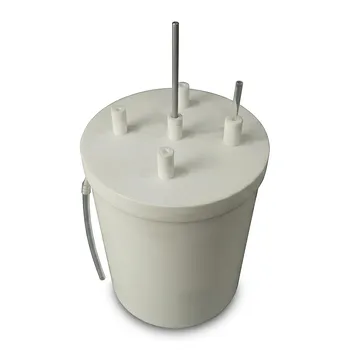
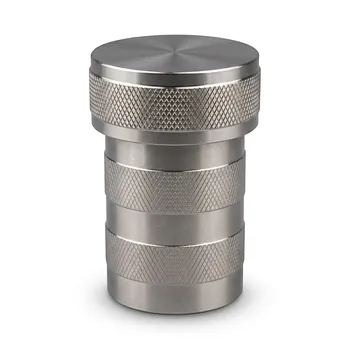
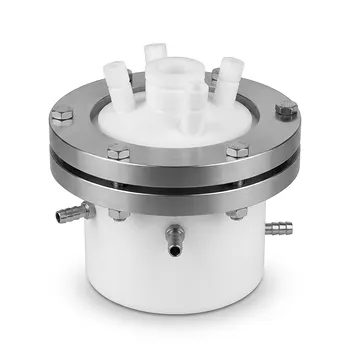
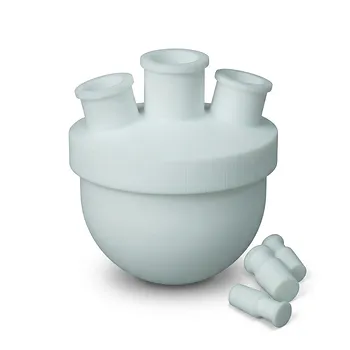
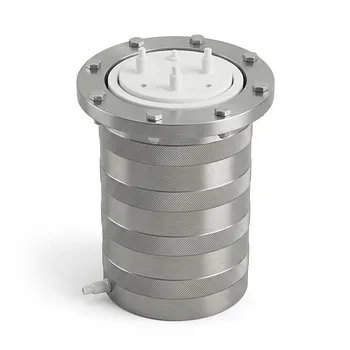
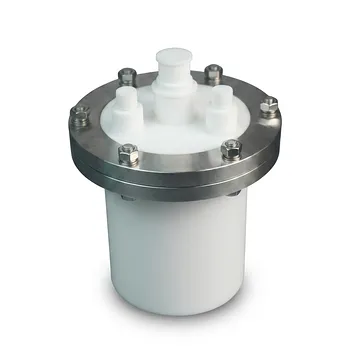
The 10 mL hydrothermal synthesis reactor serves as the specialized containment vessel required to facilitate the chemical breakdown of persistent organic pollutants. It creates a sealed, high-pressure environment that allows reagents to reach temperatures between 150°C and 250°C without evaporating. This specific environment is essential for ensuring that the chemical agents remain in close contact with the hexachlorobenzene (HCB), enabling efficient dechlorination that would be impossible at atmospheric pressure.
The hydrothermal synthesis reactor acts as a controlled micro-environment that enables subcritical reactions necessary for HCB degradation while shielding the equipment from the corrosive alkaline agents used in the process.
Engineering the High-Pressure Environment
Sustaining Subcritical Temperatures
To effectively dechlorinate HCB, the system must maintain temperatures ranging from 150°C to 250°C. The 10 mL reactor is designed to withstand the internal pressure generated at these levels, allowing water and solvents to reach a subcritical state. This state significantly enhances the solubility and reactivity of the chemical components involved.
Ensuring Intimate Reagent Contact
Because the reactor is a sealed system, it prevents the loss of volatile reagents during the heating process. This containment ensures that high concentrations of the pollutants and the dechlorination agents remain in constant, close contact. Such proximity is vital for the efficient degradation of high-concentration persistent organic pollutants (POPs).
The Critical Role of the Reactor Lining
Resisting Strong Alkaline Corrosion
The dechlorination of HCB typically requires the use of strong bases like sodium hydroxide (NaOH) or potassium hydroxide (KOH). These substances are highly corrosive to standard metals, making a Polytetrafluoroethylene (PTFE) liner necessary. The PTFE liner provides exceptional chemical stability, protecting the outer stainless steel shell from structural damage.
Preventing Sample Contamination
Beyond protecting the reactor, the liner prevents metal ions from leaching into the reaction mixture. If metal ions from the stainless steel shell were to enter the system, they could act as unwanted catalysts or inhibitors. By isolating the reaction, the liner ensures that the experimental results accurately reflect the dechlorination process without external interference.
Understanding the Technical Trade-offs
Scale and Volume Constraints
The 10 mL capacity is ideal for laboratory-scale testing and high-precision experiments but limits the amount of material that can be processed at once. Researchers must carefully balance the filling ratio of the liner (typically 60-80%) to ensure there is enough headspace for pressure expansion. Overfilling can lead to mechanical failure of the seal or the reactor shell.
Material Temperature Limits
While PTFE liners are excellent for chemical resistance, they have a strict thermal ceiling, usually around 250°C. Exceeding this temperature can cause the liner to deform or release toxic fumes. For reactions requiring higher heat, alternative materials like Polyphenylene Sulfide (PPL) must be used, though they offer different chemical resistance profiles.
How to Apply This to Your Research
If you are utilizing a hydrothermal reactor for HCB dechlorination, your approach should vary based on your specific experimental goals:
- If your primary focus is maximum chemical purity: Always utilize high-purity PTFE liners to ensure no metallic leachates interfere with your dechlorination chromatography results.
- If your primary focus is high-temperature degradation: Opt for a PPL liner if your reaction needs to exceed 250°C, as it offers better thermal stability than standard PTFE.
- If your primary focus is reaction safety: Ensure the reactor is filled to no more than 80% of its volume to account for the internal pressure generated by the subcritical water.
The 10 mL hydrothermal reactor is a precision tool that transforms hazardous pollutants into manageable compounds through the controlled application of heat and pressure.
Summary Table:
| Feature | Specification/Requirement | Role in HCB Dechlorination |
|---|---|---|
| Temperature Range | 150°C to 250°C | Reaches subcritical state to enhance HCB solubility and reactivity. |
| Liner Material | PTFE or PPL | Resists strong alkaline corrosion (NaOH/KOH) and prevents metal contamination. |
| Pressure Control | Sealed Vessel Design | Maintains volatile reagents in contact with pollutants for efficient degradation. |
| Capacity/Volume | 10 mL (60-80% Filling Ratio) | Optimized for high-precision lab-scale testing and safe pressure expansion. |
Elevate Your Research with KINTEK’s Precision Fluoropolymer Solutions
When handling persistent organic pollutants like HCB, the integrity of your equipment is non-negotiable. KINTEK specializes in high-performance laboratory supplies crafted exclusively from PTFE and PFA, ensuring absolute chemical resistance and zero contamination for your most sensitive reactions.
From everyday basic labware like beakers, crucibles, and reagent bottles to specialized hydrothermal synthesis liners and microwave digestion vessels, we provide the tools necessary for extreme environments. Our catalog extends to high-purity trace analysis instruments, fluid transfer components (tubing, valves, fittings), and sample prep tools (separatory funnels, filters, pipettes).
Need something unique? Our end-to-end custom CNC fabrication allows us to deliver complex non-standard machined parts, standard or custom electrochemical cells, and bespoke laboratory setups tailored to your specific research parameters. Whether you require a single high-volume order of stirring bars and O-rings or a complex reaction apparatus, KINTEK delivers unmatched durability and expertise.
Ready to upgrade your lab with high-performance fluoropolymers? Contact KINTEK Today to Discuss Your Custom Requirements
References
- Ye Xiao, Hai Huang. Chemical dechlorination of hexachlorobenzene with polyethylene glycol and hydroxide: Dominant effect of temperature and ionic potential. DOI: 10.1038/srep06305
This article is also based on technical information from Kintek Knowledge Base .
Related Products
- PTFE 10L Reaction Vessel with Stirring Paddle Customizable Corrosion Resistant High Temperature Reactor for Biopharmaceutical and Chemical Processing
- High Temperature Corrosion Resistant Hydrothermal Synthesis Reactor with TFM Inner Liner and Straight Cylinder Design
- Custom PTFE Reaction Tank Corrosion Resistant Fluoropolymer Chemical Processing Barrel 10L 20L 30L
- Custom PTFE Reaction System with Hose Barb Fittings Corrosion Resistant High Sealing 2L 4L Lab Reactor with Separatory Funnel
- High Temperature PTFE Reaction Flask 1000ml Single Neck Round and Flat Bottom Laboratory Bottle
People Also Ask
- Why are high-purity PTFE or PFA reaction vessels recommended for the synthesis of PANI-TiC hybrid materials? - Guide
- What reaction vessel and fluid handling considerations are necessary for living cationic polymerization of fluorinated monomers involving Lewis acid catalysts? Key design and safety tips
- Ion Activation Reaction Vessel Requirements: Why PTFE is Critical for Membrane Performance
- Why are fluoroplastic (PTFE) reaction vessels recommended for Methylene Blue (MB) adsorption kinetic experiments?
- Why is a PTFE reaction vessel required for Ti3C2Tx MXene synthesis? Ensure Safe HF Etching & High Purity