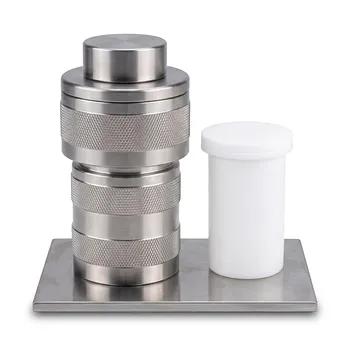
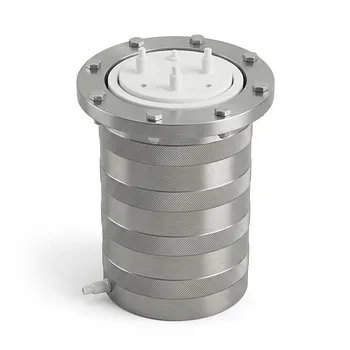
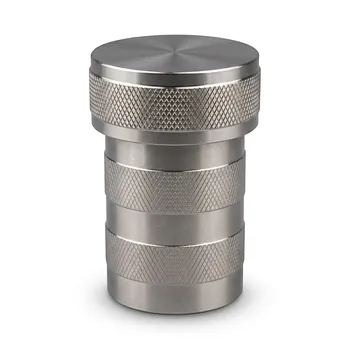
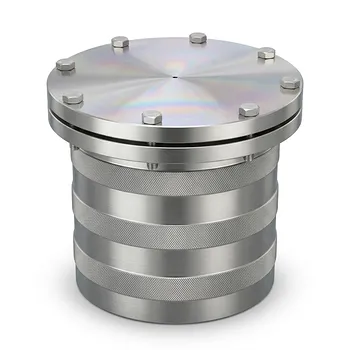
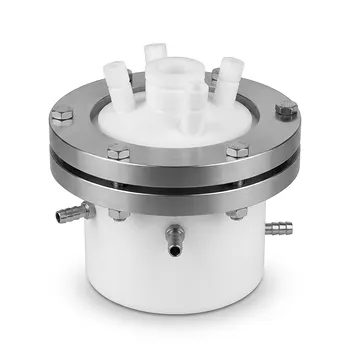
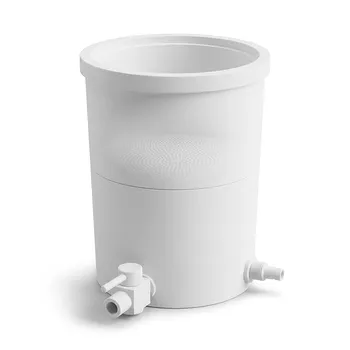
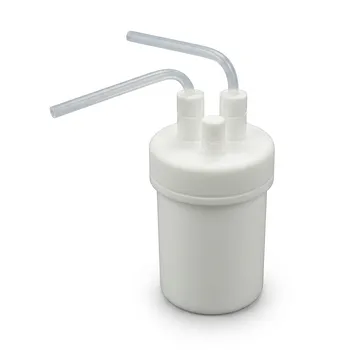
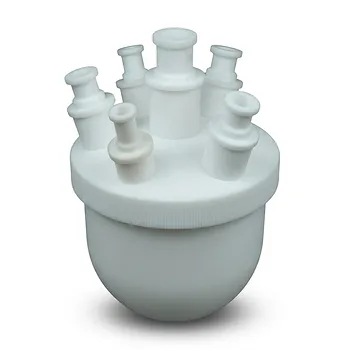
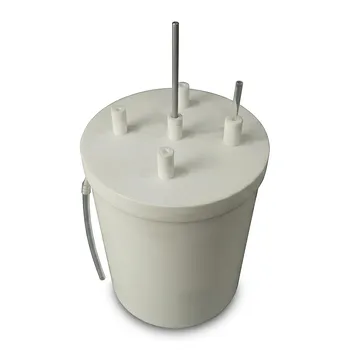
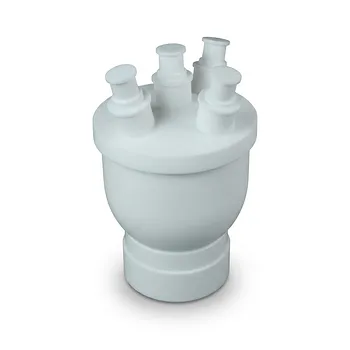
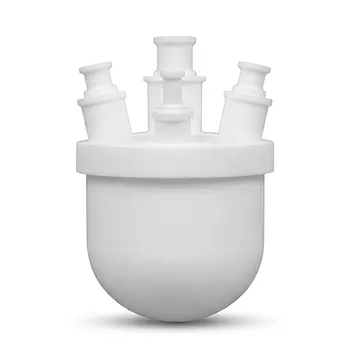
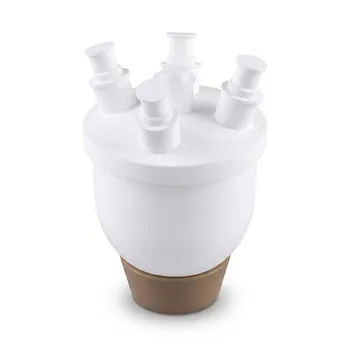
PTFE-lined hydrothermal synthesis reactors are the essential containment systems for creating Er-Bi2WO6 nanoparticles. They provide a pressurized, chemically inert environment that facilitates the precise nucleation and growth of complex hierarchical structures. By isolating aggressive reactants from the metal autoclave at temperatures around 190°C, these reactors ensure the formation of high-purity, uniform flower-like morphologies.
The core role of the PTFE-lined reactor is to maintain a stable, high-pressure solvothermal environment that promotes the transformation of precursors into specific nanostructures. This setup ensures chemical purity by preventing metal contamination and provides the non-stick surface necessary for uniform particle growth.
The Role of the Reactor in Morphological Control
Maintaining Constant Solvothermal Pressure
The reactor creates a sealed environment where internal pressure increases as the temperature reaches 190°C. This autogenous pressure is critical for the complete reaction of precursors, forcing the chemical transformation that wouldn't occur at atmospheric pressure.
Facilitating Flower-like Nucleation
The stable internal environment allows Er-Bi2WO6 to nucleate and grow into its characteristic flower-like hierarchical structure. Without the constant pressure and temperature provided by the sealed liner, the Bi2WO6 nanosheets would fail to organize into these complex, uniform shapes.
Preventing Secondary Agglomeration
The non-stick properties of PTFE (polytetrafluoroethylene) prevent the growing nanoparticles from adhering to the vessel walls. This ensures that the particles remain suspended and grow independently, maintaining an ideal size distribution rather than clumping into irregular masses.
Ensuring Chemical Purity and Integrity
Resistance to Corrosive Precursors
Synthesis of Er-Bi2WO6 often involves aggressive chemicals like ethylene glycol and nitrate solutions. The PTFE liner acts as a sacrificial but highly resistant barrier, protecting the external stainless steel autoclave from severe corrosion and erosion.
Prevention of Metal Ion Contamination
If reactants were to contact the metal walls of the autoclave, metal ions could leach into the solution. The PTFE liner provides a sealed reaction interface that isolates the chemistry, ensuring the synthesized nanoparticles maintain extremely high chemical purity.
Chemical Inertness at High Temperatures
At the 190°C threshold required for this synthesis, PTFE remains chemically inert. It does not react with the precursors or the bismuth tungstate, ensuring that the final product's chemical signature is determined solely by the intended reactants.
Understanding the Trade-offs and Limitations
Temperature Constraints
While PTFE is excellent for many hydrothermal processes, it has a strict upper thermal limit, typically around 220°C to 240°C. Exceeding these temperatures can cause the liner to soften or deform, potentially leading to seal failure or the release of toxic vapors.
Thermal Expansion Mismatch
PTFE has a different coefficient of thermal expansion than the stainless steel shell of the autoclave. Rapid heating or cooling can cause the liner to expand or contract at a different rate than the metal, which may lead to leaks if the reactor is not designed with proper tolerances.
Pressure Limitations
The liner itself does not provide structural strength; it relies on the stainless steel jacket to withstand high pressures. If the outer shell is compromised or the liner is improperly seated, the system can fail catastrophically under the solvothermal pressures required for nanoparticle synthesis.
How to Apply This to Your Synthesis Project
When selecting or operating a reactor for Er-Bi2WO6 synthesis, your choice should be dictated by your specific purity and morphology requirements.
- If your primary focus is Morphological Precision: Ensure the reactor is rated for at least 200°C and maintain a constant heating rate to allow the flower-like structures to assemble slowly and uniformly.
- If your primary focus is High Chemical Purity: Always use a fresh or ultrasonically cleaned PTFE liner to prevent cross-contamination from previous experiments and ensure the seal is airtight to prevent oxidation.
- If your primary focus is Scalability and Recovery: Leverage the non-stick nature of high-quality PTFE to maximize product yield during the recovery phase after the reactor has cooled.
By maintaining a controlled, pressurized, and inert environment, the PTFE-lined reactor serves as the fundamental tool for mastering the complex architecture of Er-Bi2WO6 nanoparticles.
Summary Table:
| Feature | Role in Er-Bi2WO6 Synthesis |
|---|---|
| Autogenous Pressure | Facilitates the nucleation of complex flower-like hierarchical structures. |
| Chemical Inertness | Prevents metal ion contamination and protects the autoclave from corrosive precursors. |
| Non-stick Surface | Prevents secondary agglomeration, ensuring uniform particle size distribution. |
| Thermal Isolation | Maintains a stable 190°C environment for the consistent growth of nanosheets. |
Elevate Your Nanomaterial Synthesis with KINTEK
Achieving the perfect hierarchical morphology in Er-Bi2WO6 requires high-performance equipment that guarantees absolute purity and structural precision. KINTEK specializes in high-performance fluoropolymer materials, offering everything from standard PTFE and PFA labware (beakers, crucibles, bottles, and tubes) to advanced hydrothermal synthesis liners, microwave digestion vessels, and custom reaction apparatus.
Whether you require complex non-standard machined parts via our custom CNC fabrication or high-volume orders of essential consumables like O-rings and stirring bars, KINTEK provides end-to-end solutions tailored to your research. From fluid transfer components to bespoke electrochemical cells, we deliver the durability and inertness your lab demands.
Contact KINTEK today to optimize your synthesis workflow!
References
- Shan Huang, Yue Zhang. Design of oxygen vacancy-rich Er-Bi2WO6 flower-like nanoparticles for enhanced photocatalytic performance in dye degradation and sterilization applications. DOI: 10.1007/s42114-024-01169-x
This article is also based on technical information from Kintek Knowledge Base .
Related Products
- PTFE Lined High Pressure Digestion Vessel 50ml High Temperature Hydrothermal Synthesis Tank
- High Pressure Custom TFM Reactor Stainless Steel Outer Vessel PTFE Inner Cup for Corrosive Synthesis
- High Temperature Corrosion Resistant Hydrothermal Synthesis Reactor with TFM Inner Liner and Straight Cylinder Design
- Custom TFM Reaction Vessel with Stainless Steel Jacket and PTFE Inner Cup for High Corrosion Resistance
- Custom PTFE Reaction System with Hose Barb Fittings Corrosion Resistant High Sealing 2L 4L Lab Reactor with Separatory Funnel
People Also Ask
- What are the benefits of using a PTFE-lined vessel for carbon-sulfur cathode treatment? Maximize Purity & Performance
- Why are PTFE-lined pressure digestion vessels required for the preparation of Ag/CeO2 catalysts? Purity & Performance
- What safety features are typically incorporated into high-pressure PTFE digestion vessel designs? Ensure Lab Safety
- What is the function of PTFE lined high-pressure vessels in g-C3N4 synthesis? Achieve High-Purity Material Growth
- Role of High-Pressure Digestion Tanks in Perovskite Synthesis: Achieve Superior Stability and Latent Heat