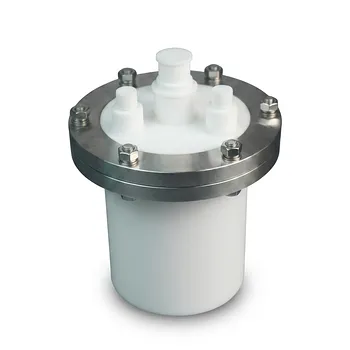
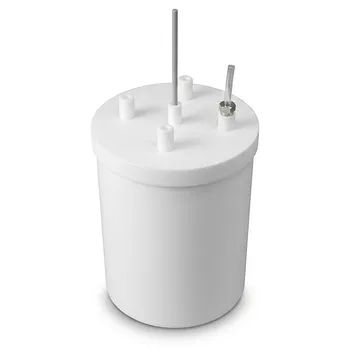
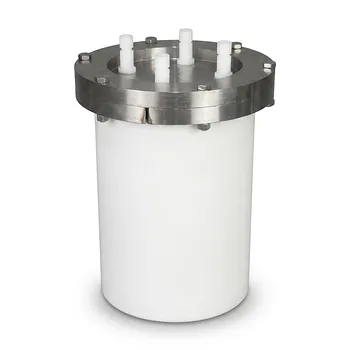
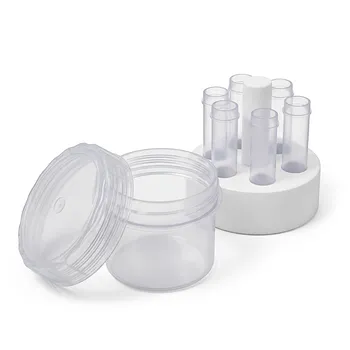
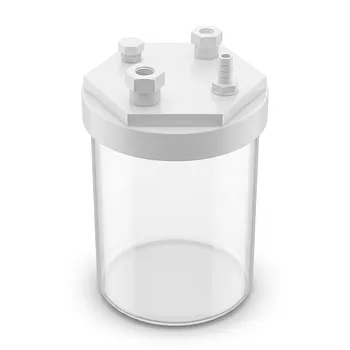
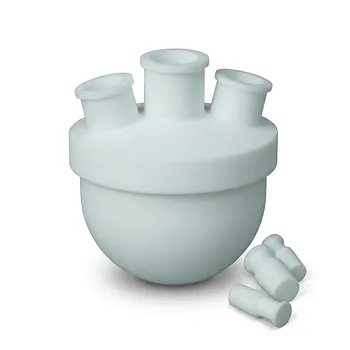
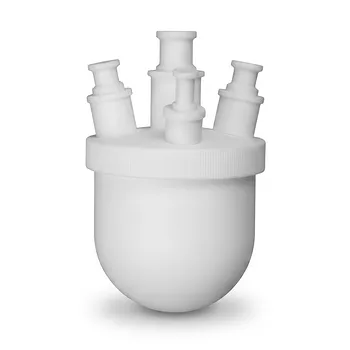
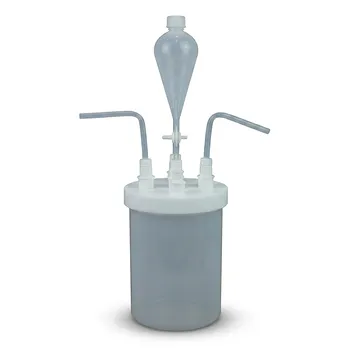
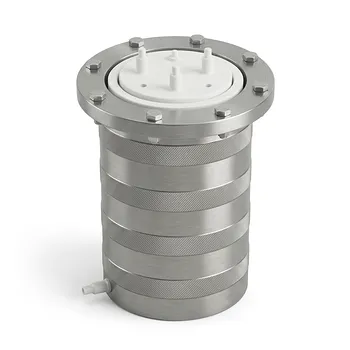
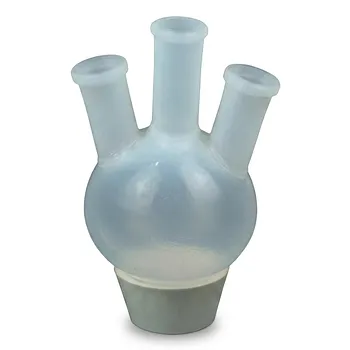
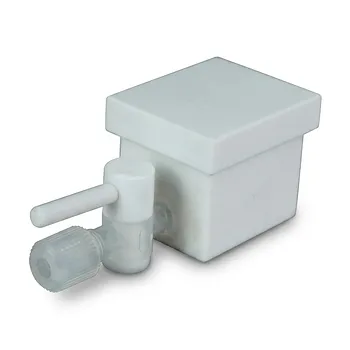
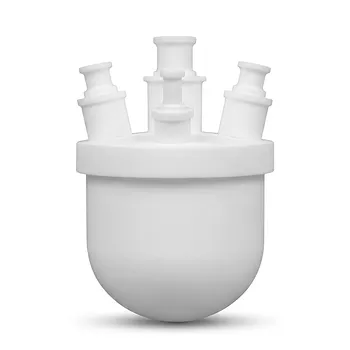
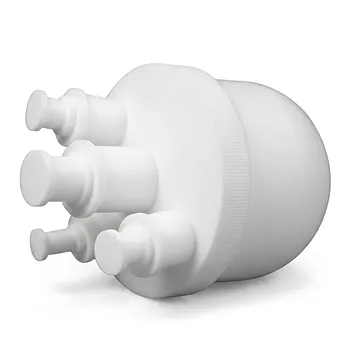
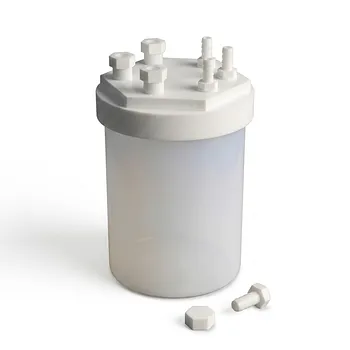
Pressure-resistant and acid-resistant reaction vessels are the critical infrastructure required to maintain structural integrity during the harsh secondary hydrolysis of biomass. These specialized containers allow researchers to subject samples to high-temperature (121 °C) and acidic (4% H2SO4) environments without vessel failure or sample contamination. By providing a controlled, sealed environment, they ensure that cellulose and hemicellulose are quantitatively converted into monosaccharides while allowing acid-insoluble lignin to be recovered and measured with high precision.
The Core Takeaway: The accuracy of biomass composition analysis is directly dependent on the vessel's ability to withstand extreme corrosive and thermal stress. These vessels act as a stable "micro-environment" that prevents sample loss and contamination, ensuring that the resulting sugar and lignin data are representative of the original material.
The Essential Role of Material Integrity
Withstanding the Dual Stress of Heat and Acid
In standard NREL protocols, biomass undergoes hydrolysis in a 4% sulfuric acid solution at 121 °C within an autoclave. This combination of high temperature and acidity is extremely aggressive, requiring vessels that can maintain their physical form under pressure.
If a vessel fails to maintain its seal or structural integrity, the concentration of the acid or the internal temperature may fluctuate. This results in incomplete hydrolysis, leading to an underestimation of sugar content and inaccurate lignin recovery.
Preventing Sample Contamination
High-performance vessels, often made from fluoropolymers like PFA or PTFE, are essential when working with high-concentration acids (such as 5 M H2SO4). These materials are chemically inert, meaning they do not react with the sample or the reagent.
By using inert materials, researchers prevent the leaching of metal ion impurities from the vessel walls into the solution. This is vital for maintaining the purity of the resulting medium, especially when the end goal is microalgae cultivation or high-purity material production.
Impact on Biomass Fractionation Accuracy
Quantitative Conversion of Polysaccharides
The primary goal of secondary hydrolysis is the quantitative conversion of cellulose and hemicellulose into monosaccharides. To achieve this, the reaction must be held at a precise temperature and pressure for a specific duration.
Pressure-resistant vessels ensure that the liquid phase does not boil off, maintaining the constant acid concentration necessary for total conversion. This consistency is what allows for the high-precision analysis required in biofuel and biochemical research.
Precise Control for Cellulose Nanocrystals
Beyond simple analysis, these vessels allow for the selective hydrolysis of the amorphous regions of cellulose. By maintaining strict control over temperature and acid concentration, the vessel ensures that only the non-crystalline parts of the biomass are dissolved.
The result is the production of cellulose nanocrystals (CNCs) with high crystallinity and superior mechanical properties. Without a high-precision vessel, the reaction could easily over-hydrolyze the crystalline regions, destroying the desired product.
Understanding the Trade-offs
Material Limitations vs. Cost
While PFA and PTFE offer the best chemical resistance, they have lower thermal conductivity than metal or glass. This can lead to a thermal lag, where the internal sample temperature takes longer to reach the set point of the autoclave or oven.
Pressure Safety and Reusability
While glass vessels are common, they pose a significant safety risk if the internal pressure exceeds their rating during 121 °C cycles. Fluoropolymer vessels are safer and more durable but require a higher initial investment and careful cleaning to prevent "memory effects" between different biomass batches.
Making the Right Choice for Your Goal
How to Apply This to Your Project
Selecting the correct reaction vessel depends entirely on the concentration of your acid and the required purity of your final fraction.
- If your primary focus is NREL Standard Biomass Analysis: Use pressure-rated, acid-resistant vessels that can withstand 121 °C to ensure accurate recovery of acid-insoluble lignin and monosaccharides.
- If your primary focus is High-Purity Material Production (e.g., CNCs): Prioritize high-performance fluoropolymers like PFA or PTFE to eliminate metal leaching and ensure the mechanical integrity of the resulting nanoparticles.
- If your primary focus is Complex Sugar Hydrolysis (e.g., Molasses): Utilize high-performance digestion tanks to resist the erosion of concentrated acids (5 M H2SO4) while heating at lower temperatures to preserve sugar purity.
The integrity of your reaction vessel is the silent partner in your analytical accuracy, bridging the gap between raw biomass and reliable data.
Summary Table:
| Key Feature | Benefit for Biomass Analysis | Recommended Material |
|---|---|---|
| Thermal Stability | Maintains integrity at 121°C for complete sugar conversion | PFA / PTFE |
| Acid Resistance | Prevents corrosion from 4% - 5M H2SO4; avoids vessel failure | PTFE / PFA |
| Chemical Inertness | Eliminates metal leaching and sample contamination | High-purity PFA |
| Pressure Sealing | Prevents boiling off; maintains constant acid concentration | Pressure-rated Vessels |
Elevate Your Research with High-Performance Fluoropolymer Labware
Precision in biomass analysis starts with the right equipment. KINTEK specializes in high-performance fluoropolymer solutions, manufacturing virtually every laboratory supply you need from PTFE and PFA. From everyday basic labware like beakers, measuring cylinders, crucibles, dishes, reagent/wash bottles, and centrifuge/digestion tubes to advanced pressure-resistant vessels, hydrothermal synthesis liners, and microchannel reactors, we ensure your samples remain pure and your results accurate.
Whether you need high-volume consumables like stirring bars, O-rings, gaskets, and filters or complex non-standard machined parts crafted via our end-to-end custom CNC fabrication, KINTEK is your ultimate partner for high-corrosion and high-purity environments. We offer everything from fluid transfer components (tubing, valves, fittings) to specialized battery testing fixtures and electrochemical cells.
Ready to optimize your lab’s efficiency and data reliability?
Contact KINTEK Today to Discuss Your Custom Requirements
References
- Aline Perin Dresch, Joel Gustavo Teleken. Analysis of biomass yield and chemical composition of elephant grass at different growth stages. DOI: 10.33448/rsd-v14i7.49300
This article is also based on technical information from Kintek Knowledge Base .
Related Products
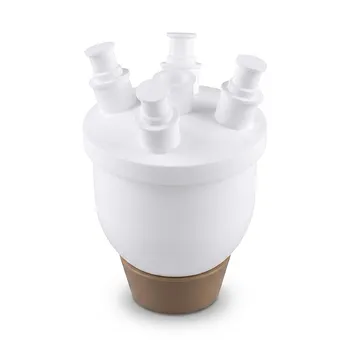
- Custom PTFE Reaction Kettle 2L Flanged Fluoropolymer Reactor Tank Acid and Alkali Resistant Polytetrafluoroethylene Vessel
- Large Corrosion Resistant PTFE Reaction Tank Integrated Digestion Barrel Leak Proof Vessel
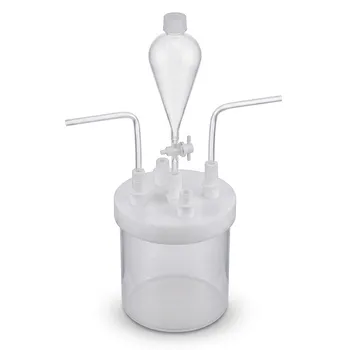
- PTFE Hydrofluoric Acid Dilutor and Corrosion Resistant Reaction Vessel with Flange Sealing White PTFE Raw Material Storage Barrel
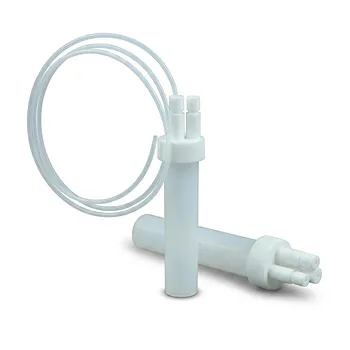
- High Purity Corrosion Resistant PFA Reaction Vessel with PTFE Holder and Integrated Sampling Tube for Trace Analysis
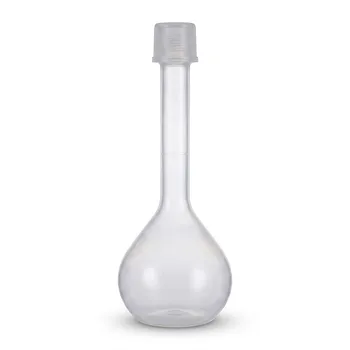
- High Purity PFA Volumetric Flask 1000ml 2000ml Constant Volume Bottle Acid Resistant Trace Analysis Custom Laboratory Labware
People Also Ask
- What toxicological hazards and safe handling protocols must be established when PTFE fluoropolymer reaction vessels are subjected to pyrolysis temperatures? Learn essential safety measures now.
- What reaction vessel and fluid handling considerations are necessary for living cationic polymerization of fluorinated monomers involving Lewis acid catalysts? Key design and safety tips
- Why are high-purity PTFE or PFA reaction vessels recommended for the synthesis of PANI-TiC hybrid materials? - Guide
- Ion Activation Reaction Vessel Requirements: Why PTFE is Critical for Membrane Performance
- Why are fluoroplastic (PTFE) reaction vessels recommended for Methylene Blue (MB) adsorption kinetic experiments?