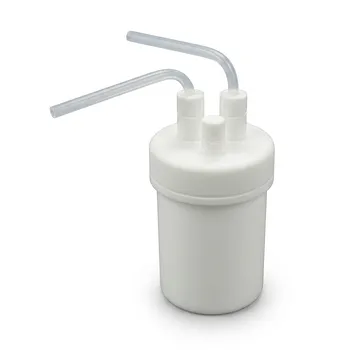
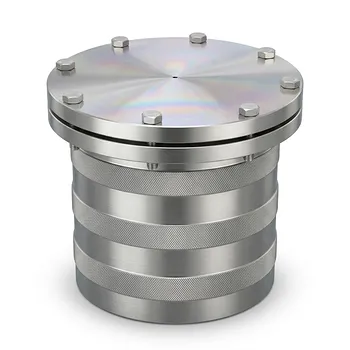
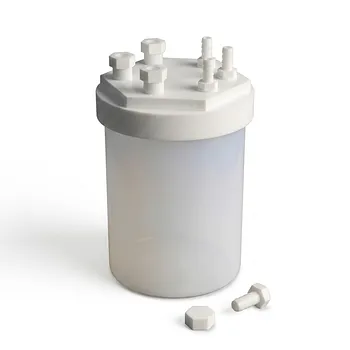
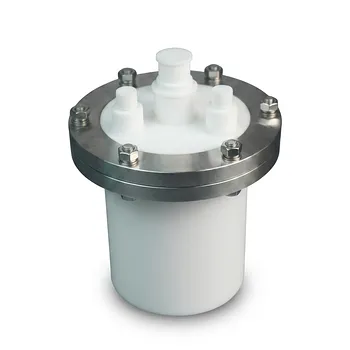
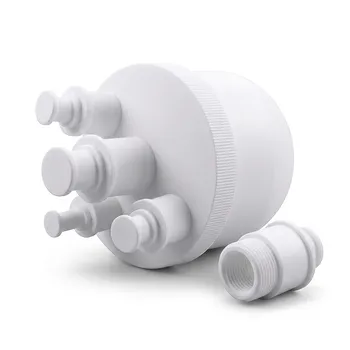
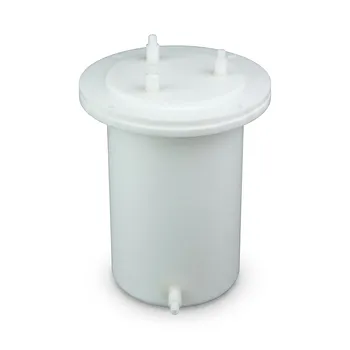
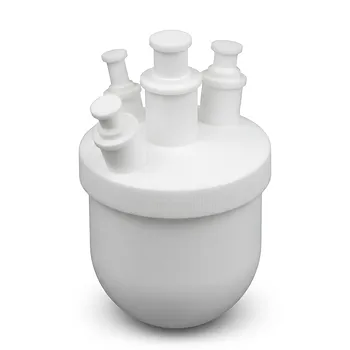
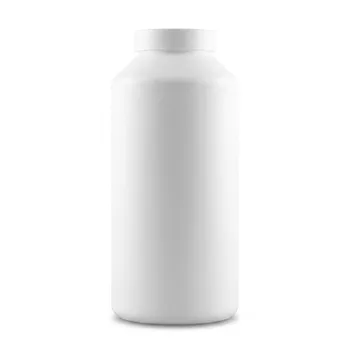
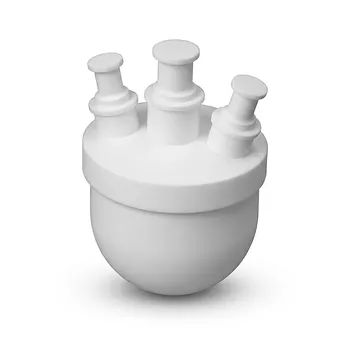
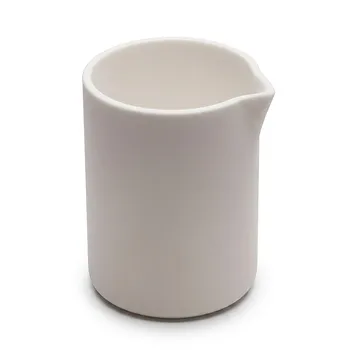
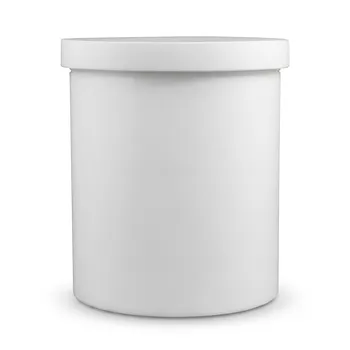
High-pressure reaction vessels and fluoropolymer liners act as the fundamental reactor architecture for synthesizing wood-based composite electrodes. These components provide the required thermal and barometric conditions to drive precursor solutions into the wood's natural micro-channels, facilitating the uniform nucleation and growth of active materials like NiFe-LDH, MOFs, or COFs. By creating a controlled, subcritical environment, they ensure that the resulting electrode maintains high structural integrity and electrochemical activity.
The synergy between the high-pressure vessel and its chemically inert liner allows for the precise deposition of nanocrystals within the complex, porous framework of carbonized wood. This setup protects the hardware from corrosive reagents while ensuring the purity and directional growth of the active materials.
The Role of the High-Pressure Environment
Enabling Subcritical and Supercritical States
High-pressure reaction vessels, often called autoclaves, provide a sealed environment that allows solvents to be heated beyond their boiling points. This generates autogenous pressure, reaching subcritical or supercritical states where the solvent's properties—such as viscosity and surface tension—change significantly.
In this state, the precursor solution achieves the high energy levels necessary for recrystallization and phase transformation. This is essential for converting amorphous precursors into highly crystalline, electrochemically active phases within the wood matrix.
Driving Deep Penetration into Biomass Pores
Wood-based substrates possess a hierarchical pore structure that is often difficult to permeate under standard atmospheric conditions. The high-pressure environment forces the reaction solution deep into the longitudinal vessels and tracheids of the wood.
This deep penetration is critical for the simultaneous carbonization of biomass fibers and the crystallization of materials like Titanium Dioxide. Without this pressure, the active materials would only deposit on the surface, failing to utilize the wood's massive internal surface area.
The Strategic Function of Fluoropolymer Liners
Chemical Inertness and Corrosion Resistance
Liners made from Polytetrafluoroethylene (PTFE) or Perfluoroalkoxy (PFA) serve as a protective barrier for the external metal autoclave. Many hydrothermal processes require strong acids (e.g., 3 M acetic acid) or strong bases that would otherwise cause catastrophic erosion of the metal vessel.
This chemical resistance ensures that the reaction remains uncontaminated by metal ions leaching from the vessel walls. Maintaining this high purity is vital for the structural stability and ionic conductivity of the resulting wood-based composite.
Non-Stick Properties and High Recovery Rates
Fluoropolymers possess low surface energy, creating a non-stick interior wall. This property minimizes the loss of reactants and prevents the synthesized nanocrystals from adhering to the container rather than the wood substrate.
By reducing wall adhesion, these liners facilitate the uniform nucleation of materials like 2D Layered Double Hydroxides (LDH). This leads to a higher recovery rate of the target product and ensures that the catalyst's defect structures remain active and intact.
Facilitating Directional Nanocrystal Growth
The controlled environment provided by the liner allows for the reversible chemical bonding of monomers, which is essential for forming complex structures like Covalent Organic Frameworks (COFs).
The liner's inertness ensures that the nucleation sites are concentrated on the wood’s carbon framework rather than the vessel's surface. This results in the directional growth of nanocrystals, creating a robust heterojunction between the conductive carbon wood and the active materials.
Understanding the Trade-offs and Constraints
Temperature and Pressure Limitations
While fluoropolymer liners like PTFE are highly versatile, they have a thermal ceiling, typically around 250°C. Exceeding these temperatures can lead to liner deformation or the release of toxic vapors, which compromises the seal of the high-pressure vessel.
For processes requiring higher temperatures, such as the direct carbonization of biomass at 550°C to 700°C, specialized liners made of Polyphenylene (PPL) or liner-less high-alloy vessels must be used.
Safety and Scaling Challenges
Operating under high autogenous pressure introduces significant safety risks if the vessel is not maintained or if the filling degree of the liner is incorrect. Additionally, while these vessels are excellent for laboratory-scale synthesis, scaling the hydrothermal treatment of large wood sections requires massive, specialized infrastructure to maintain uniform pressure and temperature gradients.
How to Apply This to Your Synthesis Goals
The choice of vessel and liner configuration depends entirely on the specific chemistry of your wood-based electrode.
- If your primary focus is high-purity LDH or MOF growth: Utilize PTFE or PFA liners to ensure a non-stick environment and prevent metal ion contamination from the autoclave walls.
- If your primary focus is synthesis involving aggressive acidic catalysts: Select PPL liners if temperatures exceed 220°C, as they offer enhanced thermal stability over standard PTFE while maintaining acid resistance.
- If your primary focus is achieving precise chemical stoichiometry: Ensure the filling degree of the reaction vessel is strictly controlled to maintain consistent autogenous pressure throughout the crystallization process.
By mastering the transition from surface-level reaction to the deep, pressurized environment of the autoclave, you can unlock the full potential of wood-based hierarchical structures for next-generation energy storage.
Summary Table:
| Component | Key Function | Benefit for Wood-Based Synthesis |
|---|---|---|
| High-Pressure Vessel | Provides autogenous pressure | Forces precursors into micro-channels; enables recrystallization. |
| Fluoropolymer Liner | Chemical inertness (PTFE/PFA) | Prevents corrosion; ensures high purity & ionic conductivity. |
| Liner Surface | Non-stick/Low surface energy | Facilitates uniform nucleation & high product recovery rates. |
| Thermal Control | Sub/Supercritical states | Transforms amorphous precursors into crystalline phases. |
Elevate Your Material Synthesis with KINTEK's Fluoropolymer Expertise
From everyday PFA beakers and PTFE stirring bars to custom-machined high-pressure liners and advanced reaction apparatus, KINTEK provides the essential infrastructure for your advanced research. Whether you are synthesizing next-generation wood-based electrodes or performing complex trace analysis, our end-to-end CNC fabrication ensures every component—from standard gaskets and tubes to bespoke laboratory setups—meets the highest performance standards.
Don't compromise on purity or precision. Partner with KINTEK for all your high-performance fluoropolymer needs, including custom hydrothermal synthesis liners and fluid transfer components.
Contact KINTEK today for your bespoke laboratory solution!
References
- Weijia Guo, Huiqiao Li. Wood‐Inspired Electrode for Sustainable Electrocatalytic Energy Conversion. DOI: 10.1002/smm2.1326
This article is also based on technical information from Kintek Knowledge Base .
Related Products
- High Purity Custom PTFE Large Volume 15L Flask Corrosion Resistant Low Trace Background Fluoropolymer Reaction Vessel
- PTFE 10L Reaction Vessel with Stirring Paddle Customizable Corrosion Resistant High Temperature Reactor for Biopharmaceutical and Chemical Processing
- High Purity Corrosion Resistant PFA Reaction Vessel with PTFE Holder and Integrated Sampling Tube for Trace Analysis
- Custom PTFE Flask 250ml High Purity Fluoropolymer Laboratory Vessel for Chemical Research
- High Temperature Corrosion Resistant PTFE Reaction Flask Custom Multi Neck Laboratory Vessel with Flat or U Bottom
People Also Ask
- What toxicological hazards and safe handling protocols must be established when PTFE fluoropolymer reaction vessels are subjected to pyrolysis temperatures? Learn essential safety measures now.
- Why are high-purity PTFE or PFA reaction vessels recommended for the synthesis of PANI-TiC hybrid materials? - Guide
- How do perfluorinated solvent environments influence the selection of reaction vessels and fluid handling components in nonaqueous emulsion polymerizations? Choose fluoropolymer materials.
- What reaction vessel and fluid handling considerations are necessary for living cationic polymerization of fluorinated monomers involving Lewis acid catalysts? Key design and safety tips
- Ion Activation Reaction Vessel Requirements: Why PTFE is Critical for Membrane Performance