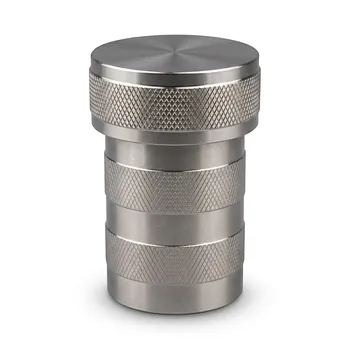
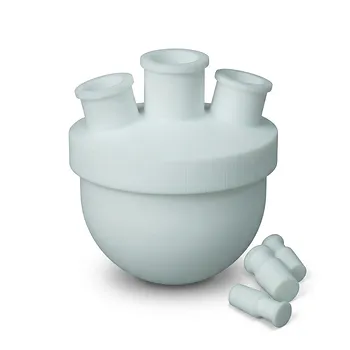
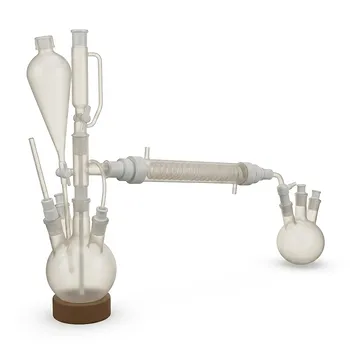
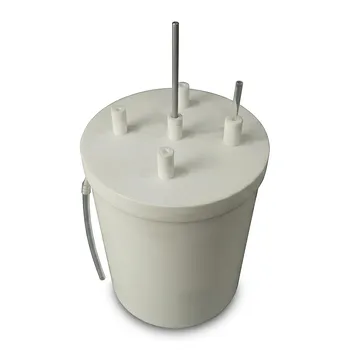
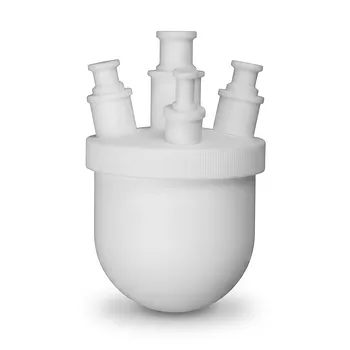
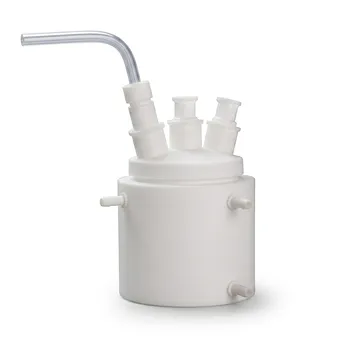
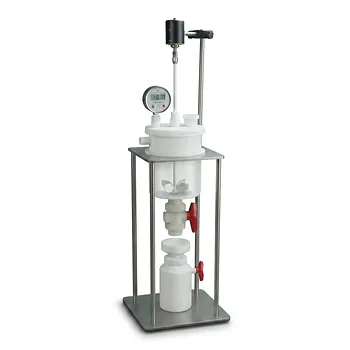
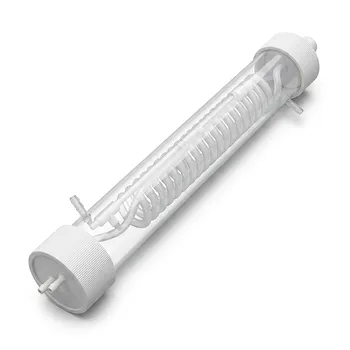
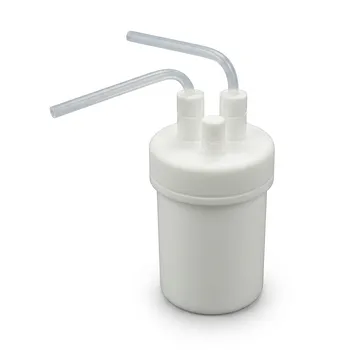
High-pressure hydrothermal synthesis reactors are the fundamental enabling technology for MFI-type zeolite production, providing the sealed, high-temperature environment required to transform amorphous precursors into crystalline frameworks. These reactors maintain autogenous pressure at temperatures typically between 170°C and 180°C, facilitating the chemical interaction between silicon sources like TEOS and aluminum sources under the guidance of organic template agents like TPAOH. By sustaining these conditions for 24 to 48 hours, the reactor ensures thorough crystallization, resulting in molecular sieves with precise pore structures and high crystallinity.
The primary role of these reactors is to provide a stable, high-energy environment that drives the dehydration condensation of aluminosilicate units. This controlled setting allows organic structure-directing agents to align precursors into the characteristic three-dimensional channel structure of the MFI framework.
Facilitating Phase Transformation and Structural Precision
Driving Amorphous-to-Crystalline Conversion
High-pressure reactors, often referred to as autoclaves, simulate natural geological conditions to force the rearrangement of amorphous gels. In this sealed environment, heat and pressure work together to trigger dehydration condensation, where silicon and aluminum units bond to form the initial zeolite nuclei. Without the sustained pressure provided by the reactor, the system could not reach the energy thresholds required to create the complex MFI lattice.
The Influence of Structure-Directing Agents (SDA)
The reactor provides the physical stage where Organic Structure-Directing Agents (OSDA), such as TPAOH, can function effectively. Under high-pressure hydrothermal conditions, the reactor facilitates the directional alignment of silica and alumina around these template molecules. This interaction is critical for defining the specific pore geometry and intersection points that characterize MFI-type zeolites like ZSM-5 and Silicalite-1.
Maintaining Gradient Uniformity
The internal environment of the reactor ensures that temperature and chemical concentration gradients remain consistent throughout the synthesis gel. This uniformity is vital for synchronized nucleation, which prevents a mixture of different crystalline phases. By providing a stable thermal field, the reactor allows the crystallization process to proceed evenly over the required 24 to 48-hour duration.
Enhancing Product Quality through Reactor Design
Corrosion Resistance and Material Purity
MFI synthesis often involves aggressive alkaline mineralizing agents that can degrade standard metal containers. High-quality reactors utilize PTFE (polytetrafluoroethylene) liners or fluoropolymer reaction vessels to provide a chemically inert barrier. This prevents the leaching of impurities into the gel, ensuring the high purity of the final MFI framework.
Dynamic Mixing and Kinetic Control
Advanced reactors may incorporate stirring or rotating mechanisms to physically move the synthesis gel during the heating cycle. This movement prevents the sedimentation of reactants and ensures that the temperature field remains perfectly uniform. The result is a zeolite product with a more consistent particle size distribution and higher overall crystallinity compared to static synthesis.
Innovations in Heating and Monitoring
Modern microwave-assisted reactors offer a significant evolution in MFI synthesis by using electromagnetic waves to heat the reaction liquid directly. This allows for extremely rapid heating and precise control over the nucleation and growth phases. Such equipment enables researchers to monitor evolution kinetics in real-time, allowing for a more granular understanding of how the MFI structure develops.
Understanding the Trade-offs
While high-pressure reactors are essential, they introduce specific operational challenges and limitations. Static reactors, while simpler and more cost-effective, often suffer from uneven heating and sedimentation, which can lead to broad particle size distributions. Conversely, dynamic or stirring reactors produce superior uniformity but involve higher mechanical complexity and maintenance requirements.
Safety is also a critical consideration, as the autogenous pressure generated at 180°C can be significant. Operators must ensure that fluoropolymer liners are properly rated for both the temperature and the internal pressure to prevent structural failure. Finally, while microwave synthesis drastically reduces reaction time, scaling these reactors for industrial-level mass production remains more technically challenging than traditional hydrothermal methods.
How to Apply This to Your Project
When selecting or operating a reactor for MFI-type zeolite synthesis, your choice should align with your specific material requirements and scale.
- If your primary focus is high-purity Silicalite-1: Use a PTFE-lined static reactor at a consistent 175°C to ensure a clean environment for OSDA-guided alignment.
- If your primary focus is uniform particle size in ZSM-5: Prioritize a rotating or stirring hydrothermal reactor to maintain a uniform temperature field and prevent reactant settling.
- If your primary focus is rapid kinetic study or sampling: Invest in microwave-assisted synthesis equipment with transparent fluoropolymer liners for high-speed thermal control.
- If your primary focus is hierarchical (micro-mesoporous) structures: Ensure the reactor is capable of sustained pressure at 130-180°C to allow for the complex interaction of multiple template agents.
By mastering the high-pressure environment of the hydrothermal reactor, you ensure the successful transformation of raw precursors into a highly ordered, functional MFI framework.
Summary Table:
| Reactor Function | Impact on MFI Zeolite Synthesis | Essential Requirement |
|---|---|---|
| Phase Transformation | Drives amorphous-to-crystalline conversion via heat/pressure. | High-pressure rated vessel |
| Structural Guidance | Facilitates SDA (Template) alignment for pore geometry. | Stable autogenous pressure |
| Thermal Uniformity | Ensures synchronized nucleation and consistent particle size. | Dynamic stirring or rotation |
| Purity Protection | Prevents metal contamination and leaching during synthesis. | PTFE/PFA fluoropolymer liners |
| Kinetic Control | Speeds up nucleation and growth phases for faster results. | Microwave-assisted heating |
Achieve Unmatched Precision in Your Zeolite Synthesis with KINTEK
Maximize the success of your crystallization processes with laboratory supplies designed for the most demanding hydrothermal environments. KINTEK specializes in high-performance fluoropolymer solutions, offering an exhaustive range of products from everyday basic labware (beakers, measuring cylinders, crucibles, and reagent bottles) to advanced reaction apparatus like hydrothermal synthesis liners, microwave digestion vessels, and custom electrochemical cells.
Whether you need standard centrifuge tubes and filters or complex bespoke laboratory setups and custom CNC-machined parts, our end-to-end fabrication ensures your equipment withstands aggressive mineralizing agents and extreme pressures. We maintain an absolute focus on high-performance PTFE and PFA materials to deliver the chemical inertness and purity your research requires.
Ready to elevate your lab’s capabilities? Contact us today for high-volume orders or custom-engineered components tailored to your specific research needs!
References
- Hui Li. The Synthesis of Core-Shell Encapsulated Metal Catalysts for Conversion of Methanol to Aromatics. DOI: 10.22399/ijcesen.3072
This article is also based on technical information from Kintek Knowledge Base .
Related Products
- High Temperature Corrosion Resistant Hydrothermal Synthesis Reactor with TFM Inner Liner and Straight Cylinder Design
- High Pressure Custom TFM Reactor Stainless Steel Outer Vessel PTFE Inner Cup for Corrosive Synthesis
- PTFE Lined High Pressure Digestion Vessel 50ml High Temperature Hydrothermal Synthesis Tank
- High Temperature PTFE Reaction Flask 1000ml Single Neck Round and Flat Bottom Laboratory Bottle
- Custom TFM Reaction Vessel with Stainless Steel Jacket and PTFE Inner Cup for High Corrosion Resistance
People Also Ask
- What is the role of a corrosion-resistant reactor in the synthesis of lignin-based carbon dots? Ensure Maximum Purity
- What are the technical advantages of using hydrothermal synthesis reactors for advanced electronic & optical nanomaterials?
- How does a hydrothermal synthesis reactor facilitate the production of crystalline materials with tailored morphologies? Precision Crystal Growth
- Why is the sealing reliability of a hydrothermal synthesis reactor critical for 24-hour cycles? Ensure Nano-Precision
- What role do hydrothermal synthesis reactors play in CQD preparation? Achieve High-Purity Nanomaterial Synthesis