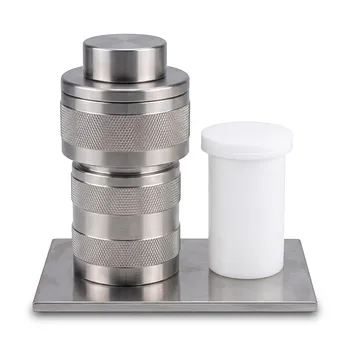
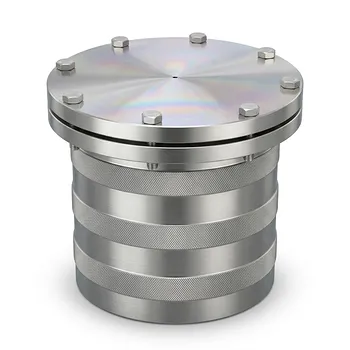
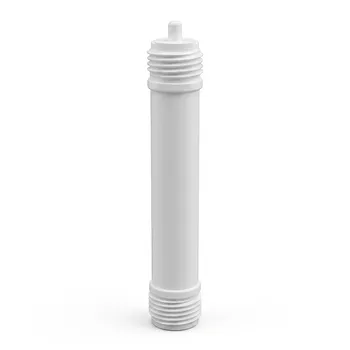
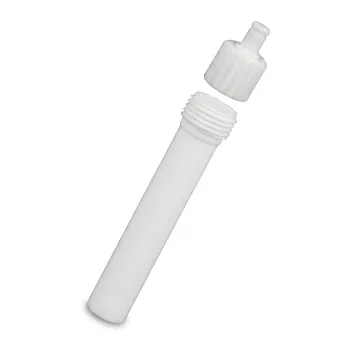
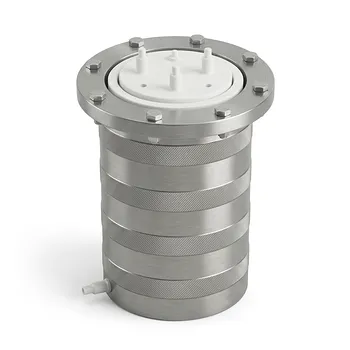
The integration of high-pressure autoclaves with PTFE or PFA liners is the fundamental technical requirement for synthesizing S-FeOOH nanorods.
These components create a sealed, high-temperature, and high-pressure environment that increases precursor solubility and drives oriented crystal growth. By providing chemical inertness, the liners ensure that sulfate ions are successfully doped into the crystal lattice while protecting the reaction from metallic contamination or vessel corrosion.
Core Takeaway: High-pressure autoclaves and fluoropolymer liners provide the thermodynamic and chemical environment necessary to force sulfate ions into the FeOOH lattice. This setup enables precise control over nanorod morphology by facilitating anisotropic growth in a high-purity, closed-system reaction.
Engineering the Hydrothermal Micro-Environment
Driving Precursor Solubility and Supersaturation
High-pressure autoclaves allow the solvent to reach temperatures well above its boiling point while remaining in a liquid or supercritical state. This specialized environment significantly increases the solubility of precursors, allowing for a more homogenous reaction mixture than standard atmospheric conditions.
Promoting Anisotropic and Oriented Growth
The enclosed high-pressure system forces the solution into a state of supersaturation, which is the primary driver for crystal nucleation. This energy-rich environment promotes oriented growth along specific crystallographic axes, enabling the formation of one-dimensional nanorod structures with specific aspect ratios.
Facilitating Sulfate Ion Doping
Achieving successful sulfate ion (S) doping into the FeOOH lattice requires the increased reactivity found in a pressurized system. The autoclave ensures that the sulfate ions are integrated into the crystal structure at the molecular level rather than remaining as surface impurities.
Protecting Material Purity and Vessel Integrity
Preventing Metallic Contamination
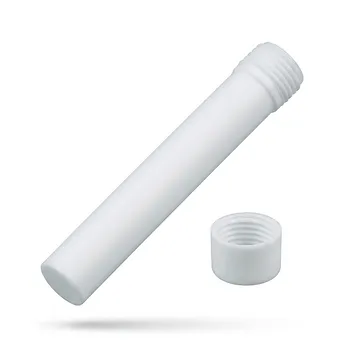
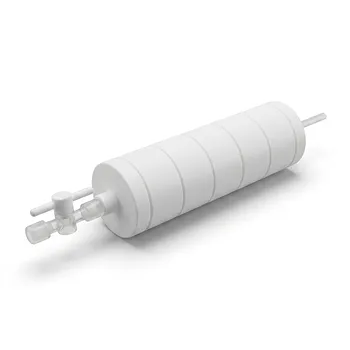
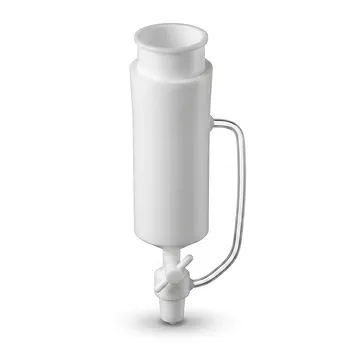
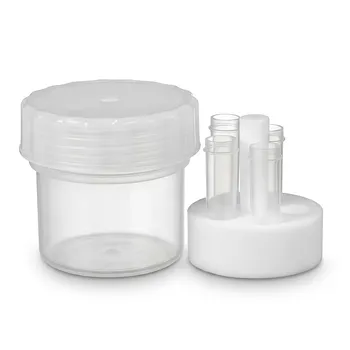
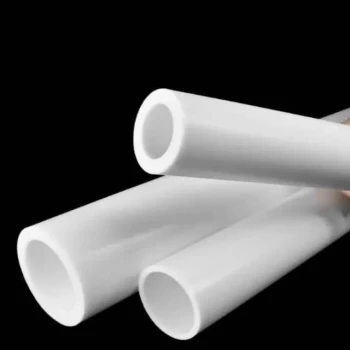
PTFE (Teflon) and PFA liners act as a physical barrier between the reactive solution and the stainless steel walls of the autoclave. This prevents unwanted metal ions (such as iron or chromium from the steel) from leaching into the reaction, ensuring the chemical purity of the synthesized nanorods.
Corrosion Resistance in Harsh Environments
The synthesis of S-FeOOH often involves acidic or corrosive precursors that would otherwise attack the metallic autoclave body. The exceptional chemical inertness of PTFE and PFA allows the synthesis to proceed steadily even at elevated temperatures, typically ranging from 90°C to 200°C.
Non-Stick Properties and Sample Recovery
The low surface energy of fluoropolymers prevents nanomaterials from adhering to the vessel walls during the crystallization process. This non-stick property ensures that the synthesized nanorods are easily recovered and that the morphology remains consistent across the entire batch.
Understanding the Trade-offs and Limitations
Temperature Constraints of Fluoropolymer Liners
While chemically robust, PTFE and PFA have strict thermal limits, generally losing structural integrity above 250°C. Exceeding these temperatures can lead to liner deformation, leakage, or the release of toxic decomposition gases, which can ruin the synthesis and damage the autoclave.
Pressure Lag and Thermal Inertia
The thick walls of the steel autoclave combined with the internal polymer liner create significant thermal inertia. This means the internal reaction temperature may lag behind the external oven settings, requiring precise calibration to ensure the reproducible growth of S-FeOOH nanorods.
Filling Ratio and Safety
The internal pressure of a hydrothermal reaction is highly sensitive to the filling ratio of the liner (typically recommended at 60-80%). Overfilling can lead to catastrophic pressure spikes, while underfilling may not provide enough pressure to achieve the supersaturation required for nanorod formation.
How to Apply This to Your Synthesis
Making the Right Choice for Your Goal
To achieve the best results when synthesizing S-FeOOH nanorods, consider your primary experimental objectives:
- If your primary focus is high-purity lattice doping: Use high-quality PFA liners, which often offer superior chemical resistance and lower trace-metal leaching compared to standard PTFE.
- If your primary focus is precise nanorod aspect ratios: Strictly control the filling ratio and heating ramp rate to ensure a stable, high-pressure environment that favors anisotropic growth.
- If your primary focus is long-term equipment durability: Always inspect liners for "memory" deformation or pitting after each run to prevent precursor carry-over and ensure a perfect seal.
By mastering the balance between autoclave pressure and liner inertness, researchers can reliably produce S-FeOOH nanorods with the exact chemical and structural properties required for advanced applications.
Summary Table:
| Feature | Role in Synthesis | Performance Benefit |
|---|---|---|
| High Pressure | Increases precursor solubility | Facilitates oriented, anisotropic crystal growth |
| Heat Control | Thermodynamic drive | Enables successful molecular-level sulfate ion (S) doping |
| Fluoropolymer Liner | Chemical inertness | Prevents metallic contamination from vessel walls |
| Non-stick Surface | Low surface energy | Ensures high sample recovery and consistent morphology |
Elevate Your Synthesis Precision with KINTEK’s Fluoropolymer Expertise
Achieving the perfect S-FeOOH nanorod morphology requires a contamination-free, high-pressure environment. KINTEK specializes in high-performance PTFE and PFA laboratory supplies designed for the most demanding hydrothermal applications.
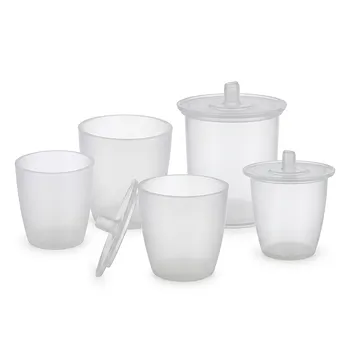
From everyday basic labware (beakers, measuring cylinders, crucibles, reagent bottles, and digestion tubes) to advanced reaction apparatus like hydrothermal synthesis liners, microwave digestion vessels, and electrochemical cells, we offer the complete spectrum of fluoropolymer solutions. Backed by end-to-end custom CNC fabrication, we deliver everything from complex non-standard machined parts to high-volume orders, ensuring absolute purity and durability for your research.
Ready to optimize your lab setup? Contact us today to discover how KINTEK’s bespoke laboratory solutions and high-purity components can transform your material synthesis results.
References
- Muhammad Tahir, Lihong Li. Modulating Intrinsic Sulfate Ions in FeOOH Nanorods for Enhanced Energy Storage and Catalytic Oxygen Evolution. DOI: 10.1002/smll.202412645
This article is also based on technical information from Kintek Knowledge Base .
Related Products
- PTFE Lined High Pressure Digestion Vessel 50ml High Temperature Hydrothermal Synthesis Tank
- Custom TFM Reaction Vessel with Stainless Steel Jacket and PTFE Inner Cup for High Corrosion Resistance
- High Purity PTFE Microwave Digestion Vessel for Soil and Food Analysis Acid Resistant Fluoropolymer Sample Preparation Liners
- High Purity PTFE Microwave Digestion Vessel Replacement Liner for Acid Sample Preparation and Trace Analysis
- High Purity TFM Microwave Digestion Vessels PTFE Acid Evaporation Liners Domestic GT-400 Equivalent Laboratory Reaction Containers
People Also Ask
- What are the benefits of using a PTFE-lined vessel for carbon-sulfur cathode treatment? Maximize Purity & Performance
- Why are PTFE-lined pressure digestion vessels required for the preparation of Ag/CeO2 catalysts? Purity & Performance
- What safety features are typically incorporated into high-pressure PTFE digestion vessel designs? Ensure Lab Safety
- What is the function of high-pressure PTFE digestion vessels in mineral analysis? Optimize Sample Mineralization
- What is the function of PTFE lined high-pressure vessels in g-C3N4 synthesis? Achieve High-Purity Material Growth