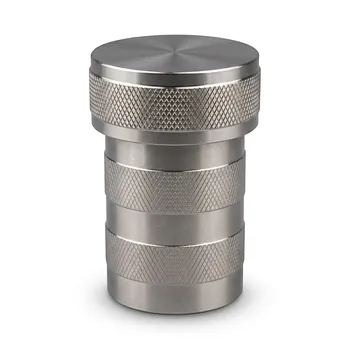
High-pressure autoclaves and PTFE liners serve as the specialized reaction vessels that enable the hydrothermal synthesis of BiOBr/Bi2O2S heterojunctions. These components create a sealed, subcritical environment—typically between 180°C and 200°C—where high pressure facilitates controlled crystal growth. This setup is essential for producing high-crystallinity semiconductors with precise morphologies, such as nanosheets or nanorods, that are difficult to achieve under standard atmospheric conditions.
The autoclave and PTFE liner system provides the thermodynamic pressure and chemical isolation required for precise crystal engineering, ensuring the resulting BiOBr/Bi2O2S heterojunctions achieve the purity and structural integrity necessary for advanced photocatalytic applications.
The Role of the Sealed Autoclave Environment
Achieving Subcritical Reaction Conditions
The primary function of the high-pressure autoclave is to maintain a sealed environment that allows the solvent to reach subcritical states. At temperatures between 180°C and 200°C, the internal pressure rises significantly, increasing the solubility and reactivity of the precursors.
Driving Controlled Crystal Growth
High pressure within the autoclave is the catalyst for controlled nucleation. This environment allows bismuth and bromine sources to react fully, resulting in the growth of particles with specific layered structures and abundant active sites.
Engineering Specific Morphologies
The pressurized state is critical for achieving specific nanostructures, such as nanosheets or nanorods. This precise morphological control directly impacts the material's surface area and its ultimate effectiveness in photocatalytic degradation.
The Critical Function of the PTFE Liner
Preventing Metal Ion Contamination
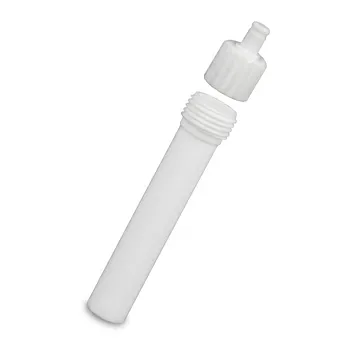
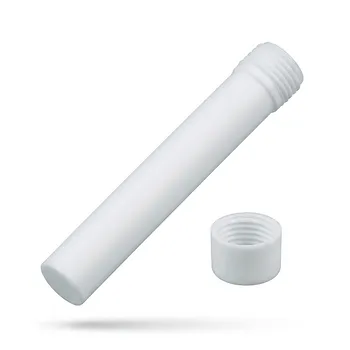
The PTFE (polytetrafluoroethylene) liner acts as a chemically inert barrier between the reaction solution and the stainless steel walls of the autoclave. This prevents metal ions from leaching into the solution, which ensures the high purity and stoichiometric accuracy of the BiOBr/Bi2O2S heterojunction.
Resistance to Aggressive Chemical Media
Synthesis often involves corrosive precursors or solvents like acetic acid or ethylene glycol. The exceptional corrosion resistance of PTFE allows the system to withstand these aggressive media at high temperatures without degrading the vessel or contaminating the product.
Facilitating Interfacial Contact
For a heterojunction to be effective, there must be tight interfacial contact between the two semiconductor phases (BiOBr and Bi2O2S). The stable, high-pressure environment provided by the liner allows one material to deposit precisely onto the surface of the other, creating a robust chemical bond.
Understanding the Trade-offs
Temperature and Pressure Limitations
While PTFE is highly versatile, it has a thermal ceiling, typically around 200°C to 250°C. Exceeding these temperatures can lead to the mechanical deformation of the liner, potentially causing the autoclave to leak or the liner to become trapped within the steel housing.
Heat Transfer Inefficiency
PTFE is an insulator, meaning it does not conduct heat as effectively as the outer metal shell. This creates a thermal lag between the oven's programmed temperature and the actual temperature of the reaction solution inside the liner, requiring careful calibration of heating times.
Risk of Pressure Overload
Because the system is sealed, there is a risk of uncontrolled pressure increases if the reaction produces gases or if the vessel is overfilled. Operators must strictly adhere to filling degree limits (usually 60-80% of total volume) to prevent catastrophic equipment failure.
How to Apply This to Your Project
When synthesizing BiOBr/Bi2O2S heterojunctions, your equipment choices should align with your specific structural and purity requirements.
- If your primary focus is high crystallinity: Ensure your autoclave is rated for at least 200°C to allow the precursors to reach the necessary subcritical state for perfect lattice formation.
- If your primary focus is photocatalytic purity: Always use a high-purity, non-stick PTFE liner to eliminate metal ion doping from the autoclave walls, which can create unwanted recombination centers.
- If your primary focus is complex morphology (e.g., nanosheets): Maintain a consistent filling ratio and ramp-down cooling rate to allow the high-pressure environment to guide the slow, oriented growth of layered structures.
By mastering the thermodynamic environment of the autoclave and the chemical isolation of the PTFE liner, you can reliably produce high-performance heterojunctions with tailored electronic properties.
Summary Table:
| Component | Primary Function | Key Benefit for Synthesis |
|---|---|---|
| High-Pressure Autoclave | Creates subcritical environments (180°C-200°C) | Enables controlled nucleation and specific nanostructures. |
| PTFE Liner | Provides a chemically inert, corrosion-resistant barrier | Prevents metal contamination and ensures stoichiometric accuracy. |
| Pressure Dynamics | Drives increased solubility and reactivity | Facilitates tight interfacial contact for semiconductor phases. |
| Operational Limits | Maintains 60-80% filling degree | Prevents pressure overload and mechanical deformation of components. |
Elevate Your Research with KINTEK’s High-Performance Fluoropolymer Solutions
Precision in hydrothermal synthesis demands equipment that can withstand aggressive chemical media without compromising purity. KINTEK specializes in manufacturing a comprehensive range of laboratory supplies crafted from high-performance PTFE and PFA, specifically designed for advanced material science and trace analysis.
Whether you require standard hydrothermal synthesis liners and microwave digestion vessels or complex custom-machined reaction apparatus, our end-to-end CNC fabrication ensures your setup meets the most exacting specifications. From basic labware (beakers, tubes, and bottles) to advanced components like microchannel reactors and electrochemical cells, we provide the durability and chemical isolation necessary for your most sensitive heterojunction projects.
Ready to optimize your lab's efficiency and purity? Contact us today to discover how our expertise in fluoropolymer fabrication and high-volume orders can support your next breakthrough!
References
- Kehinde D. Jayeola, Omotayo A. Arotiba. Redistribution of charge in a 2D/1D BiOBr/Bi<sub>2</sub>O<sub>2</sub>S heterojunction for the photoelectrocatalytic oxidation of organic pollutants in water. DOI: 10.1039/d5ra03795f
This article is also based on technical information from Kintek Knowledge Base .
Related Products
- PTFE Lined High Pressure Digestion Vessel 50ml High Temperature Hydrothermal Synthesis Tank
- Custom TFM Reaction Vessel with Stainless Steel Jacket and PTFE Inner Cup for High Corrosion Resistance
- High Pressure Custom TFM Reactor Stainless Steel Outer Vessel PTFE Inner Cup for Corrosive Synthesis
- High Purity PTFE Microwave Digestion Vessel Replacement Liner for Acid Sample Preparation and Trace Analysis
- High Purity TFM Microwave Digestion Vessels PTFE Acid Evaporation Liners Domestic GT-400 Equivalent Laboratory Reaction Containers
People Also Ask
- What are the benefits of using a PTFE-lined vessel for carbon-sulfur cathode treatment? Maximize Purity & Performance
- Why are PTFE-lined pressure digestion vessels required for the preparation of Ag/CeO2 catalysts? Purity & Performance
- What safety features are typically incorporated into high-pressure PTFE digestion vessel designs? Ensure Lab Safety
- What is the function of PTFE lined high-pressure vessels in g-C3N4 synthesis? Achieve High-Purity Material Growth
- Role of High-Pressure Digestion Tanks in Perovskite Synthesis: Achieve Superior Stability and Latent Heat