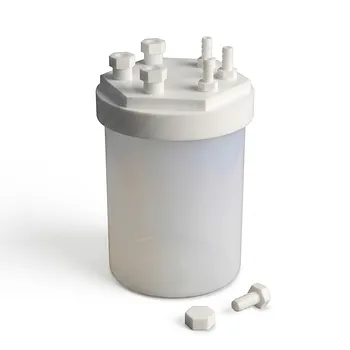
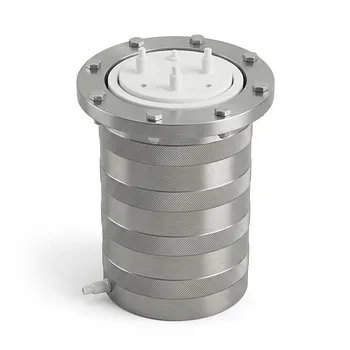
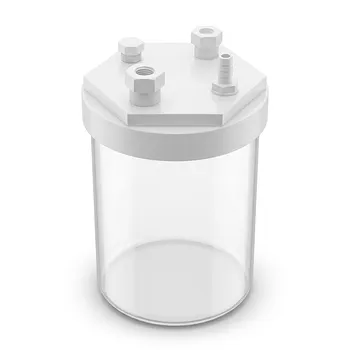
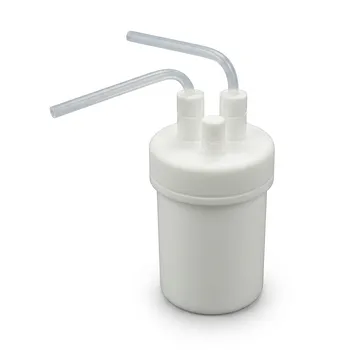
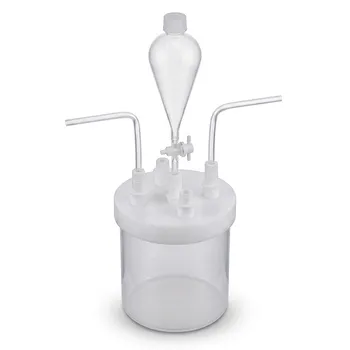
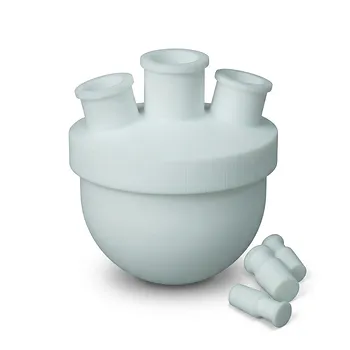
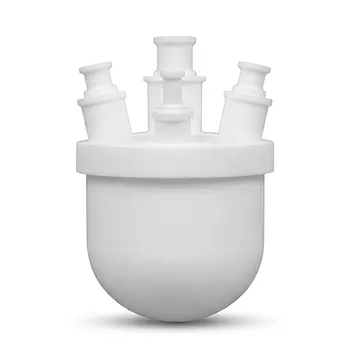
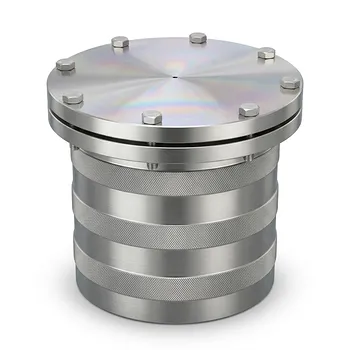
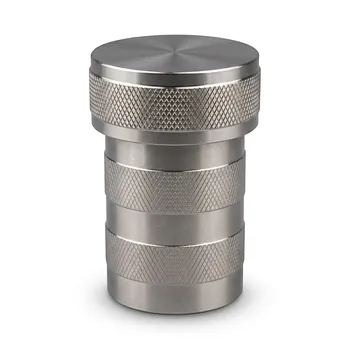
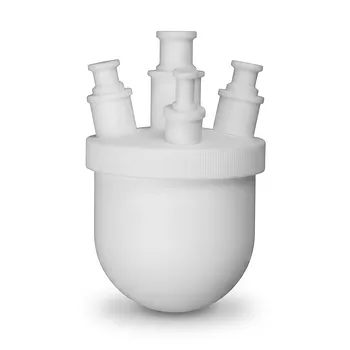
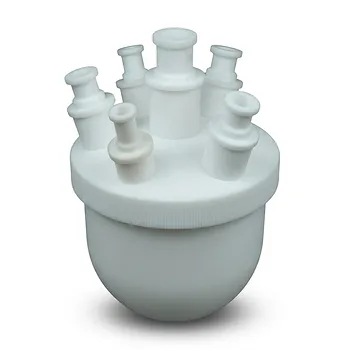
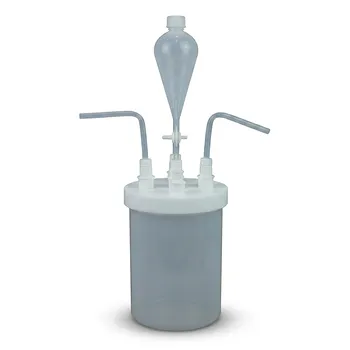
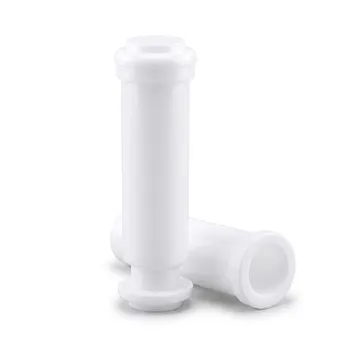
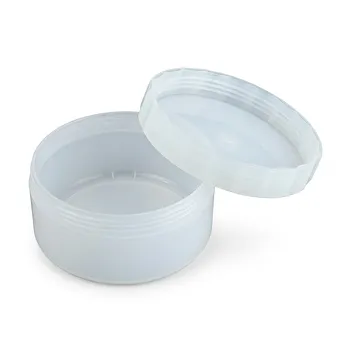
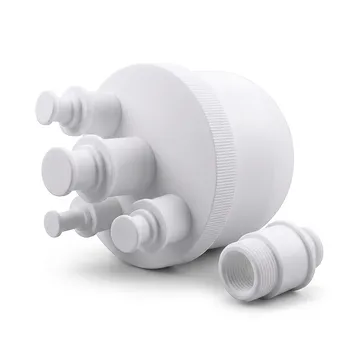
For the solvothermal synthesis of Covalent Organic Frameworks (COFs) like 3D@BT_TPA-COF, reaction containers must be high-pressure and heat-resistant. These vessels, typically high-strength glass ampoules or PTFE-lined stainless steel reactors, must maintain absolute structural integrity at temperatures between 90°C and 150°C. This specialized environment is essential to facilitate the reversible condensation of monomers into high-crystallinity frameworks.
The core requirement for COF synthesis containers is the ability to sustain stable internal pressure at elevated temperatures, which creates the thermodynamic conditions necessary for the self-correcting growth of crystalline organic structures.
Critical Material and Structural Requirements
High-Pressure Resistance
Solvothermal synthesis involves heating solvents beyond their standard boiling points, which generates significant internal pressure. The container must be engineered to withstand these forces without leaking or rupturing, as any loss of pressure will halt the synthesis process.
Thermal Stability and Range
The vessel must remain chemically and physically stable within the 90°C to 150°C range. This temperature window is critical for providing the activation energy required for monomer condensation while preventing the degradation of the organic building blocks.
Chemical Inertness
Containers must be made of materials that do not react with the monomers or catalysts. For this reason, high-purity Polytetrafluoroethylene (PTFE) liners or high-strength glass are used to ensure the purity of the resulting 3D@BT_TPA-COF.
The Role of the Container in Framework Formation
Facilitating Reversible Condensation
The primary function of the pressurized container is to keep the reaction in the liquid phase at high temperatures. This environment allows for reversible condensation, where bonds can break and reform until the most thermodynamically stable, crystalline structure is achieved.
Supporting High Crystallinity
A stable, closed system prevents the evaporation of solvents and maintains constant concentrations of reactants. This consistency is the foundation for producing frameworks with the high degree of crystallinity and long-range order required for 3D COFs.
Isolation from External Contaminants
Because COF synthesis is sensitive to moisture and atmospheric oxygen, the container must provide a perfect seal. Flame-sealed glass ampoules are particularly effective for isolating the reaction from the external environment.
Understanding the Trade-offs
Glass Ampoules vs. Stainless Steel Reactors
While high-strength glass ampoules allow for visual monitoring of the reaction, they carry a higher risk of explosion if the pressure exceeds the glass's limit. In contrast, stainless steel reactors (autoclaves) offer superior safety and pressure tolerance but lack transparency, making it impossible to observe the reaction in real-time.
Scaling Limitations
Small glass ampoules are ideal for discovery-scale research but do not scale easily for industrial applications. Transitioning to larger PTFE-lined steel reactors requires careful calibration to ensure that heating remains uniform across the larger volume.
Selecting the Right Vessel for Your Synthesis
Choosing the appropriate container depends on your specific safety requirements and the scale of your framework production.
- If your primary focus is discovery and observation: Use high-strength glass ampoules to allow for visual confirmation of the crystalline precipitate during the synthesis.
- If your primary focus is safety and high-pressure stability: Utilize stainless steel reactors lined with PTFE to minimize the risk of vessel failure at the upper limits of the 150°C range.
By maintaining a rigorous pressurized environment, you enable the precise molecular "proofreading" necessary to yield high-quality 3D@BT_TPA-COF structures.
Summary Table:
| Feature | Requirement | Purpose |
|---|---|---|
| Pressure Resistance | High-strength integrity | Withstand internal solvent pressure during heating |
| Thermal Stability | 90°C to 150°C range | Facilitate monomer condensation without degradation |
| Chemical Inertness | High-purity PTFE or Glass | Prevent reaction contamination and ensure framework purity |
| System Sealing | Airtight/Flame-sealed | Isolate synthesis from atmospheric oxygen and moisture |
Elevate Your Synthesis with KINTEK Fluoropolymer Expertise
Achieving the high crystallinity required for 3D@BT_TPA-COF demands vessels that never compromise on purity or performance. KINTEK specializes in high-performance laboratory supplies crafted exclusively from PTFE and PFA, ensuring absolute chemical inertness and thermal stability for your most sensitive solvothermal reactions.
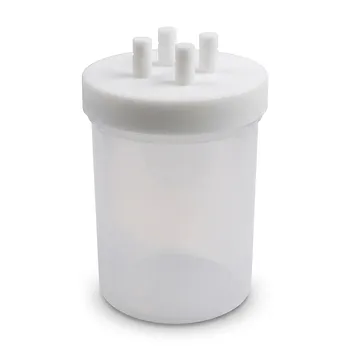
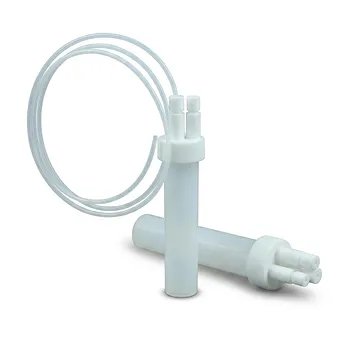
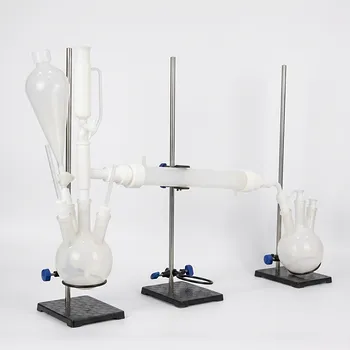
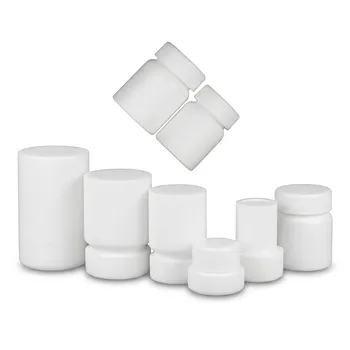
From everyday essentials like beakers, crucibles, and reagent bottles to specialized hydrothermal synthesis liners, microwave digestion vessels, and custom-machined reactors, we provide the tools you need for success. Whether you require standard labware or bespoke CNC-fabricated components for complex non-standard setups, KINTEK delivers precision at any scale.
Ready to optimize your lab's performance? Contact KINTEK today to discuss your custom requirements and secure the high-performance fluoropolymer solutions your research deserves!
References
- Subhajit Bhunia, Carlos R. Cabrera. Unraveling Dimensional Tuning: From 2D to 3D in Covalent Organic Frameworks for Enhanced 2e<sup>–</sup> Oxygen Reduction Reaction. DOI: 10.1021/acsomega.5c00568
This article is also based on technical information from Kintek Knowledge Base .
Related Products
- PTFE Lined High Pressure Digestion Vessel 50ml High Temperature Hydrothermal Synthesis Tank
- PFA Chemical Reaction Tank with Customizable Fittings for Corrosive Solvent Synthesis and High Purity Lab Applications
- High Pressure Custom TFM Reactor Stainless Steel Outer Vessel PTFE Inner Cup for Corrosive Synthesis
- PFA Reaction Tank 6L Customizable Fittings Corrosion Resistant Solvent Resistant PFA Reaction Bottle for New Material Synthesis
- Custom PTFE Continuous Reaction Bottles Virgin Fluoropolymer High Purity Low Background Synthesis Vessels
People Also Ask
- What are the benefits of using a PTFE-lined vessel for carbon-sulfur cathode treatment? Maximize Purity & Performance
- Why are PTFE-lined pressure digestion vessels required for the preparation of Ag/CeO2 catalysts? Purity & Performance
- What is the function of high-pressure PTFE digestion vessels in mineral analysis? Optimize Sample Mineralization
- What safety features are typically incorporated into high-pressure PTFE digestion vessel designs? Ensure Lab Safety
- What is the function of PTFE lined high-pressure vessels in g-C3N4 synthesis? Achieve High-Purity Material Growth