Irradiated PTFE fluoroadditives used in food-contact or pharmaceutical applications must satisfy the applicable material-composition, migration, processing, and safety requirements for their intended use. In the United States, the primary food-contact reference is FDA 21 CFR 177.1550, which governs perfluorocarbon resins such as PTFE and related fluoropolymers under specified conditions. Irradiation does not make a material automatically compliant: the radiation dose, particle characteristics, additives, manufacturing process, and finished-article use must all be evaluated.
Regulatory compliance depends on the complete system, not merely on the PTFE resin. The irradiated material must meet the applicable FDA or European food-contact requirements, while pharmaceutical and laboratory uses require separate controls for extractables, leachables, biological reactivity, contamination, and process emissions.
What Governs Food-Contact Use
FDA requirements for PTFE and related fluoropolymers
For U.S. food-contact applications, 21 CFR 177.1550, “Perfluorocarbon Resins,” is the central reference for PTFE, PFA, FEP, and related materials when used within its listed conditions.
Those conditions can address the resin type, permitted uses, temperature exposure, processing limitations, and other specifications. A supplier should therefore provide a compliance statement tied to the exact grade and intended application rather than relying on a general claim that “PTFE is FDA compliant.”
Additives and fluoroadditive formulations
Irradiated PTFE fluoroadditives may contain processing aids, pigments, fillers, stabilizers, or other intentionally added substances. Each additive must have an appropriate regulatory basis, such as authorization under the relevant FDA food-contact provisions, including applicable sections of 21 CFR Part 178.
A compliant base polymer does not automatically authorize every formulation made from it. The finished material must be assessed as a whole, including substances introduced during irradiation or subsequent processing.
Coatings and polymeric surfaces
Where the PTFE is applied as a coating or polymeric surface, provisions such as 21 CFR 175.300 may become relevant, depending on the construction and intended contact conditions.
The correct regulatory pathway depends on whether the material is a resin, coating, additive, component, or finished article. This classification should be established before testing and documentation are finalized.
Why Irradiation Requires Additional Controls
Radiation dose and particle characteristics
The primary reference identifies maximum radiation doses and particle-size limits as important controls for irradiated PTFE used in repeat-use contact applications. These limits are intended to control degradation and reduce the possibility of unsafe byproducts or unacceptable changes in the material.
The applicable limits must be confirmed against the current regulatory text and the specific material category. A generic irradiation certificate is insufficient if it does not identify the dose, processing conditions, batch, and relevant particle or finished-component specifications.
Degradation and structural integrity
PTFE is chemically resistant, but high-energy irradiation can alter polymer structure and generate volatile or low-molecular-weight degradation products. The finished component must retain its required mechanical, chemical, and dimensional properties throughout its intended service life.
This is especially important for seals, tubing, filters, reagent containers, and other repeat-use components that may experience heat, pressure, cleaning cycles, or aggressive chemicals.
Off-gas management
Irradiation operations must control process emissions, including volatile fluorinated compounds and potentially hydrogen fluoride (HF). Adequate ventilation, containment, monitoring, and stack-gas treatment are necessary to protect workers and prevent uncontrolled environmental release.
These controls are generally part of occupational-safety and environmental compliance rather than a substitute for food-contact approval. A component can meet a material standard while the manufacturing operation still requires separate emission and worker-protection controls.
Requirements for European Food Contact
Framework Regulation (EC) No 1935/2004
In the European Union, food-contact materials must comply with Framework Regulation (EC) No 1935/2004. It requires materials to be sufficiently inert so they do not transfer substances to food in quantities that endanger health, create unacceptable compositional changes, or adversely affect taste or odor.
The regulation also establishes traceability and supports the use of a documented compliance process across the supply chain.
Regulation (EU) No 10/2011
Plastic food-contact materials are generally assessed under Regulation (EU) No 10/2011, including its applicable substance listings, restrictions, migration limits, and testing conditions.
The assessment should account for the actual food simulant, contact time, temperature, repeated-use conditions, surface-to-volume ratio, and any substances generated by irradiation. Older references such as Directive 90/128/EEC should not be treated as the current governing plastics measure because they have been superseded.
Good Manufacturing Practice
Food-contact articles must also be manufactured under appropriate Good Manufacturing Practice, including controls over raw materials, contamination, process parameters, batch traceability, and change management.
For irradiated PTFE, the compliance file should connect the irradiation process to the specific finished article. Changes in dose, atmosphere, particle size, additive package, or post-irradiation processing may require renewed evaluation.
What Applies to Laboratory and Pharmaceutical Components
Laboratory use is not automatically food-contact use
A laboratory component may not contact food directly, yet still require stringent purity controls. Reagent bottles, sample-preparation vessels, filtration equipment, tubing, and fittings can contaminate samples through extractables, leachables, particles, or residues.
FDA food-contact compliance is relevant when the component is used in food processing or food analysis, but it is not a universal approval for every laboratory or pharmaceutical application.
USP Class VI testing
USP Class VI testing is commonly used for polymeric materials intended for pharmaceutical, biotechnology, and other high-purity applications. It evaluates biological reactivity under specified test conditions.
USP Class VI is evidence from a defined biological-reactivity test program, not a blanket certification that a finished component is suitable for every pharmaceutical process. Extractables, leachables, cleaning compatibility, sterilization, and process-specific contamination risks still require review.
Extractables and leachables
For pharmaceutical and biological processing, the key concern is whether the material releases substances into the product, reagent, or sample. The risk depends on the polymer grade, irradiation history, additives, manufacturing residues, cleaning agents, temperature, exposure time, and process chemistry.
A suitable qualification package should therefore include material identity, additive disclosure or regulatory status, extractables and leachables data where appropriate, and information on the actual finished component.
Trace-analysis considerations
High-purity analytical workflows may be affected by very small quantities of fluorinated residues, metals from fillers or pigments, particles, or processing contaminants. Virgin, unfilled PTFE is often selected for sanitary or trace-analysis applications because it reduces additive-related contamination risks.
That selection does not remove the need for application-specific verification. The component should be tested or qualified against the analytical method and detection limits that matter to the user.
Additional Sanitary and Material Standards
3-A Sanitary Standards
For dairy and sanitary food-processing equipment, applicable 3-A Sanitary Standards may impose requirements for materials, cleanability, surface condition, hygienic design, and multiple-use service.
A material can satisfy a resin regulation and still fail to meet equipment-level sanitary requirements because the design, joints, surface finish, or cleaning behavior is inadequate.
Potable-water and regional requirements
Some PTFE products may also be evaluated against regional potable-water standards, such as WRAS, where the application involves drinking-water systems. These requirements are separate from food-contact and pharmaceutical standards.
The applicable standard should be selected based on the destination market and the actual service environment.
Understanding the Trade-offs
“FDA compliant” is not a complete qualification
The phrase FDA compliant is incomplete unless it identifies the exact regulation, material grade, use conditions, and supporting evidence. Compliance for a resin does not necessarily extend to a finished irradiated component containing additional additives.
A reliable supplier declaration should state the regulatory basis and limitations rather than presenting compliance as unconditional.
Inertness does not eliminate migration risk
PTFE and related fluoropolymers are valued for chemical resistance, low wetting, and low reactivity. However, inertness does not prove that no substance can migrate from fillers, pigments, degradation products, residues, or adjacent materials.
Migration and extractables testing should reflect the intended conditions, especially for elevated temperatures, long contact times, repeated use, and aggressive cleaning.
USP Class VI is not a substitute for chemical testing
Biological reactivity testing addresses one category of risk. It does not establish that a component is free of extractable chemicals, suitable for trace analysis, compatible with a specific drug product, or compliant with food-contact migration limits.
Chemical characterization and process qualification may be needed in addition to biological testing.
Irradiation can create process hazards
Irradiation may improve particle size, morphology, or functional performance, but it can also generate off-gases and alter polymer properties. The process therefore requires controlled dose delivery, ventilation, gas treatment, worker protection, and documented batch records.
Finished-product testing alone cannot replace process controls for hazardous emissions.
Making the Right Choice for Your Goal
The correct qualification package should match the regulatory jurisdiction, contact medium, temperature, duration, reuse pattern, and sensitivity of the process.
- If your primary focus is direct food contact: Select a grade and finished article documented for the intended use under FDA 21 CFR 177.1550 or the applicable EU food-contact framework, including additive and migration compliance.
- If your primary focus is pharmaceutical or bioprocessing: Require USP Class VI evidence where appropriate, together with extractables and leachables information and process-specific compatibility data.
- If your primary focus is trace-analysis laboratory work: Prefer high-purity, preferably virgin and unfilled, materials and verify that the component does not contribute particles, metals, fluorinated residues, or measurable analytical interference.
- If your primary focus is irradiated fluoroadditive production: Control the radiation dose, particle specifications, degradation products, off-gas capture, HF treatment, worker exposure, and batch traceability.
- If your primary focus is sanitary dairy or beverage equipment: Assess the complete component or equipment against the relevant 3-A requirements, not only the polymer resin regulation.
- If your primary focus is European market access: Document compliance with Regulation (EC) No 1935/2004, Regulation (EU) No 10/2011 where applicable, GMP, migration limits, and traceability obligations.
The defensible approach is to qualify the irradiated formulation and finished component for its exact use conditions, supported by regulatory documentation, migration or extractables data, and controlled manufacturing records.
Summary Table:
| Standard | Scope | Key Requirements |
|---|---|---|
| FDA 21 CFR 177.1550 | US food-contact PTFE resins | Resin type, use conditions, temperature limits |
| FDA 21 CFR 175.300 | Coatings for food contact | Coating formulation, migration limits |
| EU Framework Reg. 1935/2004 | EU food-contact materials | Inertness, no harmful migration, traceability |
| EU Reg. 10/2011 | Plastic food-contact materials | Substance restrictions, migration limits, simulants |
| USP Class VI | Pharmaceutical materials | Biological reactivity tests |
| 3-A Sanitary Standards | Dairy/sanitary equipment | Hygienic design, cleanability |
Need expert guidance on regulatory compliance for PTFE components? At KINTEK, our high-performance PTFE and PFA products are designed to meet stringent standards. From FDA-compliant labware to custom machined parts for pharmaceutical and food processing, we ensure quality and safety. Contact us today to discuss your specific application and regulatory needs – we're here to help you choose the right solution. Get in touch with our specialists and let's ensure your lab or production line meets all necessary requirements.
Related Products
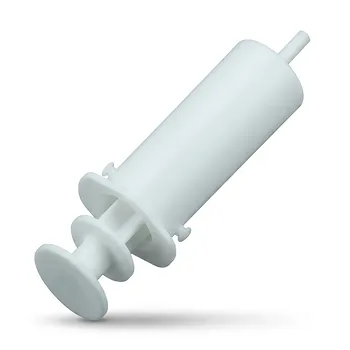
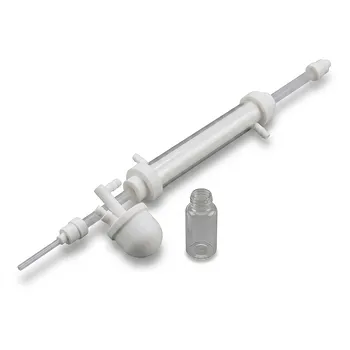
- High Purity Laboratory Grade PTFE Syringe Chemical Resistant Fluoropolymer Injector for Trace Analysis
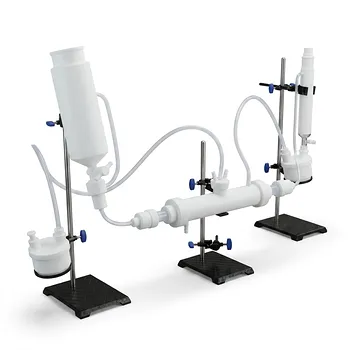
- Custom Polytetrafluoroethylene PTFE Constant Pressure Dropping Funnel Corrosion Resistant Fluid Control Assembly with Conversion Stopper Compatibility
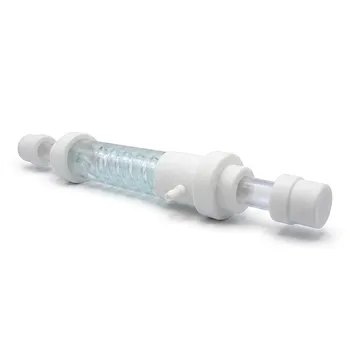
- Custom PTFE Condenser Tube 100ml Serpentine and Straight Fluoropolymer Laboratory Heat Exchanger with Flask Adapters
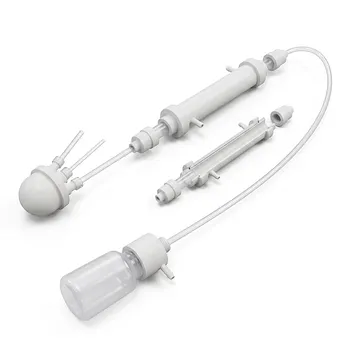
- High Temperature Corrosion Resistant PTFE Hydrogen Fluoride Condensation Reflux System with Separatory Funnel and PFA Collection Bottle
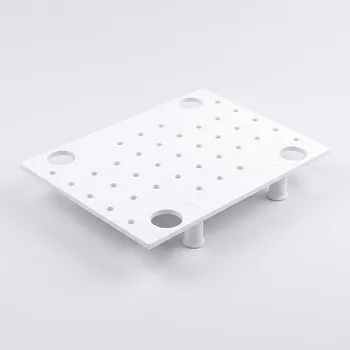
- High Temperature Resistant PTFE Thermal Insulation Board Corrosion Resistant Metal Free Fluoropolymer Stand for Ultra Clean Laboratories
People Also Ask
- In what medical devices is PTFE commonly used? Essential Components for Safety and Reliability
- What are the benefits of PTFE's chemical resistance? Achieve Unmatched Reliability in Corrosive Environments
- What chemicals is PTFE resistant to? Discover Its Near-Universal Chemical Inertness
- What chemical endgroups and off-gases are produced during the molecular weight reduction of PTFE fluoropolymers, and what safety measures are required?
- How do surfactants like APFO impact TFE polymerization, and why are alternatives essential?