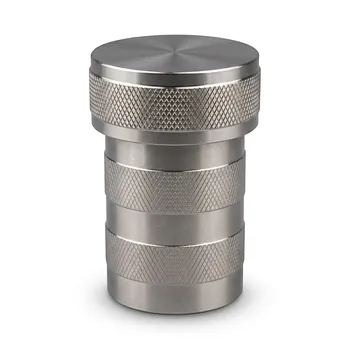
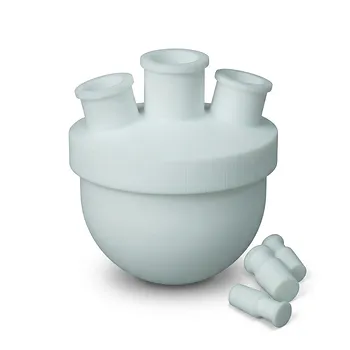
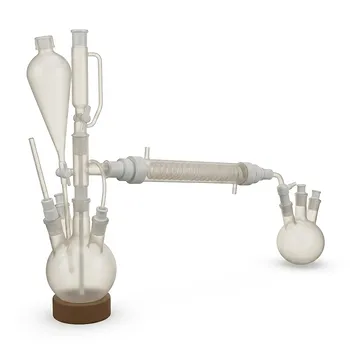
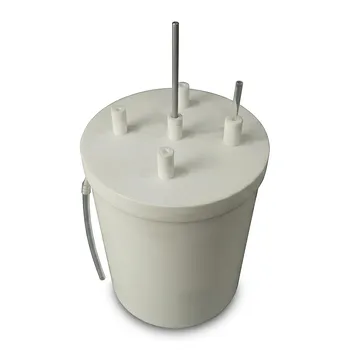
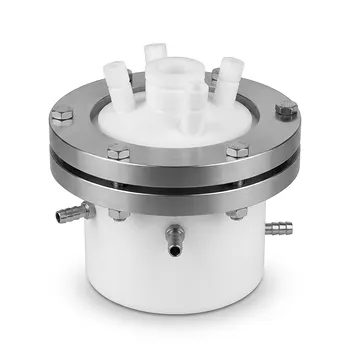
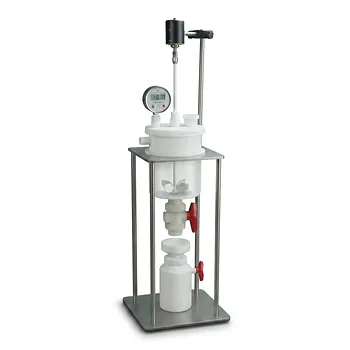
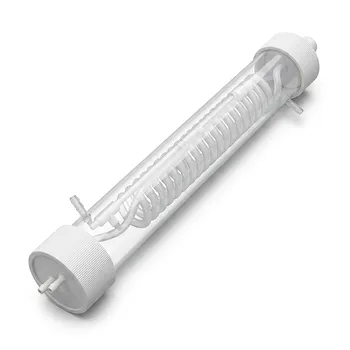
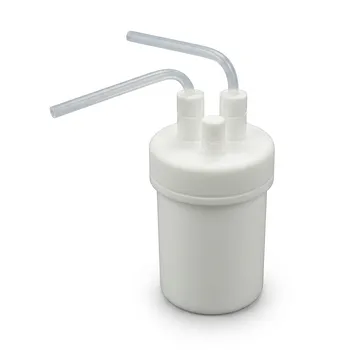
High-pressure hydrothermal synthesis reactors create a supercritical-like environment that facilitates the simultaneous reduction, nitrogen doping, and three-dimensional assembly of graphene oxide. By maintaining temperatures typically around 180°C within a sealed vessel, these reactors keep the reaction mixture in a liquid state while providing the kinetic energy necessary for n-propylamine to modify the graphene framework. This process results in a highly interconnected, porous hydrogel enriched with both nitrogen and residual oxygen functional groups.
Core Takeaway: The reactor provides a pressurized, high-temperature alkaline environment that enables n-propylamine to act as a multi-functional agent—reducing graphene oxide, doping it with nitrogen, and regulating the structural self-assembly into a 3D network.
The Role of High-Pressure Thermal Environments
Maintaining the Liquid State at High Temperatures
Hydrothermal reactors are designed to withstand significant internal pressure, which prevents the solvent and reactants from evaporating at temperatures well above their boiling points. This liquid-phase environment is essential for maintaining a high concentration of reactants, ensuring that the chemical interaction between graphene oxide and n-propylamine remains consistent throughout the process.
Enhancing Chemical Reactivity and Penetration
The combination of high pressure and heat increases the penetrative power of the reaction medium. In this state, n-propylamine can more effectively infiltrate the graphene oxide layers, accelerating the chemical kinetics required for rapid reduction and structural reorganization.
Kinetic Stability and Structural Uniformity
Consistent temperature control within the reactor ensures the kinetic stability of the assembly process. This stability is vital for creating a uniform, hierarchical structure, preventing localized defects and ensuring the graphene sheets form a well-distributed, interconnected porous network.
Chemical Mechanisms in the Hydrothermal Process
N-Propylamine as a Multi-Functional Agent
Under the specific conditions provided by the reactor, n-propylamine transitions into a highly active state. It serves a triple purpose: as a reducing agent to remove excess oxygen, a nitrogen dopant to integrate nitrogen into the carbon lattice, and a structural regulator to guide the 3D assembly.
Facilitating 3D Self-Assembly
The high-pressure environment forces the graphene sheets to overcome electrostatic repulsion, allowing them to stack and cross-link. This results in a three-dimensional hydrogel rather than a simple 2D precipitate, which is critical for applications requiring high surface area and electrochemical activity.
Preserving Oxygen and Nitrogen Co-Enrichment
While the process reduces graphene oxide, the sealed environment allows for the controlled retention of specific oxygen groups. This leads to co-enrichment, where both nitrogen and oxygen functional groups coexist to enhance the material's overall chemical reactivity and hydrophilicity.
Material Integrity and Purity Standards
The Necessity of Chemical Inertness
The hydrothermal process often creates an alkaline and corrosive environment due to the presence of organic amines. To counter this, reactors utilize internal liners made of high-purity Polytetrafluoroethylene (PTFE) or Perfluoroalkoxy (PFA).
Preventing Metallic Contamination
These liners are crucial for preventing the reaction mixture from coming into contact with the metal walls of the reactor shell. By shielding the sample, they prevent metal impurities from leaching into the hydrogel, which is vital for maintaining the electrochemical reliability and catalytic purity of the graphene.
Understanding the Trade-offs
Temperature and Pressure Limits
While higher temperatures increase reactivity, exceeding the thermal limits of the PTFE/PFA liners (typically 200°C–250°C) can cause liner deformation or failure. Operating too close to these limits requires precise monitoring to prevent structural damage to the reactor.
Balancing Reduction and Functionalization
There is a fundamental trade-off between the degree of reduction and the level of doping. Intense hydrothermal conditions may lead to excessive reduction, which can strip away beneficial oxygen groups and reduce the material's solubility or specific capacitance in battery and supercapacitor applications.
Scaling and Heat Transfer
In larger reactors, achieving a uniform temperature distribution becomes more difficult. Uneven heating can lead to inconsistencies in the hydrogel's pore size and doping levels, potentially compromising the structural integrity of the 3D network.
How to Apply This to Your Project
When utilizing high-pressure hydrothermal reactors for graphene hydrogel synthesis, your configuration should align with your specific material requirements.
- If your primary focus is Maximum Nitrogen Doping: Operate at the higher end of the temperature range (e.g., 180°C–200°C) to increase the reactivity of the nitrogen-containing precursors.
- If your primary focus is High Material Purity: Ensure the use of high-quality PFA liners and perform a thorough acid-wash of the reactor components to eliminate any trace metal ions.
- If your primary focus is Controlled Porosity: Focus on the cooling rate after the hydrothermal reaction, as slow, controlled cooling can influence the final pore distribution of the 3D framework.
The success of your synthesis depends on the precise calibration of the reactor's thermal and pressurized environment to balance chemical modification with structural assembly.
Summary Table:
| Condition/Component | Function in Synthesis | Benefit to Final Material |
|---|---|---|
| High Temp (~180°C) | Boosts kinetic energy | Faster reduction & nitrogen doping |
| High Pressure | Maintains liquid state | Ensures consistent chemical interaction |
| PTFE/PFA Liners | Chemical shielding | Prevents metallic contamination/leaching |
| N-Propylamine | Multi-functional agent | Guides 3D self-assembly and porosity |
Elevate Your Synthesis with KINTEK’s High-Performance Fluoropolymers
Precision in graphene hydrogel synthesis requires an environment free from contamination. At KINTEK, we specialize in manufacturing a comprehensive range of laboratory supplies crafted exclusively from high-performance PTFE and PFA. From essential labware like beakers, reagent bottles, and centrifuge tubes to critical hydrothermal synthesis liners and microwave digestion vessels, our products ensure the chemical inertness your research demands.
Whether you need standard consumables—such as stirring bars, filters, and fluid transfer components—or complex, custom CNC-fabricated parts and bespoke laboratory setups, KINTEK provides end-to-end solutions tailored to your specific application. Our absolute focus on fluoropolymer materials guarantees the durability and purity required for high-pressure, corrosive environments.
Ready to optimize your lab's performance? Contact us today to discuss your custom requirements!
References
- Yong Zhang, Shan Fan. N/O co-enriched graphene hydrogels as high-performance electrodes for aqueous symmetric supercapacitors. DOI: 10.1039/d1ra01863a
This article is also based on technical information from Kintek Knowledge Base .
Related Products
- High Temperature Corrosion Resistant Hydrothermal Synthesis Reactor with TFM Inner Liner and Straight Cylinder Design
- High Pressure Custom TFM Reactor Stainless Steel Outer Vessel PTFE Inner Cup for Corrosive Synthesis
- PTFE Lined High Pressure Digestion Vessel 50ml High Temperature Hydrothermal Synthesis Tank
- High Temperature PTFE Reaction Flask 1000ml Single Neck Round and Flat Bottom Laboratory Bottle
- Custom TFM Reaction Vessel with Stainless Steel Jacket and PTFE Inner Cup for High Corrosion Resistance
People Also Ask
- What is the role of a corrosion-resistant reactor in the synthesis of lignin-based carbon dots? Ensure Maximum Purity
- What are the technical advantages of using hydrothermal synthesis reactors for advanced electronic & optical nanomaterials?
- How does a hydrothermal synthesis reactor facilitate the production of crystalline materials with tailored morphologies? Precision Crystal Growth
- Why is the sealing reliability of a hydrothermal synthesis reactor critical for 24-hour cycles? Ensure Nano-Precision
- What role do hydrothermal synthesis reactors play in CQD preparation? Achieve High-Purity Nanomaterial Synthesis