The primary fluoropolymer resin categories are fully fluorinated perfluoroplastics, partially fluorinated polymers, and fluorinated copolymers or elastomers. Among these, fully fluorinated resins such as PTFE and PFA are the preferred choices for specialized laboratory supplies and fluid transfer components because they provide the strongest combination of chemical inertness, thermal stability, low surface energy, and purity. FEP is also included in the perfluoroplastic category, while materials such as PVDF and PCTFE are selected when specific mechanical, dimensional, or processing advantages are more important.
PTFE and PFA are generally the leading choices for high-purity laboratory containers, digestion vessels, tubing, valves, and fittings because they resist aggressive reagents, tolerate elevated temperatures, and minimize contamination or sample retention.
The Main Fluoropolymer Resin Categories
Fully Fluorinated Perfluoroplastics
Fully fluorinated resins include PTFE, PFA, and FEP. Their extensive fluorination produces very strong carbon-fluorine bonding, low surface energy, and exceptional resistance to acids, solvents, and other aggressive chemicals.
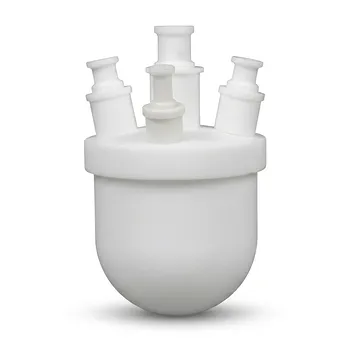
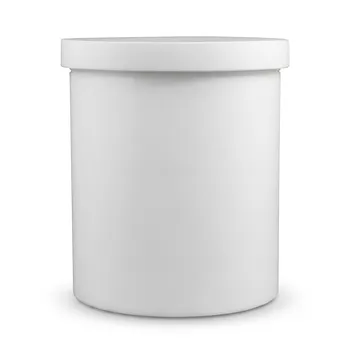
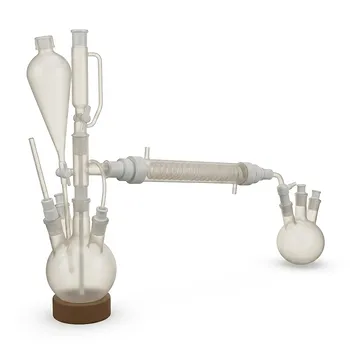
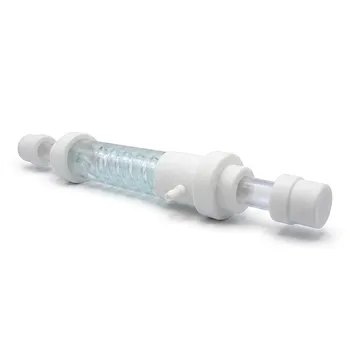
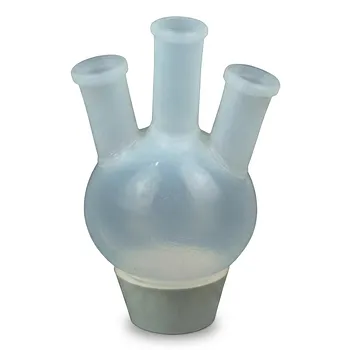
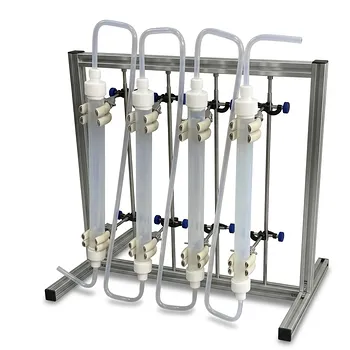
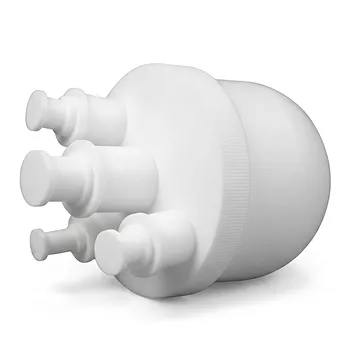
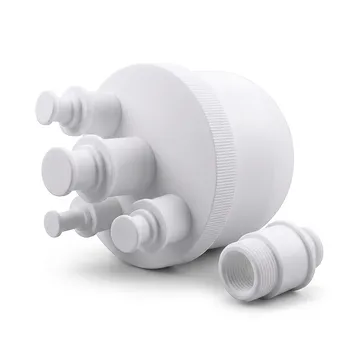
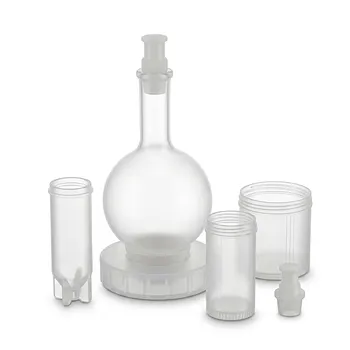
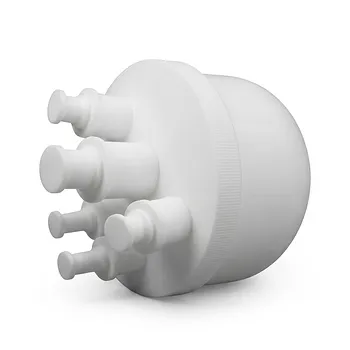
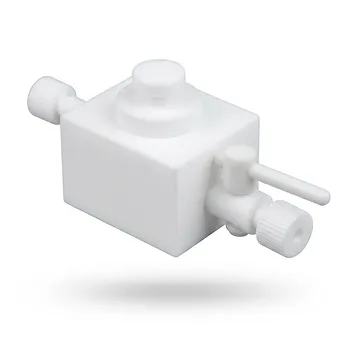
PTFE and PFA are especially important in ultra-pure laboratory applications. They are used for trace-analysis containers, microwave digestion vessels, reagent bottles, tubing, valve components, and fluid fittings where contamination and chemical degradation must be minimized.
Partially Fluorinated Polymers
Partially fluorinated polymers include PVDF, PCTFE, and PVF. They retain substantial chemical and thermal resistance but generally offer a different balance of stiffness, dimensional stability, mechanical strength, and processing characteristics than fully fluorinated materials.
PVDF, for example, can provide strong heat-distortion resistance and lower thermal expansion than PTFE or PFA under certain loading conditions. This can make it useful for components requiring tighter dimensional control, even when the maximum service temperature is lower.
Fluorinated Copolymers and Elastomers
Fluorinated copolymers and elastomers are formulated by combining fluorinated monomers to tailor sealing, flexibility, temperature performance, or solvent resistance. They are commonly considered for valve seals, gaskets, tubing components, and other parts that must remain resilient under repeated mechanical or thermal cycling.
Performance depends on the monomer composition. Adding tetrafluoroethylene can increase fluorine content and improve heat and aromatic-solvent resistance, while specialized compositions can improve low-temperature flexibility or resistance to strong bases.
Why PTFE and PFA Dominate High-Purity Applications
Chemical Inertness Protects Samples and Components
PTFE and PFA resist many corrosive acids, organic solvents, and aggressive reagents without significant degradation. This reduces the risk that containers, fittings, or tubing will react with the process fluid or release contaminants.
That characteristic is critical in trace analysis, where even very small amounts of leached material or retained residue can affect results.
Low Surface Energy Reduces Retention
The low surface energy of fully fluorinated resins creates non-wetting surfaces with both hydrophobic and lipophobic behavior. Liquids are less likely to adhere strongly to the material, which helps reduce sample retention and cross-contamination.
This property is valuable in reagent bottles, digestion vessels, and fluid pathways that must be cleaned thoroughly between uses.
Thermal Stability Supports Aggressive Processing
PTFE and PFA provide continuous service temperatures around 260°C, making them suitable for high-temperature laboratory operations and chemical processing. They maintain chemical inertness and low volatility across demanding temperature ranges.
However, thermal service temperature is only one design criterion. Dimensional stability under load must also be assessed because PTFE and PFA can exhibit thermal expansion and deformation under pressure.
How Resin Selection Changes by Component
Containers and Digestion Vessels
For ultra-pure storage, trace analysis, and microwave digestion, PTFE and PFA are usually the strongest candidates. PFA can be particularly attractive when transparency, melt processing, or complex molded geometry is required while retaining perfluoroplastic chemical resistance.
Tubing and Fluid Fittings
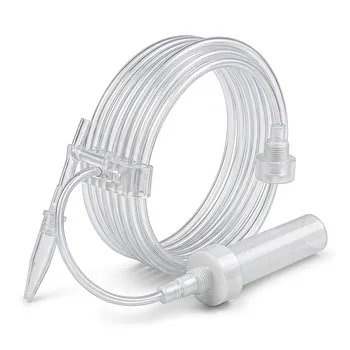
Tubing and fittings must withstand the specific chemicals, temperatures, pressures, and cleanliness requirements of the application. PTFE and PFA are favored for highly aggressive or high-purity fluids, while PVDF and selected copolymers may be appropriate when greater stiffness, lower expansion, or specialized sealing performance is required.
Valves, Seals, and Gaskets
Sealing components often require flexibility in addition to chemical resistance. Fluorinated elastomers and tailored copolymers may therefore be more suitable than rigid PTFE or PFA when the component must maintain contact pressure through movement, thermal cycling, or repeated assembly.
Understanding the Trade-offs
Chemical Resistance Does Not Guarantee Dimensional Stability
PTFE and PFA offer leading chemical and thermal performance, but their coefficients of thermal expansion are relatively high. PTFE is reported at approximately 12.6–18 × 10⁻⁵/°C, and PFA at approximately 13.7–20.7 × 10⁻⁵/°C.
For machined threads, precision fittings, and leak-sensitive assemblies, designers must account for expansion and potential thermal creep.
Heat-Distortion Performance Varies by Resin
PVDF can offer higher heat-distortion resistance under load, reported around 140°C–174°C, compared with approximately 122°C for PTFE and 74°C for PFA under the referenced test condition. This does not make PVDF a universal replacement because its continuous service temperature and chemical compatibility profile differ.
The correct comparison must consider the complete operating envelope rather than a single temperature rating.
Elastomers Require Formulation-Specific Evaluation
Fluorinated elastomers are not interchangeable as a general class. Their resistance to bases, aromatic solvents, low temperatures, and elevated temperatures depends on the particular monomer ratio and formulation.
A seal that performs well against one aggressive reagent may be unsuitable for another, so compatibility data should be evaluated for the actual chemical and temperature exposure.
Making the Right Choice for Your Goal
The application should determine whether chemical inertness, temperature capability, dimensional stability, flexibility, or sealing performance has priority.
- If your primary focus is maximum chemical resistance and sample purity: Select PTFE or PFA, especially for trace-analysis vessels, digestion equipment, reagent containers, and high-purity fluid paths.
- If your primary focus is high-temperature fluid handling: Prioritize PTFE or PFA, while checking pressure, thermal expansion, and deformation under load.
- If your primary focus is dimensional stability and heat-distortion resistance: Evaluate PVDF and other partially fluorinated polymers, provided their chemical compatibility is adequate.
- If your primary focus is flexible sealing or repeated mechanical cycling: Consider a formulation-specific fluorinated copolymer or elastomer rather than a rigid perfluoroplastic.
- If your primary focus is specialized solvent, base, or low-temperature resistance: Compare copolymer compositions and monomer ratios against the exact operating conditions.
Choosing the right fluoropolymer category means matching the resin’s chemistry and thermal behavior to the component’s purity, sealing, dimensional, and service requirements.
Summary Table:
| Category | Examples | Key Advantages | Limitations | Typical Applications |
|---|---|---|---|---|
| Fully Fluorinated Perfluoroplastics | PTFE, PFA, FEP | Highest chemical inertness; thermal stability up to 260°C; low surface energy for minimal retention | High thermal expansion; creep under load | Ultra-pure containers, digestion vessels, tubing, fittings, valves |
| Partially Fluorinated Polymers | PVDF, PCTFE, PVF | Better dimensional stability; higher heat-distortion resistance (PVDF: 140–174°C) | Lower max service temperature; reduced chemical resistance | Components requiring tighter tolerances, some fluid handling |
| Fluorinated Copolymers & Elastomers | Various (e.g., FKM, FFKM) | Flexibility; tailored resistance; good sealing under cycling | Performance varies with formulation | Seals, gaskets, flexible tubing |
Need a custom fluoropolymer solution for your lab? From PTFE/PFA containers to precision-machined parts, KINTEK delivers high-performance, contamination-free products backed by expert CNC machining. Our materials ensure chemical purity, thermal stability, and reliability for your most demanding applications—whether you require standard labware or bespoke reaction vessels. Contact us today to discuss your requirements and benefit from our tailored expertise and high-volume capability. Get in touch with our specialists now.
Related Products
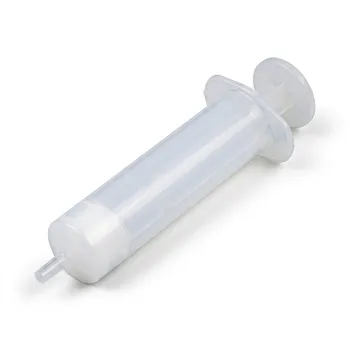
- High Purity PFA Syringe 10ml Corrosion Resistant Translucent Fluoropolymer Sampling Unit for Trace Analysis
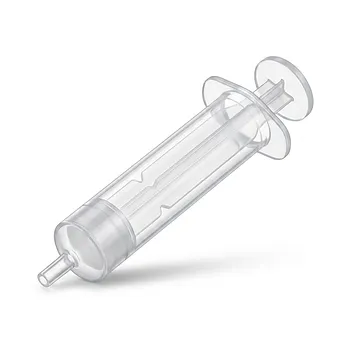
- Corrosion Resistant PFA Syringe Translucent Visual Fluoropolymer Labware 10ml Chemical Handling Tool
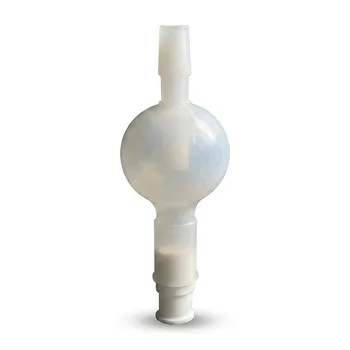
- High Purity PFA Chromatography Column with Collection Bottle Corrosion Resistant Fluoropolymer Filtration System for Trace Analysis
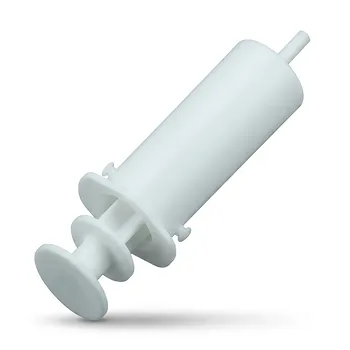
- High Purity Laboratory Grade PTFE Syringe Chemical Resistant Fluoropolymer Injector for Trace Analysis
- Custom PTFE Flask 250ml High Purity Fluoropolymer Laboratory Vessel for Chemical Research
People Also Ask
- Why is high-purity PFA trace analysis labware used for sample processing when preparing Mo2CTx@MoS2? Ensure Material Purity
- Why is high-purity PFA trace analysis labware used for MXene? Ensure Superior Material Integrity in Research
- Why is high-purity PFA labware necessary for Znx@LS-2 zeolite ICP-OES analysis? Ensure Trace-Level Precision
- Why is the use of high-purity PFA sampling bottles necessary for trace element analysis? Ensure PPT Accuracy
- Why use high-purity PFA bottles for Carbon Quantum Dots? Ensure Ink Stability and Prevent Fluorescence Quenching