Filled PTFE compounds provide substantially better mechanical performance than virgin PTFE under sustained load. By adding fillers such as glass fiber, carbon fiber, graphite, bronze, or other inorganic materials, PTFE gains higher creep resistance, improved wear resistance, greater compressive strength, better dimensional stability, and lower thermal expansion. These advantages make filled grades more suitable for demanding laboratory components such as stirrer bearings, dynamic seals, pump parts, and valve seats.
Virgin PTFE is the better choice when maximum chemical purity, inertness, and non-stick behavior are the priorities. Filled PTFE is usually the better engineering choice when a component must maintain its shape, sealing force, and service life under continuous mechanical, thermal, or frictional stress.
Why Virgin PTFE Can Be Mechanically Limited
Creep Under Continuous Load
Virgin PTFE has a tendency to cold flow, or slowly deform when subjected to sustained pressure. This can cause a seal to lose contact pressure, a valve seat to change shape, or a bearing surface to develop unwanted clearance.
The problem becomes more significant at elevated temperatures or when the component carries a continuous load.
Wear in Dynamic Applications
Virgin PTFE has excellent low-friction and non-stick properties, but its wear resistance is limited compared with filled compounds. Repeated sliding, rotation, or pressure cycling can gradually remove material from stirrer bearings, seals, and valve seats.
This limits its suitability for components that experience frequent movement or abrasive contact.
How Filled PTFE Improves Component Performance
Higher Creep Resistance
Fillers restrict molecular movement within the PTFE matrix, reducing deformation under load. Depending on the formulation, filled compounds can provide a two- to five-fold improvement in creep resistance compared with unfilled PTFE.
This helps components retain their original geometry and mechanical function for longer periods.
Greater Compressive Strength
Glass fiber, carbon, graphite, bronze, and similar fillers reinforce the material and increase its resistance to compression. This is valuable for valve seats and seals that must withstand elevated system pressures without excessive permanent deformation.
Improved compressive strength also helps maintain sealing integrity during repeated pressure cycles.
Improved Wear Resistance
Filled PTFE compounds are engineered to withstand more demanding friction and sliding conditions. Carbon, graphite, and certain other fillers can significantly extend service life in bearings, bushings, stirrer supports, and dynamic seals.
The exact wear performance depends on the filler, counterface material, surface finish, load, speed, temperature, and presence of abrasive particles.
Better Dimensional Stability
Filled compounds generally show less deformation and lower thermal expansion than virgin PTFE. This allows machined parts to hold tighter functional clearances during temperature changes and mechanical loading.
For valve seats, this can reduce leakage caused by changes in geometry. For stirrer components, it can help preserve alignment and reduce vibration or excessive play.
More Stable Performance During Thermal Cycling
Laboratory equipment may experience repeated heating and cooling, sometimes while under pressure. Filled PTFE is less prone to dimensional change under these combined conditions, helping seals and structural parts maintain more consistent performance.
This is particularly relevant for high-pressure assemblies and components exposed to continuous thermal cycling.
Customizable Thermal and Electrical Behavior
Some fillers, especially graphite and carbon, can increase thermal conductivity and alter electrical behavior. These properties can be useful when heat dissipation, static control, or electrical conductivity is relevant to the component design.
The result is a compound that can be selected for a broader range of mechanical and operating requirements than virgin PTFE alone.
Matching the Compound to the Laboratory Component
Mechanical Stirrers and Bearings
Stirrer bearings and bushings experience rotation, friction, and often continuous operation. A filled PTFE grade can provide better wear resistance and dimensional stability, reducing premature clearance growth and loss of alignment.
Graphite- or carbon-filled materials may be appropriate where low friction and improved wear performance are important, subject to chemical compatibility.
Seals and Gaskets
High-pressure seals and mechanical flange gaskets benefit from improved creep resistance and compressive strength. Filled PTFE can maintain contact pressure more effectively than virgin PTFE when exposed to sustained compression.
However, the filler must be compatible with the process media. A chemically resistant PTFE matrix does not automatically make every filled formulation suitable for every chemical environment.
Valve Seats
Valve seats must resist compression, wear, pressure cycling, and dimensional changes. Filled PTFE can reduce seat deformation and help preserve sealing geometry over longer service periods.
This advantage is most important when the valve operates frequently or handles elevated pressure and temperature.
Pump and Fluid-Handling Components
Pump impellers, diaphragms, bushings, and other fluid-handling parts may combine mechanical load with corrosive exposure. Filled PTFE compounds can provide the mechanical reinforcement required for these applications while retaining much of PTFE's corrosion resistance.
The design must still account for the filler’s effect on chemical compatibility, friction, and surface behavior.
Understanding the Trade-offs
Reduced Chemical Purity
Virgin PTFE provides the highest level of material purity and is often preferred where contamination control is critical. Fillers introduce additional constituents that may be unacceptable in ultra-pure chemical, pharmaceutical, analytical, or biological applications.
Material selection should therefore consider both the process media and the required cleanliness level.
Filler-Specific Chemical Vulnerabilities
Some fillers can react with or be attacked by particular chemicals, even when the PTFE matrix itself remains resistant. Bronze, for example, may be unsuitable in environments where copper-containing materials are incompatible.
The compound must be evaluated against the actual chemicals, concentrations, temperatures, and exposure duration.
Lower Ductility
Adding filler generally increases hardness and stiffness but reduces tensile strength and elongation at break as filler content rises. Heavily filled compounds can therefore be less tolerant of impact, sharp stress concentrations, or significant deformation.
A grade optimized for compressive stability may not be the best choice for a part that must flex or absorb strain.
Directional Mechanical Properties
Non-spherical fillers can create anisotropy, meaning that strength, creep resistance, and dimensional behavior may differ depending on the molding direction. This matters for precision-machined parts and components subjected to directional loads.
Manufacturing orientation and machining allowances should be considered when tight tolerances are required.
Surface and Friction Effects
Filled PTFE may not have the same smoothness, non-stick behavior, or friction characteristics as virgin PTFE. Some fillers improve wear performance but can increase counterface wear or alter the required surface finish.
The mating material and operating conditions should be reviewed together with the PTFE grade.
Making the Right Choice for Your Goal
The correct selection depends on whether chemical purity or mechanical durability is the dominant requirement.
- If your primary focus is chemical purity and maximum non-stick behavior: Choose virgin PTFE when loads, wear, pressure, and dimensional changes are modest.
- If your primary focus is creep resistance and sealing stability: Choose a filled PTFE compound designed for sustained compression and pressure cycling.
- If your primary focus is wear life in moving components: Evaluate carbon-, graphite-, or glass-filled grades for stirrer bearings, bushings, and dynamic seals.
- If your primary focus is dimensional stability: Select a formulation with reduced thermal expansion and strong resistance to deformation under the expected load and temperature.
- If your primary focus is chemical compatibility: Verify the filler as well as the PTFE matrix against the process media and required purity level.
For mechanical laboratory components, filled PTFE is generally the stronger choice when long-term load, wear, and dimensional stability matter more than maximum purity and unfilled PTFE behavior.
Summary Table:
| Property | Virgin PTFE | Filled PTFE |
|---|---|---|
| Creep resistance | Low (cold flows under load) | 2-5x higher |
| Wear resistance | Limited | Improved (carbon/graphite/glass) |
| Compressive strength | Moderate | Higher |
| Dimensional stability | Poor (high thermal expansion) | Better (lower expansion) |
| Chemical purity | Excellent | Reduced due to fillers |
| Typical applications | High-purity sealing, non-stick | Bearings, seals, valve seats, pump parts |
Looking for high-performance PTFE components engineered for durability? KINTEK's filled PTFE compounds offer superior creep resistance, wear life, and dimensional stability for your most demanding lab applications. Our expert team can help you select the ideal formulation for stirrers, seals, valve seats, and more. Contact us today to optimize your lab's performance — Get in touch!
Related Products
- Custom Graphite Filled PTFE Rods for Advanced Industrial Applications
- High Corrosion Resistant PTFE Faucet Polytetrafluoroethylene Valve for Chemical Storage Drums and Fluid Transfer Systems Customizable Industrial Grade
- High Temperature Chemical Resistant 50ml PTFE Syringe Customized Teflon Injector with Threaded Seal for Trace Analysis
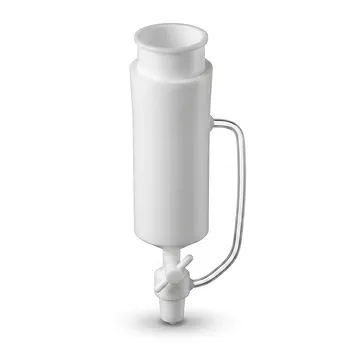
- Custom Polytetrafluoroethylene PTFE Constant Pressure Dropping Funnel Corrosion Resistant Fluid Control Assembly with Conversion Stopper Compatibility
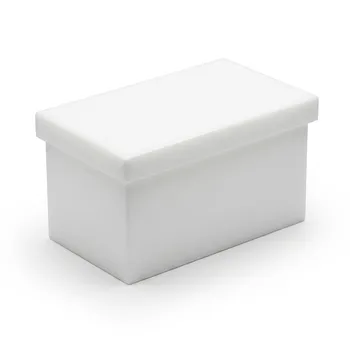
- Custom PTFE Square Tank Semiconductor Soaking Cleaning Acid Resistant Fluoropolymer Filtration Vessel
People Also Ask
- What property does graphite filler provide to PTFE? Achieve Superior Self-Lubrication and Low Friction
- How does graphite-filled PTFE perform? A Guide to Superior Self-Lubricating Components
- What are the advantages of Polytetrafluoroethylene (PTFE) with Graphite Fill? Enhance Wear and Friction Performance
- How do graphite fillers enhance PTFE? Achieve Superior Self-Lubrication and Wear Resistance
- How is graphite filler typically used in PTFE? Enhance Wear Resistance & Self-Lubrication