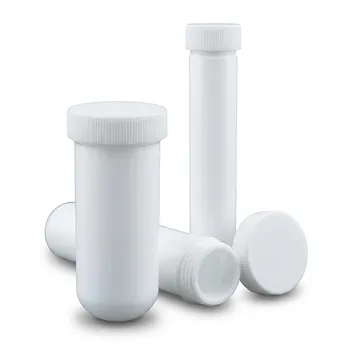
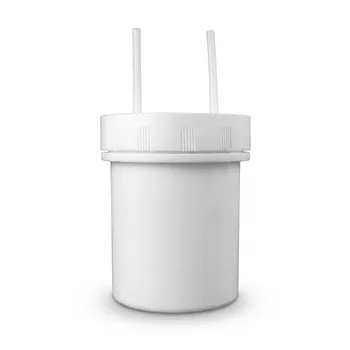
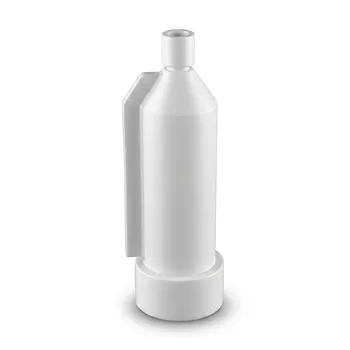
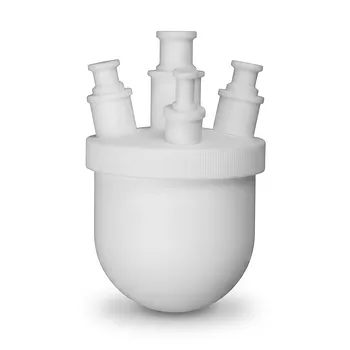
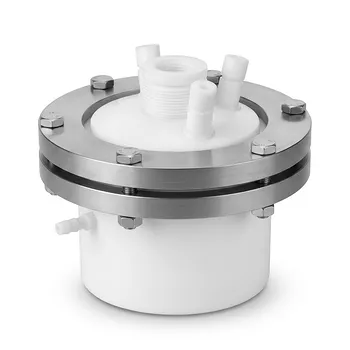
For strong peroxide initiators and fluorinated compounds, choose vessels made from highly inert, low-contamination fluoropolymers—especially PTFE or PFA—with sufficient thermal and mechanical stability for the process. These materials should resist oxidation, fluorination, swelling, corrosion, and extractable contamination while providing smooth, non-porous surfaces. Material compatibility alone is not enough: the vessel must also be suitable for the reaction temperature, pressure, concentration, and peroxide decomposition hazards.
PTFE and PFA are strong default choices because they combine chemical inertness, low surface energy, and low contamination risk. Select the exact grade and vessel design against the specific reagent and operating conditions, and do not treat fluoropolymer compatibility as a substitute for peroxide safety controls.
Why Conventional Labware Can Create Problems
Strong oxidizers can attack ordinary polymers
Organic peroxide initiators, including benzoyl peroxide and tert-butyl peroxide, are highly reactive oxidizing agents. Standard plastics may soften, swell, embrittle, discolor, or release extractable compounds during contact or heating.
The apparent integrity of a tube is not sufficient. Even minor chemical interaction can change the sample composition or introduce background signals into analytical results.
Metals can introduce contamination
Metallic vessels, tools, and fittings may contribute trace ions or catalyze unwanted reactions. This is particularly undesirable when preparing samples for trace analysis or when the reaction is sensitive to radical initiation and decomposition pathways.
Where practical, wetted components should avoid exposed metal surfaces and use chemically resistant polymer liners or components instead.
Glass is not universally suitable
Glass may be adequate for some peroxide processes, but highly corrosive fluorinating systems can attack or compromise conventional glassware. Compatibility depends on the specific fluorinating reagent, concentration, temperature, and exposure time.
For severe fluorination chemistry, a fluoropolymer wetted path is often a more robust starting point than relying on unlined glass.
Material Features to Specify
Extreme chemical inertness
The material should resist both strong peroxide oxidants and fluorinated reagents without corrosion, degradation, swelling, or significant extractables.
PTFE and PFA are commonly selected for this combination of requirements. However, the specific reagent and operating conditions should always be checked against the manufacturer’s compatibility data.
High thermal stability
Reaction vessels, digestion tubes, crucibles, and centrifuge tubes should tolerate the complete temperature profile, including heating, cooling, and any local exothermic events anticipated by the procedure.
Thermal stability should be evaluated together with mechanical strength. A material that remains chemically stable may still deform, creep, or lose sealing performance at elevated temperature.
Non-porous, smooth surfaces
A non-porous internal surface minimizes reagent absorption, cross-contamination, and sample hold-up. Smooth surfaces also make cleaning and rinsing more reliable.
This is important when the same vessel is used for low-level analytical work or for samples containing highly reactive fluorinated species.
Low surface energy
Low-surface-energy fluoropolymers reduce wetting and adhesion of residues. This helps limit sample loss and makes aggressive reagents less likely to remain trapped on the vessel wall.
PTFE and PFA are useful in this respect, although low adhesion does not eliminate the need for validated cleaning procedures.
Low extractables and low trace-metal contribution
The vessel should contribute as little organic, ionic, and metallic contamination as possible. This includes the base material, pigments, fillers, reinforcing agents, seals, tubing, and fittings.
Specify unfilled or appropriately high-purity fluoropolymer components where trace analysis is important, and assess the entire wetted assembly rather than only the main vessel.
Choosing Between PTFE and PFA
PTFE for chemical resistance and inert contact surfaces
PTFE provides highly inert contact surfaces and is widely used for liners, vessels, tubing, and other components exposed to aggressive reagents.
Its use still requires attention to mechanical design and temperature because chemical resistance does not guarantee dimensional stability under all processing conditions.
PFA for fabricated and transparent vessels
PFA offers similar high chemical resistance and is often useful when a vessel must be fabricated into a more complex geometry or when visual observation of the sample is valuable.
PFA can be a practical choice for reaction vessels, liners, tubing, and containers, provided its temperature and pressure limits are appropriate for the application.
Do not select solely by polymer name
A PTFE or PFA label does not automatically validate the complete product. Seals, closures, connectors, septa, adhesives, and manufacturing residues may be less compatible than the fluoropolymer body.
Review the full wetted path, including connection tubing and liquid-addition components.
Design Features That Protect Sample Integrity
Use fluoropolymer liners and wetted paths
For vessels with external structural supports, a PTFE or PFA liner can isolate the reagent from less-resistant construction materials. The liner must remain continuous and chemically compatible over the full exposure period.
Connection tubing and transfer lines should use compatible fluoropolymers where the reagent contacts the tubing directly.
Minimize crevices and dead volume
Crevices, threads, rough joints, and dead legs can retain peroxide or fluorinated residues. They complicate cleaning and increase the risk of carryover between samples.
Prefer smooth internal geometry, accessible surfaces, and connections designed for complete drainage and rinsing.
Select compatible sealing components
A fluoropolymer vessel can still fail through an incompatible gasket or septum. Seals should be selected for the same chemical, thermal, and pressure conditions as the vessel.
For liquid addition through a septum, high-precision syringes and compatible butyl-rubber septa may be used where validated for the reagent and temperature. The septum should not be assumed compatible merely because the vessel is PTFE or PFA.
Understanding the Trade-offs
Chemical resistance does not remove peroxide hazards
Organic peroxides can decompose violently, particularly when heated, contaminated, confined, or exposed to incompatible materials. A chemically resistant vessel is not automatically suitable for pressure-generating peroxide reactions.
Use approved procedures, appropriate scale, temperature control, shielding, and pressure-relief provisions where required. Avoid sealing a system unless the procedure and vessel are specifically designed for the potential pressure.
Fluoropolymers have mechanical limitations
PTFE and PFA may deform, creep, or lose dimensional accuracy under heat, load, or pressure even when they remain chemically intact. Thin walls, unsupported closures, and high-temperature fittings deserve particular scrutiny.
For pressurized or mechanically demanding work, consider a compatible fluoropolymer liner inside a separately engineered support vessel.
“Inert” is not absolute
No material should be described as universally non-reactive. Compatibility may change with reagent concentration, temperature, water content, exposure duration, pressure, and impurities.
Confirm the selection using supplier data, small-scale testing, and the analytical method’s contamination requirements.
Cleaning can be difficult
Low-energy surfaces reduce adhesion but do not guarantee complete removal of reactive residues. Peroxide and fluorinated compounds may require validated decontamination, rinsing, and inspection procedures.
Do not reuse vessels for sensitive work until cleaning effectiveness has been demonstrated.
Making the Right Choice for Your Goal
Select the material and design based on both chemical exposure and the consequences of contamination or failure.
- If your primary focus is chemical compatibility: Use high-purity PTFE or PFA for the vessel, liner, tubing, and other wetted components, then verify compatibility with the exact peroxide or fluorinating reagent.
- If your primary focus is analytical purity: Choose non-metallic, non-porous, low-extractable components with smooth internal surfaces and minimize seams, dead volume, and auxiliary materials.
- If your primary focus is elevated-temperature processing: Confirm both the polymer’s thermal rating and its mechanical performance under the actual heating, cooling, and pressure conditions.
- If your primary focus is safe peroxide handling: Treat vessel selection as one part of the control strategy; also evaluate decomposition, heat release, pressure generation, scale, containment, and emergency procedures.
- If your primary focus is fluorinating-reagent processing: Use fluoropolymer-lined or fluoropolymer-wetted equipment and verify the compatibility of seals, septa, fittings, and transfer tubing—not just the main vessel.
The safest and cleanest setup is a fully evaluated, low-contamination fluoropolymer wetted path matched to the specific chemistry and operating conditions.
Summary Table:
| Material | Chemical Inertness | Thermal Stability | Surface Smoothness | Extractables | Typical Applications |\n|----------|-------------------|-------------------|---------------------|--------------|----------------------|\n| PTFE | Excellent | Good (up to ~260°C) | Very smooth | Very low | Vessels, liners, tubing |\n| PFA | Excellent | Good (up to ~260°C) | Very smooth | Very low | Transparent vessels, complex fabrications |
Ensure your lab's safety and accuracy with KINTEK's high-performance PTFE/PFA labware. Our products are engineered for extreme chemical resistance, thermal stability, and minimal contamination. From standard vessels to custom CNC-machined components, we deliver solutions tailored to your peroxide and fluorinated chemistry needs. Contact us today to discuss your specific requirements and enhance your lab's performance!
Related Products
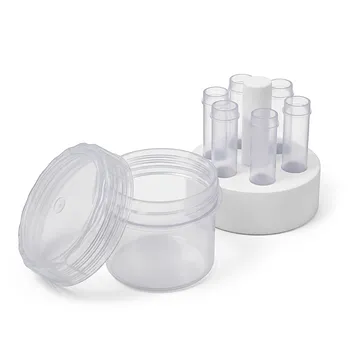
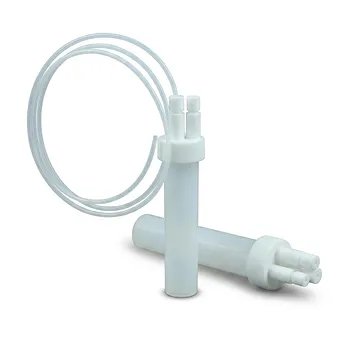
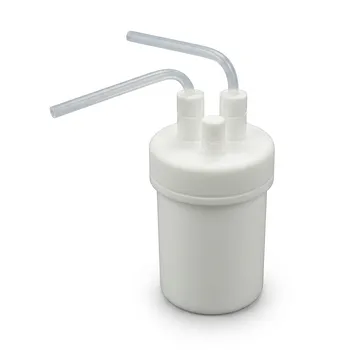
- High Purity Corrosion Resistant PFA Reaction Vessel with PTFE Holder and Integrated Sampling Tube for Trace Analysis
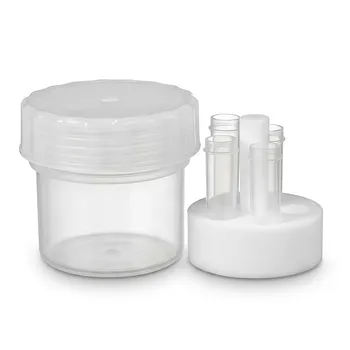
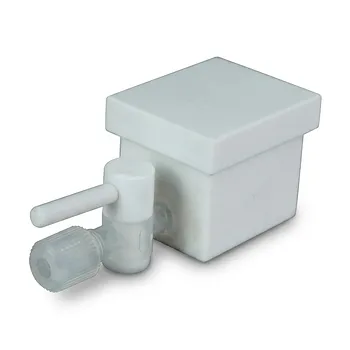
- Corrosion Resistant PTFE Support with PFA Transparent Reaction Tank and High Purity PFA Sampling Tube for Trace Analysis
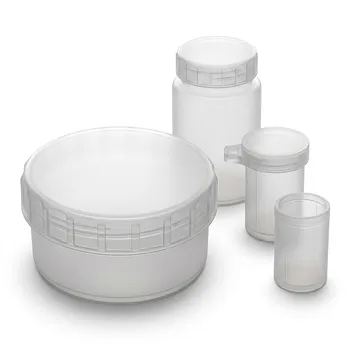
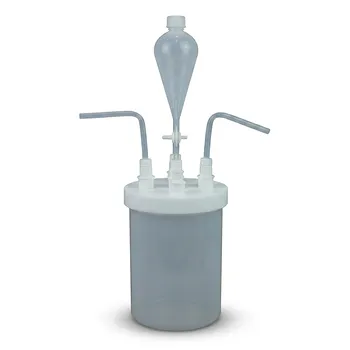
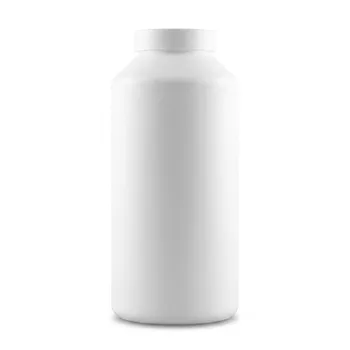
- PFA Reaction Jar Corrosion Resistant Wide Mouth PTFE Lab Bottle High Purity Chemical Vessel
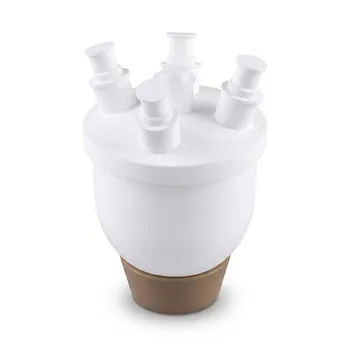
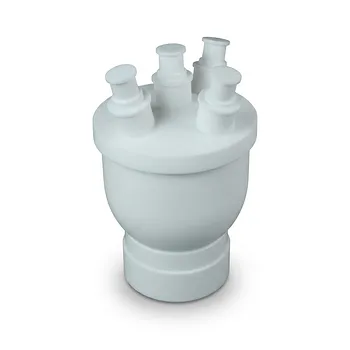
- High Performance Customizable PTFE Reaction Vessel and Corrosion Resistant Polytetrafluoroethylene Flask for Chemical Laboratory Use
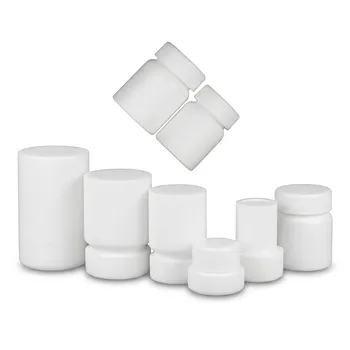
- Custom PTFE Digestion Vessel Sample Vial Straight Wall Test Tube High Temperature Low Background
People Also Ask
- Why is the choice of reaction vessel material critical during B-NiBDC synthesis? Optimize MOF Purity & Performance
- How do the material choice and sealing integrity of the reaction vessel affect the growth of NiFe-LDH? Optimize Synthesis
- Why are corrosion-resistant vessels needed for alkaline cellulose extraction? Ensure Purity and Process Safety
- Why are well-sealed reaction vessels necessary for superacid-promoted Friedel-Crafts polycondensation? Optimize Synthesis
- Role of reaction vessels in alkali treatment for oil palm waste: Achieve High-Purity Cellulose with PTFE Vessels