Fluorinated phosphazene-based polymers are suited to extreme applications because they combine an inorganic P=N backbone with fluorinated organic side groups. This architecture provides strong resistance to combustion, radiation, aggressive chemicals, and thermal stress, while also creating highly hydrophobic, low-energy surfaces. The result is a class of materials that can function as separation membranes, protective coatings, flexible seals, and high-purity laboratory components.
The central advantage is multifunctional stability: fluorinated phosphazene polymers resist chemical and environmental degradation while maintaining useful flexibility, low permeability, surface repellency, and separation performance.
Why the Molecular Structure Matters
Alternating Phosphorus-Nitrogen Backbone
The alternating phosphorus-nitrogen (P=N) backbone gives these polymers an inorganic structural foundation. Unlike conventional carbon-chain polymers, this backbone can support demanding combinations of chemical resistance, flexibility, and environmental durability.
Fluorinated Organic Side Groups
The fluorinated side groups contribute low surface energy, hydrophobicity, oleophobicity, and broad chemical resistance. They also reduce the material's tendency to interact with aggressive reagents, solvents, biological fluids, and contaminants.
Combined Inorganic and Organic Behavior
The backbone and side groups work together rather than providing isolated benefits. The backbone supports mechanical and thermal performance, while the fluorinated groups provide chemical inertness, repellency, low permeability, and resistance to surface degradation.
Performance Characteristics for Extreme Chemical Environments
Resistance to Aggressive Chemicals
Fluorinated phosphazene materials can withstand exposure to strong acids, bases, organic solvents, and chemically reactive fluids. This resistance helps prevent swelling, embrittlement, dissolution, and loss of structural integrity.
Thermal and Oxidative Stability
Fluorinated polymers generally offer high thermal degradation temperatures, low volatility, and strong oxidative stability. Fluorinated aromatic formulations can reach reported 10% thermal decomposition temperatures of up to 558 °C, although the usable service temperature depends on the specific formulation, load, and environment.
Flame and Radiation Resistance
The combination of the phosphazene backbone and fluorinated chemistry provides resistance to combustion and to UV and visible radiation. These characteristics are valuable where materials must retain performance during long-term exposure to heat, light, or harsh outdoor conditions.
Durability in Laboratory Fluid Handling
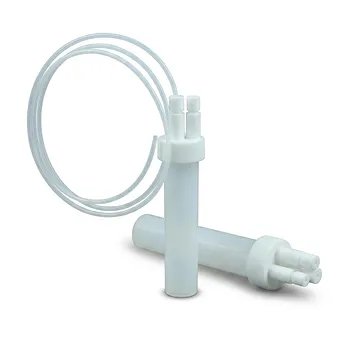
In digestion vessels, reagent bottles, tubing, and trace-analysis equipment, chemical inertness helps protect both the component and the sample. The material is less likely to degrade or introduce contaminants during contact with aggressive reagents and high-temperature processes.
Performance Characteristics for Separation Applications
Low Permeability and Controlled Transport
Fluorinated polymers can provide low permeability and selective transport behavior. In membrane applications, this supports controlled gas or liquid movement and helps separate chemical species according to their interaction with the polymer and their ability to diffuse through it.
Hydrophobic and Oleophobic Surfaces
Highly repellent surfaces reduce wetting by water-based and oil-based substances. This can improve resistance to fouling, simplify cleaning, and help maintain more consistent membrane or coating behavior.
Gas and Liquid Separation Capability
The chemical architecture supports effective gas and liquid separation, making these materials candidates for demanding membrane systems. Their value is greatest when separation performance must be combined with resistance to corrosive feeds, solvents, pressure, or environmental aging.
Stability Over Long Operating Periods
Resistance to weathering, oxidation, and chemical attack helps membranes and coatings maintain their functional surface and transport characteristics. Long-term stability is especially important because a membrane that separates well initially may become unreliable if it swells, cracks, or fouls rapidly.
Performance Characteristics for Biomedical Applications
Chemical and Biological Inertness
High inertness limits unwanted reactions with biological fluids, cleaning agents, and pharmaceutical compounds. This supports applications where the material must remain stable and avoid releasing substances that could affect a process or sample.
Flexibility and Low-Temperature Performance
Poly(fluoroalkoxyphosphazene) elastomers can provide a continuous service-temperature range reported at approximately -65 °C to 175 °C. This combination of low-temperature flexibility and high-temperature capability is useful for seals and flexible components exposed to changing thermal conditions.
Flex-Fatigue Resistance
FZ elastomers offer high flex-fatigue resistance, allowing repeated deformation without rapid mechanical failure. This matters in tubing, gaskets, seals, and other biomedical or fluid-handling components that experience movement or cyclic pressure.
Lubricity and Low Friction
Fluoropolymer chemistry provides low friction and lubricity, which can reduce resistance during movement and support smoother operation in medical devices and fluid-transfer systems. These properties are particularly useful when minimizing mechanical interaction is important.
Low Permeability and Consistency
Low permeability can help limit unwanted fluid or gas transfer, while consistent material quality supports repeatable manufacturing and device performance. Heat resistance and durability further expand the range of biomedical environments in which these materials can be considered.
How These Properties Translate Into Applications
Separation Membranes
Membranes benefit from the combination of controlled permeability, chemical resistance, and hydrophobic or oleophobic surfaces. The material can continue functioning when conventional membrane polymers are vulnerable to solvent attack, swelling, or environmental aging.
Protective Coatings
Coatings can use the low surface energy and chemical inertness of fluorinated side groups to repel fluids and reduce surface degradation. Radiation and weather resistance also support outdoor, exposed, or long-duration applications.
Elastomeric Seals
FZ elastomers combine flexibility, vibration damping, flex-fatigue resistance, and chemical resistance. This makes them suitable for sealing aggressive fluids across broad temperature ranges, including conditions where rigid fluoropolymers may not provide sufficient elasticity.
High-Purity Laboratory Components
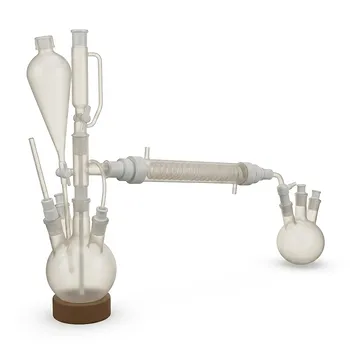
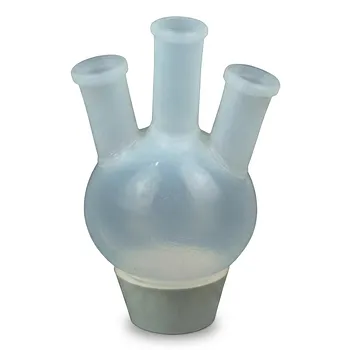
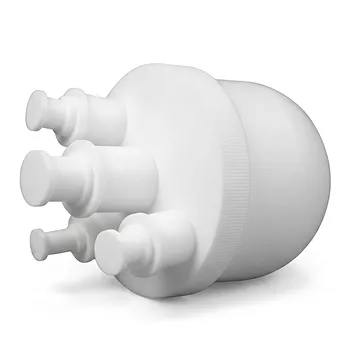
Fluid-handling parts and digestion vessels require chemical stability and minimal contamination. Fluorinated phosphazene-based materials help preserve component integrity and sample quality during contact with corrosive reagents, elevated temperatures, and trace-analysis workflows.
Understanding the Trade-offs
Higher Material and Processing Cost
Fluoropolymers generally cost more than standard non-fluorinated thermoplastics. Their processing can also be more difficult, requiring appropriate equipment, temperature control, and formulation-specific manufacturing methods.
Application-Specific Mechanical Limits
Chemical resistance does not guarantee suitability for every mechanical environment. Designers must still evaluate tensile strength, elongation, compression set, flex fatigue, pressure, and temperature together rather than selecting a material based on chemical inertness alone.
Service Temperature Is Not Decomposition Temperature
A high thermal decomposition temperature indicates resistance to chemical breakdown under a defined test condition. It does not mean the component can safely operate continuously at that temperature, because mechanical strength, sealing behavior, and dimensional stability may decline earlier.
Performance Depends on Formulation
The properties of fluorinated phosphazene polymers vary with side-group chemistry, molecular structure, additives, processing history, and final geometry. Chemical compatibility and permeation data should therefore be confirmed for the specific reagent, biological fluid, gas, or solvent involved.
Surface Repellency Can Affect Adhesion
Hydrophobic and oleophobic surfaces resist wetting, but the same low surface energy can make bonding, printing, painting, or coating adhesion more difficult. Surface treatment or mechanical retention may be necessary in assembled products.
How to Apply This to Your Project
The appropriate choice depends on which failure mode presents the greatest risk.
- If your primary focus is aggressive chemical exposure: Prioritize chemical compatibility, oxidative stability, permeation, swelling, and long-term mechanical retention for the exact reagents and temperatures involved.
- If your primary focus is gas or liquid separation: Evaluate permeability, selectivity, fouling resistance, surface energy, and stability against the process feed.
- If your primary focus is biomedical use: Confirm biological inertness, extractables, permeability, lubricity, flexibility, sterilization compatibility, and lot-to-lot consistency.
- If your primary focus is flexible sealing: Select an FZ elastomer formulation based on continuous service temperature, compression set, flex fatigue, vibration damping, and fluid resistance.
- If your primary focus is high-purity laboratory equipment: Favor low volatility, minimal contamination, chemical inertness, thermal durability, and resistance to repeated cleaning or digestion cycles.
Fluorinated phosphazene-based polymers are most valuable when chemical, thermal, surface, separation, and mechanical requirements must be satisfied simultaneously rather than individually.
Summary Table:
| Characteristic | Description |
Need high-performance fluoropolymer solutions for your lab or industrial process? KINTEK offers a comprehensive range of PTFE and PFA products, including custom-machined parts, membranes, and labware. Leverage our expertise to enhance your application's performance and reliability. Contact us today!
Related Products
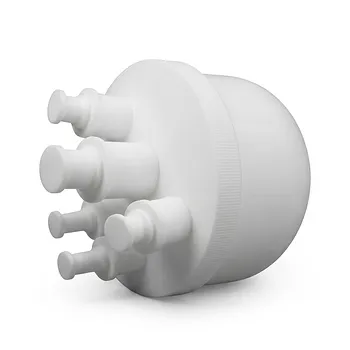
- Custom Multi Neck PTFE Flask for Chemical Engineering and High Purity Laboratory Synthesis Applications
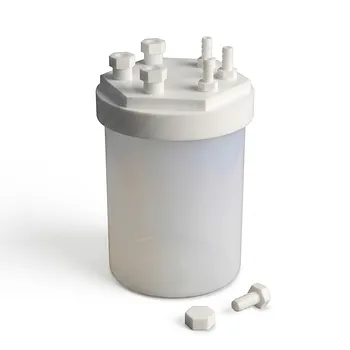
- PFA Chemical Reaction Tank with Customizable Fittings for Corrosive Solvent Synthesis and High Purity Lab Applications
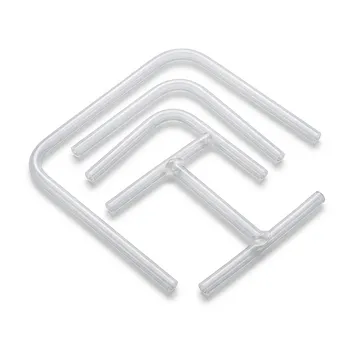
- High Purity PFA Coiled Tubing Custom PTFE Machining PFA Welding and Precision Bending Solutions
- High Purity PFA Chromatography Columns and Collection Bottles Corrosion Resistant Fluoropolymer Filtration Systems for Trace Analysis
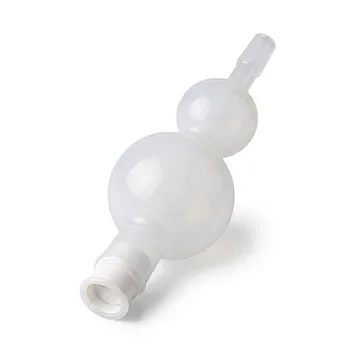
- PTFE Distillation Condensation Apparatus High Temperature Hydrofluoric Acid Resistant Fluorination Reaction Flask
People Also Ask
- How does the molecular structure of fluorinated polymers contribute to the extreme thermal stability and chemical resistance required for high-performance laboratory reaction vessels and digestion containers? Discover the science behind PTFE and PFA for your lab.
- How do PTFE fluoropolymer laboratory vessels and tubing handle exposure to different types of organic solvents? Discover key insights for optimal solvent compatibility.
- How does hardware selection optimize research? Enhance Workflows with Custom Reaction Vessels
- How is Teflon classified in terms of plastic types? A Guide to Thermoplastic Fluoropolymers
- What role do fluoropolymer vessels play in hydrothermal synthesis? Achieve Superior Sample Purity & Safety