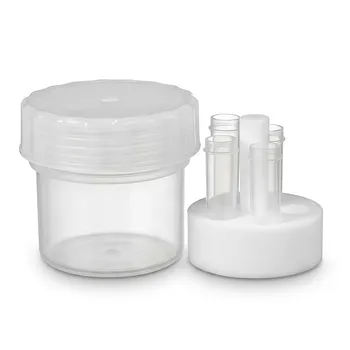
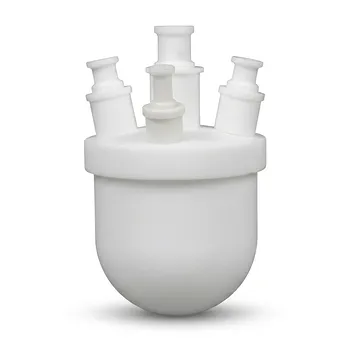
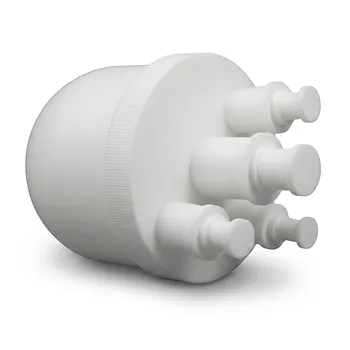
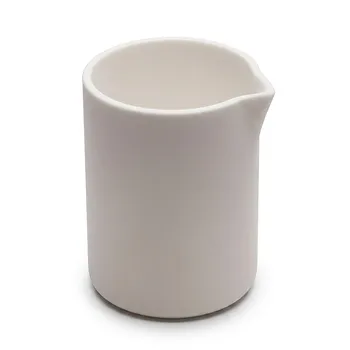
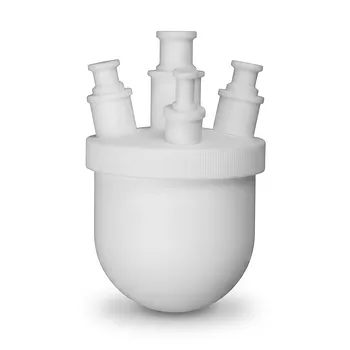
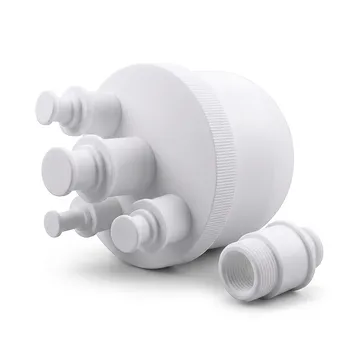
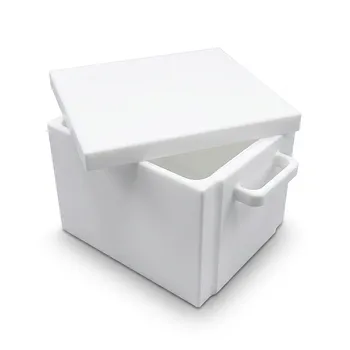
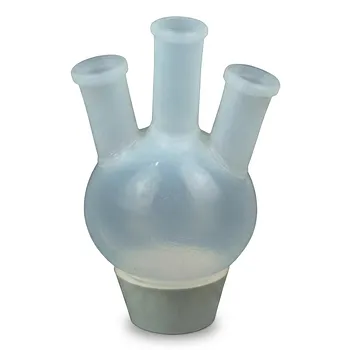
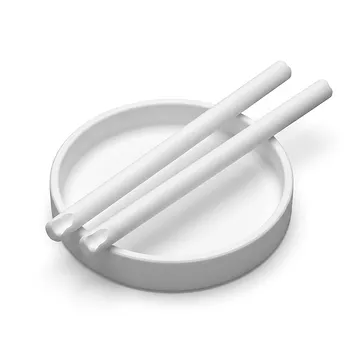
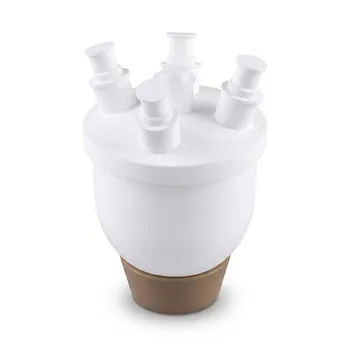
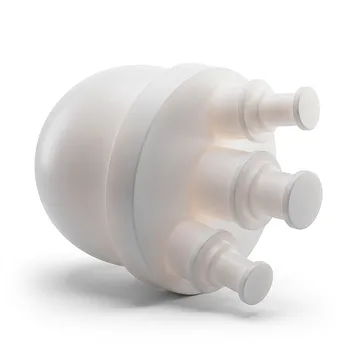
PTFE fluoropolymer laboratory vessels and tubing generally withstand organic solvents with minimal absorption, swelling, leaching, or degradation. For common hydrogen-containing solvents such as alcohols, alkanes, toluene, ethers, and many process solvents, absorption is typically less than 1% by weight at room temperature. Performance requires more caution with non-hydrogenated halogenated or perfluorinated solvents, where solvent uptake depends on molecular structure and solubility parameter, especially as temperature increases.
PTFE is an excellent choice for solvent containment and transfer, but “chemically resistant” does not mean completely unaffected by every solvent under every condition. The solvent class, temperature, exposure time, pressure, and the design of seals and connections all influence real-world performance.
Why PTFE Resists Organic Solvents
The Fluorinated Polymer Structure
PTFE consists of a carbon backbone protected by fluorine atoms. This structure gives the material very low chemical reactivity and protects it from many acids, bases, oxidizers, corrosive media, and organic solvents.
As a result, PTFE vessels, tubing, fittings, valves, and machined components generally resist chemical attack that would damage many metals, elastomers, or other plastics.
Low Solvent Absorption
Hydrogen-containing solvents, including alcohols, alkanes, toluene, and water, are absorbed by PTFE at less than 1% by weight at room temperature. This low uptake applies across a broad range of solubility parameters.
Low absorption helps preserve dimensional stability, reduce contamination risk, and limit changes in mechanical behavior during fluid handling and storage.
Resistance to Swelling and Leaching
PTFE offers nearly complete resistance to swelling, leaching, and degradation when used with standard hydrogen-bearing organic solvents and aqueous reagents. This is important for vessels and tubing used in high-purity analysis, extraction, synthesis, and sample storage.
The material does not readily release additives into the process stream, which supports applications where trace contamination must be controlled.
How Solvent Type Changes Performance
Hydrogen-Containing Organic Solvents
Common hydrogen-bearing solvents generally produce very little solvent uptake at room temperature. Examples include alcohols, alkanes, toluene, acetonitrile, acrylonitrile, pyridine, ketones, ethers, and several solvent blends.
Testing described in the references shows PTFE retaining its weight and mechanical integrity after exposure to solvents such as ethyl acetate, diethyl carbonate, diethyl ether, 1,4-dioxane, cyclohexane, cresol, cyclohexanone, diethyl ketone, and dibutyl ether.
Halogenated and Perfluorinated Solvents
Non-hydrogenated halogenated or perfluorinated solvents behave differently. They can penetrate the PTFE matrix according to their solubility parameter, which describes how closely the solvent's intermolecular behavior matches that of the polymer.
The greatest reported swelling occurs when the solvent's solubility parameter is approximately 6 (cal/cm³)^(1/2), producing a maximum weight gain of about 11% under the stated reference conditions.
This does not necessarily mean immediate chemical degradation, but it can affect dimensions, tolerances, pressure seals, and flow paths.
Aggressive Nitrogenous Solvents
PTFE components show strong resistance to undiluted pyridine from approximately 15°C to 80°C and near-boiling conditions. Exposure produces minimal weight change and negligible effects on mechanical properties.
This makes PTFE useful for handling, transferring, and storing harsh nitrogen-containing solvents where leak prevention and purity are important.
Ketones and Ethers
PTFE demonstrates strong compatibility with aggressive ketones and ethers, including cyclohexanone, diethyl ketone, and dibutyl ether, even at temperatures approaching 100°C in the referenced tests.
Similarly, ethyl acetate, diethyl ether, 1,4-dioxane, and related solvents show little visible attack or mechanical deterioration under the tested conditions.
What This Means for Laboratory Vessels and Tubing
Vessels and Digestion Equipment
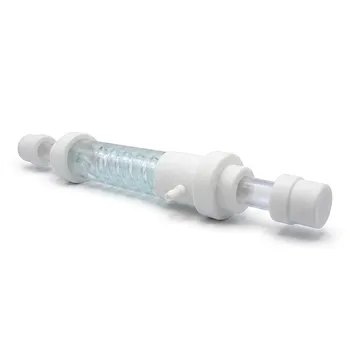
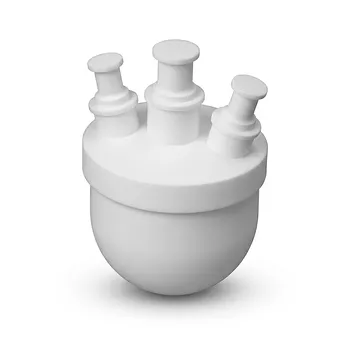
PTFE digestion vessels, reflux apparatus, and reaction containers can maintain chemical integrity during high-temperature solvent processes. Their resistance supports extraction, digestion, concentration, and organic synthesis workflows.
Dimensional stability is especially valuable when vessels must remain leak-tight during heating, cooling, or repeated solvent exposure.
Tubing and Capillary Lines
PTFE tubing is well suited to solvent transfer because it combines chemical inertness with a nonreactive internal surface. It can be used for liquid transport, sampling, chromatography-related fluid paths, and corrosive chemical handling.
The tubing itself may remain stable even when the fluid would attack conventional metals or less-resistant plastics. However, the complete assembly also includes fittings, valves, gaskets, and connectors that must be checked independently.
Valves, Fittings, and Seals
PTFE fluid-transfer fittings and valves can preserve leak-tight performance during exposure to many organic solvents, including elevated-temperature processes. High-temperature solvent handling can therefore be performed with PTFE flow-control components when their pressure and temperature ratings are appropriate.
A PTFE body does not automatically make every seal compatible. Elastomeric O-rings, backup rings, valve seats, adhesives, and external tubing connections may have lower resistance than the PTFE component itself.
The Effect of Temperature
Solvent Uptake Increases with Heat
At elevated temperatures, thermal energy expands the PTFE structure and can allow more solvent to enter the polymer matrix. The same solvent may therefore produce greater uptake or swelling at high temperature than at room temperature.
Temperature should be evaluated together with exposure duration and solvent composition rather than treated as a separate factor.
High-Temperature Exposure
The references report strong PTFE compatibility with several solvents up to their boiling points or near-boiling conditions, including pyridine, cyclohexane, acetonitrile, acrylonitrile, and selected ethers and ketones.
Other examples include resistance to caprolactam up to 120°C and carbon tetrachloride at approximately 60°C to 80°C, with short-term tolerance extending toward boiling conditions. These results support demanding synthesis and extraction applications, but they remain test-specific.
Mechanical and Pressure Considerations
Chemical compatibility does not replace a mechanical rating. Heating can reduce the pressure capability of PTFE and increase the consequences of any dimensional change.
For pressurized or sealed systems, verify the manufacturer's temperature-pressure limits and consider thermal cycling, pressure pulses, wall thickness, and the behavior of connected materials.
Understanding the Trade-offs
PTFE Is Not Unconditionally Inert
PTFE is exceptionally resistant, but it is not unaffected by every chemical combination. Solvent uptake and swelling can occur, particularly with certain halogenated or perfluorinated solvents whose solubility parameters align with the polymer.
The most relevant risk may be dimensional change rather than visible chemical attack.
Compatibility Tables Have Limits
A compatibility rating or exposure test applies to a specific solvent, concentration, temperature, duration, and component geometry. It should not be interpreted as proof that every mixture or operating condition will behave identically.
Mixtures can have properties that differ substantially from those of their individual ingredients.
Seals and Ancillary Materials May Fail First
In a PTFE vessel or tubing assembly, the weakest material may be an elastomeric seal, adhesive, valve insert, or fitting component. A chemically resistant PTFE flow path can still leak if a connected seal absorbs the solvent or loses elasticity.
Review the entire wetted assembly, not only the primary polymer.
Long-Term and Repeated Exposure Matters
Short-term tests may not capture slow diffusion, repeated swelling and shrinkage, thermal cycling, or stress-related deformation. These effects matter when tubing must hold tight dimensions or when vessels are used under vacuum, pressure, or repeated heating.
For critical applications, qualification testing with the actual solvent and operating cycle is more reliable than relying on a generic material label.
Making the Right Choice for Your Goal
PTFE is an appropriate starting material for most laboratory solvent vessels and fluid-transfer paths, provided the operating conditions are defined clearly.
- If your primary focus is routine solvent handling: Use PTFE vessels and tubing for common hydrogen-containing solvents because they typically show very low absorption and strong resistance to swelling, leaching, and degradation.
- If your primary focus is high-temperature processing: Confirm the exact solvent, temperature, exposure time, pressure, and component rating because heat can increase solvent uptake and reduce mechanical margins.
- If your primary focus is halogenated or perfluorinated solvents: Check the solvent's solubility-parameter relationship with PTFE and assess possible dimensional swelling before finalizing tolerances or seals.
- If your primary focus is leak prevention: Evaluate fittings, valves, gaskets, and O-rings together with the PTFE vessel or tubing, since ancillary materials may have lower chemical resistance.
- If your primary focus is trace analysis or contamination control: Prefer PTFE for wetted surfaces and validate the complete system for extractables, adsorption, and long-term exposure under the actual process conditions.
With solvent class, temperature, and assembly materials properly evaluated, PTFE provides one of the most reliable options for laboratory containment and transfer of aggressive organic solvents.
Summary Table:
| Solvent Type | Typical Absorption | Key Considerations |
|---|---|---|
| Hydrogen-containing (alcohols, alkanes, toluene) | <1% by weight at RT | Excellent resistance, minimal swelling or leaching |
| Halogenated/perfluorinated | Up to ~11% (depending on solubility parameter) | Monitor dimensional changes, especially at elevated temperatures |
| Nitrogenous (pyridine) | Negligible | Strong resistance, even near boiling point |
| Ketones/ethers | Very low | Good compatibility, even at elevated temperatures |
| High-temperature exposure | Increases with heat | Verify pressure/temperature ratings; may affect mechanical properties |
When it comes to handling aggressive organic solvents, trust KINTEK's PTFE and PFA labware for unmatched chemical resistance and purity. Our full range of vessels, tubing, fittings, and custom-machined parts ensures reliable performance in your most demanding applications. Contact our experts today to find the perfect solution for your lab. Get in touch now!
Related Products
- Corrosion Resistant PTFE Support with PFA Transparent Reaction Tank and High Purity PFA Sampling Tube for Trace Analysis
- Custom PTFE Flask 250ml High Purity Fluoropolymer Laboratory Vessel for Chemical Research
- Custom PTFE Test Tubes Corrosion Resistant Low Background Fluoropolymer Labware 50ml 30ml
- Laboratory PTFE Three Neck Reaction Flask Corrosion Resistant 2000ml Low Background Fluoropolymer Vessel
- Custom PTFE Condenser Tube 100ml Serpentine and Straight Fluoropolymer Laboratory Heat Exchanger with Flask Adapters
People Also Ask
- What is the role of high chemical inertness reaction vessels in the organic synthesis of acylhydrazone ligands? | Guide
- How do the material choice and sealing integrity of the reaction vessel affect the growth of NiFe-LDH? Optimize Synthesis
- Role of reaction vessels in alkali treatment for oil palm waste: Achieve High-Purity Cellulose with PTFE Vessels
- Why are well-sealed reaction vessels necessary for superacid-promoted Friedel-Crafts polycondensation? Optimize Synthesis
- Why are PTFE or PFA vessels ideal for biomass acid/base treatments? Ensure Purity and Accuracy in Your Research.