Fluoropolymers are valuable in specialized laboratory components because they combine chemical inertness, thermal stability, low surface energy, and useful electrical behavior. They resist aggressive reagents, solvents, moisture, weathering, and flame, while their smooth, non-stick surfaces help reduce contamination and simplify cleaning. Their performance is also strongly influenced by crystalline structure: crystallinity generally increases stiffness, dimensional stability, and chemical resistance, while more amorphous structures improve flexibility and impact toughness.
The key insight is that fluoropolymer performance depends on both chemistry and structure. Fluorinated chains provide exceptional resistance and low surface energy, while crystallinity, molecular conformation, and crystalline phase determine how the material responds mechanically, chemically, and electrically.
Why Fluoropolymers Suit Demanding Laboratory Applications
Resistance to Aggressive Chemicals
Fluoropolymers are highly chemically inert. This allows components to handle corrosive reagents, strong bases, organic solvents, and other aggressive media without rapidly degrading or contaminating samples.
This resistance is particularly important in trace analysis, chemical synthesis, and fluid transfer, where even small amounts of extractables or reaction products can affect results.
Thermal and Flame Stability
Many fluoropolymers maintain useful performance across broad temperature ranges, with some grades supporting working temperatures approaching 260°C and thermal degradation temperatures often reaching approximately 300°C to 400°C.
Their low flammability and flame-retardant behavior provide an additional safety advantage in laboratory and industrial environments involving heat, chemical exposure, or both.
Low Surface Energy and Easy Cleaning
Fluoropolymers have exceptionally low surface energy, producing both hydrophobic and oleophobic behavior. Water, oils, and many laboratory substances are less likely to spread across or adhere strongly to the surface.
This property helps minimize sample retention, cross-contamination, and residue. It also makes vessels, tubing, and fluid-control components easier to clean.
Low Friction and Biocompatibility
Materials such as PTFE provide low-friction and self-lubricating behavior. This is useful in valves, seals, sliding interfaces, and fluid-handling mechanisms where reduced friction can support reliable operation.
Selected fluoropolymers also offer strong biocompatibility, making them suitable for applications where contact with biological materials or sensitive samples is required.
How Crystalline Structure Changes Performance
Higher Crystallinity Increases Rigidity
As crystallinity increases, polymer chains become more ordered and tightly packed. This generally improves tensile yield strength, flexural modulus, stiffness, and resistance to deformation under load.
Highly crystalline components are therefore useful when dimensional stability and rigidity matter more than flexibility.
Lower Crystallinity Improves Toughness
A more amorphous structure allows greater molecular mobility. The result is typically higher flexibility and better resistance to impact, particularly under notched impact conditions.
The trade-off is greater deformation under sustained load. A lower-crystallinity component may absorb impacts better but be less suitable for maintaining precise dimensions under pressure or continuous mechanical stress.
Cooling Rate Controls the Material State
Processing conditions influence how much crystallinity develops. Slower cooling generally provides more opportunity for ordered regions to form, while faster cooling can retain a more amorphous structure.
For custom laboratory components, controlling the cooling rate can therefore help target either maximum rigidity and dimensional stability or greater impact toughness and flexibility.
Why Crystallinity Matters Chemically
Ordered Regions Resist Penetration
Higher crystallinity produces a denser, less permeable structure. Aggressive chemicals and solvents have fewer opportunities to penetrate, swell, or disrupt the polymer matrix.
This improves resistance to chemical attack from substances such as organic anhydrides, strong bases, and organic solvents.
Dimensional Stability Supports Precision
Chemical swelling or solvent penetration can change the dimensions of a component. In precision labware, tubing, fittings, and fluid-control parts, even small dimensional changes can affect sealing, flow, alignment, or measured volume.
Higher crystallinity helps limit these changes, supporting long-term dimensional stability.
Purity and Extractables
For high-purity laboratory supplies, chemical resistance is not only a matter of component life. It also affects whether the material releases unwanted substances into a sample.
A structure optimized for higher crystallinity can reduce solvent penetration, extractables, and contamination risk when the application involves prolonged chemical exposure.
How Crystalline Phase Affects Electrical Function
Dipole Orientation Creates Functional Behavior
Some fluoropolymers exhibit piezoelectric, pyroelectric, and ferroelectric properties. These behaviors arise when polar units in the polymer chain are arranged so that their dipoles produce a net electrical response.
The beta-phase is a notable example of a crystalline polymorph associated with strong dipole orientation in certain fluoropolymers.
Dielectric Response Is Structure-Dependent
Certain fluoropolymers used in functional and dielectric components can exhibit dielectric constants in the range of approximately 10 to 12. This behavior is not determined by fluorine content alone.
Dielectric response depends on the crystalline phase, chain conformation, molecular weight distribution, and structural defects. These variables influence polarization, charge storage, and the material's response to an applied electric field.
Energy Storage and Electromechanical Response
A material's ability to store electrical energy or convert between mechanical and electrical signals depends on how its molecular dipoles and crystalline domains are organized.
This makes structural control essential when fluoropolymers are used in sensors, actuators, capacitive components, or other specialized functional applications.
Selecting the Right Fluoropolymer Structure
For Rigid Precision Components
Choose a higher-crystallinity material state when the component must resist deformation, chemical swelling, and dimensional drift.
This is often appropriate for precision vessels, machined fittings, structural supports, and fluid-control parts exposed to sustained loads or aggressive reagents.
For Impact-Resistant Components
Choose a lower-crystallinity or more amorphous structure when flexibility and impact resistance are the primary requirements.
This approach can be useful where components may experience sudden mechanical shocks, bending, or installation-related stress.
For Electrical Components
Specify the required crystalline polymorph and chain orientation rather than treating the fluoropolymer as a generic insulating plastic.
Applications involving dielectric, piezoelectric, pyroelectric, or ferroelectric behavior require control of the phase structure and dipole orientation.
Understanding the Trade-offs
Processing Is More Difficult
Fluoropolymers are difficult to melt-process, bond, cross-link, and chemically modify. Their chemical inertness and low surface energy also make conventional adhesion and molding techniques less effective.
Complex or non-standard laboratory components may require specialized fabrication, including precision CNC machining and carefully controlled thermal processing.
Stiffness Can Reduce Impact Resistance
Increasing crystallinity improves stiffness and load resistance but generally reduces break elongation and notched impact resistance.
Designers must therefore avoid assuming that the most crystalline material is automatically the best choice for every application.
High Insulation Can Limit Integration
Strong electrical insulation is valuable for many laboratory and dielectric applications, but it can complicate grounding, static-charge management, or integration with conductive parts.
The electrical behavior must be evaluated alongside the chemical and mechanical requirements.
Surface Inertness Complicates Bonding
The same low-adhesion surface that prevents samples from sticking can make coatings, labels, seals, and bonded joints difficult to attach reliably.
Mechanical retention, specialized surface treatment, or purpose-designed joining methods may be needed.
Making the Right Choice for Your Goal
The correct fluoropolymer specification should account for operating chemicals, temperature, mechanical loads, purity requirements, fabrication method, and electrical function.
- If your primary focus is chemical resistance and sample purity: Choose a fluoropolymer and crystalline structure that minimize chemical penetration, swelling, extractables, and surface contamination.
- If your primary focus is dimensional stability: Favor higher crystallinity and controlled processing to improve stiffness and reduce deformation under load.
- If your primary focus is impact toughness and flexibility: Favor a less crystalline structure, accepting greater deformation during sustained loading.
- If your primary focus is dielectric or electromechanical performance: Specify the relevant crystalline polymorph, especially a dipole-active phase such as the beta-phase where applicable.
- If your primary focus is complex custom geometry: Account for specialized machining and joining requirements early because chemical inertness and low surface energy limit conventional fabrication methods.
Fluoropolymers deliver their greatest value when their chemical composition and crystalline structure are specified together for the actual laboratory or functional requirement.
Summary Table:
| Property | High Crystallinity | Low Crystallinity |
|---|---|---|
| Stiffness | High | Low |
| Flexibility | Low | High |
| Chemical Resistance | High | Lower |
| Dimensional Stability | High | Lower |
| Impact Toughness | Lower | Higher |
| Electrical Polarization | Depends on phase | Depends on phase |
Optimize your lab's performance with precision-engineered PTFE and PFA components from KINTEK. Leverage our deep understanding of fluoropolymer crystallinity to deliver parts with superior chemical resistance, dimensional stability, and purity. Whether you need standard labware or custom CNC-machined parts, our high-performance solutions ensure reliability. Contact us today to discuss your requirements and elevate your laboratory's capabilities.
Related Products
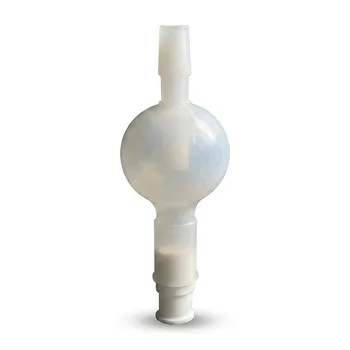
- High Purity PFA Chromatography Column with Collection Bottle Corrosion Resistant Fluoropolymer Filtration System for Trace Analysis
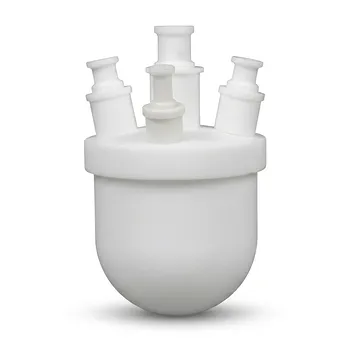
- Custom PTFE Flask 250ml High Purity Fluoropolymer Laboratory Vessel for Chemical Research
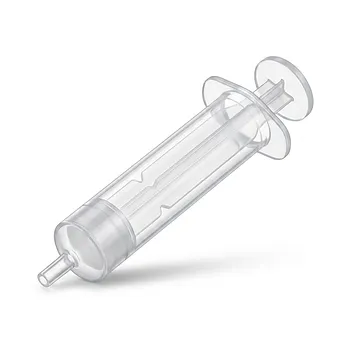
- Corrosion Resistant PFA Syringe Translucent Visual Fluoropolymer Labware 10ml Chemical Handling Tool
- Custom PTFE Reaction Tank Corrosion Resistant Fluoropolymer Chemical Processing Barrel 10L 20L 30L
- Custom PFA Tubing 1/4 Inch High Purity Corrosion Resistant Fluoropolymer Tube with Welding and Machining Services
People Also Ask
- Why is the chemical stability of polymer endgroups critical when selecting melt-processible fluoropolymers like PFA for high-purity laboratory apparatus? Choose Stable Endgroups for Reliable Performance
- What are the characteristics of PFA material? A Guide to Its High-Performance Balance
- Why is Perfluoroalkoxy alkane (PFA) preferred over glass or stainless steel in pharmaceutical process development? Pure Yield
- Why is PFA superior for cleaning and preventing cross-contamination? The Gold Standard for Ultra-Trace Lab Hygiene
- What are the key properties of PFA (PerFluoroAlkoxy)? A Guide to Extreme Chemical and Thermal Resistance