Fluoropolymers are ideal for critical components because they combine thermal stability, chemical inertness, low surface energy, and environmental durability. These properties help O-rings remain functional at severe temperatures, enable pipe liners to isolate fluids from structural substrates, and allow specialized fluorinated membranes to survive chemically aggressive fuel-cell environments. The exact formulation still matters: no single fluoropolymer optimizes every property equally.
Core takeaway: Fluoropolymers protect components from heat, chemicals, moisture, weathering, and contamination. For O-rings and liners, resistance and stability are the primary advantages; for fuel-cell membranes, those properties must be combined with engineered ion conductivity and selective transport.
Why Fluoropolymers Perform in Harsh Service
Strong carbon–fluorine chemistry
The strong carbon–fluorine molecular structure gives many fluoropolymers exceptional chemical inertness. They resist attack from strong acids, bases, oxidizing reagents, and many organic solvents that can degrade conventional polymers.
This is particularly valuable in pipe liners and seals, where chemical exposure can otherwise cause swelling, embrittlement, cracking, or loss of sealing force.
Broad thermal stability
Fluoropolymers generally tolerate a wide operating-temperature range and have high resistance to thermal degradation. Some fluoropolymer families exhibit degradation temperatures in the approximate 300–400°C range, although the practical service limit depends on the specific resin, grade, stress, and environment.
For extreme-temperature O-rings, this stability slows material breakdown and helps preserve structural integrity during heating and cooling cycles.
Low moisture and solvent absorption
Minimal water and solvent absorption reduces dimensional changes, swelling, and property loss. This helps components maintain predictable fit and performance when exposed to liquids or humid environments.
For precision fluid systems, low absorption also reduces the risk of extractables, leaching, and sample contamination.
Why They Suit Extreme-Temperature O-Rings
Resistance to chemical attack
An O-ring must maintain a seal while in contact with the process fluid. Fluoropolymers are well suited to this role because they resist many aggressive chemicals and solvents that attack elastomers with less chemical stability.
This protects against seal erosion and reduces the likelihood that degraded material will contaminate the system.
Retention of structural integrity
Thermal stability helps an O-ring resist degradation during sustained exposure to elevated temperatures. Chemical inertness helps it retain its useful properties when heat and aggressive fluids occur together.
However, thermal resistance is not the same as unlimited sealing performance. Compression set, creep, pressure, dynamic motion, and rapid temperature changes must be evaluated for the chosen grade.
Low surface energy
Low surface energy produces hydrophobic and, in many grades, oleophobic behavior. This reduces adhesion and makes surfaces less prone to retaining liquids, residues, or contaminants.
That characteristic is useful where cleanability, low friction, and reduced buildup matter, although it does not eliminate the need for compatible lubrication and proper surface design.
Why They Suit Pipe Liners
Chemical isolation
A fluoropolymer liner creates a chemically resistant barrier between the transported fluid and the pipe’s structural material. The pipe can provide mechanical support while the liner provides protection against corrosion and contamination.
This is valuable for aggressive acids, bases, solvents, and high-purity process fluids.
Low contamination potential
Low moisture absorption, low volatility, and chemical inertness help reduce the risk of the liner reacting with or contaminating the fluid. This is especially important in laboratory, semiconductor, pharmaceutical, and trace-analysis systems.
The benefit depends on manufacturing cleanliness, joining methods, surface condition, and the specific grade—not only on the polymer family.
Weathering and aging resistance
Fluoropolymers generally resist ultraviolet exposure, oxidation, and environmental aging. This supports long service life in outdoor equipment and systems exposed to changing temperature and weather.
Their inherent flame resistance and low flammability can provide an additional safety advantage, but the complete assembly still determines fire performance.
Why Specialized Fluoropolymers Suit Fuel-Cell Membranes
Chemical and oxidative durability
Fuel-cell membranes can face chemically aggressive conditions and oxidative stress. Fluorinated membrane materials, particularly specialized perfluorinated chemistries, are used because their backbone provides strong resistance to chemical degradation.
This durability helps preserve membrane function over repeated operating cycles.
Controlled moisture interaction
Membrane performance depends strongly on water management. Fluorinated membrane structures can be engineered to control water uptake and maintain useful hydration without excessive swelling.
The relevant property is therefore not simply “low moisture absorption.” A fuel-cell membrane must have controlled water retention and transport, because too little hydration can reduce conductivity while excessive swelling can weaken dimensional stability.
Selective ion transport
A fuel-cell membrane must do more than resist chemicals: it must conduct the desired ions while limiting unwanted crossover between reactants. This requires a membrane architecture with appropriate proton conductivity, selectivity, thickness, and mechanical reinforcement.
Consequently, ordinary PTFE or PFA components are not automatically suitable fuel-cell membranes. Membrane-grade fluorinated ionomers are engineered for electrochemical transport, whereas standard fluoropolymers are commonly used as seals, liners, tubing, or support materials.
Additional Properties That Add Design Value
Electrical insulation
Many fluoropolymers have low dielectric constants and low dissipation factors. They can therefore provide electrical insulation and stable dielectric behavior in demanding environments.
This matters in electrically active equipment, sensors, and systems where fluid resistance and electrical isolation are both required.
Flame resistance
Low flammability and self-extinguishing behavior can reduce material contribution to fire. The actual safety result still depends on thickness, additives, surrounding components, and applicable testing standards.
Low friction and nonstick behavior
Low surface energy and low friction can reduce adhesion, facilitate cleaning, and support smooth fluid or mechanical contact. These characteristics are useful in valves, seals, tubing, and laboratory equipment.
They should not be confused with universal wear resistance: abrasive particles, pressure, temperature, and mating-surface conditions still control service life.
Understanding the Trade-offs
Chemical resistance does not guarantee mechanical performance
Fluoropolymers can resist chemicals while still suffering from creep, cold flow, compression set, or reduced strength under load. PTFE, for example, is chemically outstanding but may require design features or reinforcement where dimensional stability is critical.
A seal or liner must therefore be selected using pressure, load, temperature, motion, and installation data.
Temperature ratings are application-specific
A material’s degradation temperature is not its recommended continuous-use temperature. Mechanical stress, chemical exposure, oxygen availability, pressure, and thermal cycling can substantially change performance.
Use the supplier’s service limits for the exact grade and geometry rather than relying on a generic fluoropolymer temperature range.
Fluoropolymer families are not interchangeable
PTFE, PFA, FEP, PVDF, and fluorinated ionomers differ in melt processability, mechanical strength, flexibility, permeability, electrical behavior, and electrochemical function.
The correct choice depends on whether the component needs chemical isolation, elasticity, weldability, mechanical strength, ion transport, or some combination of these requirements.
Processing and end-of-life require attention
Fluoropolymers can be difficult to process, bond, or recycle compared with more conventional plastics. Manufacturing controls are also important when components are used in high-purity or contamination-sensitive systems.
Material selection should include fabrication method, cleanliness requirements, joining strategy, and disposal considerations.
How to Apply This to Your Project
The best material choice begins with the component’s actual failure risks, not with the label “fluoropolymer.”
- If your primary focus is extreme-temperature sealing: Choose a grade validated for the temperature, chemical exposure, compression set, pressure, and cycling conditions.
- If your primary focus is corrosive fluid transfer: Use a fluoropolymer liner or wetted component selected for the exact chemicals, permeability requirements, pressure, and fabrication method.
- If your primary focus is high-purity processing: Prioritize low extractables, low moisture and solvent absorption, chemical inertness, surface cleanliness, and validated manufacturing controls.
- If your primary focus is fuel-cell membrane performance: Select a purpose-designed fluorinated ionomer membrane and evaluate proton conductivity, hydration, reactant crossover, oxidative durability, and mechanical reinforcement.
- If your primary focus is electrical or fire performance: Verify dielectric properties and flame behavior for the specific grade and finished assembly rather than assuming all fluoropolymers perform identically.
When matched to the correct formulation and operating conditions, fluoropolymers provide a powerful combination of chemical protection, thermal endurance, cleanliness, and long-term reliability.
Summary Table:
| Property | O-Rings | Pipe Liners | Fuel Cell Membranes |
|---|---|---|---|
| Chemical resistance | High | High | High (to oxidative stress) |
| Thermal stability | High (needs grade-specific ratings) | High | Moderate (must withstand operating temps) |
| Low moisture absorption | Low | Low | Controlled (for water management) |
| Low surface energy | Yes (reduces adhesion) | Yes (cleanability) | Not primary; engineered for ion transport |
| Ion conductivity | Not required | Not required | Essential (selective transport) |
Elevate your critical components with KINTEK's high-performance fluoropolymer solutions. Our PTFE and PFA products offer exceptional chemical resistance, thermal endurance, and purity for demanding applications. From custom O-rings and pipe liners to specialized fuel cell components, our expert team ensures precise fabrication and reliable supply. Contact us today to discuss your project and experience the KINTEK advantage.
Related Products
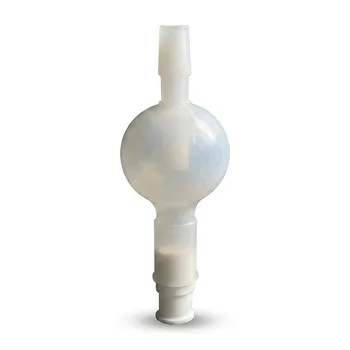
- High Purity PFA Chromatography Column with Collection Bottle Corrosion Resistant Fluoropolymer Filtration System for Trace Analysis
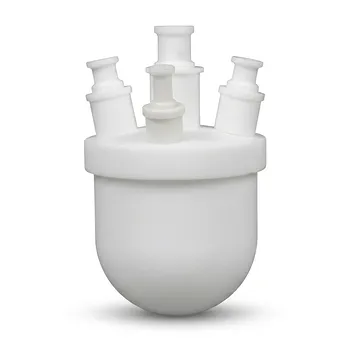
- Custom PTFE Flask 250ml High Purity Fluoropolymer Laboratory Vessel for Chemical Research
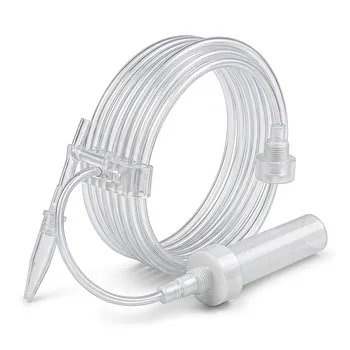
- Custom PFA Tubing 1/4 Inch High Purity Corrosion Resistant Fluoropolymer Tube with Welding and Machining Services
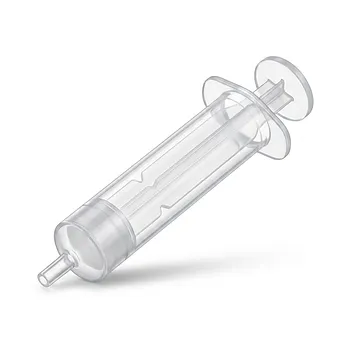
- Corrosion Resistant PFA Syringe Translucent Visual Fluoropolymer Labware 10ml Chemical Handling Tool
- Custom PTFE Reaction Tank Corrosion Resistant Fluoropolymer Chemical Processing Barrel 10L 20L 30L
People Also Ask
- What are the primary functional and temperature differences between PFA and FEP when selecting melt-processible fluoropolymers for custom laboratory apparatus?
- Why is the chemical stability of polymer endgroups critical when selecting melt-processible fluoropolymers like PFA for high-purity laboratory apparatus? Choose Stable Endgroups for Reliable Performance
- What are the characteristics of PFA material? A Guide to Its High-Performance Balance
- Why is Perfluoroalkoxy alkane (PFA) preferred over glass or stainless steel in pharmaceutical process development? Pure Yield
- Why is PFA superior for cleaning and preventing cross-contamination? The Gold Standard for Ultra-Trace Lab Hygiene