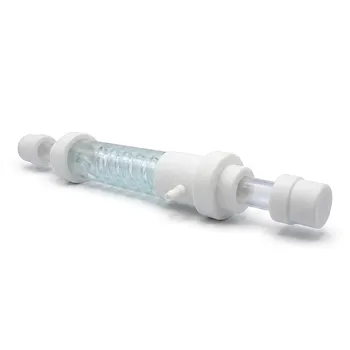
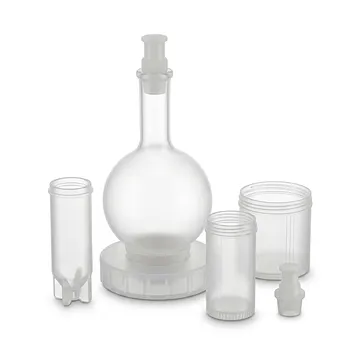
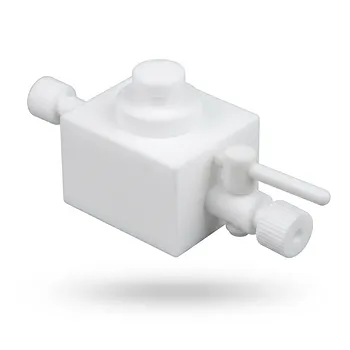
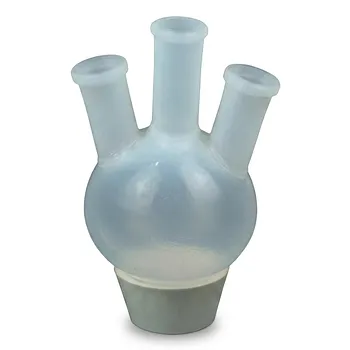
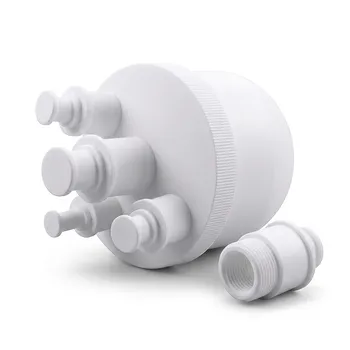
Fluorinated polymers are ideal for severe laboratory environments because they combine chemical inertness, thermal stability, low contamination potential, and durable surface performance. Their resistance to strong acids, bases, oxidative reagents, and organic solvents helps prevent degradation and unwanted reactions. They also retain structural integrity at elevated temperatures while resisting moisture, sample adhesion, weathering, and aging.
The central advantage of fluorinated polymers is their ability to remain stable when both chemical exposure and thermal stress are severe. This stability protects laboratory equipment, preserves sample purity, and extends component service life.
Why Chemical Resistance Matters
Resistance to Aggressive Reagents
The fluorine-rich molecular structure creates strong resistance to chemical attack. As a result, materials such as PTFE can withstand many strong acids, bases, organic solvents, and oxidative reagents without rapidly degrading.
This makes fluorinated polymers suitable for digestion vessels, reagent bottles, tubing, fittings, and other components that routinely contact aggressive chemicals.
Low Reactivity and Contamination Risk
Fluorinated polymers are highly chemically inert, so they are less likely to react with stored reagents or laboratory samples. They also resist leaching impurities into high-purity chemicals during demanding procedures.
This property is especially important in trace analysis, where small amounts of contamination can compromise results.
Low Absorption of Water and Solvents
Low water and solvent absorption helps the material maintain its dimensions and properties during repeated chemical exposure. It also reduces the likelihood that solvents or residues will remain trapped within the component.
For fluid-handling systems, this supports cleaner transfers and more reliable analytical processes.
Why Thermal Stability Matters
Resistance to High Operating Temperatures
Fluorinated polymers have high thermal stability and high thermal degradation temperatures. Depending on the specific polymer and operating conditions, some fluoropolymers can tolerate temperatures in the range of approximately 300°C to 400°C before significant thermal degradation.
This allows them to perform in applications involving heating, digestion, sterilization, or other high-temperature laboratory processes.
Structural Reliability Under Thermal Stress
Thermal stability helps vessels, tubing, fittings, and custom-machined components resist warping, embrittlement, and loss of performance. The applicable temperature limit still depends on the specific fluoropolymer, load, exposure time, and design.
The key benefit is that the material remains reliable across demanding thermal cycles when properly selected for the application.
Flame Retardancy and Self-Extinguishing Behavior
Many fluoropolymers offer inherent flame retardancy and self-extinguishing behavior. This can reduce the risk of sustained combustion when components are exposed to heat or nearby ignition sources.
Flame performance does not eliminate the need for appropriate laboratory safety controls, but it adds an important layer of material-level protection.
Why Surface Properties Improve Laboratory Performance
Hydrophobic and Oleophobic Behavior
Fluorinated polymers have very low surface energy, giving them both hydrophobic and oleophobic characteristics. Water-based and oil-based substances are less likely to spread across or strongly adhere to the surface.
This helps minimize sample retention and makes components easier to drain, clean, and reuse.
Low Sample Adhesion
Low surface energy and low friction reduce the tendency of chemicals and samples to stick to the material. In trace analysis and high-purity work, this can help limit carryover between procedures.
The result is a surface that supports cleaner handling and more consistent recovery of valuable samples.
Low Coefficient of Friction
Fluoropolymers generally have an extremely low coefficient of friction. This property can reduce resistance in moving interfaces and support smoother operation in valves, seals, fittings, and fluid-transfer systems.
It also contributes to their usefulness where minimizing mechanical wear or material adhesion is important.
Additional Properties That Support Long-Term Use
Weathering and Aging Resistance
Fluorinated polymers resist degradation from weathering, ultraviolet exposure, and long-term environmental aging. Their photostability helps preserve performance in storage, processing, and laboratory environments exposed to light or changing conditions.
This durability reduces the likelihood of premature cracking, discoloration, or loss of chemical resistance.
Electrical Insulation
Low dielectric constants and low dissipation factors give many fluoropolymers useful electrical insulation properties. These characteristics matter in electrochemical cells, sensors, instrumentation, and laboratory equipment that combines chemical exposure with electrical functionality.
The material can therefore provide chemical containment while also limiting unwanted electrical losses.
Oxidative Stability
High oxidative stability helps fluorinated polymers resist degradation when exposed to oxygen-rich conditions and certain oxidizing reagents. This reinforces their suitability for chemical processing and laboratory procedures involving aggressive environments.
The exact compatibility must still be checked against the specific oxidizer, concentration, temperature, and exposure duration.
Understanding the Trade-offs
Chemical Resistance Is Not Universal
“Chemically inert” does not mean resistant to every chemical under every condition. Certain highly reactive substances, molten alkali metals, specialized fluorinating agents, or extreme combinations of temperature and pressure may attack particular fluoropolymers.
Compatibility should be evaluated using the specific polymer grade and actual operating conditions.
Mechanical Performance Can Be Application-Specific
Fluoropolymers may have limitations involving stiffness, creep, dimensional stability, or load-bearing performance at elevated temperatures. A chemically resistant material may still require mechanical reinforcement, a different geometry, or a different polymer grade.
Design decisions should consider pressure, mechanical load, thermal cycling, and component dimensions alongside chemical compatibility.
Processing and Joining Require Care
Low surface energy is valuable for reducing adhesion, but it can make bonding, printing, and coating more difficult. Manufacturing methods may require specialized preparation or mechanical joining strategies.
These processing considerations should be addressed before selecting a fluoropolymer for a complex assembly.
How to Apply This to Your Project
The right choice depends on which failure modes present the greatest risk in the laboratory environment.
- If your primary focus is chemical compatibility: Select a fluoropolymer with verified resistance to the exact acids, bases, oxidizers, and solvents used in the process.
- If your primary focus is high-temperature operation: Confirm the polymer’s continuous-use and short-term temperature limits under the expected mechanical load.
- If your primary focus is sample purity: Prioritize low absorption, low reactivity, low leaching potential, and low surface adhesion.
- If your primary focus is fluid transfer: Use the material’s low friction, chemical resistance, and dimensional stability to guide tubing, fitting, valve, and seal selection.
- If your primary focus is long service life: Evaluate weathering, oxidative stability, flame behavior, thermal cycling, and the expected maintenance environment.
Fluorinated polymers earn their place in severe laboratory environments by remaining chemically stable, thermally reliable, and clean where conventional materials may degrade or contaminate the process.
Summary Table:
| Property | Benefit |
|---|---|
| Chemical inertness | Resists acids, bases, solvents; prevents contamination |
| Thermal stability | Withstands up to 300-400°C; reliable under heat |
| Low surface energy | Hydrophobic/oleophobic; low sample adhesion, easy cleaning |
| Low friction | Smooth operation in valves, fittings, and moving parts |
| Weathering/aging resistance | Long service life even in harsh conditions |
| Electrical insulation | Suitable for electrochemical and instrumentation uses |
| Oxidative stability | Performs well in oxygen-rich and oxidizing environments |
Upgrade your lab with KINTEK's high-performance PTFE and PFA products. From beakers to custom CNC-machined parts, our fluoropolymer solutions ensure durability, purity, and reliability in your most demanding processes. Contact us today for a quote or custom design support – our team is ready to assist you.
Related Products
- High Purity PFA Chromatography Column with Collection Bottle Corrosion Resistant Fluoropolymer Filtration System for Trace Analysis
- Custom PTFE Flask 250ml High Purity Fluoropolymer Laboratory Vessel for Chemical Research
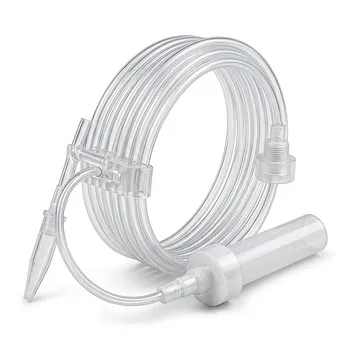
- Custom PFA Tubing 1/4 Inch High Purity Corrosion Resistant Fluoropolymer Tube with Welding and Machining Services
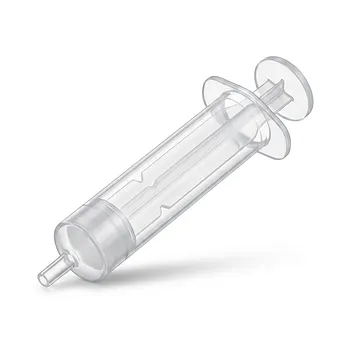
- Corrosion Resistant PFA Syringe Translucent Visual Fluoropolymer Labware 10ml Chemical Handling Tool
- Custom PTFE Reaction Tank Corrosion Resistant Fluoropolymer Chemical Processing Barrel 10L 20L 30L
People Also Ask
- What are the primary functional and temperature differences between PFA and FEP when selecting melt-processible fluoropolymers for custom laboratory apparatus?
- How does PPVE modify PTFE to make melt-processable PFA? Discover key benefits and applications.
- Why is the chemical stability of polymer endgroups critical when selecting melt-processible fluoropolymers like PFA for high-purity laboratory apparatus? Choose Stable Endgroups for Reliable Performance
- What are the characteristics of PFA material? A Guide to Its High-Performance Balance
- Why is Perfluoroalkoxy alkane (PFA) preferred over glass or stainless steel in pharmaceutical process development? Pure Yield