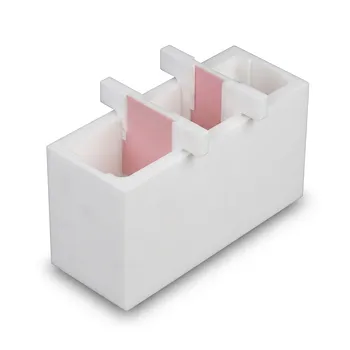
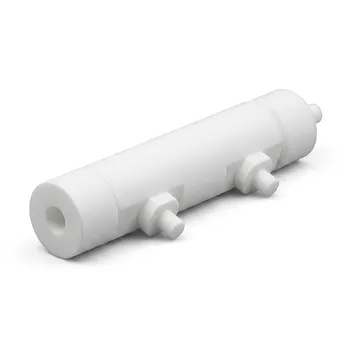
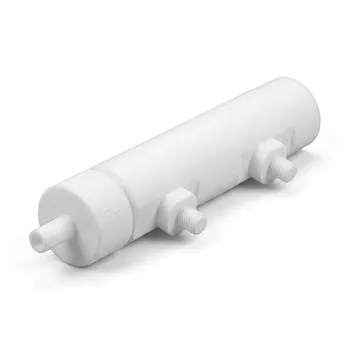
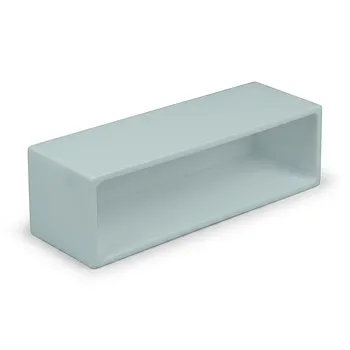
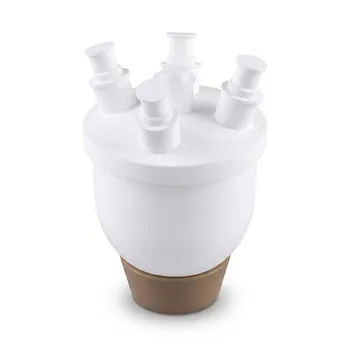
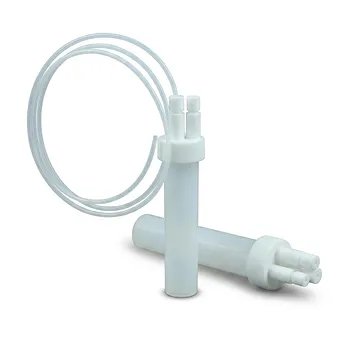
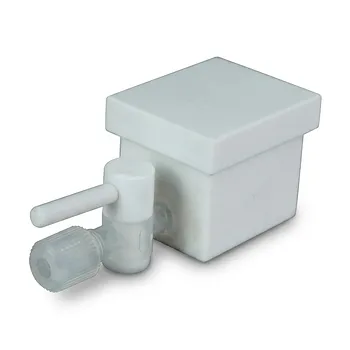
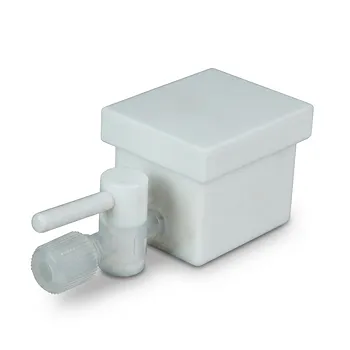
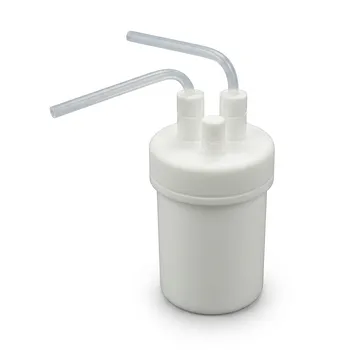
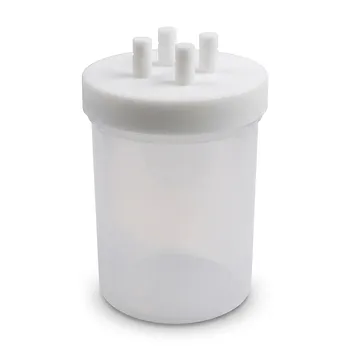
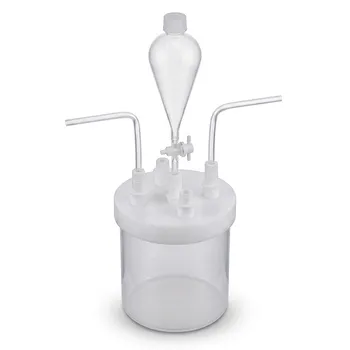
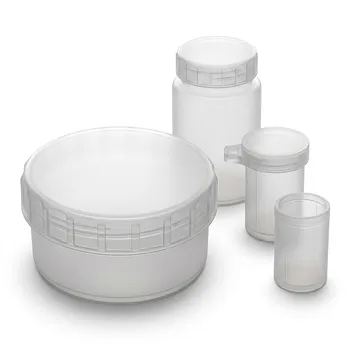
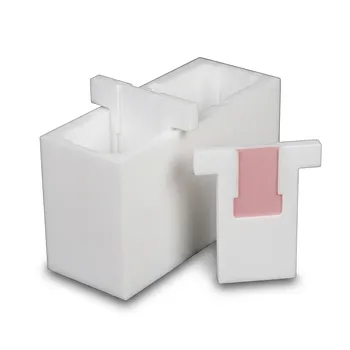
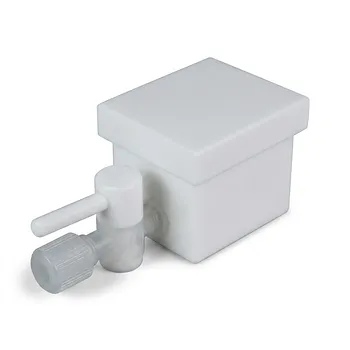
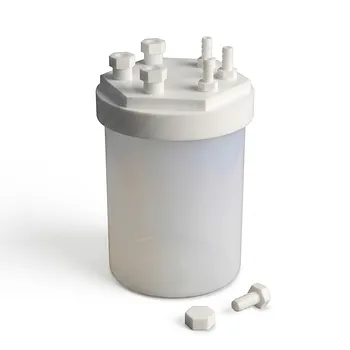
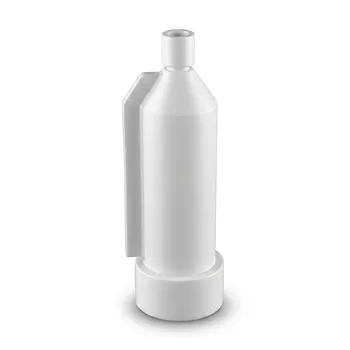
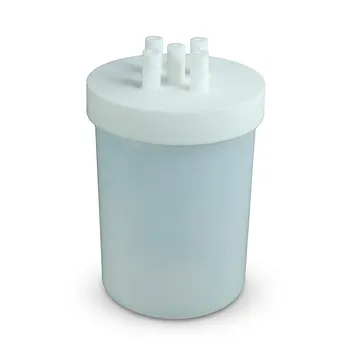
Custom machined PTFE and PFA components are ideal for corrosive electrochemical cells because they combine exceptional chemical inertness, electrical insulation, thermal stability, and low contamination potential. Their fluorinated carbon backbones resist hydrofluoric acid, strong acids, oxidizers, bases, and many organic solvents, while their high electrical resistivity prevents stray currents and signal interference. Because both materials can be precision-machined, they can also provide purpose-built structural features for complex cell and reaction-vessel designs.
The central advantage is compatibility: PTFE and PFA can form a chemically resistant, electrically insulating, low-contamination framework around electrodes, electrolytes, gases, and sensors without introducing conductive or reactive surfaces.
Why Fluoride and Strong Acid Systems Are Difficult
Glass Is Vulnerable to Fluoride Attack
Fluoride-containing solutions, particularly hydrofluoric acid, can rapidly etch glass and other silica-based materials. This can damage the vessel, alter dimensions, release contaminants, and compromise analytical results.
PTFE and PFA avoid this failure mode because their fully fluorinated polymer structures are highly resistant to fluoride chemistry.
Metals Can Create Chemical and Electrical Problems
Metal components may corrode in strong acids or fluoride electrolytes. Corrosion products can contaminate the electrolyte, alter electrode behavior, or shorten component life.
Metals can also introduce unwanted conductive paths. In a sensitive electrochemical system, that conductivity may create stray currents, leakage, or measurement errors.
Material Properties That Support Reliable Cell Design
Exceptional Chemical Inertness
The strong carbon-fluorine bonds in PTFE and PFA give them broad resistance to concentrated acids, strong bases, oxidizing agents, and many organic solvents.
This is particularly valuable when a cell must contain hydrofluoric acid or another aggressive fluoride electrolyte for extended periods. The material is unlikely to react with the process chemistry, swell significantly, dissolve, or release substantial contaminants under appropriate operating conditions.
High Electrical Resistivity
PTFE provides high surface and volume resistivity, making it an effective electrical insulator for cell bodies, electrode holders, covers, and analytical housings.
This insulation helps isolate electrodes and prevents current from bypassing the intended electrochemical path. It can also reduce stray-current interference and support more accurate trace measurements.
Low Dielectric Response
PTFE has a low dielectric constant, approximately 2.1, and a very low dissipation factor. These properties reduce the material's electrical interaction with the electrochemical system compared with more polar or conductive materials.
That matters in applications involving small signals, high potentials, impedance measurements, or tightly controlled electrode geometry.
Broad Thermal Stability
PTFE and PFA retain useful chemical and mechanical performance across broad temperature ranges, including processes operating well above 100 °C when the design and pressure conditions are suitable.
Thermal stability helps components maintain their shape and sealing function during heated reactions, digestion steps, and temperature cycling. The exact service limit still depends on load, pressure, geometry, exposure time, and the specific grade.
Low Moisture Absorption and Low Surface Energy
Fluoropolymers absorb very little moisture and have low surface energy. Their smooth, non-porous, non-stick surfaces resist wetting, adhesion, and buildup from many reagents and reaction products.
This reduces sample retention and simplifies cleaning. It is especially important in trace analysis, where residue from a previous run can produce more error than the material cost of the vessel itself.
Low Contamination Potential
PTFE and PFA are generally non-leaching and chemically nonreactive in the environments for which they are selected. They therefore reduce the risk that the cell walls or vessel components will contribute ions, corrosion products, or organic contaminants to the electrolyte.
PFA is often useful where high purity, transparency, or more uniform processing is important. PTFE is widely valued for its chemical resistance, electrical insulation, low friction, and machinability.
Why Custom Machining Matters
Cell Geometry Can Match the Experiment
CNC machining allows manufacturers to produce custom cell bodies, covers, electrode holders, electrolyte level holders, gas separation skirts, channels, ports, and sealing surfaces.
This is useful when the experiment requires a particular electrode spacing, fluid volume, gas path, sampling port, or sensor position that is unavailable in standard laboratory equipment.
Electrical Isolation Can Be Designed Into the Structure
Custom insulating features can separate electrodes, shield sensitive regions, and prevent contact between conductive hardware and the vessel wall.
The component is therefore more than a chemical container. It becomes part of the electrical architecture of the electrochemical cell.
Gas and Electrolyte Management Become More Controlled
Machined PTFE or PFA parts can incorporate dedicated passages and barriers for gas separation, electrolyte retention, venting, and controlled access.
These features help keep gases from mixing, maintain a stable liquid level, and protect adjacent instruments or electrodes from unintended exposure.
Precision Supports Repeatability
Consistent machined dimensions improve electrode positioning, working volume, sealing, and alignment between experimental runs.
That repeatability is valuable in electrochemical synthesis and trace analysis because small geometric changes can affect current distribution, mass transport, and measured response.
PTFE and PFA: Similar Strengths, Different Uses
PTFE Favors Chemical Resistance and Low Friction
PTFE is an excellent choice for chemically exposed insulating structures, seals, holders, liners, and cell bodies. Its low friction and non-stick surface can also simplify assembly, cleaning, and component removal.
PTFE is commonly selected when the design prioritizes broad chemical resistance and robust performance over transparency or dimensional behavior under load.
PFA Favors Purity and Process Visibility
PFA offers similarly strong chemical resistance and is well suited to high-purity fluid-handling and containment applications. Its processability can make it attractive for vessels or components where visual inspection of the contents is useful.
The choice between PTFE and PFA should consider transparency, stiffness, machining requirements, thermal exposure, sealing method, and mechanical loading rather than chemical resistance alone.
Understanding the Trade-offs
Chemical Resistance Is Not Unlimited
PTFE and PFA are highly resistant, but no polymer should be described as universally compatible under every condition. Extreme environments involving molten alkali metals, high-temperature elemental fluorine, or specialized fluorinating compounds can exceed their practical limits.
Compatibility must be checked against concentration, temperature, pressure, exposure duration, and mechanical stress.
Mechanical Creep Requires Attention
PTFE can deform slowly under sustained compressive load, particularly at elevated temperatures. This behavior can affect threaded connections, flange seals, electrode alignment, and vessel dimensions.
Designs using PTFE should account for creep through appropriate wall thickness, support, fastening methods, and sealing geometry. PFA may offer different dimensional and processing characteristics, but it also requires application-specific evaluation.
Machining Does Not Eliminate Design Constraints
Custom machining can create precise features, but thin walls, sharp internal corners, deep cavities, and heavily loaded threads may reduce structural reliability.
A successful design must consider machining tolerances, thermal expansion, pressure differentials, assembly forces, and access for cleaning.
Electrical Insulation Can Increase Static Risk
High resistivity is beneficial for electrochemical measurements, but insulating fluoropolymers can accumulate static charge in some handling environments.
Grounding and handling practices should be evaluated where flammable solvents, sensitive instrumentation, or electrostatic discharge hazards are present.
Sealing Requires System-Level Compatibility
PTFE and PFA components may be chemically compatible with the electrolyte while adjacent O-rings, adhesives, fittings, or electrode materials are not.
The complete wetted assembly must be reviewed. A chemically resistant vessel cannot compensate for a seal or insert that degrades in the same electrolyte.
Making the Right Choice for Your Goal
Choose the material and machining approach according to the dominant risk in the application.
- If your primary focus is fluoride or strong-acid resistance: Use PTFE or PFA for wetted structural components, then verify compatibility at the actual concentration, temperature, pressure, and exposure duration.
- If your primary focus is measurement accuracy: Use the materials' high resistivity and low dielectric response to isolate electrodes, reduce stray currents, and limit electrical interference.
- If your primary focus is trace-analysis purity: Favor smooth, non-porous fluoropolymer surfaces and minimize wetted interfaces that could retain or leach contaminants.
- If your primary focus is a complex cell architecture: Specify custom-machined features such as electrode holders, gas barriers, ports, channels, and electrolyte level controls as part of the cell design.
- If your primary focus is long-term dimensional stability: Account for creep, thermal expansion, pressure, fastening loads, and seal behavior during the engineering review.
When chemical compatibility, electrical isolation, purity, and precise geometry are all important, custom machined PTFE and PFA provide a reliable foundation for demanding electrochemical cells and reaction vessels.
Summary Table:
| Property | PTFE | PFA | Benefits for Electrochemical Cells |
|---|---|---|---|
| Chemical Inertness | Excellent | Excellent | Resists fluorides, strong acids, bases, oxidizers; prevents contamination |
| Electrical Resistivity | Very High | Very High | Isolates electrodes, prevents stray currents, accurate measurements |
| Dielectric Constant | ~2.1 | ~2.1 | Low electrical interference |
| Thermal Stability | Broad (-200 to 260°C) | Broad (-200 to 260°C) | Maintains shape during heating/cycling |
| Moisture Absorption | <0.01% | <0.01% | Prevents hydration, retains purity |
| Surface Energy | Very Low | Very Low | Non-stick, easy cleaning |
| Contamination Potential | Very Low | Very Low | Ideal for trace analysis |
| Machinability | Good | Good | Custom geometries for precise design |
Elevate your electrochemical cell performance with KINTEK's precision-machined PTFE and PFA components. Our high-performance fluoropolymers deliver superior chemical resistance, electrical insulation, and purity, ensuring reliable results in the most corrosive environments. Benefit from our custom CNC machining capabilities, tailored to your exact specifications. Contact our experts today to discuss your requirements and enhance your lab's efficiency.
Related Products
- Corrosion Resistant PTFE Electrochemical Cell for New Energy Research Inert Insulating Customizable Lab Reaction Vessel
- Custom PTFE Electrolytic Cell Corrosion Resistant Low Background Reaction Vessel with Inlet Outlet Ports
- High Purity Custom PTFE Reaction Cell Electrolytic Tank for Semiconductor and Polysilicon Industrial Applications
- Custom PTFE Reaction Box Opaque White Square Electrochemical Cell Tank
- High Performance Customizable PTFE Reaction Vessel and Corrosion Resistant Polytetrafluoroethylene Flask for Chemical Laboratory Use
People Also Ask
- How do custom PTFE electrochemical cells improve the accuracy of stability testing for alkaline catalysts compared to glass cells?
- How does the hydrophobicity of PTFE benefit electrochemical measurements? Enhance Stability and Precision in Your Lab
- What makes PTFE an ideal construction material for custom electrochemical cells and electronic analytical instrumentation housings? Discover superior chemical resistance and electrical insulation
- Why must seawater electrolysis test cells have high corrosion resistance? Protect catalyst stability & data accuracy.
- What are the key steps for structural integrity in molded PTFE lab reaction vessels? Master fine powder processing.