Fluorinating a polymer backbone generally creates a more chemically inert, thermally stable, and low-friction material. Replacing hydrogen with fluorine strengthens resistance to aggressive acids, bases, oxidizing chemicals, and organic solvents while improving flame retardancy, photostability, and resistance to thermal degradation. The resulting low surface energy, low coefficient of friction, and low dielectric constant are especially valuable in laboratory vessels, fluid-handling components, electrochemical systems, and other applications where contamination, adhesion, or electrical loss must be minimized.
The central benefit is reliability under combined chemical and thermal stress: fluoropolymers can preserve their structure and purity when exposed to corrosive reagents, solvents, elevated temperatures, and demanding processing conditions.
Why Fluorination Changes Polymer Performance
The carbon-fluorine bond creates chemical protection
The carbon-fluorine (C-F) bond is highly strong and fluorine is highly electronegative. Together, these characteristics reduce the susceptibility of the polymer backbone to chemical attack and oxidative degradation.
Fluorine atoms can form an electron-dense protective layer around the carbon backbone. This shielding makes it more difficult for acids, bases, solvents, oxygen, and other reactive species to reach and break down the underlying chain.
Higher fluorine content generally increases inertness
As fluorine content rises, polymer structures typically become more resistant to chemical attack and solvent interaction. Fully fluorinated materials, including perfluoropolymers such as PTFE and PFA, provide particularly high resistance to mineral acids, organic solvents, and other aggressive reagents.
This resistance also reduces solvent absorption, sample sorption, impurity leaching, and material degradation, which are critical concerns in trace analysis and high-purity processing.
Fluorine changes polarity and electronic behavior
Fluorination lowers the polarizability of the relevant bonds and can reduce the material's dielectric constant and dissipation factor. It also alters dipole moments, frontier orbital energies, and related electronic properties.
These changes support electrical insulation and low-loss performance in electrochemical cells, high-frequency environments, and laboratory systems that must isolate sensitive measurements from the equipment surrounding them.
Key Chemical Properties and Their Applications
Resistance to acids, bases, and solvents
Fluoropolymers can withstand exposure to strong acids, concentrated bases, and many organic solvents without rapid swelling, dissolution, corrosion, or chain scission. This makes them suitable for direct contact with aggressive chemical media.
Laboratory examples include digestion vessels, beakers, crucibles, reagent bottles, cleaning tanks, tubing, and fluid fittings. These components can retain their shape and function during chemical preparation, transfer, and containment.
Low chemical sorption and low contamination risk
Low solvent solubility and low surface reactivity help prevent chemicals from being absorbed into the polymer or released from it. This is especially important when analyte concentrations are very low or when cross-contamination would compromise a result.
For trace analysis, fluoropolymer vessels and containers help maintain sample integrity by reducing interactions between the sample and the equipment.
Hydrophobic and oleophobic surfaces
Fluorinated surfaces generally have low surface energy and resist wetting by water and many oils. This produces hydrophobic and oleophobic behavior, which limits adhesion and makes residues easier to remove.
The same characteristic helps prevent samples from sticking to vessel walls and supports cleaner fluid transfer through fittings, tubing, and processing equipment.
Low coefficient of friction
Fluoropolymers provide an extremely low coefficient of friction. Components can slide, seal, or transport materials with reduced adhesion and mechanical resistance.
In laboratory and industrial fluid systems, this can improve flow behavior, reduce sticking, and simplify handling of chemically aggressive or viscous materials.
Key Thermal Properties and Their Applications
Improved thermal stability
Fluorinated backbones resist thermal and oxidative degradation more effectively than many conventional hydrocarbon polymers. Strong C-F bonding and protection of the carbon backbone allow fluoropolymer components to remain functional during high-temperature chemical operations.
This is valuable in microwave digestion, acid digestion, thermal processing, and high-temperature reaction work, where both the reagent and the heat can attack ordinary plastics.
Greater flame retardancy and thermal decomposition resistance
Fluorination generally improves flame resistance and raises the temperature at which significant thermal decomposition occurs. The material is therefore less likely to break down rapidly when exposed to heat or ignition conditions.
This does not mean every fluoropolymer has the same maximum service temperature. Actual performance depends on the specific polymer, geometry, load, exposure time, and processing environment.
Dimensional and structural stability
Maintaining structural integrity under heat is essential for vessels, seals, fittings, and precision components. A fluoropolymer that resists softening, oxidation, and decomposition is less likely to distort or release contaminants during operation.
That stability supports repeatable fluid volumes, reliable seals, consistent flow paths, and safer containment in demanding laboratory equipment.
Melting and processing behavior must be evaluated by grade
Fluorination can contribute to high melting or processing temperatures, particularly in highly fluorinated materials, but melting point is not a universal property that increases in every fluorinated polymer. Chain structure, molecular weight, crystallinity, and the type and placement of fluorinated groups all affect melting behavior.
For engineering decisions, the relevant data should include melting point, glass-transition temperature, continuous-use temperature, decomposition temperature, and chemical compatibility under the intended conditions.
How These Properties Work Together
Aggressive chemistry and heat often occur together
Chemical digestion and reaction workflows frequently combine corrosive reagents with elevated temperatures. A material must therefore resist both chemical attack and thermal degradation at the same time.
Fluoropolymers are effective in this setting because their chemical inertness, thermal stability, low sorption, and low adhesion reinforce one another rather than solving only one part of the problem.
Surface behavior supports cleaner processing
A chemically resistant material is not automatically a low-contamination material. Fluorinated surfaces add value by reducing wetting, adhesion, and absorption, which helps samples move through the system without becoming trapped on equipment surfaces.
This is particularly useful for fluid transfer components, precision fittings, digestion tubes, and trace-analysis containers.
Electrical properties extend the application range
The low dielectric constant and low dissipation factor of many fluoropolymers reduce electrical energy storage and loss relative to more polar materials. Combined with chemical inertness, this makes them useful in electrochemical cells and other systems where insulation and chemical compatibility are both required.
Understanding the Trade-offs
High chemical resistance does not eliminate all compatibility limits
Fluoropolymers are highly resistant, but compatibility still depends on temperature, pressure, exposure duration, mechanical stress, and the exact chemical mixture. Certain molten alkali metals, highly reactive fluorinating conditions, and specialized high-energy reagents can exceed the material's resistance.
Compatibility charts and supplier data should be checked for the actual operating conditions rather than relying on the general label “chemically inert.”
Thermal stability is not the same as unlimited temperature capability
A polymer may resist decomposition yet still soften, creep, or lose dimensional accuracy at a lower temperature. Load-bearing parts, seals, and thin-walled vessels require particular attention to mechanical performance during heating.
Design limits should therefore distinguish between short-term exposure, continuous service, processing temperature, and decomposition temperature.
Low surface energy can complicate bonding
The same low-adhesion surface that prevents samples from sticking can make fluoropolymers difficult to paint, glue, print, or bond. Mechanical retention, surface treatment, or specialized joining methods may be necessary.
This trade-off matters when a fluoropolymer component must be permanently integrated into a larger assembly.
Higher fluorine content can affect processing and cost
Highly fluorinated polymers may require specialized processing equipment and tighter temperature control. Their performance advantages can also come with higher material and manufacturing costs than conventional polymers.
Material selection should weigh the cost of the polymer against the cost of contamination, equipment failure, chemical replacement, and process downtime.
Barrier performance is application-specific
Fluorinated groups can increase hydrophobicity and chemical resistance, but fluorination does not guarantee the lowest possible gas or solvent permeability in every formulation. Polymer morphology, crystallinity, free volume, thickness, and temperature also influence transport.
Where barrier performance is critical, permeability data for the specific grade and chemical should be verified directly.
Making the Right Choice for Your Goal
The best selection process matches the fluorinated structure and material grade to the complete chemical, thermal, mechanical, and purity requirements.
- If your primary focus is chemical resistance: Choose a highly fluorinated grade, such as PTFE or PFA, and verify compatibility with the exact acids, bases, solvents, concentration, temperature, and exposure time.
- If your primary focus is high-temperature processing: Compare continuous-use, softening, melting, and decomposition data, then evaluate whether the component must retain load-bearing or dimensional accuracy while heated.
- If your primary focus is sample purity: Prioritize low sorption, low leaching, low extractables, and low surface adhesion, especially for trace analysis and sensitive digestion workflows.
- If your primary focus is fluid handling: Use the low-friction, low-surface-energy behavior of fluoropolymers to reduce sticking and improve transfer, while checking pressure, creep, sealing, and joining requirements.
- If your primary focus is electrical or electrochemical performance: Evaluate dielectric constant, dissipation factor, insulation behavior, chemical compatibility, and thermal stability together rather than selecting on chemical resistance alone.
Fluorination is most valuable when its chemical inertness, thermal stability, surface behavior, and electrical properties are matched deliberately to the demands of the application.
Summary Table:
| Property | Key Benefits | Lab Applications |
|---|---|---|
| Chemical inertness | Resists acids, bases, solvents; low contamination | Digestion vessels, beakers, tubing |
| Thermal stability | Withstands high temperatures; flame retardant | Microwave digestion, high-temp reactions |
| Low surface energy | Hydrophobic, oleophobic; easy cleaning | Sample storage, fluid handling |
| Low friction | Reduced sticking, smooth flow | Fittings, valves, seals |
| Electrical insulation | Low dielectric constant | Electrochemical cells |
Enhance Your Lab with KINTEK's Fluoropolymer Solutions
From PTFE/PFA labware to custom machined parts, our high-performance products deliver superior chemical resistance, thermal stability, and purity. Ideal for demanding applications like trace analysis, acid digestion, and fluid handling.
Contact us today to discuss your requirements and get expert guidance—reach out now!
Related Products
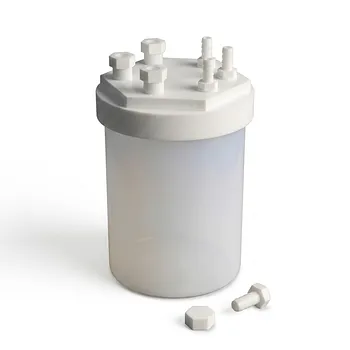
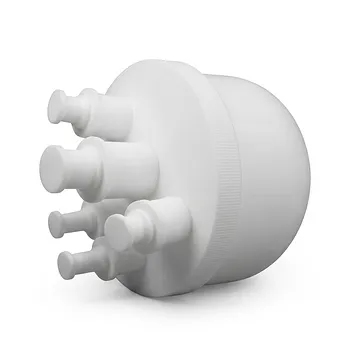
- PFA Chemical Reaction Tank with Customizable Fittings for Corrosive Solvent Synthesis and High Purity Lab Applications
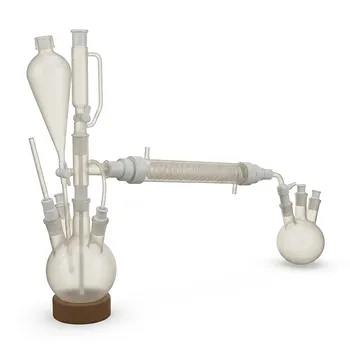
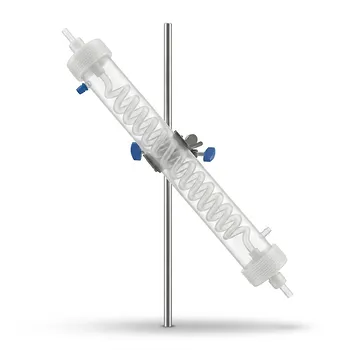
- PTFE Distillation Condensation Apparatus High Temperature Hydrofluoric Acid Resistant Fluorination Reaction Flask
- Custom PTFE Flask 250ml High Purity Fluoropolymer Laboratory Vessel for Chemical Research
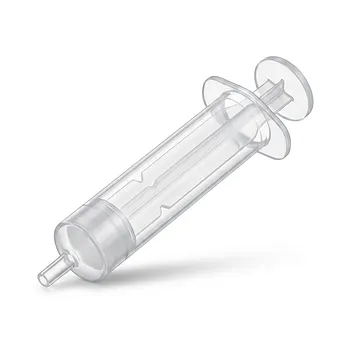
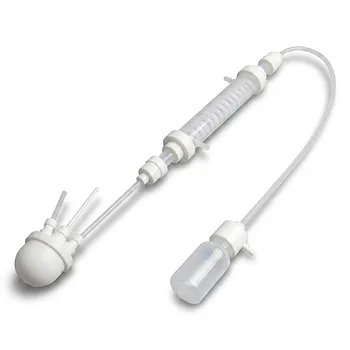
- Corrosion Resistant PFA Syringe Translucent Visual Fluoropolymer Labware 10ml Chemical Handling Tool
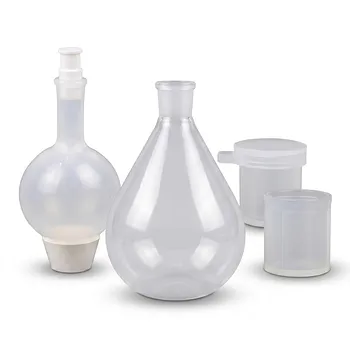
- PFA Eggplant Flask Custom Molded Pear Shaped Laboratory Flask Corrosion Resistant Glass Alternative
People Also Ask
- How does the molecular structure of fluorinated polymers contribute to the extreme thermal stability and chemical resistance required for high-performance laboratory reaction vessels and digestion containers? Discover the science behind PTFE and PFA for your lab.
- How can re-entrant surface geometry enable fluoropolymer vessels to repel organic solvents? Learn the design rules for stable, low-adhesion surfaces that resist wetting and contamination.
- What are the key material and operational challenges for fluoropolymer vessels in direct gas fluorination?
- How do choice of solvent and chain transfer activity affect molecular weight during vinylidene fluoride (VDF) radical polymerization? Learn Key Factors for High-MW PVDF
- What are the thermodynamic properties and heat of polymerization of tetrafluoroethylene (TFE), and how do they influence fluoropolymer reaction vessel design? Discover key design principles for safe and efficient TFE polymerization reactors.