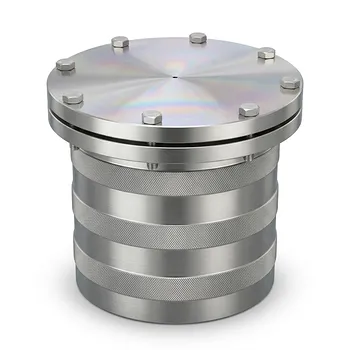
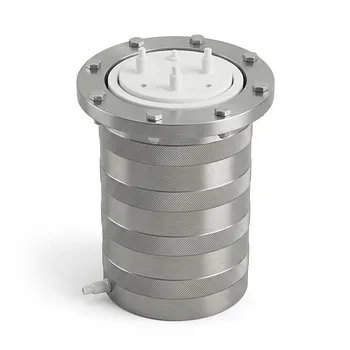
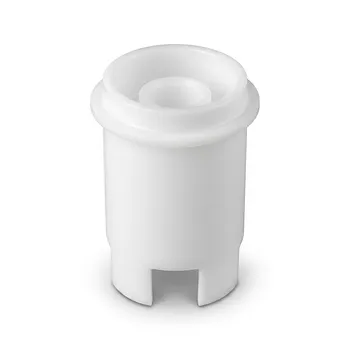
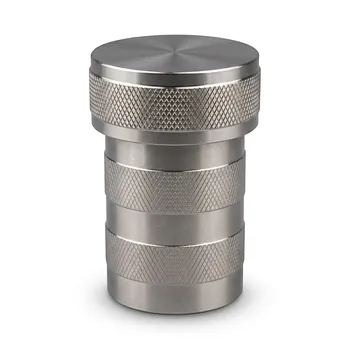
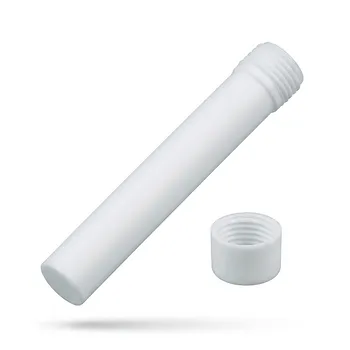
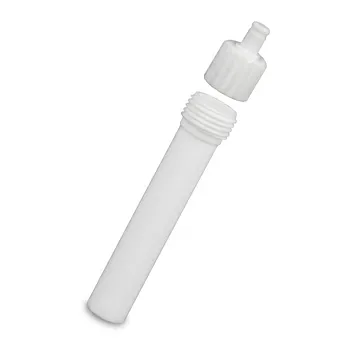
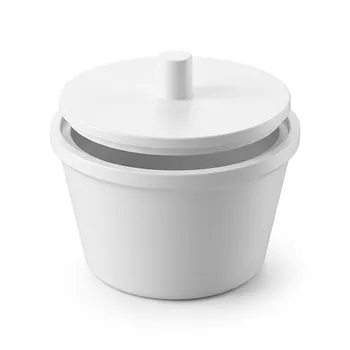
The use of a PTFE-lined high-pressure autoclave is critical for maintaining the chemical purity and structural integrity of MIL-53(Al)@BaTiO3 composites during hydrothermal synthesis. This equipment provides a chemically inert, high-pressure environment at temperatures like 180 °C, preventing aggressive reagents such as sodium hydroxide (NaOH) and acetic acid from corroding the reactor walls while ensuring no metallic contaminants interfere with the crystallization process.
Core Takeaway: A PTFE-lined autoclave acts as a protective barrier that enables high-temperature hydrothermal reactions without compromising material purity or equipment safety. It is the essential vessel for facilitating the nucleation and growth of complex metal-organic framework (MOF) composites in corrosive environments.
Ensuring Chemical Stability and Purity
Protection Against Aggressive Reagents
The preparation of MIL-53(Al)@BaTiO3 often involves highly corrosive substances like sodium hydroxide and acetic acid. The PTFE (Polytetrafluoroethylene) liner is chosen for its exceptional chemical inertness, which shields the stainless steel outer shell of the autoclave from acidic or basic erosion.
Prevention of Metallic Contamination
If the reaction mixture were to come into direct contact with the stainless steel walls, metal ions such as iron, nickel, or chromium could leach into the solution. The PTFE liner ensures that the resulting composite maintains high purity and a clear single-crystal phase by eliminating these unwanted impurities.
Maintenance of High Crystallinity
By providing a stable and uncontaminated environment, the PTFE liner allows the precursors to assemble precisely into the intended framework. This is vital for achieving the high crystallinity required for the MIL-53(Al) structure to function effectively within the composite.
Mechanical and Structural Facilitation
Withstanding Autogenous Pressure
Hydrothermal synthesis at 180 °C generates significant autogenous pressure within the sealed vessel. While the PTFE liner provides chemical resistance, the stainless steel outer shell provides the mechanical strength necessary to safely contain these high pressures during the reaction.
Enhancing Nucleation and Crystal Growth
The sealed environment allows for precise control over the kinetic energy of the system, which is essential for the nucleation and growth of the MOF structure. This controlled pressure and temperature facilitate the anchoring of MIL-53(Al) onto the BaTiO3 surfaces, creating stable heterojunctions.
Improving Material Recovery
PTFE is characterized by extremely low surface energy and non-stick properties. This prevents the synthesized microcrystals from adhering to the internal walls of the vessel, which maximizes the yield and simplifies the collection of the final powder sediment.
Understanding the Trade-offs and Limitations
Temperature Constraints
While PTFE is highly resistant to chemicals, it has a functional temperature limit, typically around 250 °C to 260 °C. Exceeding these temperatures can cause the liner to soften, deform, or release toxic vapors, potentially compromising the experiment and the equipment.
Pressure Sensitivity and Sealing
The effectiveness of the autoclave depends on a perfect seal between the PTFE liner, its lid, and the stainless steel cap. Frequent use at high temperatures can lead to deformation of the PTFE, which may result in pressure leaks and unsuccessful synthesis runs.
Thermal Lag Considerations
PTFE is a poor thermal conductor compared to metal. This creates a thermal lag between the oven temperature and the internal reaction temperature, requiring researchers to carefully calibrate heating times to ensure the precursors reach the necessary 180 °C.
How to Apply This to Your Synthesis Goals
To achieve the best results when preparing MIL-53(Al)@BaTiO3 or similar MOF composites, consider your specific experimental priorities:
- If your primary focus is material purity: Ensure your PTFE liners are thoroughly cleaned with dilute acid and deionized water between runs to remove any residual nucleation sites or contaminants.
- If your primary focus is high-yield production: Leverage the non-stick properties of the liner by using a mechanical scraper or sonication to recover the maximum amount of precipitate from the vessel walls.
- If your primary focus is equipment longevity: Avoid rapid cooling of the autoclave; allow it to cool naturally to room temperature to prevent the PTFE liner from warping or cracking due to thermal shock.
The PTFE-lined autoclave remains the gold standard for MOF synthesis because it perfectly balances the need for chemical isolation with the mechanical requirements of high-pressure hydrothermal processing.
Summary Table:
| Key Feature | Role in MIL-53(Al)@BaTiO3 Synthesis | Advantage of PTFE/PFA |
|---|---|---|
| Chemical Inertness | Protects against NaOH and acetic acid corrosion | Prevents liner degradation |
| Contamination Shield | Prevents metallic ions (Fe, Ni, Cr) from leaching | Ensures high material purity |
| Non-Stick Surface | Facilitates easy recovery of microcrystal sediment | Maximizes powder yield |
| Pressure Resistance | Supports autogenous pressure at 180 °C | Safe hydrothermal environment |
| Structural Control | Enables stable MOF-ferroelectric heterojunctions | Precision crystallization |
Elevate Your Synthesis Precision with KINTEK Fluoropolymer Solutions
Achieving high-purity MIL-53(Al)@BaTiO3 composites requires equipment that can withstand aggressive chemistry without compromise. KINTEK specializes in high-performance fluoropolymer laboratory supplies designed for the most demanding hydrothermal and trace analysis applications.
From everyday basic labware like beakers, crucibles, and reagent bottles to specialized hydrothermal synthesis liners, microwave digestion vessels, and custom electrochemical cells, we provide the tools you need for success. Our product range extends to high-purity fluid transfer components (tubing, valves, fittings) and essential consumables (O-rings, stir bars, septa), all crafted from premium PTFE and PFA.
Why choose KINTEK?
- Custom Fabrication: End-to-end CNC machining for bespoke laboratory setups and complex non-standard parts.
- Absolute Purity: Focused exclusively on high-performance fluoropolymers to eliminate contamination.
- Versatile Support: From high-volume standard orders to specialized research apparatus.
Don't let equipment corrosion or contamination stall your research. Contact KINTEK today to discover how our custom-engineered fluoropolymer solutions can enhance your laboratory's efficiency and results!
References
- Mustafa Soylak, Furkan Uzcan. Dispersive micro solid phase extraction of cadmium on MIL-53(Al)@BaTiO3 nanocomposite from seafood samples. DOI: 10.55730/1300-0527.3733
This article is also based on technical information from Kintek Knowledge Base .
Related Products
- PTFE Lined High Pressure Digestion Vessel 50ml High Temperature Hydrothermal Synthesis Tank
- Custom TFM Reaction Vessel with Stainless Steel Jacket and PTFE Inner Cup for High Corrosion Resistance
- High Pressure Custom TFM Reactor Stainless Steel Outer Vessel PTFE Inner Cup for Corrosive Synthesis
- High Pressure PTFE Digestion Vessel Inner Cup Holder Custom Corrosion Resistant Low Background Teflon
- High Temperature Corrosion Resistant Hydrothermal Synthesis Reactor with TFM Inner Liner and Straight Cylinder Design
People Also Ask
- What are the benefits of using a PTFE-lined vessel for carbon-sulfur cathode treatment? Maximize Purity & Performance
- Why are PTFE-lined pressure digestion vessels required for the preparation of Ag/CeO2 catalysts? Purity & Performance
- What is the function of high-pressure PTFE digestion vessels in mineral analysis? Optimize Sample Mineralization
- What safety features are typically incorporated into high-pressure PTFE digestion vessel designs? Ensure Lab Safety
- What is the function of PTFE lined high-pressure vessels in g-C3N4 synthesis? Achieve High-Purity Material Growth