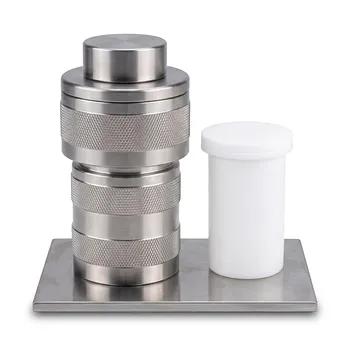
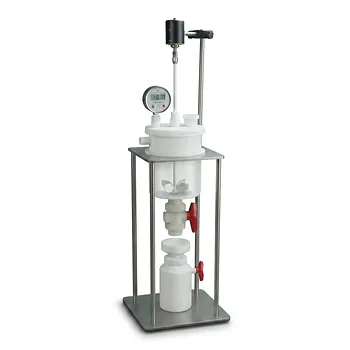
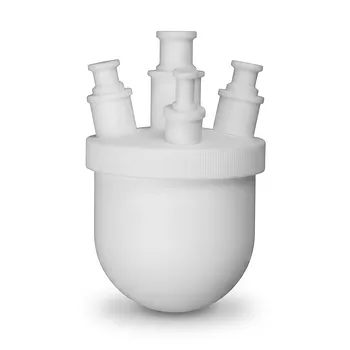
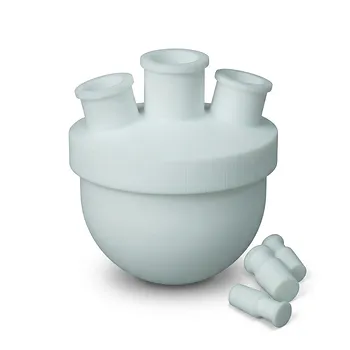
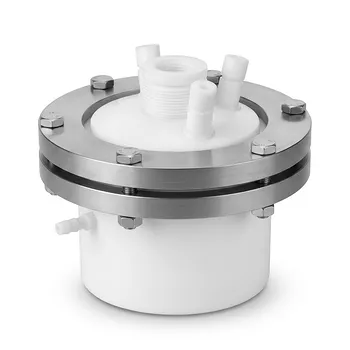
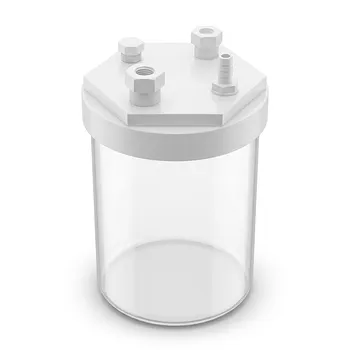
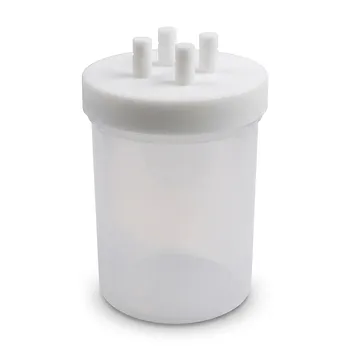
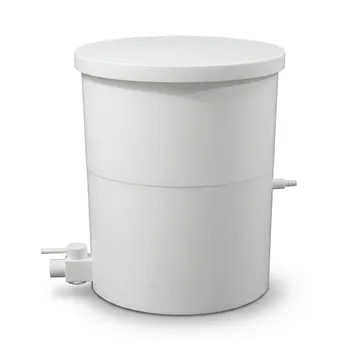
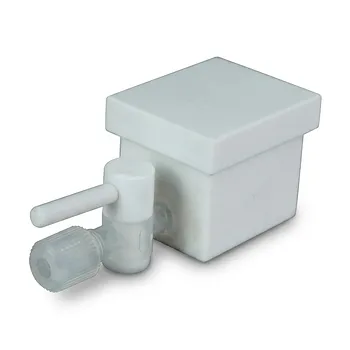
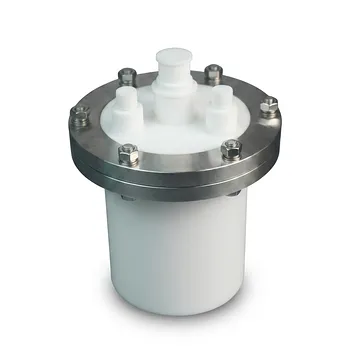
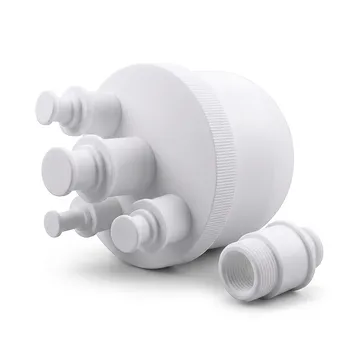
The integration of a hydrothermal reaction vessel with X-ray total scattering equipment is essential for capturing the complete structural evolution of polyoxometalates (POMs) in real-time. This specialized setup allows researchers to maintain the high-pressure and high-temperature conditions necessary for synthesis while simultaneously collecting both Bragg diffraction and diffuse scattering data. By enabling the derivation of the Pair Distribution Function (PDF), the vessel makes it possible to observe the precise moment dissolved molecules transform into solid crystal nuclei.
The hydrothermal reaction vessel serves as a transparent "chemical reactor" that allows X-rays to probe the internal state of a reaction without disturbing the environment. Its primary significance lies in its ability to facilitate the collection of total scattering data, which is the only way to map the atomic-scale progression from amorphous solution clusters to ordered crystalline solids.
Bridging the Gap Between Solution and Solid
Capturing the Full Scattering Spectrum
Traditional X-ray diffraction focuses on Bragg peaks, which only reveal information about well-ordered, periodic crystal structures. The hydrothermal vessel, when paired with total scattering equipment, allows for the collection of diffuse scattering data, which contains the structural signature of disordered or amorphous materials.
Deriving the Pair Distribution Function (PDF)
The vessel provides a stable environment for collecting the high-quality data needed to perform a Fourier transform, resulting in the Pair Distribution Function. This function is a physical map of atomic distances, allowing researchers to see how far apart atoms are, regardless of whether the sample is a liquid, a gel, or a solid crystal.
Monitoring Short-Range and Long-Range Order
Because the vessel supports total scattering, researchers can simultaneously track short-range atomic distances (within a single POM cluster) and long-range periodicity (the arrangement of clusters into a crystal lattice). This dual perspective is critical for understanding how complex inorganic molecules organize themselves into larger structures.
Visualizing the Atomic-Scale Progression
Tracking Amorphous Nanoclusters
In the early stages of a reaction, polyoxometalates often exist as dissolved, disordered nanoclusters that do not produce traditional diffraction patterns. The hydrothermal vessel allows these precursors to be monitored in situ, providing a "fingerprint" of the clusters before they begin to orient into a solid phase.
Identifying the Nucleation Point
By using the vessel for in-situ monitoring, scientists can pinpoint the exact transition from a homogeneous solution to the birth of solid crystal nuclei. This allows for the study of nucleation kinetics, helping to determine how temperature and pressure influence the final architecture of the polyoxometalate.
Observing Structural Intermediate Phases
Many chemical reactions involve short-lived intermediate phases that disappear once the reaction is complete. The hydrothermal vessel enables continuous monitoring, ensuring that these transient structures are captured and characterized rather than missed by post-synthesis analysis.
Understanding the Trade-offs and Challenges
Vessel Material Interference
The walls of the hydrothermal vessel must be strong enough to withstand high pressures but thin or "transparent" enough to let X-rays pass through without excessive absorption. Choosing the right material (such as quartz or specialized alloys) is a constant balance between safety and data signal-to-noise ratio.
Background Noise in Total Scattering
Because total scattering captures all interactions, including those from the solvent and the vessel itself, the background subtraction process becomes highly complex. Any slight movement or change in the vessel's position during the hydrothermal reaction can introduce errors into the PDF derivation.
Thermal and Pressure Gradients
Maintaining a perfectly uniform temperature inside the vessel is difficult, and thermal gradients can lead to non-uniform crystallization. This can result in data that represents an average of several different reaction states rather than a single, clean transition point.
How to Apply This to Your Research
If you are planning to use in-situ X-ray total scattering to study molecular assembly, your approach should be dictated by your specific structural goals.
- If your primary focus is identifying precursor clusters: Prioritize a vessel design that minimizes background scattering to ensure the weak signals from amorphous nanoclusters are not lost in the noise.
- If your primary focus is the kinetics of crystallization: Use a vessel that allows for rapid temperature ramping and precise thermal control to accurately time the transition from solution to solid.
- If your primary focus is solving unknown crystal structures: Ensure your setup is optimized for high-Q range data collection, which provides the high-resolution PDF peaks necessary for accurate structural modeling.
By leveraging a hydrothermal vessel in this way, you move beyond simply seeing the "start" and "end" of a reaction, gaining the power to influence and control the pathway of molecular synthesis.
Summary Table:
| Feature | Role in X-ray Total Scattering | Structural Insight Provided |
|---|---|---|
| Total Scattering Integration | Collects both Bragg and diffuse data | Maps the full transition from amorphous clusters to solids |
| PDF Derivation | Provides a stable HT/HP environment | Visualizes precise atomic distances via Pair Distribution Function |
| In-Situ Monitoring | Enables continuous real-time data capture | Identifies transient intermediates and the exact nucleation point |
| Vessel Transparency | Minimizes X-ray absorption | Ensures high signal-to-noise ratio for nanocluster detection |
Elevate Your Research with KINTEK’s Precision Fluoropolymer Solutions
To achieve accurate in-situ monitoring, your hardware must withstand extreme conditions without compromising data integrity. KINTEK specializes in high-performance PTFE and PFA laboratory supplies, specifically designed for sensitive analytical environments.
Whether you need hydrothermal synthesis liners, microwave digestion vessels, or bespoke custom CNC-machined parts for specialized reaction setups, our end-to-end fabrication ensures absolute precision. From high-purity trace analysis tools to complex fluid transfer components, we provide the durable, non-reactive equipment necessary for advanced molecular synthesis.
Ready to optimize your hydrothermal reactor setup? Contact us today to discuss how our expertise in high-performance fluoropolymers can support your next breakthrough.
References
- Laura S. Junkers, Carles Bó. Uncovering Polyoxometalate Speciation in Hydrothermal Systems by Combining Computational Simulation with X-ray Total Scattering. DOI: 10.1021/jacs.5c04696
This article is also based on technical information from Kintek Knowledge Base .
Related Products
- PTFE Lined High Pressure Digestion Vessel 50ml High Temperature Hydrothermal Synthesis Tank
- PTFE Hydrofluoric Acid Dilutor and Corrosion Resistant Reaction Vessel with Flange Sealing White PTFE Raw Material Storage Barrel
- Custom TFM Reaction Vessel with Stainless Steel Jacket and PTFE Inner Cup for High Corrosion Resistance
- PTFE 10L Reaction Vessel with Stirring Paddle Customizable Corrosion Resistant High Temperature Reactor for Biopharmaceutical and Chemical Processing
- Customizable PTFE Reaction Vessel with Electric Stirring Paddle and Buchner Funnel Vacuum Filtration System
People Also Ask
- What are the benefits of using a PTFE-lined vessel for carbon-sulfur cathode treatment? Maximize Purity & Performance
- Why are PTFE-lined pressure digestion vessels required for the preparation of Ag/CeO2 catalysts? Purity & Performance
- What safety features are typically incorporated into high-pressure PTFE digestion vessel designs? Ensure Lab Safety
- What is the function of PTFE lined high-pressure vessels in g-C3N4 synthesis? Achieve High-Purity Material Growth
- Role of High-Pressure Digestion Tanks in Perovskite Synthesis: Achieve Superior Stability and Latent Heat