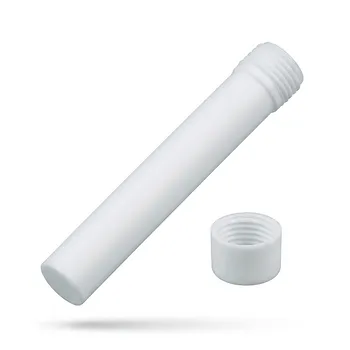
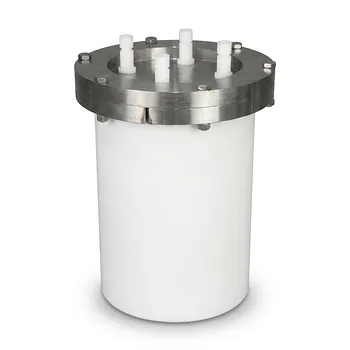
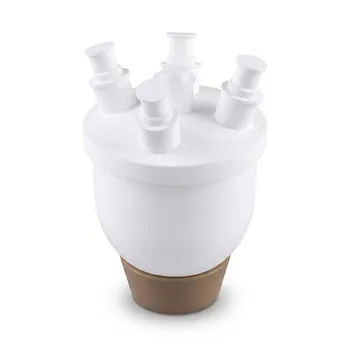
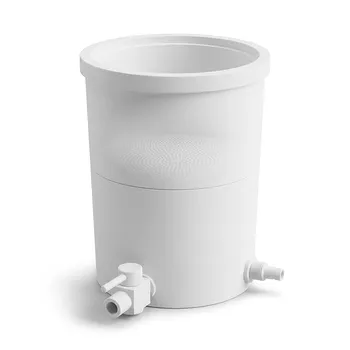
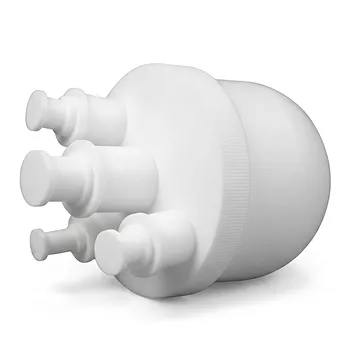
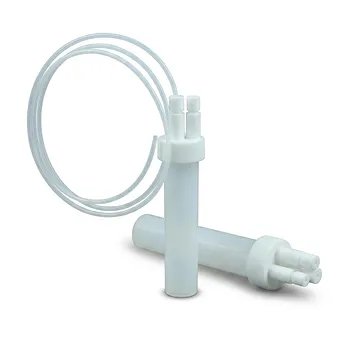
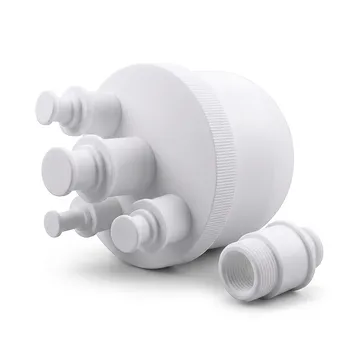
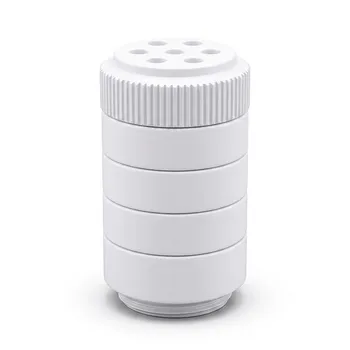
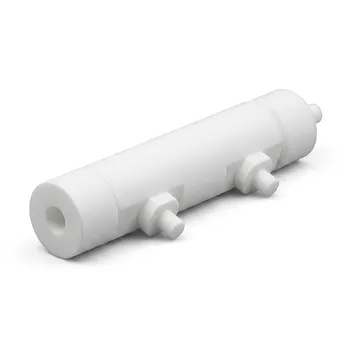
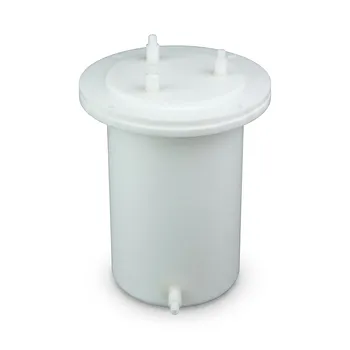
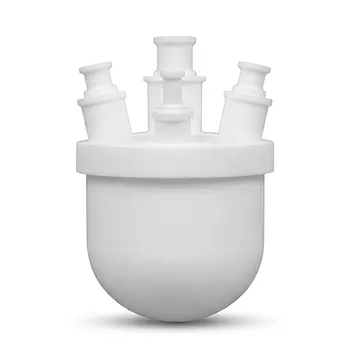
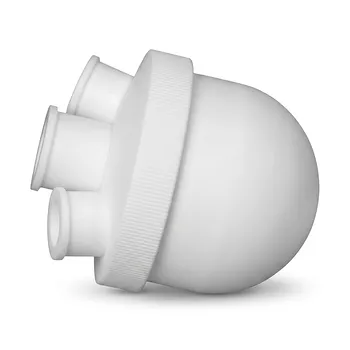
The temperature and pressure resistance of reaction liners are the fundamental safeguards that enable the rapid etching of MXene nanosheets. These liners, typically made of high-strength PTFE, provide a stable and sealed environment capable of withstanding the exothermic energy and internal pressure generated during the ammonium fluoride (NH4F) reaction. Without this resistance, the vessel would succumb to deformation or leakage, leading to inconsistent exfoliation and compromised material quality.
High-strength reaction liners act as the essential mechanical barrier that stabilizes the volatile kinetics of MXene synthesis. Their ability to resist thermal and barometric stress ensures process safety while maintaining the precise conditions necessary for high-quality nanosheet exfoliation.
The Role of Mechanical Integrity in Chemical Kinetics
Managing Exothermic Thermal Spikes
The NH4F rapid etching process is inherently exothermic, meaning it releases significant heat as the chemical reaction progresses. Resistant liners prevent the reaction vessel from warping or failing when exposed to these sudden, intense temperature increases. By maintaining structural integrity, the liner ensures that the heat is managed within the controlled environment of the reactor.
Enabling High-Pressure Acceleration
Specific pressures are often required to accelerate the kinetic processes that drive the etching of precursor materials. A pressure-resistant liner allows the system to reach and maintain these critical levels without the risk of rupture. This pressurized environment is vital for ensuring the etching solution penetrates the precursor material effectively.
Impact on MXene Quality and Consistency
Ensuring Uniform Nanosheet Exfoliation
Consistent pressure and temperature are mandatory for the efficient and uniform separation of MXene layers. Structural stability in the liner prevents fluctuations in the internal environment that could lead to incomplete or uneven etching. This stability results in a more predictable and high-quality yield of exfoliated nanosheets.
Optimizing Surface Chemistry and Porosity
Stable, high-pressure environments facilitate better solute diffusion and recombination during the synthesis process. This precision allows for a more uniform distribution of active functional groups on the MXene surface. Enhanced control over these variables directly improves the specific surface area (SSA) and pore structure, which is critical for applications like organic wastewater treatment.
Understanding the Trade-offs and Limitations
The Thermal Ceiling of PTFE
While high-strength PTFE is the industry standard, it has a specific thermal limit that must not be exceeded. Operating near or beyond these limits can cause the liner to soften, potentially leading to vessel failure or chemical contamination. Researchers must balance the desire for rapid kinetics with the physical limitations of the liner material.
Cost Versus Safety and Yield
High-performance liners represent a higher initial investment compared to standard laboratory glassware. However, using inferior materials increases the risk of vessel deformation, which can ruin expensive precursor batches. Investing in high-resistance liners is a trade-off that favors long-term consistency and laboratory safety over short-term cost savings.
How to Optimize Your Etching Environment
Selecting the appropriate liner depends on the specific kinetic requirements and safety parameters of your MXene production goal.
- If your primary focus is process safety during rapid reactions: Prioritize high-strength PTFE liners with reinforced wall thickness to withstand unexpected exothermic pressure spikes.
- If your primary focus is maximizing specific surface area (SSA): Utilize liners that support precise pressure control to facilitate uniform functional group distribution and optimized pore structures.
By prioritizing the structural resilience of your reaction environment, you ensure both the safety of the laboratory and the electrochemical performance of the resulting MXene composites.
Summary Table:
| Key Feature | Role in NH4F Etching | Impact on MXene Quality |
|---|---|---|
| Temperature Resistance | Manages intense exothermic thermal spikes | Prevents vessel warping and chemical contamination |
| Pressure Resistance | Enables high-pressure kinetic acceleration | Ensures deep etchant penetration and uniform layers |
| Structural Integrity | Maintains a stable, sealed environment | Optimizes specific surface area (SSA) and porosity |
| Material (PTFE) | Provides high-strength chemical inertness | Facilitates consistent, high-purity nanosheet yield |
Elevate Your MXene Synthesis with KINTEK’s High-Performance Fluoropolymer Solutions
At KINTEK, we understand that the success of NH4F rapid etching hinges on the absolute reliability of your reaction environment. We manufacture virtually all imaginable laboratory supplies crafted from premium PTFE and PFA, specifically designed to withstand the extreme thermal and barometric stresses of advanced material synthesis.
Whether you require everyday basic labware (beakers, crucibles, reagent bottles), high-purity trace analysis instruments, or specialized hydrothermal synthesis liners and microwave digestion vessels, our products provide the mechanical integrity your research demands. Our expertise extends to comprehensive fluid transfer components (tubing, valves), sample prep tools, and advanced derivative apparatus like custom electrochemical cells and microchannel reactors.
Why choose KINTEK?
- Precision Engineering: Backed by end-to-end custom CNC fabrication for complex, non-standard machined parts.
- Material Focus: An exclusive and absolute focus on high-performance fluoropolymers for maximum chemical resistance.
- Scalability: We deliver everything from bespoke laboratory setups to high-volume industrial orders.
Don't let equipment limitations compromise your material quality. Contact our experts today to secure the high-performance tools your lab needs for consistent, high-quality MXene production!
References
- Hanchen Xu, Li Song. Halogen Ion‐Mediated Hydrothermal Synthesis of Diverse MXenes with Tailored Heterostructures (Adv. Mater. 40/2025). DOI: 10.1002/adma.70713
This article is also based on technical information from Kintek Knowledge Base .
Related Products
- High Purity TFM Microwave Digestion Vessels PTFE Acid Evaporation Liners Domestic GT-400 Equivalent Laboratory Reaction Containers
- PTFE Hydrofluoric Acid Dilutor and Corrosion Resistant Reaction Vessel with Flange Sealing White PTFE Raw Material Storage Barrel
- High Performance Customizable PTFE Reaction Vessel and Corrosion Resistant Polytetrafluoroethylene Flask for Chemical Laboratory Use
- Large Scale PTFE Double Layer Reaction Tank with Integrated Filter Plate for Chemical Processing
- Custom TFM Reaction Vessel with Stainless Steel Jacket and PTFE Inner Cup for High Corrosion Resistance
People Also Ask
- How does the dielectric property of PTFE benefit microwave-assisted digestion? Unlock Rapid and Uniform Sample Heating
- What are the advantages of using microwave digestion vessels for environmental analysis? Boost speed and sample accuracy.
- What safety features are commonly integrated into microwave digestion vessels? Ensuring High-Pressure Laboratory Safety
- What are the advantages of using microwave digestion vessels? Optimize EG@MO synthesis with superior thermal control.
- How do microwave digestion vessels support pharmaceutical elemental impurity testing? Achieve Precise USP Compliance