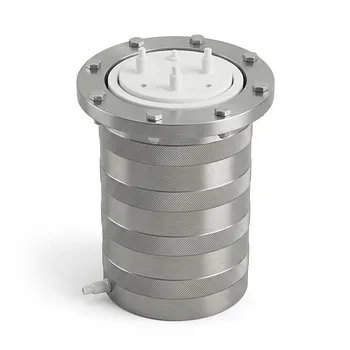
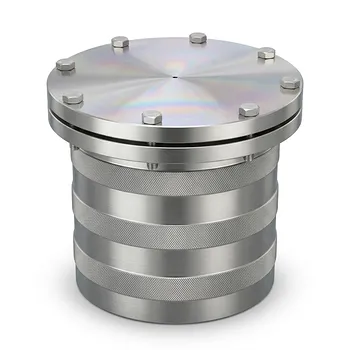
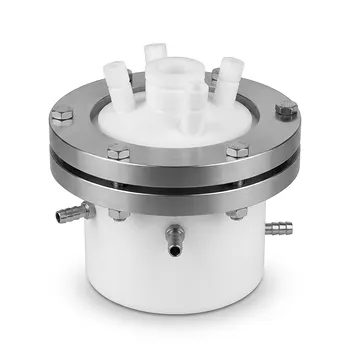
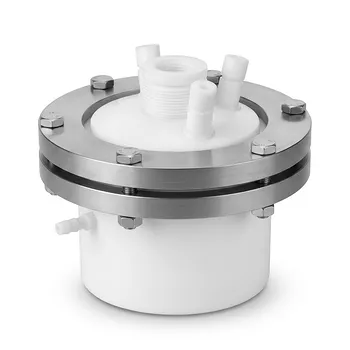
High-pressure stainless steel hydrothermal reactors serve as the fundamental vessel for precision synthesis, creating the extreme physical environment required to transform ferric ion precursors into structured hematite nanowires. By maintaining a sealed system at temperatures often exceeding the solvent's boiling point, these reactors facilitate the thermodynamically stable nucleation and oriented growth necessary to produce one-dimensional nanostructures with high specific surface areas.
The core role of the hydrothermal reactor is to provide a controlled, high-energy environment that increases precursor solubility and dictates the crystallographic growth direction of hematite. This process transforms amorphous precursors into highly crystalline nanowires that would be impossible to synthesize under ambient conditions.
Mechanisms of Morphological Control
Inducing One-Dimensional Growth
The reactor allows the reaction to occur under conditions that favor growth along specific crystallographic directions. By controlling the internal energy of the system, the reactor ensures that hematite develops into one-dimensional nanowires rather than bulk particles.
Thermodynamically Stable Nucleation
High-pressure environments lower the energy barrier for the nucleation of ferric ions. This ensures that the formation of crystal seeds is uniform throughout the precursor solution, leading to a more consistent final product.
Achieving High Specific Surface Area
Because the reactor maintains precise control over the growth rate, it enables the synthesis of nanowires with high specific surface areas. This characteristic is vital for applications in catalysis and sensing where surface interaction is the primary driver of performance.
Enhancing Chemical Reactivity and Solubility
Reaching Subcritical and Supercritical States
The sealed nature of the stainless steel reactor allows solvents to reach subcritical or supercritical states. In these states, the solvent's ability to dissolve precursor powders increases significantly, providing a steady supply of ions for crystal growth.
Facilitating Full Recrystallization
The high-pressure environment promotes the dissolution and recrystallization of solutes. This process allows initial amorphous products to reorganize into highly crystalline structures with superior structural integrity and stoichiometry.
Managing Reaction Kinetics
By precisely modulating temperature—typically between 100°C and 200°C—the reactor controls the speed of the chemical reaction. This prevents the "clumping" of nanoparticles and ensures that the self-assembly into nanowires remains orderly.
Understanding the Trade-offs and Risks
Corrosion and Purity Challenges
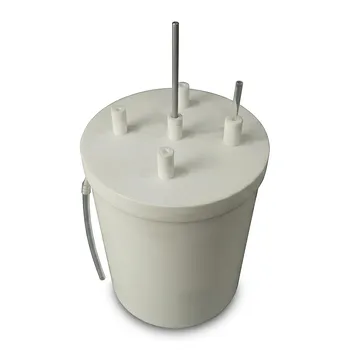
While the stainless steel outer shell provides the necessary strength to withstand high pressures, it is susceptible to corrosion from acidic precursors. To maintain product purity and protect the reactor, researchers must use PTFE (polytetrafluoroethylene) or PFA liners.
Thermal Lag and Pressure Spikes
Stainless steel has significant thermal mass, which can lead to thermal lag during heating and cooling. Rapid temperature changes can cause unpredictable pressure spikes, potentially leading to safety hazards or variations in the nanowire morphology.
Material Limitations
Standard fluoropolymer liners like PTFE have a maximum operating temperature, often around 220°C. Exceeding these limits can lead to liner deformation or the release of contaminants, which compromises the integrity of the hematite synthesis.
How to Optimize Your Synthesis Strategy
To achieve the best results when using hydrothermal reactors for hematite synthesis, align your parameters with your specific material requirements.
- If your primary focus is High Crystallinity: Operate the reactor at the higher end of the temperature scale (near 200°C) for an extended duration to ensure full recrystallization and phase transition from amorphous to hematite.
- If your primary focus is Uniform Nanowire Length: Prioritize precise pressure control and use a microwave-assisted reactor if available, as this promotes rapid and uniform nucleation throughout the volume.
- If your primary focus is Chemical Purity: Always utilize a chemically inert PTFE or PFA liner and ensure the stainless steel seals are inspected for wear to prevent metallic contamination from the reactor walls.
The high-pressure hydrothermal reactor is the essential engine that drives the transition from liquid precursors to sophisticated, high-performance hematite nanowires.
Summary Table:
| Key Feature of Reactor | Impact on Hematite Nanowire Synthesis |
|---|---|
| High Pressure | Enhances precursor solubility and achieves subcritical solvent states |
| Precise Temperature | Modulates reaction kinetics and dictates 1D crystallographic growth |
| Sealed Environment | Lowers the energy barrier for uniform, stable nucleation |
| Fluoropolymer Liners | Prevents metallic corrosion and maintains high chemical purity |
| Thermal Stability | Facilitates full recrystallization of amorphous precursors into crystalline structures |
Elevate Your Research Precision with KINTEK Fluoropolymer Solutions
Achieving the perfect hematite nanowire morphology requires equipment that stands up to extreme chemical and thermal demands. KINTEK specializes in high-performance laboratory supplies crafted from PTFE and PFA, ensuring your synthesis remains pure and controlled.
Whether you need standard hydrothermal synthesis liners, microwave digestion vessels, and high-purity trace analysis instruments, or require complex non-standard machined parts via our end-to-end custom CNC fabrication, we deliver everything from basic labware (beakers, tubes, and fittings) to advanced reaction apparatus like electrochemical cells and microchannel reactors.
Don't let corrosion or contamination compromise your results. Partner with KINTEK for bespoke laboratory setups designed for the most demanding material science applications.
Contact our expert team today to discuss your custom requirements!
References
- Francisco Javier Fernández-Alonso, C. T. Sousa. Exploring the interplay of Ti-Sn co-doping in photoelectrochemical water splitting of hematite nanowires. DOI: 10.20517/energymater.2024.108
This article is also based on technical information from Kintek Knowledge Base .
Related Products
- High Pressure Custom TFM Reactor Stainless Steel Outer Vessel PTFE Inner Cup for Corrosive Synthesis
- High Temperature Corrosion Resistant Hydrothermal Synthesis Reactor with TFM Inner Liner and Straight Cylinder Design
- Custom TFM Reaction Vessel with Stainless Steel Jacket and PTFE Inner Cup for High Corrosion Resistance
- PTFE Distillation Condensation Apparatus High Temperature Hydrofluoric Acid Resistant Fluorination Reaction Flask
- PTFE 10L Reaction Vessel with Stirring Paddle Customizable Corrosion Resistant High Temperature Reactor for Biopharmaceutical and Chemical Processing
People Also Ask
- Why is a PTFE-lined reactor required for Mn2O3 synthesis? Achieve High Purity & Corrosion Resistance
- What is the technical value of 180 bar pressure for MgO nanostructures? Unlock Superior Crystallinity and Morphology
- What are the technical advantages of using high-pressure PTFE reaction vessels during metal digestion? Expert Insights.
- How does the regulation of initial pressure within a high-pressure reaction system affect the production of MIL-100(Fe)?
- Why is a high-pressure reactor necessary for the esterification reaction between oleic acid and methanol at 150°C? Guide