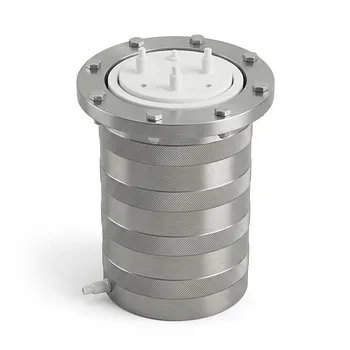
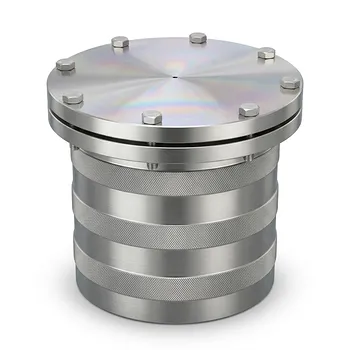
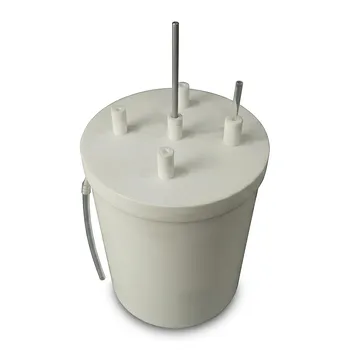
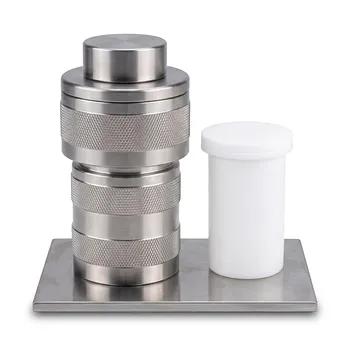
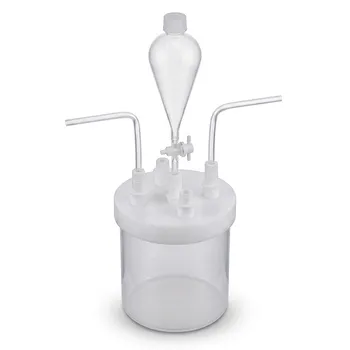
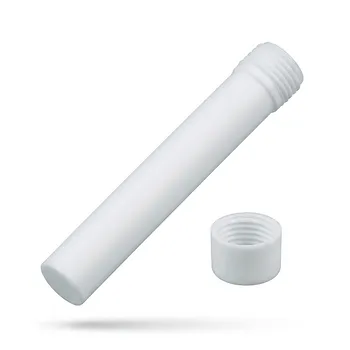
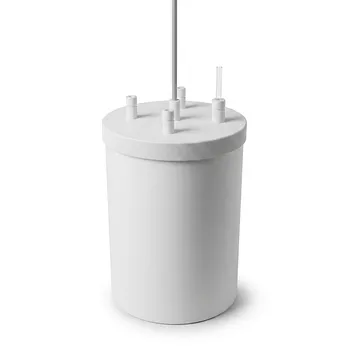
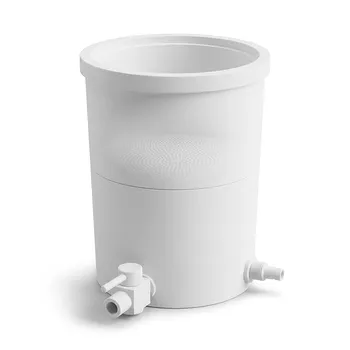
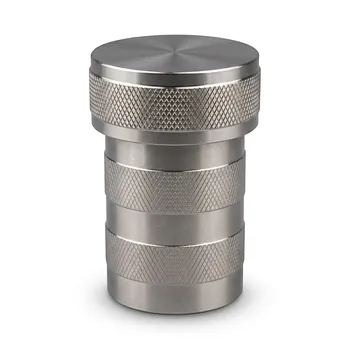
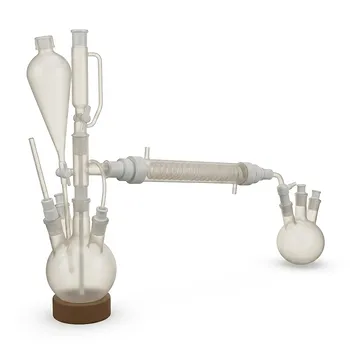
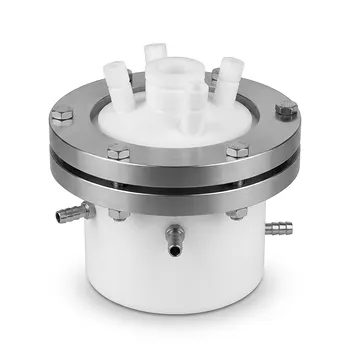
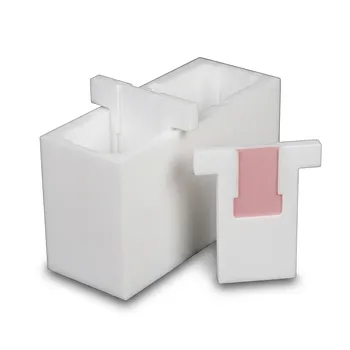
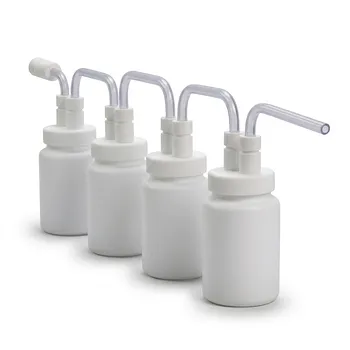
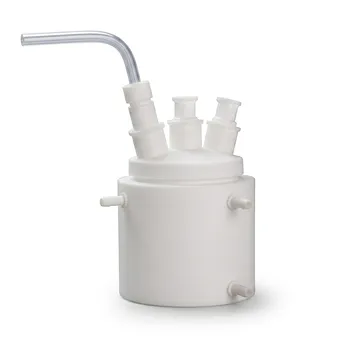
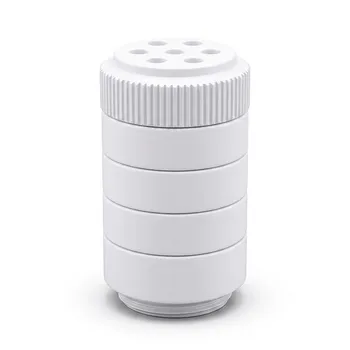
High-pressure reactors equipped with high-performance fluoropolymer liners are the critical hardware foundation for solvothermal MOF synthesis. They provide a chemically inert, sealed environment that enables metal ions and organic ligands to react under subcritical temperatures and pressures without contaminating the product or corroding the equipment. By isolating the reaction mixture from the metal walls of the autoclave, these liners ensure the high purity, structural integrity, and crystallinity required for advanced framework materials.
Core Takeaway: Fluoropolymer-lined reactors solve the dual challenge of containing aggressive chemical environments while maintaining extreme material purity, directly enabling the precise crystal growth necessary for high-quality Metal-Organic Frameworks.
Ensuring Chemical Purity and Structural Integrity
Prevention of Metal Ion Contamination
The primary function of a fluoropolymer liner, such as Polytetrafluoroethylene (PTFE) or Perfluoroalkoxy (PFA), is to provide a barrier between the reaction and the autoclave's steel walls.
During solvothermal synthesis, organic ligands and metal precursors are highly reactive; without a liner, metal ions from the reactor shell could leach into the solution.
This isolation is critical for maintaining the specific stoichiometric ratios and ensuring that the resulting MOF reflects the intended chemical composition and electronic properties.
Facilitating Subcritical Reaction Conditions
High-pressure reactors allow solvents to reach temperatures well above their boiling points, creating a subcritical environment that increases the solubility of precursors.
This elevated energy state facilitates the breaking and reorganization of chemical bonds, which is essential for the formation of complex, highly ordered 3D structures.
The sealed nature of the liner ensures that the pressure generated by the heated solvent is maintained, promoting optimal crystal nucleation and growth.
Protecting Infrastructure and Improving Yield
Resistance to Corrosive Solvents and Reagents
Solvothermal synthesis often employs aggressive solvents like DMF (Dimethylformamide) or DMSO (Dimethyl sulfoxide), sometimes in combination with strong acids or bases.
Fluoropolymer liners exhibit exceptional resistance to these corrosive agents, protecting the external stainless steel autoclave from irreversible structural damage.
This chemical resistance ensures the longevity of the laboratory equipment while preventing the introduction of corrosion by-products into the experimental sample.
Low Surface Energy and Product Recovery
Fluoropolymers possess a low surface energy, creating a "non-stick" environment that prevents MOF crystals from adhering to the container walls.
This property is vital for maximizing the recovery rate of synthesized powders and facilitating the cleaning process between experimental runs.
Furthermore, the non-stick surface can influence crystallization kinetics, often encouraging crystals to form in the bulk solution or on specific submerged substrates rather than encrusting the vessel.
Understanding the Trade-offs
Temperature Limitations
While high-performance fluoropolymers are thermally stable, they have a definitive upper operating limit, typically around 250°C (482°F) to 260°C.
Exceeding these temperatures can cause the liner to soften, deform, or release toxic fluorinated vapors, potentially compromising both the experiment and lab safety.
Thermal Lag and Heat Transfer
Fluoropolymers are thermal insulators compared to the metal shell of the autoclave.
This creates a thermal lag, meaning the internal reaction temperature may take longer to stabilize than the external heating mantle indicates.
Researchers must account for this delay to ensure that the reaction time at the target temperature is accurately recorded for reproducibility.
How to Apply This to Your Project
Choosing the Right Setup for Your Goal
To achieve the best results in MOF synthesis, the reactor configuration must match the specific requirements of your chemical precursors and desired framework characteristics.
- If your primary focus is extreme chemical purity: Use high-purity PFA liners, which offer even lower trace-metal leaching profiles than standard PTFE.
- If your primary focus is maximizing product yield: Prioritize liners with a high-quality, polished interior finish to minimize crystal adhesion and simplify recovery.
- If your primary focus is synthesis at temperatures above 250°C: Move away from fluoropolymer-lined autoclaves and consider specialized glass-lined or noble-metal-lined (gold/platinum) reactors.
By matching the unique properties of fluoropolymer liners to the specific demands of your solvothermal process, you ensure the production of MOFs with superior crystallinity and predictable performance.
Summary Table:
| Feature | Role in MOF Synthesis | Material Advantage |
|---|---|---|
| Chemical Inertness | Prevents metal ion leaching from reactor walls | Ensures high-purity framework composition |
| Corrosion Resistance | Withstands aggressive solvents like DMF and DMSO | Protects autoclave shell and prevents contamination |
| Low Surface Energy | Non-stick surface prevents crystal adhesion | Maximizes product yield and simplifies recovery |
| Thermal Stability | Maintains integrity in subcritical environments | Supports precise nucleation at up to 260°C |
Optimize Your MOF Synthesis with KINTEK High-Performance Fluoropolymers
Achieving perfect crystallinity in Metal-Organic Frameworks requires hardware that eliminates contamination and survives harsh solvothermal conditions. KINTEK specializes in manufacturing a comprehensive range of laboratory supplies crafted exclusively from high-performance PTFE and PFA to meet these exacting standards.
Our product portfolio spans from everyday basic labware (beakers, crucibles, reagent bottles, and digestion tubes) and fluid transfer components (tubing, fittings, valves) to advanced reaction apparatus. We provide specialized hydrothermal synthesis liners, microwave digestion vessels, and custom electrochemical cells designed for durability and purity. Backed by end-to-end custom CNC fabrication, KINTEK is equipped to deliver everything from high-volume standard orders to complex, non-standard machined parts tailored to your specific research setup.
Ready to enhance your lab's efficiency and material purity? Contact KINTEK today to discuss your custom fluoropolymer requirements!
References
- Christos Argirusis, Georgia Sourkouni. Advances in Metal-Organic Frameworks (MOFs) for Rechargeable Batteries and Fuel Cells. DOI: 10.3390/batteries11050192
This article is also based on technical information from Kintek Knowledge Base .
Related Products
- High Pressure Custom TFM Reactor Stainless Steel Outer Vessel PTFE Inner Cup for Corrosive Synthesis
- Custom TFM Reaction Vessel with Stainless Steel Jacket and PTFE Inner Cup for High Corrosion Resistance
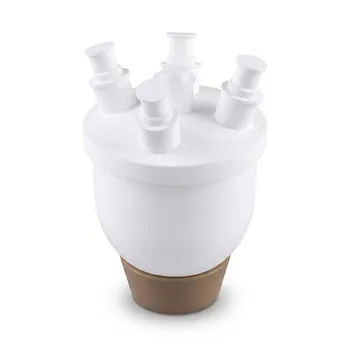
- High Performance Customizable PTFE Reaction Vessel and Corrosion Resistant Polytetrafluoroethylene Flask for Chemical Laboratory Use
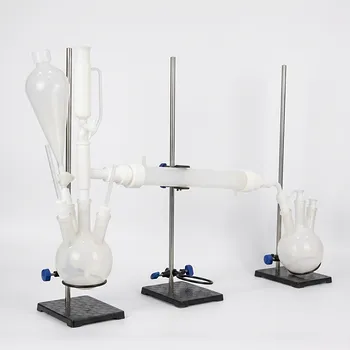
- High Purity PFA Constant Pressure Condensation Reaction System Acid Resistant High Temperature Customizable Teflon Labware
- PTFE 10L Reaction Vessel with Stirring Paddle Customizable Corrosion Resistant High Temperature Reactor for Biopharmaceutical and Chemical Processing
People Also Ask
- Why is a PTFE-lined reactor required for Mn2O3 synthesis? Achieve High Purity & Corrosion Resistance
- What is the technical value of 180 bar pressure for MgO nanostructures? Unlock Superior Crystallinity and Morphology
- What are the technical advantages of using high-pressure PTFE reaction vessels during metal digestion? Expert Insights.
- How does the regulation of initial pressure within a high-pressure reaction system affect the production of MIL-100(Fe)?
- Why is a high-pressure reactor necessary for the esterification reaction between oleic acid and methanol at 150°C? Guide