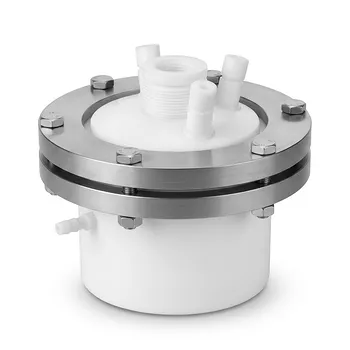
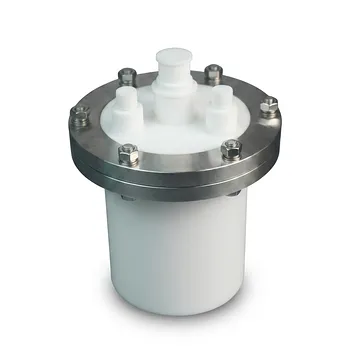
The stainless steel pressure reactor, when paired with PTFE seals, creates a high-pressure, superheated environment that allows solvents to operate well above their atmospheric boiling points. This specific configuration is essential for driving the deep impregnation and chemical coordination of copper precursors into polyacrylonitrile (PAN) polymers at 180 °C, a process that would be impossible in a standard open-vessel setup.
Core Takeaway: The reactor system serves as a dual-purpose tool: the stainless steel provides the mechanical strength to contain high internal pressures, while the PTFE components ensure chemical inertness and a leak-proof seal, together enabling the precise synthesis of high-purity copper-doped catalysts.
Facilitating the Solvothermal Environment
Overcoming Boiling Point Limitations
During the treatment of copper-doped catalysts, solvents like isopropanol and glycerol must be heated to 180 °C to be effective. The sealed stainless steel reactor allows these liquids to remain in a liquid or supercritical state despite exceeding their normal boiling points. This creates the autogenous pressure necessary to force reactants into the microscopic pores of the carbon precursor.
Enhancing Precursor Coordination
The high-temperature, high-pressure environment facilitates the deep impregnation of copper ions into the polyacrylonitrile (PAN) matrix. This intensity is required to ensure strong coordination bonds between the metal and the polymer. Without this controlled pressure, the copper would likely remain on the surface rather than becoming an integrated part of the catalyst structure.
Protecting Material and Equipment Integrity
Providing Chemical Inertness
The PTFE (polytetrafluoroethylene) seals and liners are utilized specifically for their exceptional chemical stability. They prevent the aggressive reaction media from coming into direct contact with the stainless steel walls. This barrier is critical when working with precursors that could otherwise cause pitting or stress corrosion in the metal housing.
Eliminating Metal Contamination
A secondary but vital role of the PTFE barrier is the prevention of leaching. By isolating the reaction mixture, it ensures that no iron, nickel, or chromium from the stainless steel enters the catalyst. This preserves the high purity and structural integrity of the copper-doped carbon, ensuring the resulting material’s performance is not skewed by unintended metal impurities.
Understanding the Trade-offs
Thermal and Pressure Constraints
While highly effective, PTFE has a definitive thermal ceiling, typically around 220 °C to 250 °C, above which it may deform or release toxic vapors. Users must balance the need for high reaction temperatures with the physical limits of the seal to prevent systemic failure or leakage.
Thermal Lag and Gradient Issues
The thick walls of a stainless steel autoclave provide safety but also create thermal inertia. This means the internal temperature may lag significantly behind the furnace or heating jacket setting. Precise synthesis requires an understanding of this delay to ensure the catalysts are treated at the target temperature for the correct duration.
How to Apply This to Your Project
Ensuring the success of a solvothermal synthesis requires matching your hardware capabilities to your chemical requirements.
- If your primary focus is catalyst purity: Always utilize a complete PTFE liner in addition to seals to prevent any contact between the precursors and the stainless steel body.
- If your primary focus is deep impregnation of the polymer: Ensure the reactor is rated for at least twice the expected autogenous pressure to allow for safe operation at the 180 °C threshold.
- If your primary focus is long-term equipment life: Inspect PTFE seals for deformation or "creep" after every high-temperature cycle to prevent solvent leakage that could corrode the reactor threads.
By combining the structural containment of steel with the chemical resistance of PTFE, you create the rigorous conditions necessary for advanced catalyst engineering.
Summary Table:
| Component | Primary Function | Advantage for Catalyst Synthesis |
|---|---|---|
| Stainless Steel Body | Mechanical Containment | Withstands high autogenous pressure at 180°C+ |
| PTFE Seals/Liners | Chemical Isolation | Prevents metal leaching and corrosion (High Purity) |
| Superheated Solvent | Reaction Medium | Enables deep impregnation of metal into polymer matrix |
| Pressure Control | Enhanced Coordination | Forces reactants into microscopic carbon pores |
Elevate Your Solvothermal Synthesis with KINTEK Precision
Achieving deep impregnation and high-purity catalyst coordination requires hardware that never compromises. KINTEK specializes in high-performance fluoropolymer engineering, providing the essential tools for rigorous solvothermal and hydrothermal processes. From PTFE and PFA liners, seals, and gaskets to custom-machined hydrothermal synthesis vessels and reaction apparatus, we ensure your experiments remain contamination-free and pressure-secure.
Whether you need everyday essentials like beakers, centrifuge tubes, and fittings or complex custom CNC-fabricated reaction cells, KINTEK delivers end-to-end solutions tailored to your lab's specific thermal and chemical demands.
Ready to optimize your catalyst engineering? Contact our expert team today to discuss your custom fluoropolymer requirements and high-volume orders.
References
- Arseniy Y. Kalnin, Elena V. Alekseeva. Copper-driven catalyst design for improved oxygen reduction reactions in carbon-based materials. DOI: 10.31300/ctec.25.2023.65-72
This article is also based on technical information from Kintek Knowledge Base .
Related Products
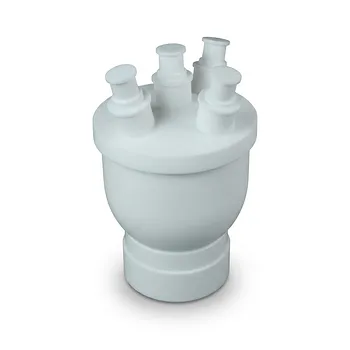
- High Pressure Custom TFM Reactor Stainless Steel Outer Vessel PTFE Inner Cup for Corrosive Synthesis
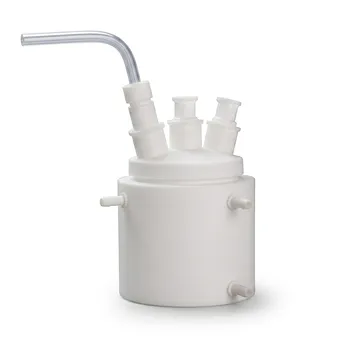
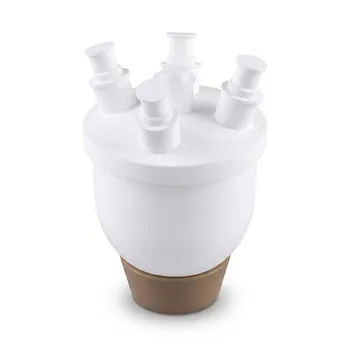
- Custom TFM Reaction Vessel with Stainless Steel Jacket and PTFE Inner Cup for High Corrosion Resistance
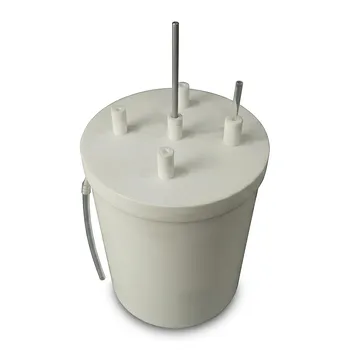
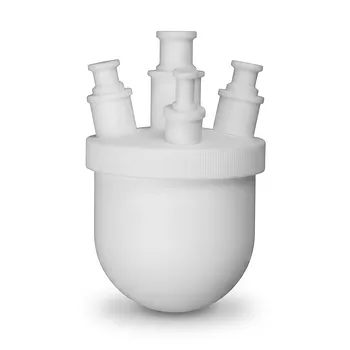
- Custom PTFE Reaction Apparatus Flange Sealed Corrosion Resistant Jacketed Vessel with Stirring Bar and Thermometer Ports
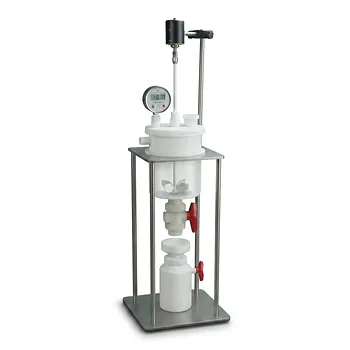
- Custom PTFE Reaction System with Hose Barb Fittings Corrosion Resistant High Sealing 2L 4L Lab Reactor with Separatory Funnel
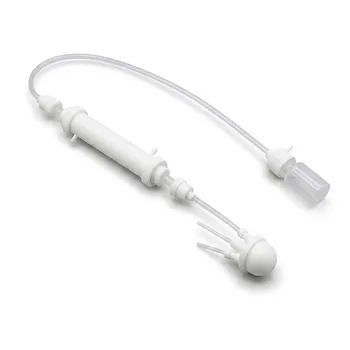
- PTFE Continuous Reaction System Jacketed Constant Pressure Dropping Funnel Corrosion Resistant HF Resistant Customizable
People Also Ask
- Why is a PTFE-lined reactor required for Mn2O3 synthesis? Achieve High Purity & Corrosion Resistance
- What is the technical value of 180 bar pressure for MgO nanostructures? Unlock Superior Crystallinity and Morphology
- What are the technical advantages of using high-pressure PTFE reaction vessels during metal digestion? Expert Insights.
- How does the regulation of initial pressure within a high-pressure reaction system affect the production of MIL-100(Fe)?
- Why is a high-pressure reactor necessary for the esterification reaction between oleic acid and methanol at 150°C? Guide