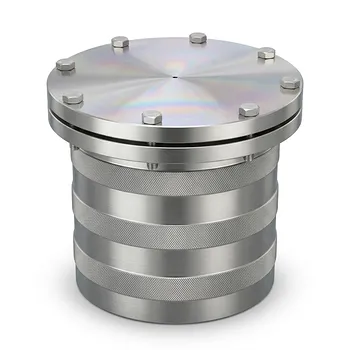
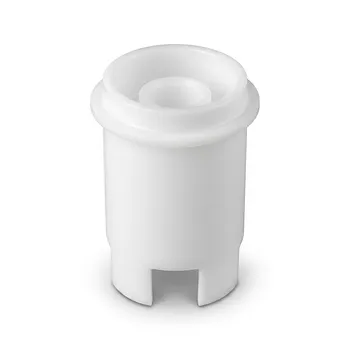
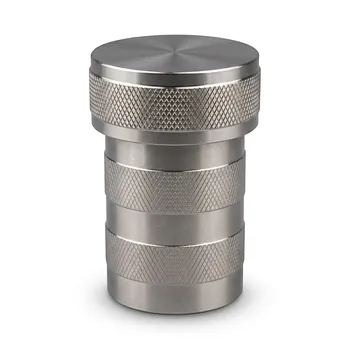
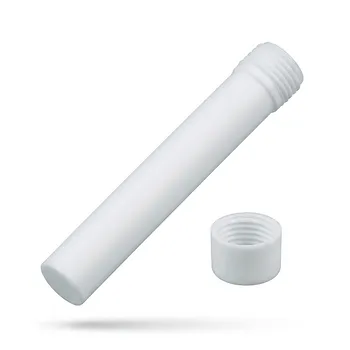
The PTFE-lined high-pressure autoclave serves as the critical reaction vessel for the solvothermal reduction of graphene oxide. It creates a sealed, high-temperature, and high-pressure environment that facilitates the removal of oxygen-containing functional groups while ensuring the resulting reduced graphene oxide (rGO) remains free from metallic contamination. This setup is essential for achieving the chemical and structural restoration necessary to convert graphene oxide into high-quality rGO nanosheets.
The primary role of a PTFE-lined autoclave is to provide a chemically inert, pressurized environment that enables solvents to reach supercritical or near-critical states. This specific environment accelerates the reduction process and protects the purity of the rGO nanosheets by shielding them from the reactive stainless steel vessel walls.
Creating the Solvothermal Environment
High-Pressure Acceleration of Reduction
The sealed nature of the autoclave allows the internal pressure to rise significantly as the solvent is heated. This pressurized environment is vital for the removal of oxygen-containing functional groups (like hydroxyls and carboxyls) from the graphene oxide surface. By forcing the reaction conditions beyond the standard boiling point of the solvent, the autoclave facilitates the restoration of the honeycomb carbon lattice.
Enhanced Solvent Activity
Under high pressure and temperature, organic solvents like DMF, ethanol, or acetonitrile exhibit increased diffusivity and decreased viscosity. This allows the solvents to penetrate the GO layers more effectively, ensuring a uniform reduction across the nanosheets. The autoclave maintains these conditions consistently over long periods, which is necessary for deep reduction.
The Shielding Effect of the PTFE Lining
Preventing Metal Ion Contamination
While the stainless steel outer shell of the autoclave provides the mechanical strength to withstand pressure, it is susceptible to leaching metal ions. The PTFE (Polytetrafluoroethylene) liner acts as a total barrier, preventing the reaction liquid from contacting the metal. This ensures that the rGO produced is of the highest purity, free from iron, nickel, or chromium impurities that could alter its electronic properties.
Corrosion Resistance Against Harsh Reagents
The solvothermal method often involves strong acids, alkalis, or aggressive organic solvents that would corrode standard laboratory equipment. PTFE is chosen for its exceptional chemical inertness, allowing it to withstand concentrated sodium hydroxide or organic ligands at temperatures up to 200°C. This resistance ensures the vessel remains stable and does not introduce degradation products into the synthesis.
Facilitating Product Recovery
The non-stick properties and extremely smooth surface of the PTFE liner are practical advantages during the collection phase. Once the reduction is complete, the synthesized rGO precipitates can be easily recovered from the liner without loss. This surface also prevents the vessel itself from acting as a catalyst, ensuring the reaction reflects the true performance of the intended precursors.
Understanding the Trade-offs
Temperature Limitations
While PTFE is highly inert, it has a definitive thermal ceiling, typically around 250°C to 260°C. Exceeding these temperatures can cause the liner to soften or release toxic fluorinated vapors. For reactions requiring higher temperatures, more expensive liners like PPL (polyphenylene polymers) must be used.
Thermal Expansion Disparity
PTFE has a much higher coefficient of thermal expansion than the stainless steel shell surrounding it. If the autoclave is heated or cooled too rapidly, the liner can deform or crack, potentially allowing corrosive liquids to reach the steel shell. Controlled, programmed cooling is often required to maintain the integrity of both the liner and the synthesized crystals.
Pressure Safety and Fill Ratios
The internal pressure is highly dependent on the filling ratio (the volume of liquid relative to the total volume of the liner). Overfilling the autoclave can lead to dangerous pressure spikes that exceed the safety limits of the stainless steel vessel. Users must precisely calculate the expansion of their specific solvent at the target temperature to avoid equipment failure.
How to Apply This to Your Project
Recommendations Based on Your Goals
- If your primary focus is electronic grade purity: Always use a fresh or deep-cleaned PTFE liner to ensure zero metallic or cross-batch contamination during the reduction.
- If your primary focus is maximizing rGO yield: Optimize the filling ratio (typically 60-80%) to generate the specific internal pressure required to fully strip oxygen groups from the GO.
- If your primary focus is structural stability: Use programmed cooling post-reaction to allow the rGO nanosheets to stabilize without the structural stress of rapid depressurization.
By mastering the controlled environment of the PTFE-lined autoclave, you can achieve the precise chemical restoration required for high-performance graphene applications.
Summary Table:
| Feature | Role in rGO Synthesis | Key Advantage |
|---|---|---|
| PTFE Liner | Total chemical isolation | Prevents metal ion contamination from the steel vessel |
| Pressurized Seal | High-pressure environment | Facilitates removal of oxygen groups and lattice restoration |
| Inert Surface | Resistance to harsh reagents | Withstands strong acids/alkalis at temperatures up to 250°C |
| Non-stick Finish | Easy product recovery | Ensures maximum yield collection of rGO nanosheets |
| Pressure Control | Solvothermal activity | Enables solvents to reach supercritical states for deep reduction |
Optimize Your Nanomaterial Synthesis with KINTEK Expertise
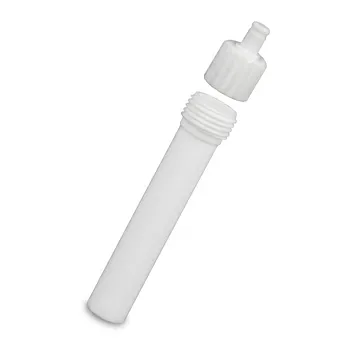
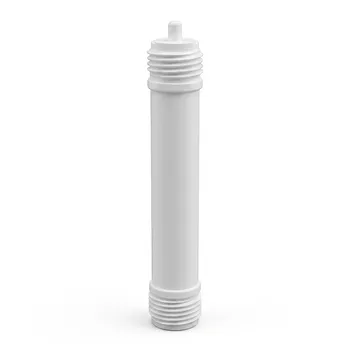
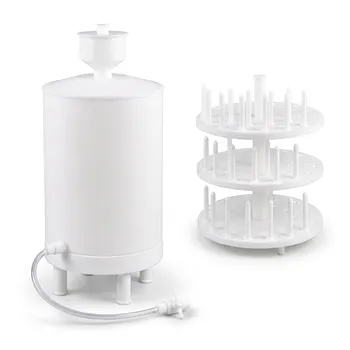
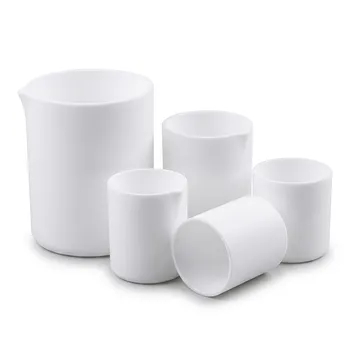
Precision in the lab requires equipment that can withstand the most demanding chemical environments. At KINTEK, we specialize in high-performance fluoropolymer solutions tailored for advanced research. From everyday basic labware like beakers, crucibles, and reagent bottles to specialized tools like high-purity trace analysis instruments and comprehensive fluid transfer components (tubing, valves, and fittings), we provide the foundations for reliable science.
Our expertise extends to advanced reaction apparatus, including PTFE-lined hydrothermal synthesis liners, microwave digestion vessels, and custom electrochemical cells. Backed by end-to-end custom CNC fabrication, we deliver everything from high-volume consumables to bespoke, non-standard machined parts designed for your specific rGO or nanomaterial project.
Ensure absolute purity and performance in your next experiment. Contact KINTEK today to discuss your custom laboratory needs!
References
- Sana Ullah Asif, Farooq Ahmad. Design of Ni-modified ZnSe nanostructures embedded in rGO for efficient supercapacitor electrodes. DOI: 10.1039/d5ra05161d
This article is also based on technical information from Kintek Knowledge Base .
Related Products
- PTFE Lined High Pressure Digestion Vessel 50ml High Temperature Hydrothermal Synthesis Tank
- Custom TFM Reaction Vessel with Stainless Steel Jacket and PTFE Inner Cup for High Corrosion Resistance
- High Pressure Custom TFM Reactor Stainless Steel Outer Vessel PTFE Inner Cup for Corrosive Synthesis
- High Pressure PTFE Digestion Vessel Inner Cup Holder Custom Corrosion Resistant Low Background Teflon
- High Temperature Corrosion Resistant Hydrothermal Synthesis Reactor with TFM Inner Liner and Straight Cylinder Design
People Also Ask
- What are the benefits of using a PTFE-lined vessel for carbon-sulfur cathode treatment? Maximize Purity & Performance
- Why are PTFE-lined pressure digestion vessels required for the preparation of Ag/CeO2 catalysts? Purity & Performance
- What safety features are typically incorporated into high-pressure PTFE digestion vessel designs? Ensure Lab Safety
- What is the function of PTFE lined high-pressure vessels in g-C3N4 synthesis? Achieve High-Purity Material Growth
- Role of High-Pressure Digestion Tanks in Perovskite Synthesis: Achieve Superior Stability and Latent Heat