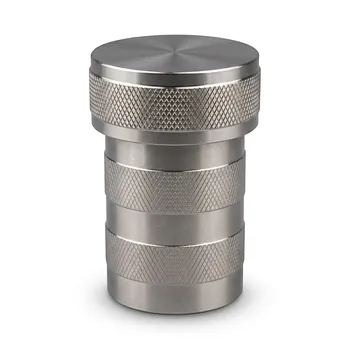
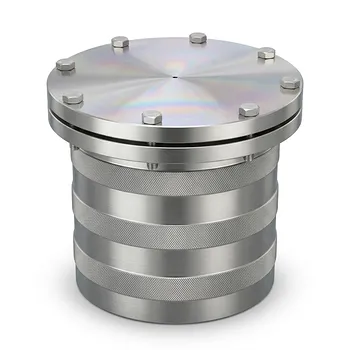
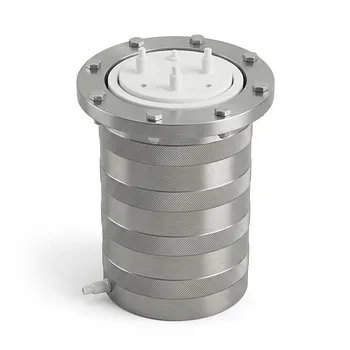
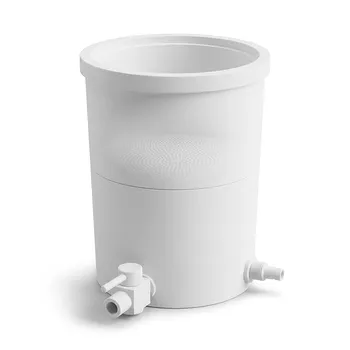
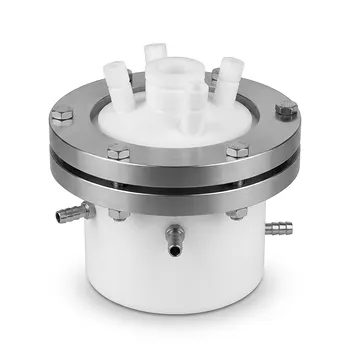
A stainless steel autoclave with a PTFE liner provides the essential high-pressure, high-temperature, and chemically inert environment required to synthesize high-purity copper hydroxystannate (CuSn(OH)₆). The stainless steel shell provides the mechanical strength to contain autogenous pressure, while the Polytetrafluoroethylene (PTFE) liner protects the sample from metallic contamination and prevents the strong alkaline reaction medium from corroding the vessel. This combination ensures the formation of single-phase perovskite-structured crystals during the 16-hour reaction at 180°C.
Core Takeaway: The autoclave setup acts as a pressurized micro-reactor where the stainless steel provides physical containment and the PTFE liner provides chemical isolation, collectively enabling the synthesis of high-purity nanocrystals that would be impossible to produce at standard atmospheric pressure.
Creating the Hydrothermal Environment
The primary function of the autoclave is to facilitate a hydrothermal reaction by creating conditions that exceed the normal boiling point of the precursor solution.
Generation of Autogenous Pressure
As the sealed vessel is heated to 180°C, the internal liquid expands and vaporizes, generating autogenous pressure. This pressure is the physical driver that forces the dissolution of precursors and promotes the nucleation and growth of the CuSn(OH)₆ crystals.
Achieving High Crystallinity
The high-pressure environment allows the reaction to occur in a "superheated" state, which significantly increases the solubility of the reagents. This ensures that the resulting copper hydroxystannate achieves a single-phase perovskite structure with high crystallinity, which is difficult to reach using open-vessel synthesis methods.
The Protective Role of the PTFE Liner
While the stainless steel shell manages the physical stress, the PTFE (Teflon) liner is responsible for maintaining the chemical integrity of the reaction.
Resistance to Alkaline Corrosion
The synthesis of CuSn(OH)₆ typically involves a strong alkaline environment. PTFE is exceptionally chemically inert, meaning it will not react with or be eroded by the caustic precursors that would otherwise damage the inner walls of a bare metal autoclave.
Prevention of Metal Ion Contamination
If the reaction solution were in direct contact with the stainless steel, iron or chromium ions could leach into the mixture. The PTFE liner acts as an absolute barrier, ensuring the final product remains free of metallic impurities and maintains its intended chemical purity.
Structural Integrity and Material Recovery
The design of the autoclave system balances the need for extreme durability with the practical requirements of laboratory recovery.
Mechanical Strength of the Shell
At 180°C, the internal pressure is substantial. The stainless steel outer shell provides the necessary tensile strength to prevent the vessel from deforming or failing under stress, ensuring a stable and safe reaction environment for the full 16-hour duration.
Facilitating Product Collection
PTFE has an extremely smooth, non-stick surface. This property is critical during the post-reaction phase, as it allows the synthesized CuSn(OH)₆ powder sediments to be easily recovered and collected without sticking to the walls of the container.
Understanding the Trade-offs
While the PTFE-lined autoclave is a standard tool, it has specific limitations that must be managed to ensure safety and experimental success.
- Temperature Limits: PTFE begins to soften and can release toxic fumes or deform if temperatures exceed approximately 220°C–250°C. For the 180°C synthesis of CuSn(OH)₆, this is safe, but it leaves little margin for error if heating elements malfunction.
- Thermal Expansion Mismatch: PTFE expands at a different rate than stainless steel when heated. If the liner is filled too high (typically over 80% capacity), the expansion of the liquid and the liner can lead to extreme internal pressure that may compromise the seal or the vessel itself.
- Slow Cooling Requirements: Rapidly cooling the autoclave (quenching) can cause the PTFE liner to contract faster than the steel shell, potentially leading to leaks or permanent deformation of the liner.
How to Apply This to Your Synthesis
To achieve the best results when synthesizing copper hydroxystannate or similar perovskite structures, follow these guidelines based on your specific priorities:
- If your primary focus is phase purity: Ensure the PTFE liner is thoroughly cleaned with acid between uses to remove any residual nucleation sites from previous experiments.
- If your primary focus is safety and vessel longevity: Never exceed 75-80% of the liner's total volume with your precursor solution to allow sufficient "headspace" for gas expansion.
- If your primary focus is consistent morphology: Maintain a steady temperature of 180°C for the full 16 hours, as fluctuations in pressure can lead to non-uniform crystal sizes or secondary phases.
By correctly utilizing the dual-material design of the autoclave, you create a controlled "pressure cooker" that transforms simple precursors into sophisticated, high-purity crystalline materials.
Summary Table:
| Component | Primary Function | Key Laboratory Benefits |
|---|---|---|
| Stainless Steel Shell | Structural Support | Safely contains high autogenous pressure at 180°C. |
| PTFE (Teflon) Liner | Chemical Shielding | Prevents alkaline corrosion and metal ion contamination. |
| Non-stick Surface | Material Recovery | Facilitates easy collection of synthesized powder sediments. |
| Combined System | Phase Control | Ensures formation of single-phase perovskite-structured crystals. |
Elevate Your Research with KINTEK’s High-Performance Labware
Precision in hydrothermal synthesis begins with superior materials. KINTEK specializes in high-performance fluoropolymer solutions designed to withstand the most demanding laboratory environments.
From everyday basic labware (beakers, crucibles, and reagent bottles) to advanced reaction apparatus—including custom PTFE liners for autoclaves, hydrothermal synthesis vessels, and microwave digestion containers—we provide the chemical inertness and thermal stability your research requires.
Why choose KINTEK?
- End-to-End Customization: Expertise in custom CNC fabrication for complex, non-standard machined parts.
- Broad Product Range: We supply everything from fluid transfer components (tubing, fittings, valves) and sample prep tools to advanced battery testing fixtures and electrochemical cells.
- Absolute Focus: Dedicated exclusively to high-performance PTFE and PFA materials for maximum purity.
Don’t compromise on your results. Contact KINTEK today to discuss your bespoke laboratory setups or high-volume orders and experience the difference that expert craftsmanship makes!
References
- Anton V. Loginov, Alexander G. Bannov. Carbon nanofiber–based CuSn(OН) <sub>6</sub> and CuSnO <sub>3</sub> composites for NO <sub>2</sub> gas sensors and supercapacitors. DOI: 10.15826/chimtech.9167
This article is also based on technical information from Kintek Knowledge Base .
Related Products
- PTFE Lined High Pressure Digestion Vessel 50ml High Temperature Hydrothermal Synthesis Tank
- High Temperature Corrosion Resistant Hydrothermal Synthesis Reactor with TFM Inner Liner and Straight Cylinder Design
- Custom TFM Reaction Vessel with Stainless Steel Jacket and PTFE Inner Cup for High Corrosion Resistance
- High Pressure Custom TFM Reactor Stainless Steel Outer Vessel PTFE Inner Cup for Corrosive Synthesis
- Large Scale PTFE Double Layer Reaction Tank with Integrated Filter Plate for Chemical Processing
People Also Ask
- What are the benefits of using a PTFE-lined vessel for carbon-sulfur cathode treatment? Maximize Purity & Performance
- Why are PTFE-lined pressure digestion vessels required for the preparation of Ag/CeO2 catalysts? Purity & Performance
- What safety features are typically incorporated into high-pressure PTFE digestion vessel designs? Ensure Lab Safety
- What is the function of PTFE lined high-pressure vessels in g-C3N4 synthesis? Achieve High-Purity Material Growth
- Role of High-Pressure Digestion Tanks in Perovskite Synthesis: Achieve Superior Stability and Latent Heat