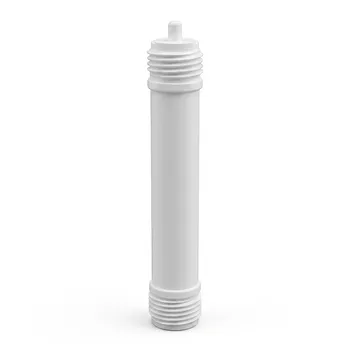
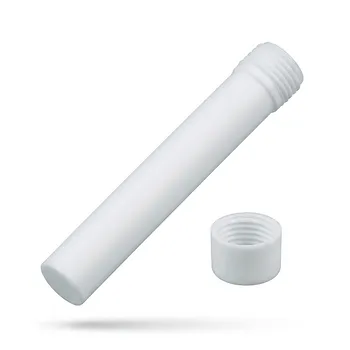
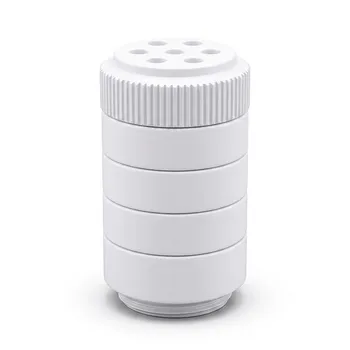
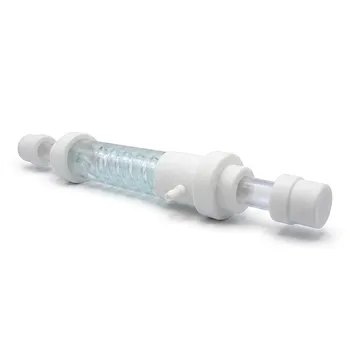
A PTFE liner is essential for the hydrothermal synthesis of ZnSe because it provides critical chemical resistance against strong alkalinity (pH 8) and high temperatures (160°C). By acting as an inert barrier, it prevents the reaction solution from corroding the stainless steel reactor shell and eliminates the risk of metal ion contamination. Furthermore, its non-stick surface prevents ZnSe crystals from scaling on the walls, ensuring a precise stoichiometric ratio and uniform nanoparticle morphology.
The PTFE liner acts as both a protective shield for the hardware and a high-purity crucible for the chemistry. It ensures that the synthesized ZnSe nanoparticles remain free of impurities while maintaining the specific environmental conditions necessary for controlled crystal growth.
Protecting Chemical Purity and Structural Integrity
Preventing Metal Ion Contamination
During synthesis, the high-pressure environment can cause the reaction medium to leach metal ions from the stainless steel autoclave walls. A PTFE liner provides a complete chemical seal, isolating the precursors from the metal shell. This isolation is vital for maintaining the high purity of ZnSe nanocrystals and quantum dots, where even trace metallic impurities can degrade optical and electronic properties.
Resisting Alkaline Corrosion
The synthesis of ZnSe often requires a strong alkaline environment (pH 8) to facilitate the reaction. PTFE is uniquely resistant to such caustic conditions, whereas many other materials would degrade or react. This chemical inertness ensures that the liner does not participate in the reaction, keeping the chemical stoichiometric ratio of the zinc and selenium precursors exact.
Facilitating Uniform Crystal Growth
The non-stick properties of PTFE are crucial for controlling the physical characteristics of the nanoparticles. By preventing ZnSe crystals from adhering or "scaling" to the vessel walls, the liner ensures that all particles experience the same growth conditions in the bulk solution. This results in a product with uniform morphology and consistent particle size distribution.
Ensuring Process Safety and Efficiency
Managing Autogenous Pressure
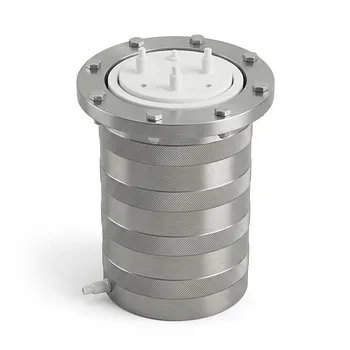
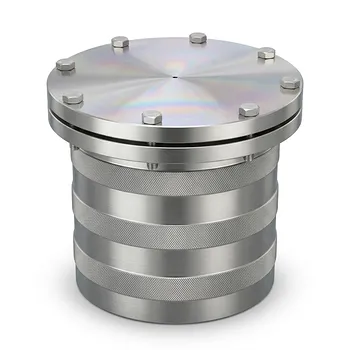
In a hydrothermal setup, the PTFE liner fits inside a stainless steel sleeve designed to withstand the autogenous pressure generated at 160°C. The liner holds the liquid phase while the outer shell provides the mechanical strength. This combination allows the reaction to reach the energy levels required for high crystallinity without risking vessel failure.
Sample Recovery and Maintenance
The hydrophobic, non-stick nature of PTFE allows for the complete recovery of the synthesized ZnSe powder. After the reaction, the precipitates can be easily collected without loss to the vessel surfaces. Additionally, this makes the liner easy to clean, preventing cross-contamination between different experimental batches.
Understanding the Trade-offs and Limitations
Thermal Conductivity Lag
PTFE is an effective thermal insulator, which means there is a time lag between the heating of the external oven and the internal solution reaching 160°C. Researchers must account for this thermal inertia when timing their synthesis to ensure the ZnSe crystals have sufficient "soak time" at the target temperature.
Temperature Thresholds
While PTFE is excellent for 160°C, it has a functional limit typically around 220°C to 250°C. Exceeding these temperatures can lead to the mechanical softening of the liner or the release of toxic vapors. For reactions requiring higher energy, alternative materials like PPL (Para-polyphenylene) or specialized ceramics may be necessary.
Pressure Deformations
Under repeated high-pressure cycles, PTFE liners can experience "cold flow" or permanent deformation. If a liner becomes warped, it may no longer seal correctly against the autoclave lid. This can lead to pressure leaks, which drop the internal temperature and ruin the stoichiometric balance of the ZnSe synthesis.
How to Apply This to Your Project
To achieve the best results in your hydrothermal synthesis, match your liner maintenance and selection to your specific experimental goals.
- If your primary focus is high-purity quantum dots: Always use a new or meticulously acid-washed PTFE liner to ensure zero metal ion leaching from previous experiments.
- If your primary focus is morphological consistency: Ensure the liner surface remains scratch-free, as abrasions on the PTFE can act as nucleation sites that cause uneven crystal scaling.
- If your primary focus is process safety: Regularly inspect the liner for "creeping" or deformation and replace any liner that does not fit perfectly flush within its stainless steel shell.
The PTFE liner is the silent guardian of the hydrothermal process, ensuring that the extreme conditions required for ZnSe synthesis do not compromise the quality of the final nanomaterial.
Summary Table:
| Feature of PTFE Liner | Benefit for ZnSe Synthesis | Why It Matters |
|---|---|---|
| Chemical Inertness | Prevents metal ion leaching and corrosion | Maintains high purity and exact stoichiometry |
| Non-stick Surface | Prevents crystal scaling on vessel walls | Ensures uniform morphology and particle size |
| Alkaline Resistance | Withstands high pH (pH 8) environments | Protects the reactor hardware from degradation |
| High Sample Recovery | Facilitates complete collection of precipitates | Increases process efficiency and ease of cleaning |
| Thermal Stability | Operates safely at temperatures up to 160°C+ | Provides a stable environment for crystal growth |
Elevate Your Synthesis Precision with KINTEK High-Performance Fluoropolymers
Ensure the integrity of your nanomaterial research with KINTEK’s specialized PTFE and PFA solutions. From hydrothermal synthesis liners and microwave digestion vessels to high-purity trace analysis instruments, our products are engineered to withstand the most aggressive chemical environments while preventing contamination.
At KINTEK, we focus exclusively on high-performance fluoropolymers, providing everything from everyday basic labware (beakers, crucibles, reagent bottles, and tubing) to advanced custom electrochemical cells and bespoke reaction apparatus. Whether you need standard consumables or complex, non-standard machined parts, our end-to-end custom CNC fabrication ensures your laboratory setup meets your exact specifications.
Ready to optimize your lab's performance? Contact us today to discuss your custom fluoropolymer requirements!
References
- Sana Ullah Asif, Farooq Ahmad. Design of Ni-modified ZnSe nanostructures embedded in rGO for efficient supercapacitor electrodes. DOI: 10.1039/d5ra05161d
This article is also based on technical information from Kintek Knowledge Base .
Related Products
- PTFE Lined High Pressure Digestion Vessel 50ml High Temperature Hydrothermal Synthesis Tank
- High Pressure Custom TFM Reactor Stainless Steel Outer Vessel PTFE Inner Cup for Corrosive Synthesis
- Custom TFM Reaction Vessel with Stainless Steel Jacket and PTFE Inner Cup for High Corrosion Resistance
- High Purity PTFE Microwave Digestion Vessel for Soil and Food Analysis Acid Resistant Fluoropolymer Sample Preparation Liners
- High Purity TFM Microwave Digestion Vessels PTFE Acid Evaporation Liners Domestic GT-400 Equivalent Laboratory Reaction Containers
People Also Ask
- What are the benefits of using a PTFE-lined vessel for carbon-sulfur cathode treatment? Maximize Purity & Performance
- Why are PTFE-lined pressure digestion vessels required for the preparation of Ag/CeO2 catalysts? Purity & Performance
- What safety features are typically incorporated into high-pressure PTFE digestion vessel designs? Ensure Lab Safety
- What is the function of PTFE lined high-pressure vessels in g-C3N4 synthesis? Achieve High-Purity Material Growth
- Role of High-Pressure Digestion Tanks in Perovskite Synthesis: Achieve Superior Stability and Latent Heat