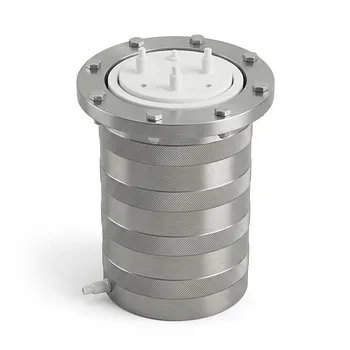
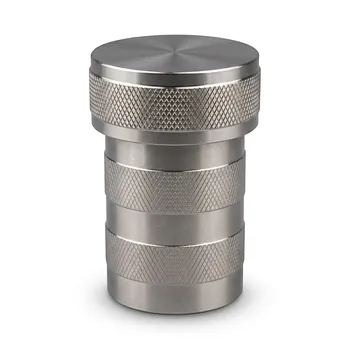
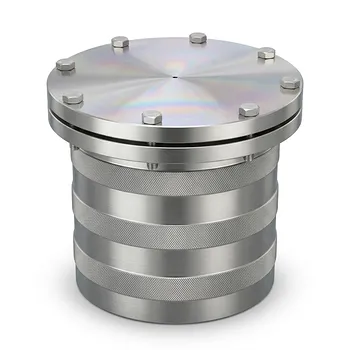
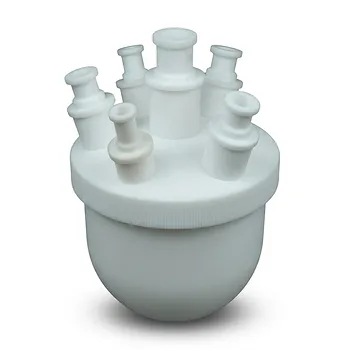
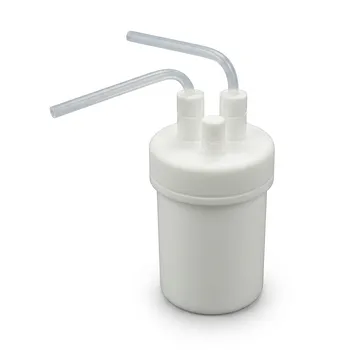
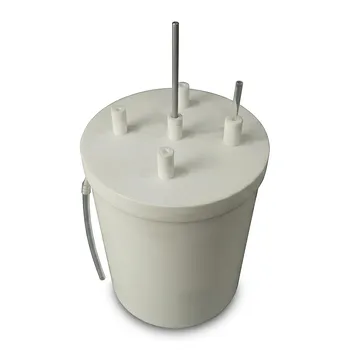
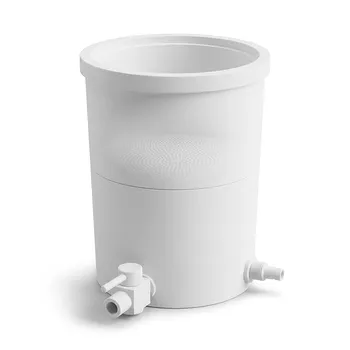
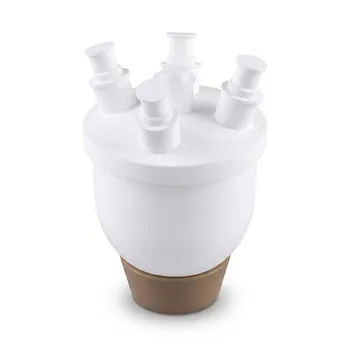
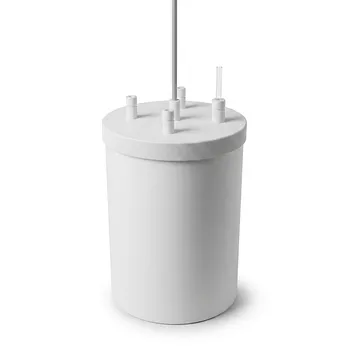
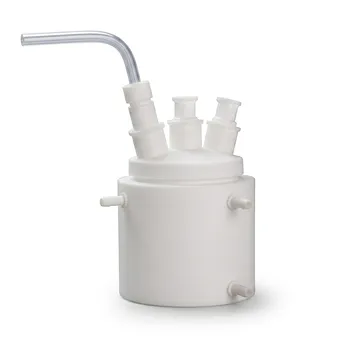
The Polytetrafluoroethylene (PTFE) lined high-pressure reactor is the primary vessel for the hydrothermal synthesis of Layered Double Hydroxide (LDH) electrodes. It creates a hermetically sealed, chemically inert environment that allows precursors to undergo controlled nucleation and growth at temperatures typically ranging from 120°C to 220°C. By isolating corrosive reagents from the reactor's metal shell, the PTFE liner ensures the high purity and structural integrity of the LDH particles, which is essential for their performance in electrochemical applications.
The PTFE liner serves as a critical chemical barrier that enables high-temperature hydrothermal synthesis while preventing metal-ion contamination and reactor corrosion. This isolation is fundamental to maintaining the precise catalytic activity and crystal structure required for high-performance particle electrodes.
Maintaining Chemical Purity and Catalytic Integrity
Prevention of Metal Ion Leaching
During hydrothermal synthesis, high temperatures can cause the reaction solution to leach ions from a standard stainless steel reactor wall. Metal ion impurities introduced this way can intercalate into the LDH structure, fundamentally altering its electrochemical properties and catalytic activity. The PTFE liner provides a complete physical barrier, ensuring that the final electrode material remains high-purity.
Inertness in Highly Corrosive Environments
The synthesis of LDH particles often involves strong bases, such as ammonium hydroxide, or acidic precursors like copper nitrate. PTFE is chemically inert to nearly all strong acids, bases, and organic solvents used in these processes. This resistance prevents the reaction media from attacking the structural integrity of the vessel during long synthesis cycles.
Facilitating Controlled Hydrothermal Synthesis
Managing Temperature and Autogenous Pressure
The reactor is designed to withstand autogenous pressure generated when liquid precursors are heated beyond their boiling point in a sealed space. The PTFE liner maintains stability at temperatures up to 220°C, providing a consistent environment for the metal oxides or hydroxides to crystallize. This stability is vital for achieving the uniform 3D particle structures required for modern electrodes.
Optimized Nucleation and Growth
By providing a closed system with a constant temperature and pressure, the reactor ensures that precursors undergo sufficient nucleation and crystal growth. This controlled environment allows for the precise modification of the LDH nanocluster structures. Consistent conditions lead to better distribution of active sites across the catalyst surface.
Product Recovery and Maintenance
The non-stick properties of PTFE facilitate the easy recovery of the synthesized LDH particles after the reaction is complete. This reduces material loss and simplifies the cleaning process, preventing cross-contamination between different batches. It also serves as a key safeguard that extends the service life of the outer stainless steel autoclave by preventing erosion.
Understanding the Trade-offs
Temperature Limitations
While PTFE is highly versatile, it has a definitive thermal ceiling, typically around 250°C, above which it may begin to deform or release toxic fumes. For synthesis requiring extreme temperatures (solvothermal processes above 300°C), researchers must transition to more expensive PPL (Polyphenylene polymers) or gold-lined vessels.
Thermal Expansion Discrepancies
PTFE has a much higher coefficient of thermal expansion than the stainless steel shell surrounding it. If the reactor is cooled too rapidly, the liner can warp or crack, potentially allowing corrosive liquids to reach the metal shell. Controlled, slow cooling is necessary to maintain the structural integrity of the liner over multiple uses.
How to Apply This to Your Project
Recommendations for Equipment Selection
- If your primary focus is Maximum Purity: Prioritize high-quality, virgin PTFE liners to eliminate any risk of metal ion leaching that could poison your catalyst sites.
- If your primary focus is High-Temperature Synthesis (Above 220°C): Consider alternative liner materials like PPL, as standard PTFE may lose structural integrity and contaminate your LDH samples.
- If your primary focus is Scalability and Longevity: Implement a strict "slow-cool" protocol after hydrothermal cycles to prevent liner warping and protect the stainless steel outer shell from stress corrosion.
The PTFE-lined reactor is an indispensable tool that balances chemical protection with the extreme physical conditions necessary for engineering high-performance LDH particle electrodes.
Summary Table:
| Feature | Role in LDH Synthesis | Key Benefit |
|---|---|---|
| Chemical Inertness | Prevents reaction with strong bases/acids | Ensures high-purity particles without contamination |
| Physical Barrier | Isolates precursors from metal reactor walls | Eliminates metal-ion leaching into the catalyst |
| Thermal Stability | Maintains integrity up to 220°C - 250°C | Enables controlled hydrothermal nucleation/growth |
| Non-stick Surface | Reduces adhesion of synthesized particles | Maximizes product recovery and simplifies cleaning |
| Pressure Seal | Withstands autogenous hydrothermal pressure | Creates the necessary environment for 3D crystal structures |
Elevate Your Synthesis with KINTEK’s Precision Fluoropolymer Solutions
Achieving the perfect crystal structure in LDH particle electrodes requires more than just chemistry—it requires uncompromising equipment. KINTEK specializes in high-performance fluoropolymer materials designed to withstand the most demanding hydrothermal and electrochemical environments.
From everyday basic labware like beakers, crucibles, and reagent bottles to specialized sample prep tools, filtration kits, and fluid transfer components (tubing, valves, and fittings), we provide the building blocks for a sterile and efficient lab. For advanced research, we offer custom-engineered PTFE and PFA reactors, electrochemical cells, battery testing fixtures, and microwave digestion vessels.
Why choose KINTEK?
- End-to-End Customization: Our advanced CNC fabrication allows us to deliver bespoke laboratory setups and complex non-standard machined parts tailored to your specific research parameters.
- Material Excellence: We focus exclusively on high-performance PTFE and PFA to ensure zero contamination and maximum chemical resistance.
- Scalable Production: Whether you need a single custom liner or high-volume consumables like O-rings, gaskets, and stirring bars, we deliver with precision.
Don’t let equipment impurities compromise your data. Contact KINTEK today to discuss your custom project or to restock your high-purity laboratory supplies!
References
- Guene L. Razack, Shan-Shan Yang. Current State of Research on the Three-Dimensional Particle Electrode System for Treating Organic Pollutants from Wastewater Streams: Particle Electrode, Degradation Mechanism, and Synergy Effects. DOI: 10.3390/w17162490
This article is also based on technical information from Kintek Knowledge Base .
Related Products
- PTFE Lined High Pressure Digestion Vessel 50ml High Temperature Hydrothermal Synthesis Tank
- High Pressure Custom TFM Reactor Stainless Steel Outer Vessel PTFE Inner Cup for Corrosive Synthesis
- High Temperature Corrosion Resistant Hydrothermal Synthesis Reactor with TFM Inner Liner and Straight Cylinder Design
- Custom TFM Reaction Vessel with Stainless Steel Jacket and PTFE Inner Cup for High Corrosion Resistance
- Custom PTFE Reaction System with Hose Barb Fittings Corrosion Resistant High Sealing 2L 4L Lab Reactor with Separatory Funnel
People Also Ask
- What are the benefits of using a PTFE-lined vessel for carbon-sulfur cathode treatment? Maximize Purity & Performance
- Why are PTFE-lined pressure digestion vessels required for the preparation of Ag/CeO2 catalysts? Purity & Performance
- What is the function of high-pressure PTFE digestion vessels in mineral analysis? Optimize Sample Mineralization
- What safety features are typically incorporated into high-pressure PTFE digestion vessel designs? Ensure Lab Safety
- What is the function of PTFE lined high-pressure vessels in g-C3N4 synthesis? Achieve High-Purity Material Growth