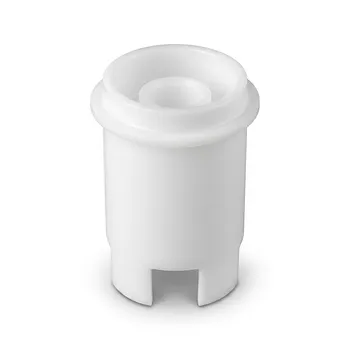
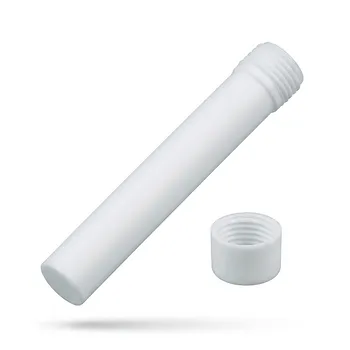
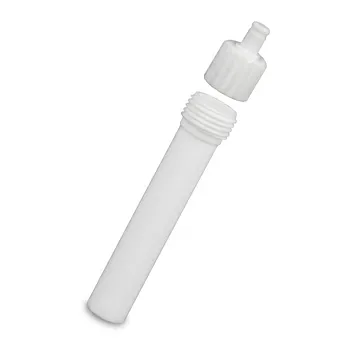
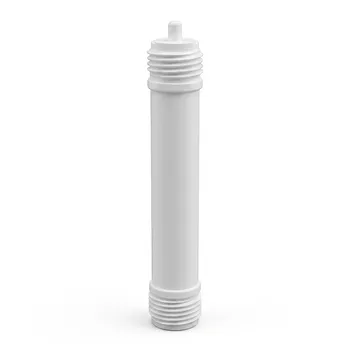
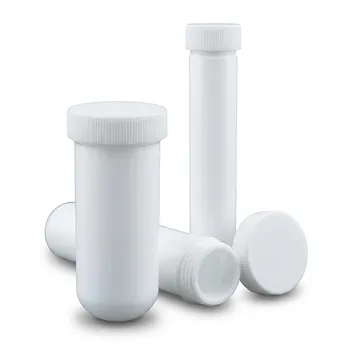
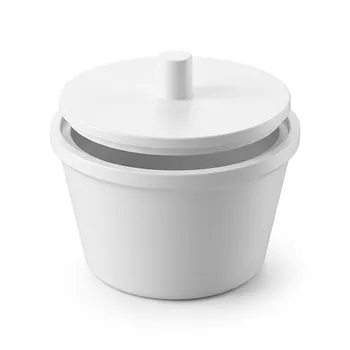
The Polytetrafluoroethylene (PTFE)-lined high-pressure autoclave serves as the essential reaction vessel for the solvothermal synthesis of carbon dots by providing a sealed, chemically inert environment. It enables the precise carbonization of organic precursors—such as 3-hydroxy-2-naphthoic acid or cellulose—by facilitating dehydration and polycondensation under high temperatures and autogenous pressures. The PTFE liner specifically ensures that the resulting nanoparticles remain free from metallic contamination and that the reaction conditions remain stable throughout the synthesis process.
The core role of a PTFE-lined autoclave is to provide a controlled, high-pressure environment that isolates the chemical reaction from the metallic walls of the vessel. This isolation is critical for maintaining the purity, photophysical properties, and surface functionalization of the synthesized carbon dots.
Enabling High-Temperature and High-Pressure Carbonization
Facilitating the Chemical Transformation
The synthesis of carbon dots requires energy to drive the dehydration, polycondensation, and carbonization of organic precursors. The autoclave provides the necessary thermal environment, often reaching temperatures between 180 °C and 220 °C, to transform molecular precursors into nanoscale carbon structures.
Managing Autogenous Pressure
In a sealed autoclave, the heating of solvents creates high autogenous pressure, which increases the solubility of precursors and accelerates reaction kinetics. This pressurized environment is vital for ensuring that the precursors react completely to form green-fluorescent carbon dots with desirable photophysical properties.
Providing a Stable Thermal Environment
The thick stainless steel outer shell of the autoclave, combined with the PTFE liner, ensures consistent heat distribution and retention. This stability allows for the precise control of reaction times, which is necessary for achieving a uniform size distribution in the resulting carbon quantum dots.
The Critical Importance of Chemical Inertness
Preventing Metal Ion Contamination
One of the primary functions of the PTFE liner is to act as a physical barrier between the reaction solution and the stainless steel walls. This prevents metal ions from the autoclave body from leaching into the sample, which could otherwise quench fluorescence or alter the chemical signature of the dots.
Resistance to Corrosive Precursors and Solvents
Solvothermal synthesis often involves acidic precursors or aggressive polar solvents like DMF, ethanol, and acetonitrile. PTFE is chosen for its exceptional corrosion resistance, ensuring that the vessel remains undamaged while preventing the introduction of impurities into the final product.
Ensuring Surface Functional Group Purity
The inert nature of PTFE ensures that the reaction process is dictated solely by the precursors and catalysts intentionally added to the mix. This level of control is necessary to maintain the purity of surface functional groups, which directly influences the dots' solubility and biological compatibility.
Understanding the Trade-offs and Limitations
Temperature and Pressure Thresholds
While PTFE is highly resilient, it has a functional temperature limit, typically around 220 °C to 250 °C. Exceeding these temperatures can lead to the mechanical failure or softening of the liner, potentially compromising the seal and risking a dangerous pressure release.
Heat Transfer Characteristics
PTFE is a thermal insulator compared to the stainless steel outer shell, which can lead to a lag in heat transfer to the internal reaction mixture. Researchers must account for this "ramp-up" time to ensure the internal solution spends the required duration at the target synthesis temperature.
Potential for Physical Deformation
Under repeated high-pressure cycles, PTFE liners can experience "creep" or permanent deformation. This may eventually affect the effective working volume or the quality of the seal, requiring periodic inspection and replacement to ensure reproducibility of results.
How to Apply This to Your Synthesis Goals
Strategic Recommendations
- If your primary focus is High Purity: Always use a fresh or thoroughly acid-washed PTFE liner to eliminate cross-contamination between different synthesis batches.
- If your primary focus is Maximum Yield: Adjust the filling ratio of the PTFE liner to optimize the gas-liquid phase contact and internal pressure, typically filling it to 60-80% capacity.
- If your primary focus is Material Longevity: Limit synthesis temperatures to 200 °C or below when possible to extend the life of the PTFE liner and prevent mechanical deformation.
By correctly utilizing the PTFE-lined autoclave, you secure the chemical environment necessary to produce high-quality, reproducible carbon dots for advanced optical and biological applications.
Summary Table:
| Feature | Role in Carbon Dot Synthesis | Technical Impact |
|---|---|---|
| Chemical Inertness | Prevents metal ion leaching from vessel walls | Maintains fluorescence purity & biosecurity |
| Pressure Control | Manages autogenous pressure in sealed system | Increases precursor solubility & reaction speed |
| Thermal Stability | Provides uniform heat for polycondensation | Ensures consistent size distribution of dots |
| Corrosion Resistance | Withstands aggressive polar solvents (DMF/Ethanol) | Extends equipment life & prevents impurities |
Elevate Your Nanomaterial Synthesis with KINTEK
Maximize the purity and reproducibility of your carbon dots with high-performance fluoropolymer solutions from KINTEK. Whether you require precision-machined hydrothermal synthesis liners, microwave digestion vessels, or high-purity trace analysis instruments, our products ensure a completely inert reaction environment free from contamination.
From everyday labware like beakers and centrifuge tubes to bespoke laboratory setups and complex non-standard machined parts, we offer end-to-end custom CNC fabrication. Our expertise extends to fluid transfer components, sample prep tools, and advanced reaction apparatus—all crafted with an absolute focus on high-performance PTFE and PFA materials.
Ready to optimize your lab’s efficiency? Contact us today to discover how KINTEK’s custom-engineered solutions can support your specific research goals!
References
- Subhrajeet Banerjee, Prolay Das. Machine learning-guided fabrication of carbon dot–pepsin nano-conjugates for enhanced bioimaging, synergistic drug delivery, and visible light-induced photosensitization. DOI: 10.1039/d5nr00752f
This article is also based on technical information from Kintek Knowledge Base .
Related Products
- PTFE Lined High Pressure Digestion Vessel 50ml High Temperature Hydrothermal Synthesis Tank
- Custom TFM Reaction Vessel with Stainless Steel Jacket and PTFE Inner Cup for High Corrosion Resistance
- High Pressure Custom TFM Reactor Stainless Steel Outer Vessel PTFE Inner Cup for Corrosive Synthesis
- High Pressure PTFE Digestion Vessel Inner Cup Holder Custom Corrosion Resistant Low Background Teflon
- High Temperature Corrosion Resistant Hydrothermal Synthesis Reactor with TFM Inner Liner and Straight Cylinder Design
People Also Ask
- What are the benefits of using a PTFE-lined vessel for carbon-sulfur cathode treatment? Maximize Purity & Performance
- Why are PTFE-lined pressure digestion vessels required for the preparation of Ag/CeO2 catalysts? Purity & Performance
- What is the function of high-pressure PTFE digestion vessels in mineral analysis? Optimize Sample Mineralization
- What safety features are typically incorporated into high-pressure PTFE digestion vessel designs? Ensure Lab Safety
- What is the function of PTFE lined high-pressure vessels in g-C3N4 synthesis? Achieve High-Purity Material Growth