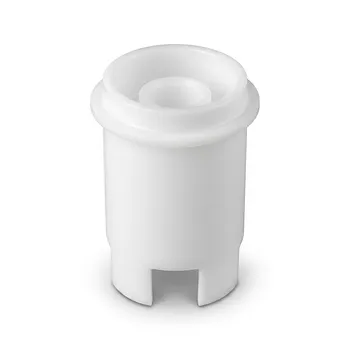
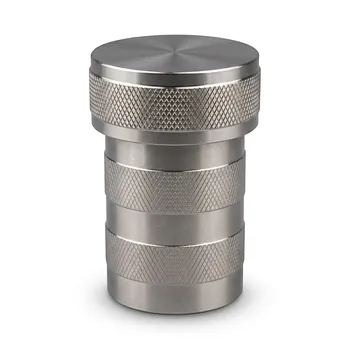
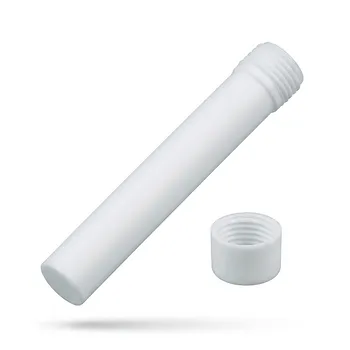
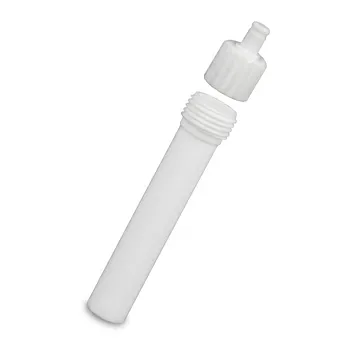
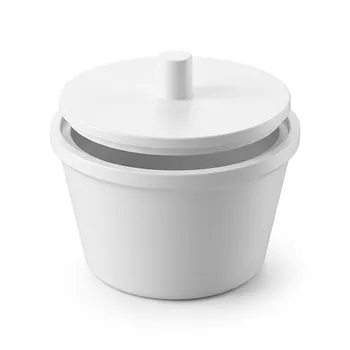
The Polytetrafluoroethylene (PTFE) lined high-pressure autoclave is the fundamental reactor that enables the hydrothermal synthesis of CuO-ZnO catalysts by providing a sealed, chemically inert environment. It allows aqueous solutions to reach subcritical temperatures—significantly exceeding their atmospheric boiling points—which is essential for the oriented growth of precursors onto support materials. This controlled pressure vessel ensures the formation of specific metal oxide morphologies, such as ZnO nanorods or CuO nanoflowers, while maintaining high chemical purity.
Core Takeaway: The PTFE-lined autoclave functions as a specialized "pressure cooker" that facilitates precise crystal growth and prevents metal ion contamination, ensuring the catalyst achieves the exact morphology and purity required for high performance.
Creating the Subcritical Environment
Achieving Temperatures Above the Boiling Point
The primary role of the autoclave is to maintain solvents in a liquid state at temperatures that would normally cause them to evaporate. By sealing the reaction, the internal pressure rises as heat is applied, creating subcritical conditions.
Enhancing Solubility and Reactivity
Under these high-pressure conditions, the solubility and reactivity of chemical reactants are significantly increased. This creates a supersaturated state that is necessary for the nucleation and slow growth of high-quality crystals.
The Critical Role of the PTFE Liner
Preventing Metal Ion Contamination
While the stainless steel outer shell provides the strength to withstand high pressure, the PTFE (Teflon) liner provides essential chemical inertness. It prevents the precursor solution from reacting with or leaching metal ions from the steel walls, which would otherwise poison the catalyst.
Withstanding Corrosive Alkaline Environments
Hydrothermal synthesis often requires a strong alkaline environment to trigger the hydrolysis of agents like hexamethylenetetramine (HMT). The PTFE material is exceptionally resistant to chemical erosion, ensuring the stability of the reaction even at high pH levels and temperatures up to 200°C.
Facilitating Product Collection
The non-stick properties of PTFE are a practical necessity for catalyst synthesis. This allows researchers to easily collect the synthesized CuO-ZnO powder or nanostructures from the vessel without loss of material or contamination from previous batches.
Morphology Control and Structural Stability
Promoting Oriented Crystal Growth
The stable temperature and pressure provided by the autoclave allow for anisotropic growth, where crystals grow faster in one direction than others. This is how manufacturers produce specific shapes like ZnO nanorods or indium hydroxide nanocuboids.
Ensuring Uniform Loading
In composite catalysts, the high-pressure environment ensures that active components, such as copper nanoparticles, are uniformly loaded onto the support structure. This creates a better interface—often referred to as ohmic contact—which improves the overall efficiency of the catalyst.
Understanding the Trade-offs
Temperature Limitations
While PTFE is highly inert, it has a physical limit; it generally cannot be used for reactions exceeding 250°C as the material begins to soften or decompose. For reactions requiring higher heat, more expensive liners like PEEK or specialized metallic alloys may be required.
Pressure and Safety Risks
High-pressure autoclaves are "batch" processes that require strict safety protocols to prevent vessel failure. Because the pressure is autogenous (generated by the heat), a slight over-calculation in the solvent volume can lead to a dangerous over-pressurization of the stainless steel shell.
Scale-up Challenges
Hydrothermal synthesis in an autoclave is difficult to transition to continuous large-scale production. The process is inherently time-consuming due to the slow heating and cooling cycles required to maintain the structural integrity of the PTFE liner and the crystal morphology.
How to Apply This to Your Project
Recommendations for Catalyst Synthesis
- If your primary focus is High Purity: Ensure your PTFE liner is thoroughly cleaned with acid between runs to remove any residual ions that could act as unintended dopants.
- If your primary focus is Morphology Control: Prioritize the "fill factor" (the volume of liquid relative to the vessel size) to precisely control the autogenous pressure, as this dictates the growth rate of nanorods.
- If your primary focus is Safety and Longevity: Never exceed a 70-80% fill capacity and monitor the cooling rate to prevent the PTFE liner from warping or "vacuum-collapsing" away from the steel wall.
The successful synthesis of CuO-ZnO catalysts relies on the autoclave's ability to balance extreme internal energy with absolute chemical isolation.
Summary Table:
| Feature | Benefit for CuO-ZnO Synthesis |
|---|---|
| High-Pressure Sealing | Facilitates subcritical conditions for crystal nucleation |
| PTFE Chemical Inertness | Prevents metal ion leaching and resists alkaline corrosion |
| Precise Temperature Control | Enables oriented growth of nanorods and nanoflowers |
| Non-stick Liner Surface | Ensures maximum product recovery and easy cleaning |
| Structural Stability | Maintains uniform loading of active copper nanoparticles |
Optimize Your Synthesis with KINTEK’s High-Performance Fluoropolymer Solutions
Precision in catalyst synthesis requires equipment that guarantees absolute purity. KINTEK specializes in manufacturing virtually every laboratory essential from high-performance PTFE and PFA, ensuring your reactions remain free from contamination.
Our extensive range covers everything your lab needs:
- Basic Labware: Beakers, measuring cylinders, crucibles, and reagent bottles.
- Sample Prep & Filtration: Separatory funnels, burettes, filters, and high-purity pipettes.
- Reaction Apparatus: Hydrothermal synthesis liners, microwave digestion vessels, and custom electrochemical cells.
- Fluid Transfer & Consumables: Tubing, valves, O-rings, and bespoke CNC-machined components.
Whether you require high-volume standard orders or complex, non-standard machined parts tailored to your specific research, our end-to-end custom fabrication is ready to deliver. Contact KINTEK today to discuss your project requirements and secure the high-performance materials your research deserves.
References
- Matt L. J. Peerlings, Peter Ngene. Synthesis and Catalytic Performance of Bimetallic Oxide-Derived CuO–ZnO Electrocatalysts for CO<sub>2</sub> Reduction. DOI: 10.1021/acscatal.4c01575
This article is also based on technical information from Kintek Knowledge Base .
Related Products
- PTFE Lined High Pressure Digestion Vessel 50ml High Temperature Hydrothermal Synthesis Tank
- Custom TFM Reaction Vessel with Stainless Steel Jacket and PTFE Inner Cup for High Corrosion Resistance
- High Pressure Custom TFM Reactor Stainless Steel Outer Vessel PTFE Inner Cup for Corrosive Synthesis
- High Pressure PTFE Digestion Vessel Inner Cup Holder Custom Corrosion Resistant Low Background Teflon
- High Temperature Corrosion Resistant Hydrothermal Synthesis Reactor with TFM Inner Liner and Straight Cylinder Design
People Also Ask
- What are the benefits of using a PTFE-lined vessel for carbon-sulfur cathode treatment? Maximize Purity & Performance
- Why are PTFE-lined pressure digestion vessels required for the preparation of Ag/CeO2 catalysts? Purity & Performance
- What safety features are typically incorporated into high-pressure PTFE digestion vessel designs? Ensure Lab Safety
- What is the function of PTFE lined high-pressure vessels in g-C3N4 synthesis? Achieve High-Purity Material Growth
- Role of High-Pressure Digestion Tanks in Perovskite Synthesis: Achieve Superior Stability and Latent Heat